
Guitars and keyboards are not the only things that are "vintage. Some rhythm machines are also "vintage. Some of them became a hit immediately after their release and were hailed as groundbreaking, while others had a strange fate: they were unpopular at the time of their release, but became popular after they were discontinued. Among these vintage rhythm machines, two domestically produced and one made overseas are introduced here.
TR-808, a pioneer in rhythm machines
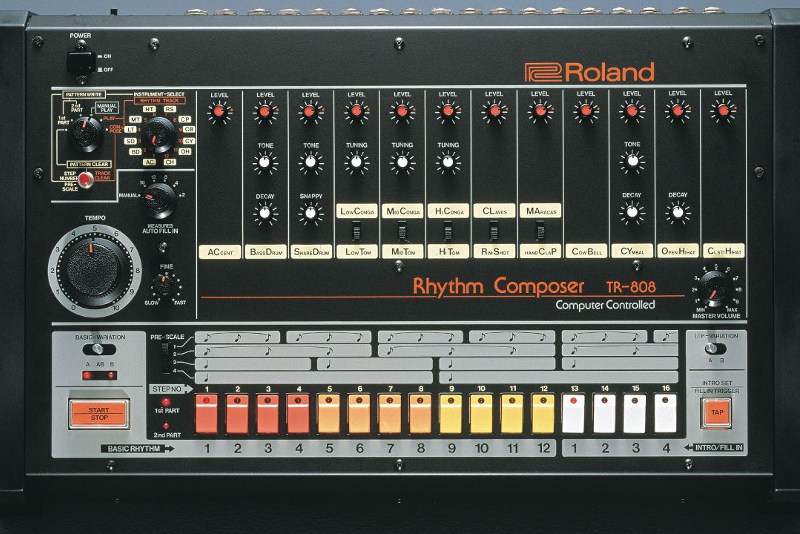
In the past, rhythm machines could only tick fixed patterns and could not create their own rhythm patterns. It is said that the TR-808, released by Roland in Japan, was the first machine that allowed users to create their own rhythm patterns. Until then, it was called a "rhythm box," but the TR-808 came to be called a rhythm machine because it was distinctively different from them. It can be said to be a pioneer of rhythm machines.
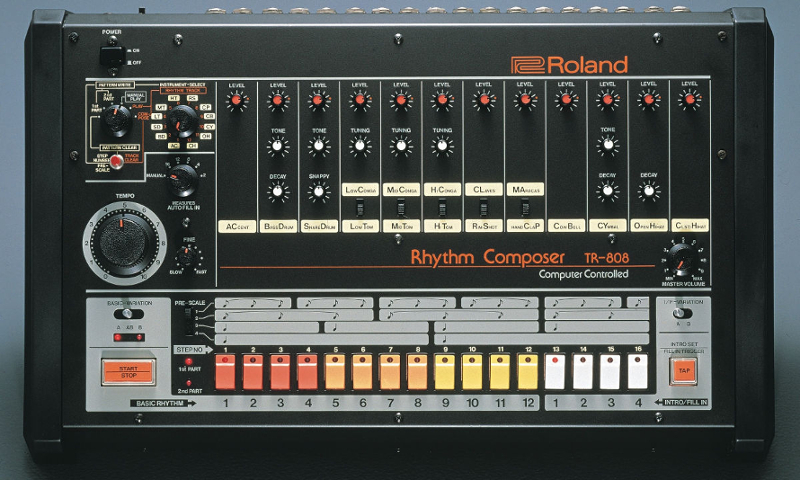
When it was first released in 1980, sampling technology had not yet become commonplace, so the drum sounds were synthesized by analog circuitry. However, it became popular when it was first released, partly because there were no rhythm machines available at the time that could freely create rhythm patterns. It is known to have been used in many songs, including Michael Jackson's "Thriller.
TR-909" was unpopular at the time of its release
Its successor, the TR-909, was released in 1983. Although the cymbal system was replaced by sampling, the rest of the sound was synthesized by analog circuitry. However, with the rise of sampling-type drum machines, which will be discussed later, the TR-909 did not become as popular as the TR-808, due in part to its slightly higher list price of 189,000 yen, and it was tossed aside as unpopular. And with the rise of sampled sound sources, the TR-808 was about to be relegated to the fringes of time.
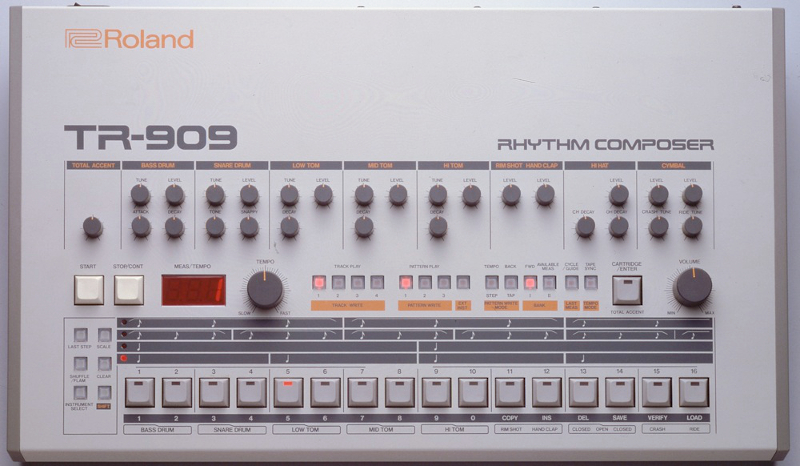
Then, house and hip-hop musicians who had no money to spend turned to the TR-808 and TR-909, which were being sold at secondhand stores. Although they lacked realism due to their analog circuitry, they were able to take full advantage of the strong, habitual sounds that could only be produced by these machines. The music they produced became a hit, and at the same time, the TR-808 and TR-909 returned to the mainstream, causing used prices to skyrocket. It is deeply moving to think that neither the TR-808 nor the TR-909 would have become vintage if musicians had not been poor and had to gather their wits.
The reason for the TR-909's unpopularity? The LM-2.
And the sinful rhythm machine that nearly relegated the TR-808 and TR-909 to the fringes of the era was the Linn LM-2. The original LM-1 was an extremely expensive instrument, costing over 1 million yen in Japan, and only 500 were produced, so it never made it to the mainstream. It did not become mainstream until the LM-2, when the price was lowered and 5,000 units were produced.
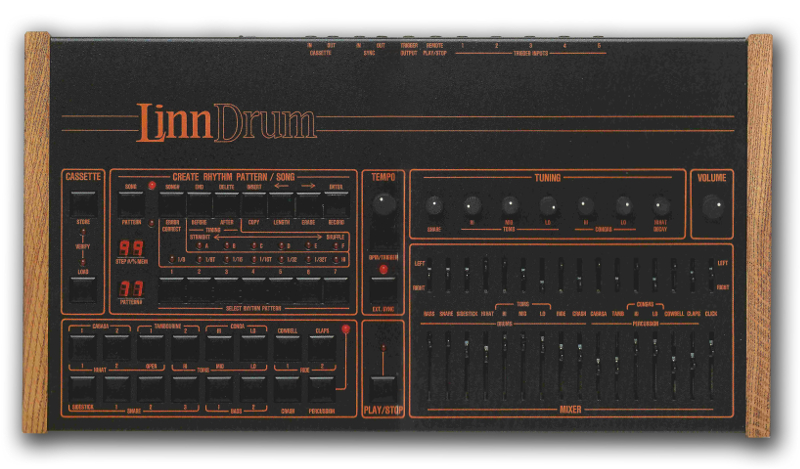
The sampling rate was 12 bits, which may not sound like much in today's world where 16 bits are the norm, but when it was released in 1982, sampling technology was not yet common, so it sounded like a real drum no matter how you heard it. It was no wonder that rhythm machines that used analog circuits had been destroyed by the time it was released.
Vintage bloodlines that continue to the present day.
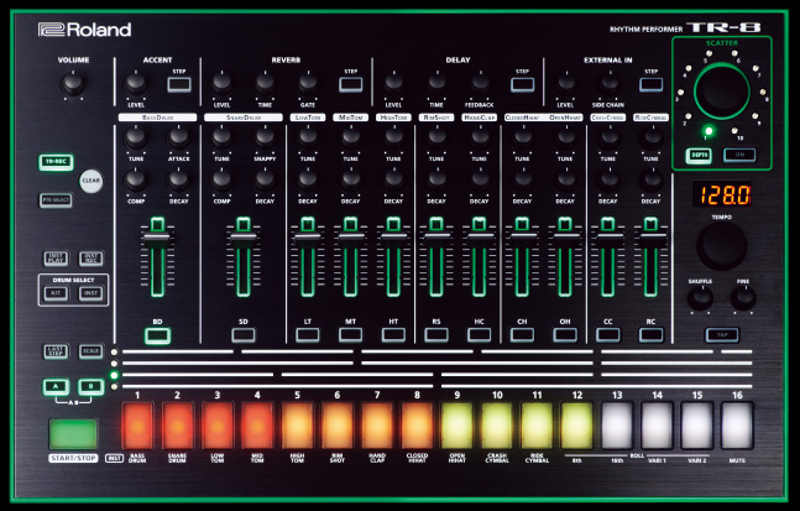
The TR-808 and TR-909 were reissued by the original Roland as the TR-8, one of the "AIRA" systems. The number of simulated soft synths and sample collections are too numerous to list here.
On the other hand, no successor to the LM-2 exists, as the developer, Linn Electronics, has gone bankrupt. There are many sound sources that sample this sound, but people would still like to have Roger Linn, the developer, bring it back to life.
