

This is the fourth part of a project to introduce outstanding Western films from the 20th and early 21st centuries that we hope will be handed down to the next generation.
Infernal Affairs
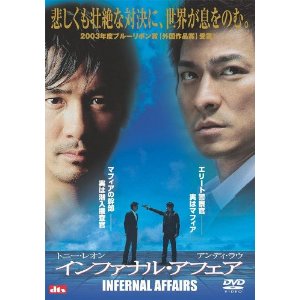
Infernal Affairs is a 2002 Hong Kong film, one of the most popular Hong Kong noir films. It is directed by Andrew Lau and Alan Mak.
It tells the story of Yang (Tony Leung), who enters the Mafia as an undercover cop, and Lau (Andy Lau), who is infiltrated by the Mafia into the police force. The film contrasts Yang's anguish as a cop with Lau's attempts to betray the organization and become a good guy.
Source: ja.wikipedia.org
Hong Kong films are often thought of as being all about action and kung fu, but the precision and gravity of this film have the power to overturn such stereotypes.
As evidence of this, the film was later remade as "The Departed" with DiCaprio in the lead role, and a remake drama was even made in Japan.
Tony Leung and Andy Lau, both well-known veterans in the Hong Kong film industry, play the lead roles, and the supporting actors are also a masterpiece with a silver-tongued charm.
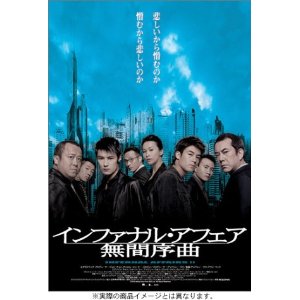
This film includes "Infernal Affairs 2" and "Infernal Affairs 3," which go back chronologically.
2" focuses on the adolescent years of both Yang and Lau.
In "3," Lau's lonely battle is depicted, and the expression on his face in the final scene even gives me shivers.
Gilbert Grape (What's eating Gilbert Grape)
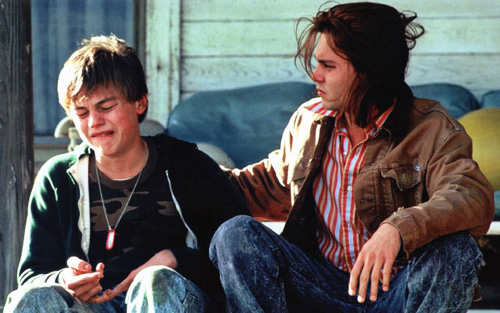
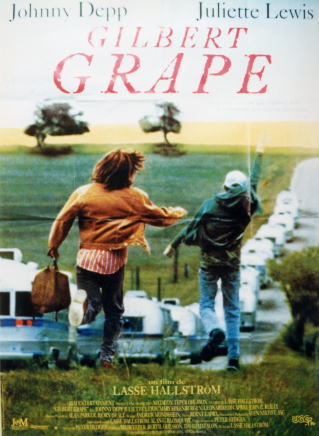
This tender-hearted human drama depicts the bonds of family, the love and hate of siblings, the pain of adolescence, and hope for the future through the life of a young man who lives protecting his physically and emotionally fragile family. Adapted from playwright Peter Hedges' first novel, the film is directed by Swedish-born Lasse Hallström, known for "My Life as a Dog" and "Once Around" (V). Produced by Maia Tepel, Bertil Ohlsson and David Matalon. Executive producers are Hallström and Alan C. Bronquist of "The Moment of Truth. Cinematography is by Sven Nyqvist, a master cinematographer known for his work with Ingmar Bergman and "Meguriwa", and music is by Alan Parker and Björn Isphardt. The cast includes Johnny Depp (Arizona Dream), Juliette Lewis (California (1993)), Leonardo DiCaprio (Boys' Life), Darlene Cates (discovered by the author and making her first film appearance), Mary Steenbergen (Philadelphia), and others. and others.
Source: movie.walkerplus.com
Johnny Depp, who often plays eccentric roles, delicately played a young man who spends his days depressed in rural America, and Leonardo DiCaprio, who was still a high teen at the time, excelled in a very natural and cute performance as a boy with intellectual disabilities.
Personally, I liked DiCaprio best in the next few years or so.
The film is fresh and refreshing, not flashy, but a lovely film that will stay with viewers forever, thanks to the skill of director Lasse Hallström.
Titanic)
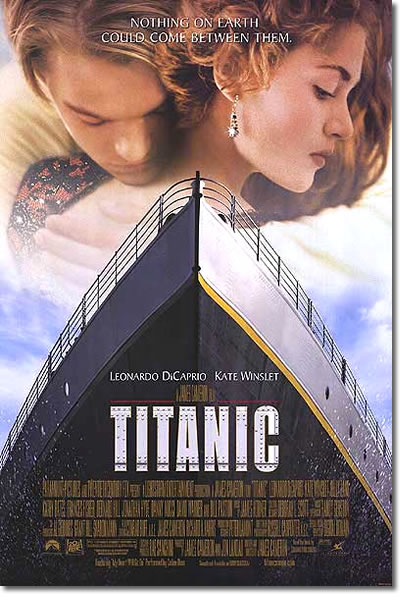
Based on the actual sinking of the British liner Titanic in 1912, the film depicts the tragic love between a poor young man and an upper class girl. Director Cameron, who has mainly worked on science fiction action films, took on the challenge of making a romantic epic for a change. The story unfolds with the historical fact of the sinking of the Titanic. The first half of the film is a love story, but the second half is a tense development similar to a panic film, and the last part is an excellent story about the lovers who are tragically separated.
Starring Leonardo DiCaprio and Kate Winslet. Distributed by Paramount Pictures in North America and 20th Century Fox in other countries including Japan. With $600 million in the U.S., a box office record of 26.2 billion yen in Japan (distribution revenue of 16 billion yen)[3], and $1.835 billion worldwide, it was the highest grossing film in the world until it was surpassed by the same director's "Avatar," and was registered in the Guinness Book of Records.
The film won 11 Academy Awards in 1998, including Best Picture, Best Director, Best Cinematography, Best Theme Song, Best Music, Best Costume Design, Best Visual Effects, Best Sound Effects, Best Sound, and Best Editing. The theme song "My Heart Will Go On," sung by Celine Dion, was also a big hit.
Source: ja.wikipedia.org
It's a very traditional love story, but it's a film you can't miss.
Since the days of "Romeo and Juliet," "tragic love due to differences in status" has been a perfect subject for a movie.
This film has a good balance of romance and action thrills, and the director, James Cameron, who has a background in science fiction, has created a very large scale film.
The toughness of the woman, Rose, is also impressive.
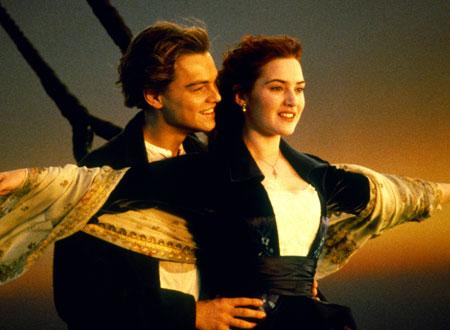
At the bow of a luxury liner, "We're flying! Rose says in the famous scene.
Nuovo Cinema Paradiso
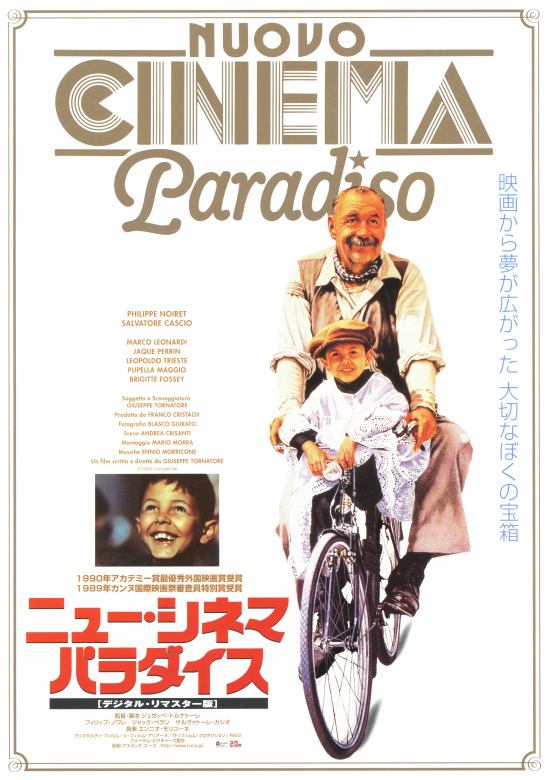
Nuovo Cinema Paradiso (Italian: Nuovo Cinema Paradiso) is an Italian film released in 1988. It is directed by Giuseppe Tornatore.
The film tells the story of a middle-aged man who recalls his boyhood and adolescent love affair with cinema. The film depicts sentimentality, nostalgia, and love for cinema. The theatrical version of the film, described below, was well received outside of Japan, and it gave the impression to the public at home and abroad of the resurgence of Italian cinema, which had been in a period of stagnation for some time. The music by Ennio Morricone is well known in combination with the film's content.
Source: ja.wikipedia.org
There are some people who almost reflexively get a little giddy when they hear this theme song. I am one such person.
When I was a child, I knew a projectionist who was a friend of my parents, and I went into the projection room several times. For a child, the view of the inside of a movie theater from the projection room is very exciting. Because I have such memories myself, I understood very well the emotional movements of Toto, the protagonist of this film, when he was a child.
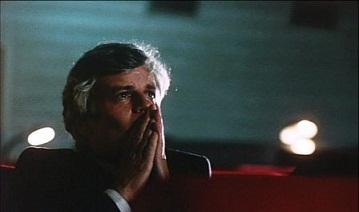
When Toto grew up and became tired of his successful film career, he saw a memento from his former "master" in his hometown.
Tears well up in Toto's eyes as he gazes at it.
I think this last scene is one of the best in all the films I have seen.
Kramer vs.
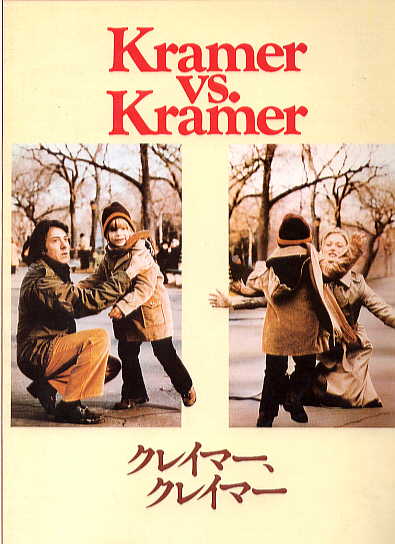
Kramer vs. Kramer is an American film released in 1979. It was produced and distributed by Columbia Pictures.
It was directed and written by Robert Benton, based on the novel by Avery Korman. The film stars Dustin Hoffman.
Winner of the 52nd Academy Award for Best Picture and the 37th Golden Globe Award for Best Drama.
The original title of the film is "Kramer v. Kramer," which refers to a divorce case involving two people with the same name.
Source: ja.wikipedia.org
Dustin Hoffman and Meryl Streep, two Oscar-winning actors, play a married couple.
The two actors are very talented, of course, but their son, who was only 8 years old at the time, was so cute and tender that it made my heart ache.
The boy, who was only 8 years old at the time, played the two sons, and I felt sad for him. It seems that the idea that "all a man has to do is his work, and his wife can take care of the house" was the norm in the U.S. at that time as well. Now, of course, this is not the case, and women's participation in society is much higher in this country.
I think the way you feel about this work will change depending on whether you see it from the standpoint of a father or a mother.
