
Seventy years have passed since the end of the war. Fewer and fewer people remember the tragedy that once took place. This is a collection of works describing the first atomic bomb used during the Pacific War. At first glance, the book seems to be written in a light-hearted manner, but it is heavy in parts because of this.
Turn around! Miiko! (Volume 2) "Miiko's Wish..."
The serialization of "Kocchi mukete (Look at me. Miiko!)," which was serialized in "Chao" (Japanese magazine)! Miiko! which was serialized in "Chao". Originally, this manga was intended for younger children, but the content was (sometimes) for older children. At least, there was a time when I felt so. It is a manga that is surprisingly hard to underestimate, as it talks about keywords that are too early for younger children and details about childbirth.
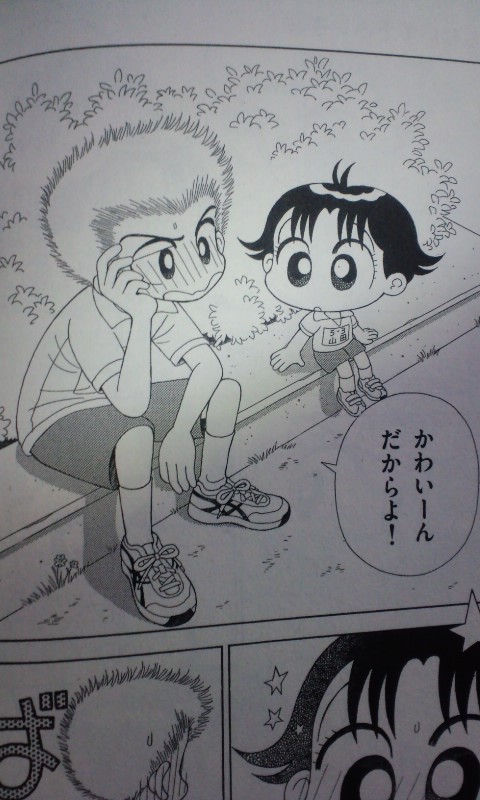
Such a cute pattern....
One such episode in "Miiko" was about the atomic bombing. It happened when she went sightseeing in Nagasaki with a girl cousin. Miiko, a modern girl, complained that the heat wave in Kyushu in the middle of summer made her thirsty. But then she heads to the Peace Park, reads the inscription of "experiences" and pulls back a little. He doesn't quite understand what kind of place it is or why it is there. He is not a local boy to begin with. And then they found the "one-legged torii".
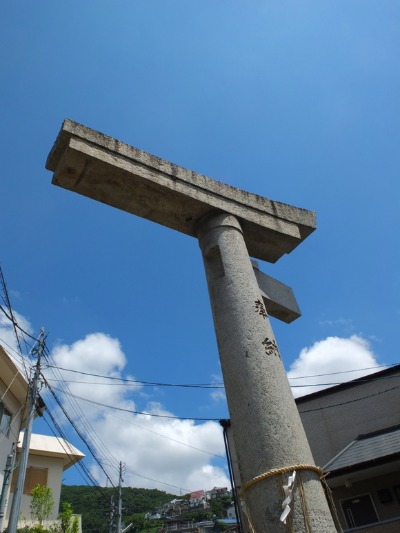
Torii gate with one leg blown off. This is the torii of Sanno Shrine in Nagasaki City.
How did this happen?" When she comes to, she finds that her cousins are gone and four girls dressed in subtle "old-fashioned" outfits. When the girls decided to play together despite their wariness, Miiko noticed something unusual. The torii gate is not broken. At the moment she wondered, dazzling light, heat rays, and a blast hit the girls and the torii gate... What she saw, perhaps almost instantaneously, was the collapsing torii gate. And then, visible in the flames, four figures.
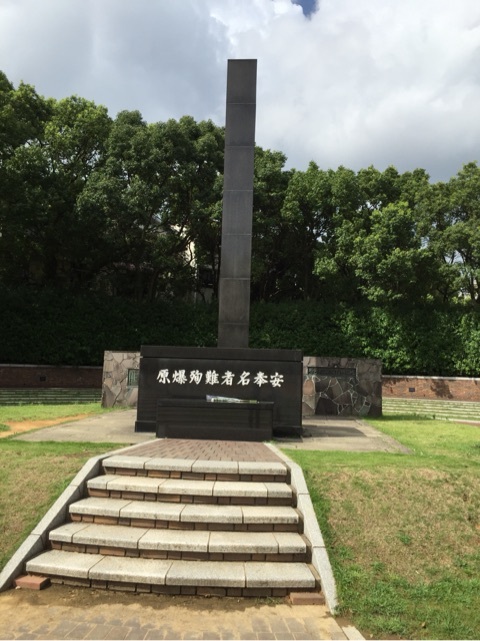
The direct damage we saw was a torii gate and four girls. The indirect damage was caused by the words of those who experienced the inscription. Miiko, who learned of the "tragedy that once existed," did the least she could do. It is a very trivial thing. But she does it with all her heart. The "wish" written in a simple manner is earnest and heavy.
Living with Father.
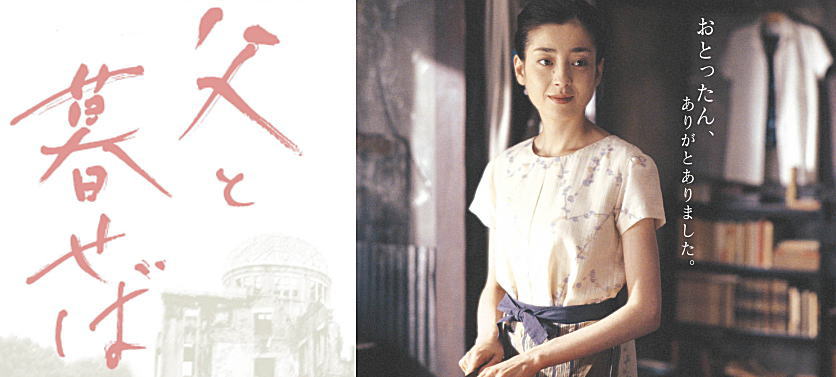
The story begins with Mitsue, now 23 years old, coming home frightened of thunder... The identity of her father, who is kind but humorous, and the reason for her fear of thunder are really depicted in a very simple manner. She also has feelings for a man who collects such "materials" including A-bomb tiles, but is unable to summon the courage to do so. After her friend dies and she "abandons" her father and runs away, she has no right to be happy with anyone else. To Mitsue, her father, who has become a ghost, sternly tells her, "Live and be happy. He told her to live and be happy. In the first place, the father had always told her to run away. The father's last line and the daughter's last line give us a sense of hope. And it makes me want to eat jako miso or shoyu rice....
What the ticking "Atomic Bomb Clock" appeals
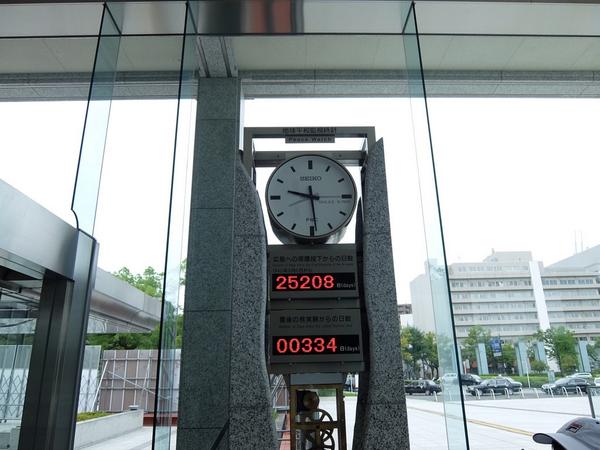
The top is the number of days since the atomic bomb was dropped. The bottom is the number of days since the last nuclear test.
Many countries still possess nuclear weapons. In Hiroshima, a clock was set up with the time from the time of the bombing to the present. At the museum in Nagasaki, the clock rang out as if it were the entrance to a "different world. But it is not a "different world," it is the "reality" of what happened 70 years ago. Before saying that it was the other side's fault or that we were the ones who attacked first, shouldn't we first pray for the souls of those who lost their lives? Praying is not the only thing that living people can do. This is what these works remind us of.
