
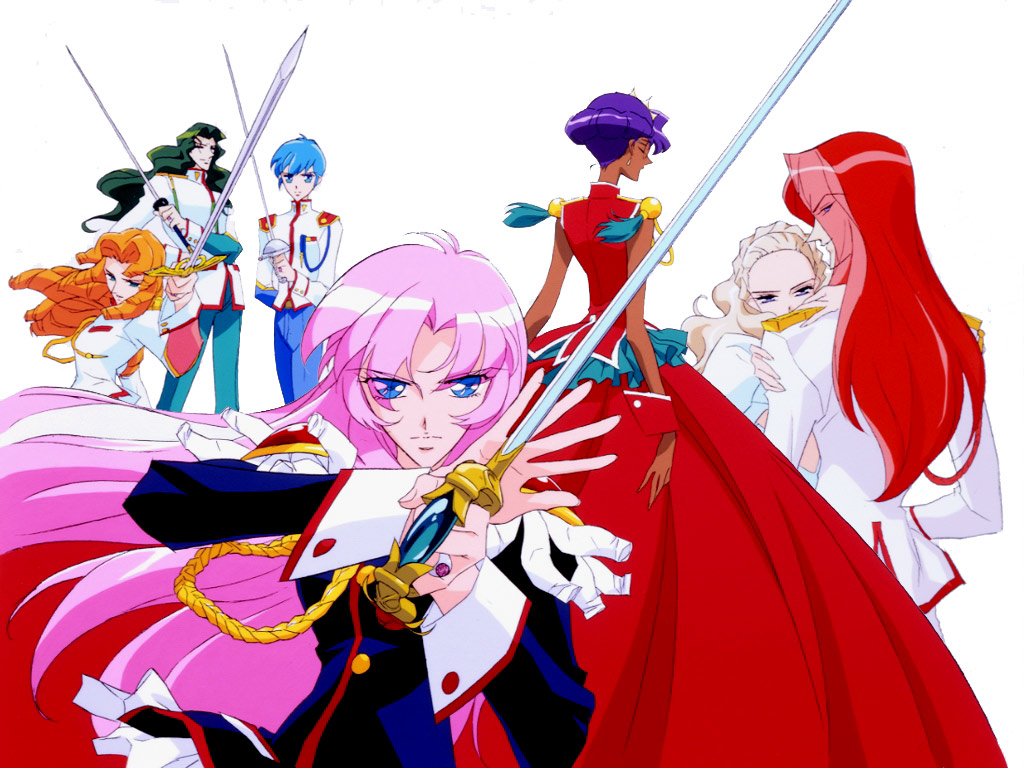
The Power to Revolutionize the World! The well-known "Revolutionary Girl Utena" in the "Revolutionary Girl Utena. We have compiled a list of songs used in dueling scenes that will shock you with their innovative worldview.
When Where Who Which
When Where Who Which
Episode 1 "Bride of Roses" vs. Saionji Keiichi
when where who which
when where who which
the flow of blood in the cage of memory
A thousand years in the cradle of bliss
I am an actor likened eternal
Sphinx in the desert winter Finks
of the body of birth and death
You know the sad wind
I am the actor who fell into the abyss
The dark light that fell into the abyss, Marginaux
Shine and burn, wake up and sing
Birth in the world, momentary birth
Its repetition
The memorable first dueling piece. Utena, who is to duel Saionji without knowing what to expect, heads to the dueling square with a shinai, but Saionji, on the other hand, pulls the Dios sword from Ancy's chest like a magic trick, surprising Utena, which is impressive. Now, this song has a very introductory structure, with no chorus, so using it for the first session is quite effective. And what interests me about the lyrics is the part "I am an actor metaphorically eternal" and "I am a holy actor metaphorically eternal". Utena, after all, had an "actor playing a prince" element to it, didn't it? Utena, who was so longing for a prince that she dressed up as a boy and acted as a prince for the time being, may have been a "holy actor" indeed. Also, the ending part of the song, "Shine, Burn, Sing in the Morning / Birth in the World, Birth in the Moment / The Repetition of the Birth" seems to represent the descent of Diodorus. I think it is a wonderful selection of music.
Source: www.geocities.co.jp
Paleozoic in the flesh
Paleozoic in the flesh
Episode 2 "For Whom the Rose Smiles" vs.
Astronomical age Primordial oceans Erosion Sedimentation
3 billion years Birth of life Geologic age
Cambrian Ordovician Silurian Devonian
Stross Trites Bacteria Corenia Triassic Jurassic Cretaceous
Cambria Ordovician Silurian Storos Trites Bacteria Corellia Triassic Jurassic Cretaceous
Kaitonia Bennetithes Ammonite
sea rose sea lily sea apple sea squirt
Sea marten, sea cucumber, sea toadflax, sea mayfly
Coal Permian Paleozoic
sea anata
Paleozoic in the flesh
Paleozoic in the flesh
Continue to live
continue to die
Paleozoic age speaking to us
Like whales
Like a porpoise
Like a seal
Sea watashi to the bottom of the sea
The Great History of the Bottom of the Sea
The Bottom of the Sea
Ammonites
This is the dueling song used in the return match with Saionji. When I hear this song, I am reminded of the story of human beings going through the entire process from the lower life forms to human beings in their mother's womb before they are born. It may be that we realize and awaken to the paleozoic in our bodies, and eventually return to the sea, the home of all living creatures. The song ends with a very strong phrase, "ammonite," which seems to lead into the next dueling piece, "Spira Mirabilis Theater," since ammonite is a spiral-shaped fossil. Still, I thought I was in trouble when I was humming the lyrics of the dreaded katakana enumeration that begins with "Cambria Ordovis~" without mistaking it for a humming song. To be honest, I don't really see the connection between the second episode and this song, but since it was the duel where Dios descends on Utena for the first time, I think there are many fans who have no turning back now around here.
Source: www.geocities.co.jp
Angelic creation i.e. light
Episode 7 "Mihonenu Juri" vs. Juri Arisugawa
Banzolite
Mosaico Light
Lucifer Angel, Son of the Dawn
Revelation Light
Michael Light
Androgynous Son of Darkness
Light of the Flame
Tendo Light
Hierarchy of the Heavens
Illusion Light
Eternal Light
Imaginary Karakuri
Capricious Birth
Nicox (Dark Night)
Erebos
Uranos (Starry Sky)
Thanatos (Death)
Gnus, the spherical, luminous body
Born of every miracle, Gnus
Pleasure Principle
Nirvana Principle
The inevitability of death, or light
Not alive, but
But an elephant of life in motion
In the cerebral universe
The form of life drifting in the cerebral universe
Light, temporary manifestation
in anticipation of eternity! That is, incomplete returning to the primordial
Both natures, both poles
Two I's
Up and down, left and right
Two I am
Front and back Heaven and earth
The Two I Am
Angel Devil
Two me
Hollow inside
This song may have a theme like "eternal and immortal circle" from the fact that the words "Nirvana principle" are also used in the song. This may be connected to Juri's thoughts, which eventually return to their original state. This is a bit off topic, but is it just me or did I already know Akio's true identity thanks to a line from "Lucifer, the Child of Dawn, the Angel of Lucifer? According to the magicians, Lucifer is often regarded as the King of Hell and appears in the form of a beautiful red-faced boy. They call up Lucifer and when he does something for them, they give him a house mouse in return. Tutu didn't seem to be very attached to Akio...? Back to this duel between Juri and Akio. What is unforgettable is the "miracle" that occurred at the moment the match was decided. All the duel scenes are worth watching, but this one is especially good. The expression on Juri's face at the moment the sword falls from the heavens is also good. The action of Juri afterwards also shows that "Koumei, kakarigenshitsu/ Eien wo tsukimasu! I wondered if he would continue to repeat this process of "returning to the primordial state of imperfection.
Source: www.geocities.co.jp
Last Evolution (Eve of Evolutionary Revolution)
Last Evolution
Episode 10 "Nanami's Important Things" vs.
The Beginning of the Earth
Stage Set
The Laplace Nebula
Theory of Strangers
The Illusion of Immutability
Mystery Clock
The End of Immortality
the baby carriage
Eternal Watashi
The Eternal Stranger
Two Relationships
Two births
The Mysterious Balance
The Zodiac Sign of the Human Body
Aaah!
Aaaaah!
Time is a hypothesis, an illusion
A stage set for the beginning of birth
Fate, choice, goodbye theory
Me and you are rivers of heaven
No past, only present, no future
Theatre, alone in the universe
That's me! Wait! my last evolution
revolution
everlution
This is the episode in which Nanami wins everyone's heart. This is the first time Nanami changes from her sailor suit to her dueling uniform, and she appears in it for a while after that. Nanami's dueling uniform is very special. Only Nanami wears yellow from top to bottom. While the bottoms of the others are white, Nanami is the only one in yellow and black. As expected of Nanami-sama! As for the song content, the most tear-jerking line is "Watashi to watashi wa ten no kawa (Me and you are the river of heaven). Is it "Watashi to Okuri-Sama wa Ten-no-Kawa (Me and My Brother are Rivers of Heaven)"? The part "Eternal I / Eternal stranger" is also meaningful, considering the suspicion of bloodless siblings. The song itself is good, so any lyrics are OK, but in the latter half of the song, after the "ah ah / ah ah ah," the high key makes the song tense and heart-wrenching. Even in the duel, the pathetic feeling of Nanami, once defeated, taking the dagger she had secretly kept in her hand and rushing toward Utena is unbearable. But what in the world is "the end of immortality/the baby carriage"?
Source: www.geocities.co.jp
sealing spell
sealing spell
Episode 11 "Elegant and Ruthless: The One Who Picks Its Flowers" vs. Fuyume Kiryu
Sealing Curse without a Chronicle
The iron mask of bad luck
Blue skies, oceans, and winds blow
And meadows, rabbits, and rivers flow
Time and age never change
Time, times are what they are and what they are not
People are described by the blood of "playing"
People are also "counted" rivers flowing
People are only told that they are people
No change!
Seen by day, unseen by night
Seen in the night, not in the day
Anagrams
Its riddles, its language masks
Its source is dich!
This song was used when Utena was defeated by Fuyume in a duel. The song begins with the words "Kishinashi naki seiran kyubaku/Iron mask of misfortune." The "iron mask" probably refers to the iron mask in the legend concerning Louis XIV. During the reign of Louis XIV, there was a prisoner wearing a mask made of iron in the French fortress of Pignerol, and for some reason, this prisoner was protected by the king. For some reason, this prisoner was protected by the king, but no one ever saw his true face, and people came to call him "the Iron Mask. His true identity is not clear, but there is a theory that he is actually Louis' twin brother, who once aspired to the throne but was taken prisoner due to a conspiracy, or that the Iron Mask is in fact the real Louis and the so-called Louis XIV is a fake. From this, the meaning of the title "The Sealing Curse" can be roughly guessed. The connection with Episode 11 is found in the last two lines, "That riddle word, the mask of words / Its source is Dich! I think it is in the last two lines of the title. Fuyume's strategy in this duel is a bit cowardly. He keeps saying, "Wasn't that prince like me?" and throwing riddle words at Utena. and then, at the duel, he deceives Utena and wins. Dich" is the German word for "you," so the source of the word mask is you, Fuyume! I guess that's what it means.
Source: www.geocities.co.jp
fictitious past type <<prohibited>> spell
Episode 15 "The Scenery That Treetops Point To" vs.
Time Machine
To the Past, to the Future Zbikyunshazun
Time Machine
My Cute Childhood
Lotus Carpet
Playing with Dolls
Mysterious Magical Feefee
K kompeito
Wearing a beautiful bebe
Shichi-Go-San
Oh My Dream Machine
Flower Blizzard
A Long Time Ago I
Ten, two, one, zero!
Take Off!
Time Machine
To the past, to the future, Zbikunsha Zdun Zdun
Time Machine
To that time of dreams and hopes
With my hair tied up
With a lunch box
Mysterious magic feefee
Amusement Park
Amazing Momo Tree
My Heart is a
Oh My Dream Machine
Dream Blizzard
A Long Time Ago
Ten, two, one, zero!
Take Off!
One of the things I would have liked to see more of in "Utena" is the story of Mikimoto and Kozue. They are twins, and since they are at a delicate age, not yet fully grown, I would have liked to have seen more episodes that captured their emotional landscape. Kozue is a girl, but she is very neutral, just as Miki does not have a masculine smell. In a way, you could say that both Miki and Kozue are "boys. When I first heard this song, I thought it was very scary. It sounds like "Kagome kagome," a song that has undergone a minor change. Kagome kagome" is like a game to guess the back of a person's head, and "Hanaichimonme" is like a game of human trafficking. The beginning of the song, "Time Machine / To the past, to the future, Zubikyunshazuzun" to "KAWAITO ME NO KIDDENDAI" is very impressive. The title of the song, "Mysterious Magician Fee Fee," is also very suspicious. However, it is probably Miki who really wants to go back to his childhood. I think Kozue will be able to continue to live her life with a proper acceptance of reality.
Source: www.geocities.co.jp

Related Articles
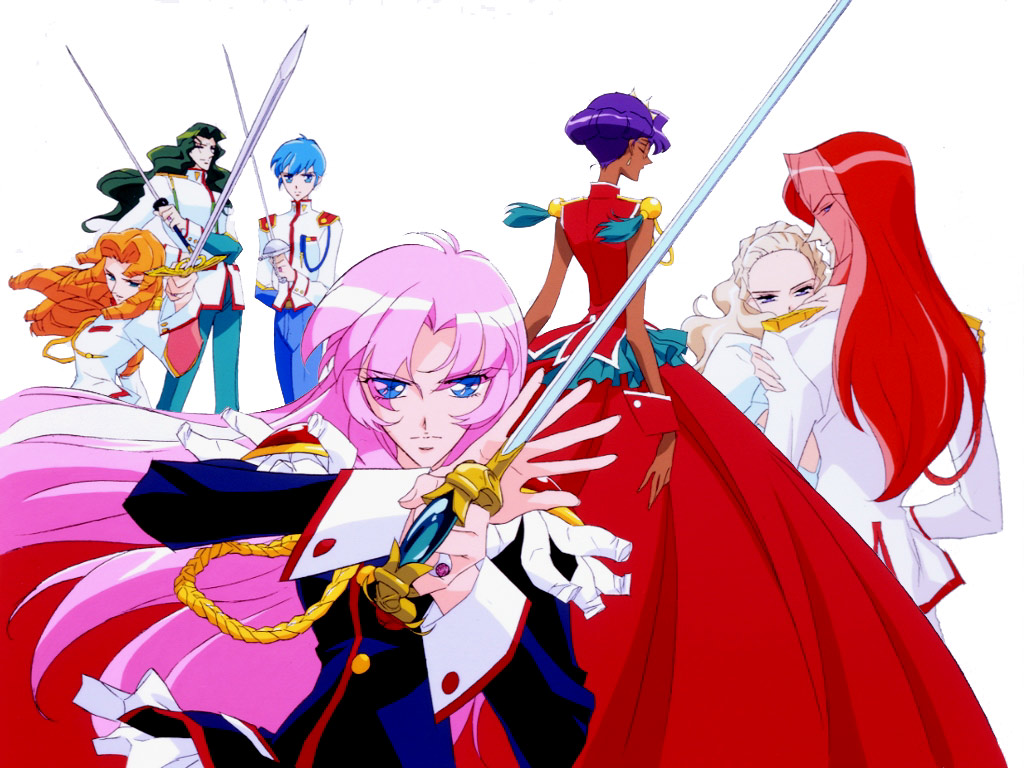
Spoiler commentary and discussion of Utena the Girl Revolution (anime)
Utena: Revolutionary Girl" is an animation series created by Bee Papas led by Kunihiko Ikuhara in collaboration with manga artist Uchiha Saito. 39 episodes were broadcast from April 2 to December 24, 1997, and a completely new feature-length animation film was released in 1999. Utena Tenjo, who was saved by a prince in her childhood and wanted to become a prince herself, meets a girl called "Rose Bride," Anshi Himemiya, at Hou Academy, and gets involved in a duel game to win her.
Read Article
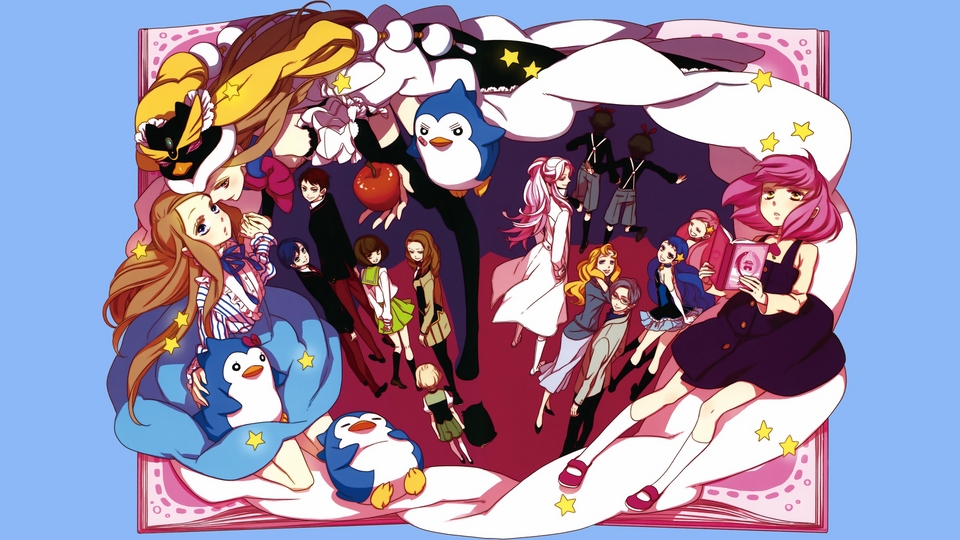
Spoiler commentary and discussion of the Ring Ping Drum (Pindola).
It is the return of Kunihiko Ikuhara, director of "Revolutionary Girl Utena" and other works, after a 12-year absence. 24 episodes were broadcast from July to December 2011, produced by Brains Base. Kamba and Shoma's younger sister, Himari, has only a short time left to live due to an illness, and they go to the aquarium of their memories, but Himari collapses and is taken to the hospital, where she passes away. She is prolonged by a mysterious personality that resides in a penguin hat she bought at the aquarium, but in return she is forced to search for the "Ping Drum".
Read Article
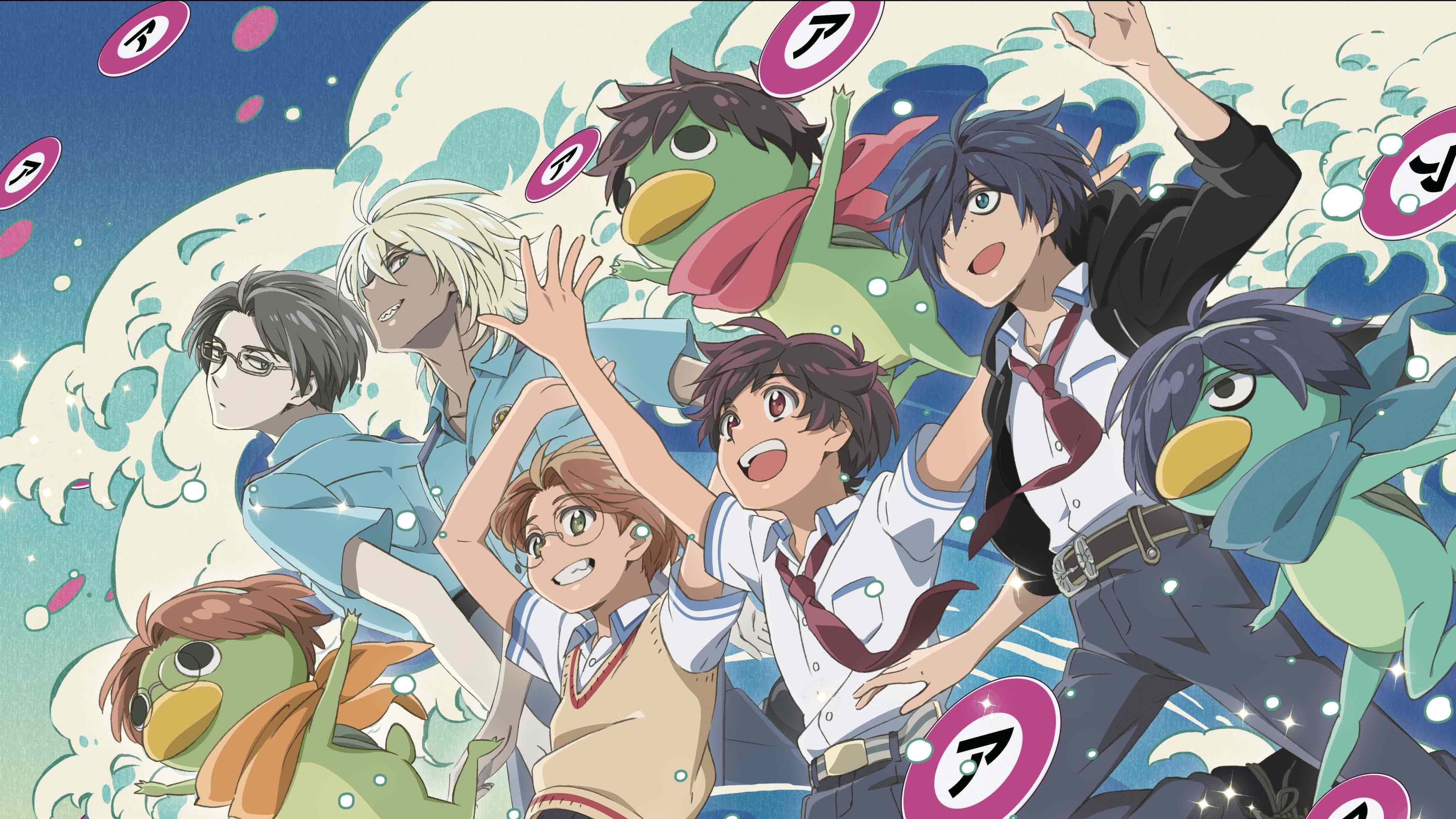
Spoiler commentary and discussion of Sarazanmai (anime)
Sarazanmai" is a new original TV animation directed by Kunihiko Ikuhara, who has created many hit movies such as "Shoujo Kakumei Utena" and "Rinru Ping Drum". Set in Asakusa, Tokyo, the work depicts "connections" between people, and was broadcast on Fuji Television's Noitamina and other channels from April to June 2019. Three junior high school students, Kazuki Yagata, Yuu Kuji, and Kenta Jinnai, meet a mysterious kappa-shaped life form called "Keppi. Keppi is the only being that can create a "plate of hope," which can make any wish come true. In order to obtain the plate of hope and protect their non-negotiable connection, the three follow Keppi's orders.
Read Article
![Utena: The Girl Who Leapt Through Time] Super Maniac! Summary of "Anime Worth Watching" selected by foreigners [The Girl Who Leapt Through Time].](https://renote.net/files/blobs/proxy/eyJfcmFpbHMiOnsiZGF0YSI6NzA4MzM0OCwicHVyIjoiYmxvYl9pZCJ9fQ==--8c98898a68b93b33ec8794b64ebdf876926aa18e/group03pe5.jpg)
Utena: The Girl Who Leapt Through Time] Super Maniac! Summary of "Anime Worth Watching" selected by foreigners [The Girl Who Leapt Through Time].
There are many Japanese manga and anime works of high quality, and they are highly appreciated not only by Japanese but also by foreigners. Some of them are so maniacal that even Japanese people don't know about them, and I feel the ardent love for Japanimation by foreigners. In this article, we introduce anime that foreigners rated as "worth watching. Wow, really, such Japanese animation is so popular in the world. As a Japanese, I am so happy!
Read Article
Contents
- When Where Who Which
- Paleozoic in the flesh
- Angelic creation i.e. light
- Last Evolution (Eve of Evolutionary Revolution)
- sealing spell
- fictitious past type <<prohibited>> spell
- conical absolute egg alcibra
- Phantom Butterfly Moth 16th Century
- transparent period of maturity
- Watashi Imaginary Life Form
- I am the hundred wonders of all things