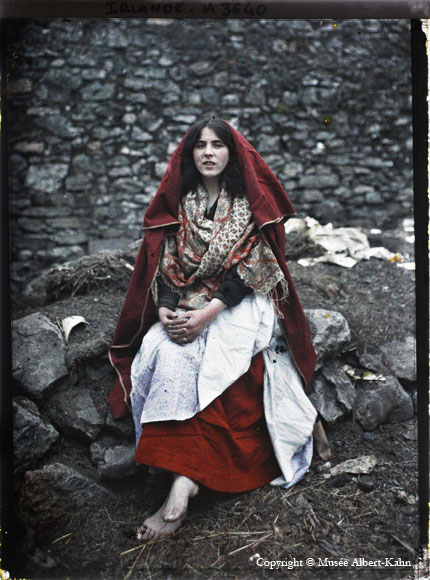
Have you ever heard of Albert Kahn (1860-1940)? He was a French millionaire who sent photographers all over the world to take color photographs, which were still rare at the time, for his own collection. He had a grand dream of bringing about world peace, and he continued to take photographs to achieve this dream. Peace and color photography" seemingly unrelated at first glance, but why did these two things come together? We will look back on Kahn's life and try to unravel the mystery.
He was a successful speculator and a successful adult.
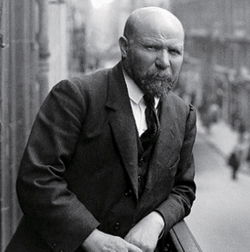
Albert Kahn was born in 1860 in the Alsace region near the German-French border.
Albert Kahn was born in 1860 in the Alsace region near the German-French border. His family was a poor Jewish livestock wholesaler.
In 1870, when the war ended and Alsace was annexed by Germany
the family left the region.
At the age of 16, Kahn worked as a banker in Paris
From 1889 to 1893, he worked mainly in the gold and diamond mines of South Africa.
Between 1889 and 1893, Kahn amassed an enormous fortune by speculating in gold and diamond mines, mainly in South Africa.
He later established his own bank.
But at the end of the 19th century, when anti-Semitism was in the air in Europe,
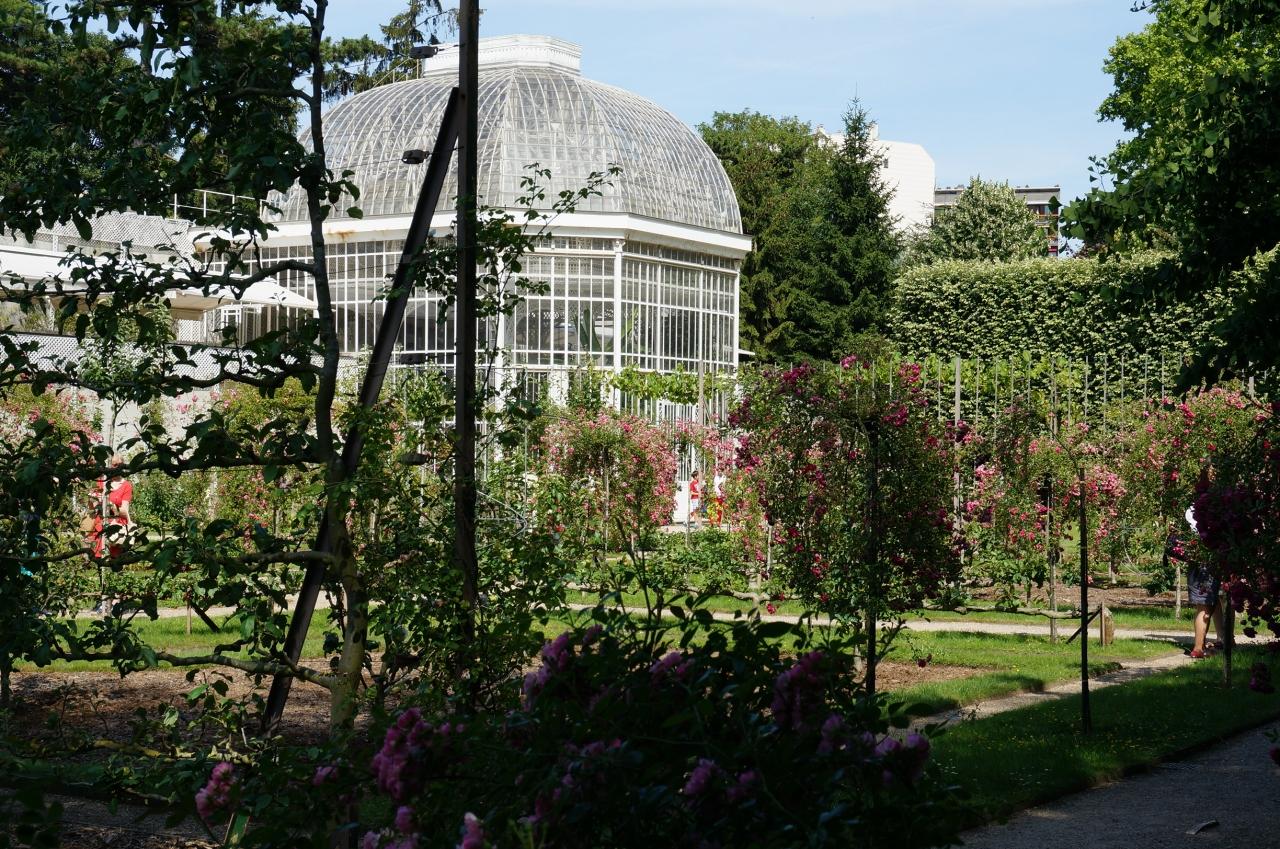
he retreated from the forefront. In Boulogne, a suburb of Paris, he set up a vast garden and mansion.
He transformed it into a garden with the motif of the entire earth.
the entire earth as the motif of his garden.
Determined to bring peace to the world through photography
Khan wanted world peace. It may be related to the fact that he was born into a persecuted
Perhaps it is related to the fact that he was born into a Jewish family.
Kahn said, "In order to eliminate conflicts between people, we must first learn about each other's
need to know the differences in culture and thought between people. In order for people to know about different cultures
I thought it would be better to show people the pictures of the different cultures
I thought it would be a good way to let people know about different cultures through direct and easy-to-understand photographs.
So, he hired photographers at his own expense and dispatched them around the world.
Sometimes he even traveled abroad himself, and the images he took amounted to 72,000.
The total number of images taken by the photographers, who sometimes traveled abroad themselves, amounted to 72,000.
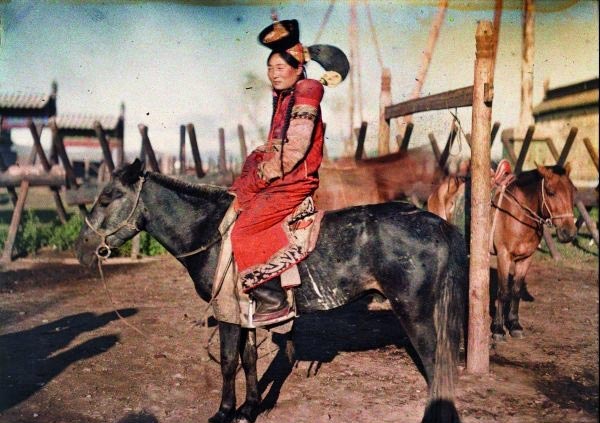
The photo shows a local woman in Mongolia.
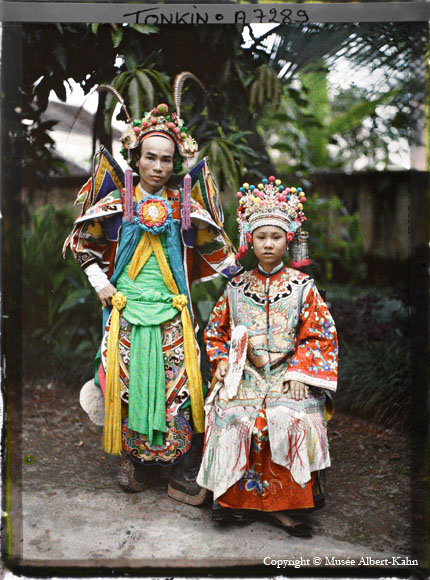
The photographs taken were color photographs, which were still rare at the time.
The photographs were taken using a photographic technique known as the autochrome method.
The color is vivid, but has a somewhat retro and unique texture.
but with a unique retro feel.
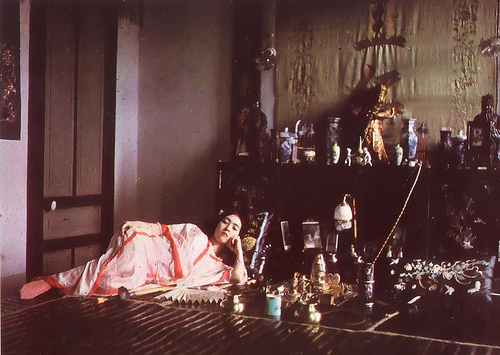
The photo is of a Beijing Opera actor taken in the Indonesian territory of Vietnam.
The first commercially successful color photographic technique was
invented by the Lumière brothers in France in 1904
The technique is known as the "autochrome method.
The three starch colors (orange, green, and violet-blue) are applied to a black-and-white photographic dry plate.
The three primary colors were filtered by applying starch colored with RGB (orange, green, and violet-blue) onto a black-and-white photographic dry plate.
This enabled color photography. This was marketed from 1907 and used as a full-scale color photograph.
and used as full-scale color photography.
Source: webcache.googleusercontent.com
Sending photographers around the world
In 1898, Kahn created what is now known as a "round-the-world"
scholarship program to send poor students abroad to study
and to promote cross-cultural exchanges. From 1910 to 1913, he established the "Museum of the History of the Earth".
Kahn established the "Museum of Earth History" between 1910 and 1913. There, he collected
and other materials.
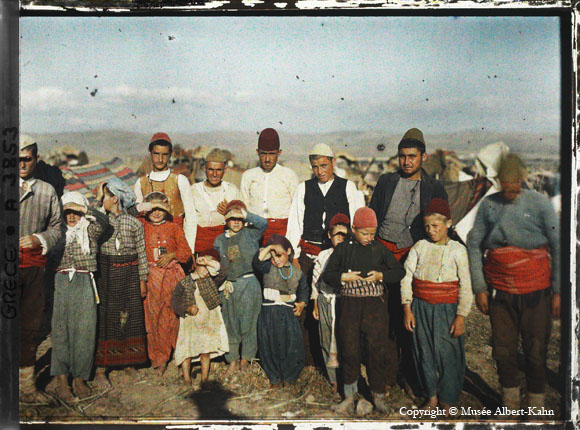
The photo shows Greek peasants.
Among the photographers dispatched around the world were women photographers, which was still rare at the time.
women photographers, which were still rare at the time.
Kahn chose to focus on women and children, rather than celebrities and the rich.
He also instructed his own photographers to focus on women and children as much as possible.
photographers as well.
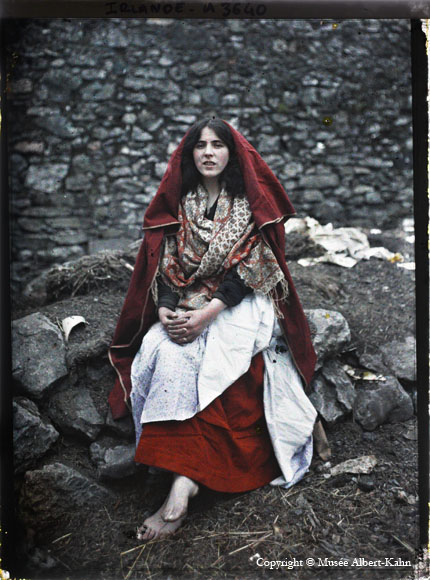
A 14-year-old girl in traditional costume photographed in Ireland
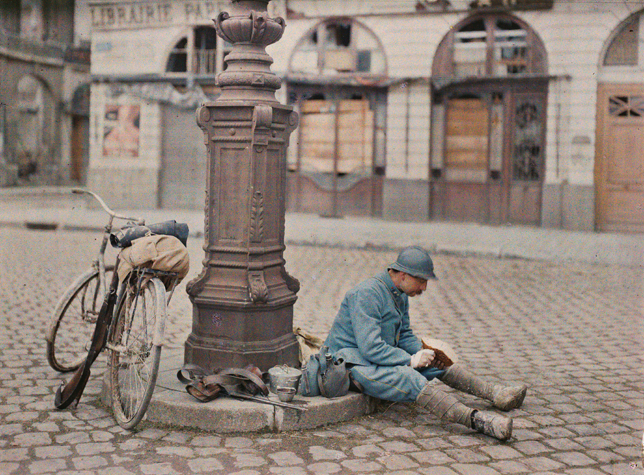
When photographing the war, it is not about the gruesome corpses.
but the everyday scenes of soldiers who are living hard in the war zone.
I have taken many photos of soldiers who are living hard in the war zone.
*World War I, French soldiers
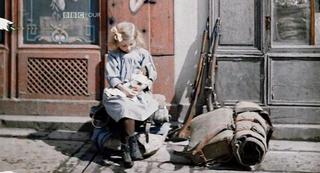
The Gun and the Girl
World War I, served in the French army.
Photographed by a photographer who served in the French army.
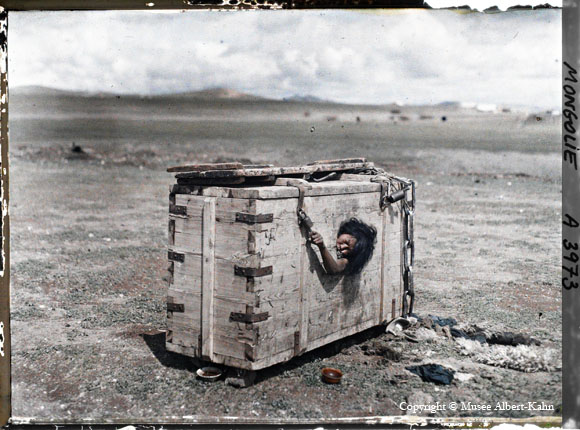
Some of the photos are harrowing...
A female prisoner in a bleached prison cell photographed in Mongolia.
Considering the severity of the punishment, it is speculated that she is a felon, such as a murderer.
It is speculated that she is a convicted felon, such as a murderer, considering the harshness of the punishment.
Colorful ethnic costumes
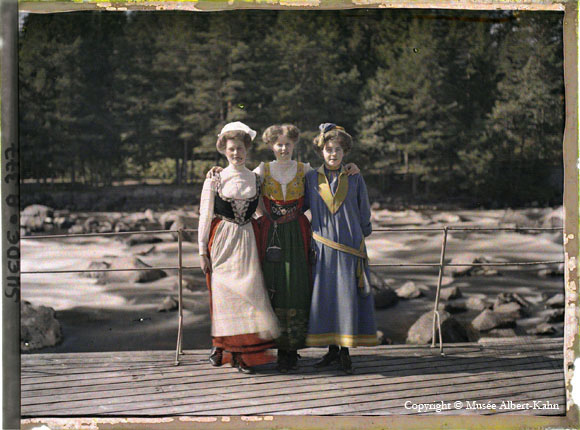
Swedish Women
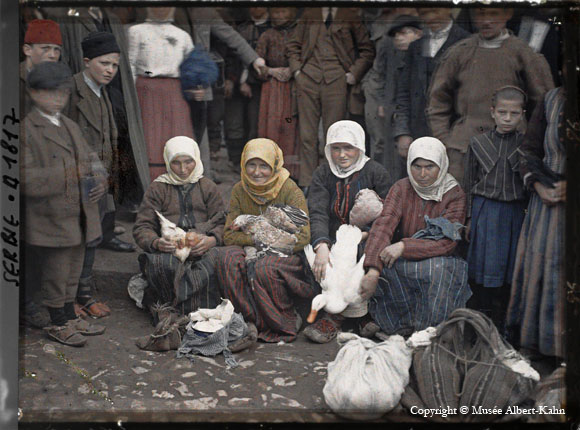
Taken in Serbia
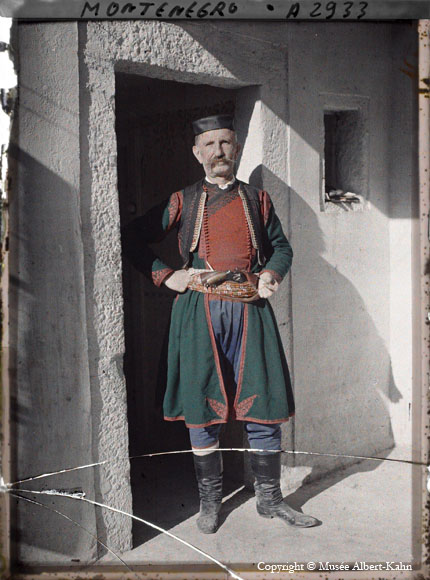
In Montenegro. Men in national dress.
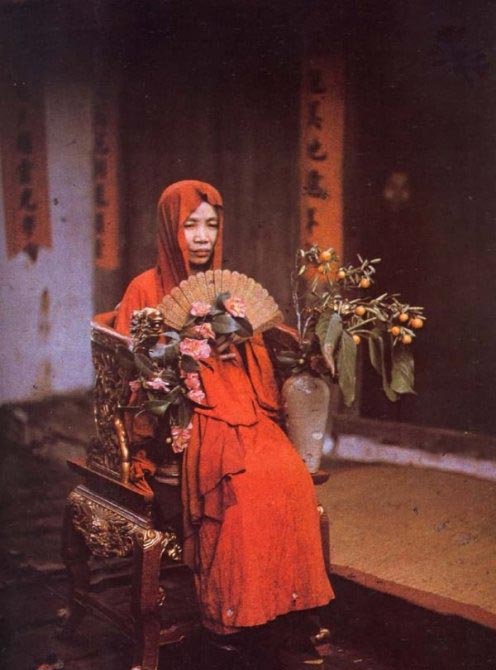
Woman photographed in China
Albert Kahn and Japan
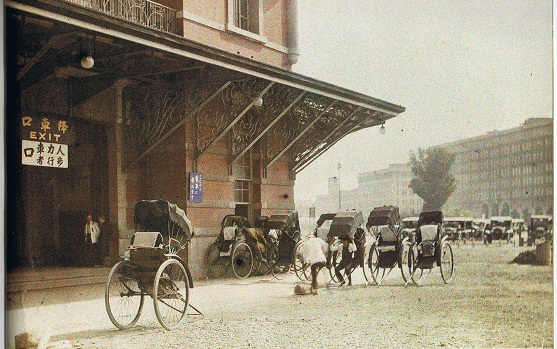
Albert Kahn was also known as a Japanophile.
When he established his own bank, he recommended the issuance of Japanese government bonds for the European market.
Japanese government bonds for the European market. He was one of those who believed in Japan's economic development.
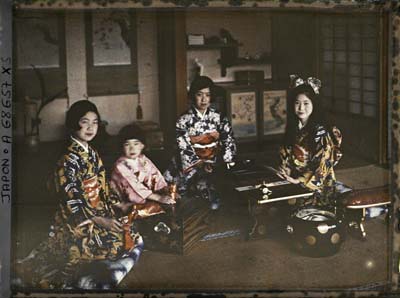
The sisters were photographed in Tokyo in the 1920s.
In total, Kahn visited Japan three times.
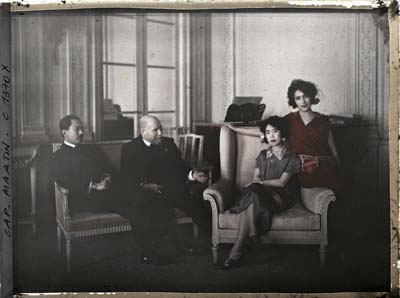
Kahn also interacted with Shigenobu Okuma of Japan and had ties with the Imperial Family.
The photo shows King Narihisa Kitashirakawa and his wife.
Bankruptcy, and the later years of Khan's life.
Kahn's business seemed to be going well, but the Great Depression of 1929 worsened the economic situation.
In 1936, he went bankrupt.
His personal property was seized, and his entire collection of photographs and videos
and his collection of photographs and videos were all purchased by the Seine Prefecture in France. However,
ironically, this was a lucky event for those of us in later life, because it allowed us to collect valuable images
Because thanks to this, the precious images were not lost and have survived to this day.
The collection of photographs and images was purchased by the prefecture of Seine, France.
Photo: Woman taken in Vietnam