
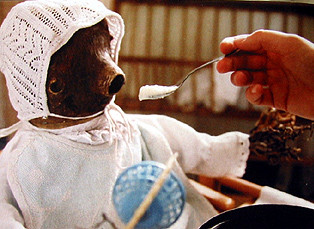
A collection of works by Czech filmmaker Švankmajer. We have previously introduced his short films, but this time we would like to focus on his feature-length works. This time, the absurdity seems to be 30% more absurd because of the story! The food looks as bad as ever!
Alice" (1988)
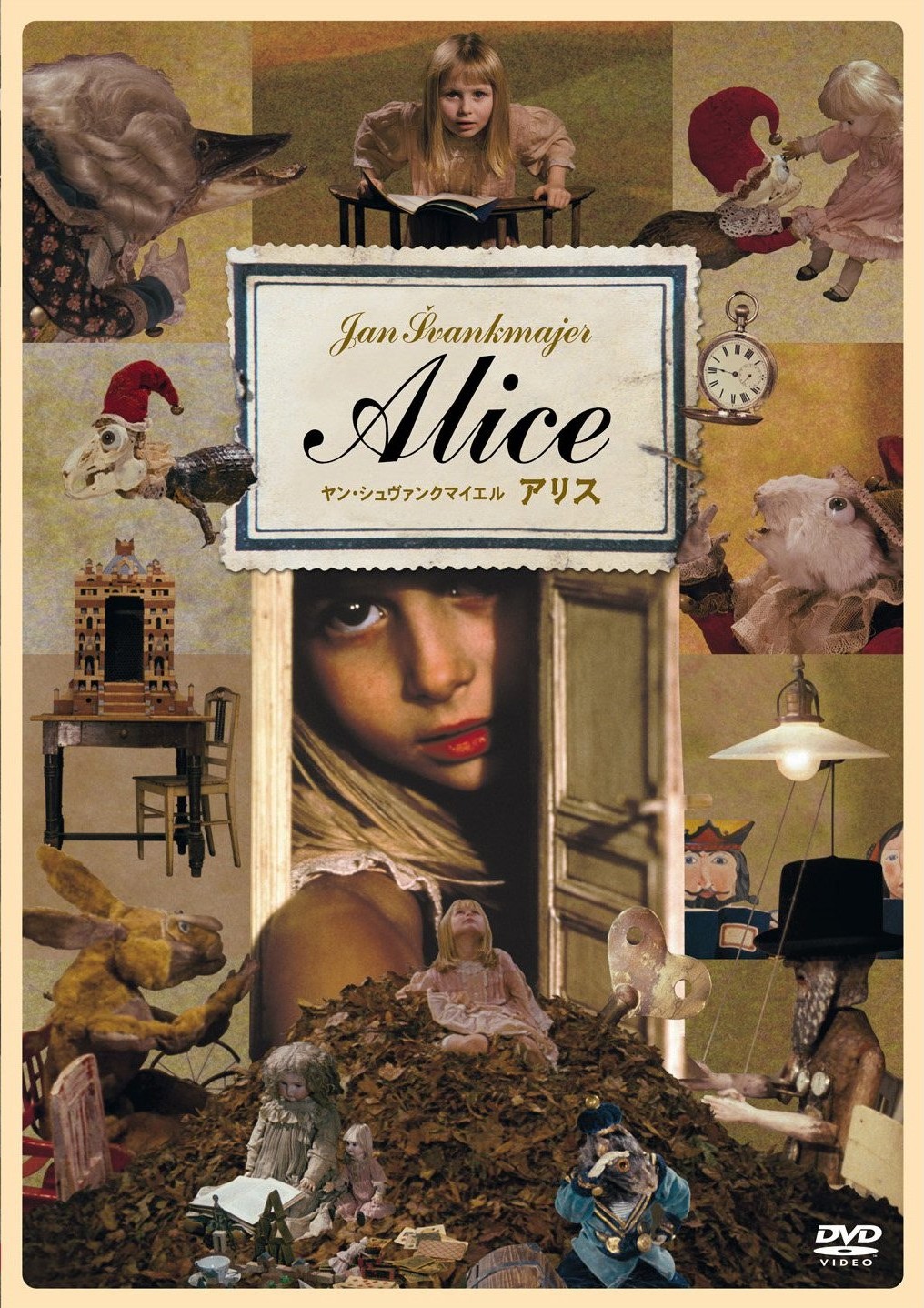
First up is "Alice". Based on Lewis Carroll's famous fairy tale, the film is full throttle in the Švankmajer vein. Although Alice's face is "cute," she does not smile and looks somewhat grumpy, and the rabbit is also somewhat scary. I don't know if this is Alice's room or not, but there are many creepy specimens in the first room, and it looks kind of dirty. This is a common impression in his works.
Cute but Buddha-faced Alice from beginning to end.
A model rabbit from Alice's room. It is not cute. It is rather creepy.
Otesanek" (2000)
You may be thinking, "That sounds like a tongue-biting name," but it is based on a folk tale that is well-known, or at least common knowledge, in the Czech Republic.
What is the story?
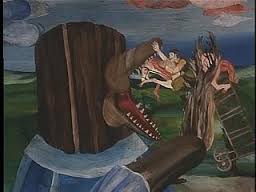
The Fairy Tale of "Otesanek"
The story goes as follows: "A childless couple named a doll made from a tree root "Otesanek" and substituted it for their child. However, "Otesanek" has an insatiable appetite, and even after eating a pot of rice and a loaf of bread, he still cannot get enough, so he eats his parents and everyone he meets on the road. He eats his way through his parents and everyone he meets on the street, until he is ripped open with a farmer's spit. So, is the movie a retelling of the fairy tale?
One who wants a baby and a pair
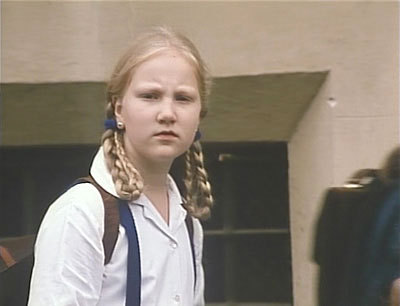
Arzewiecka. She is the star of the show...?
The setting is the present day. Mr. and Mrs. Horak are infertile and unable to have children, and Arzewiecka is the daughter of their apartment neighbor. She too wants a sibling, but remains an only child. She throws away the chocolate given to her by Mrs. Holák, saying it is bad luck, reads books that are too young for a child of 10 or so, and does a lot of other things.
The least I could do...
He buys a villa on his neighbor's recommendation, digs out a tree stump in the shape of a human being, and jokingly gives it to his wife, hoping it will at least give her some comfort. His wife, however, is very fond of the stump, as if she wanted to have a child, and makes a cushion to put in her belly to "pretend" she is pregnant... The others congratulate her, thinking she is really having a child, but the little girl is a bit skeptical. Is it the acuteness of a child, or is it the sympathy of those who also have the desire to have a baby? Then comes the last month of pregnancy. The "born" stump is named "Otique" and is raised in secrecy. Just as in the fairy tale, he has an abnormal appetite....
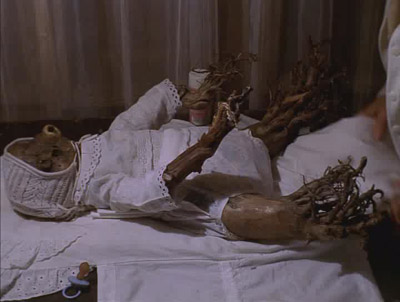
Before "birth."
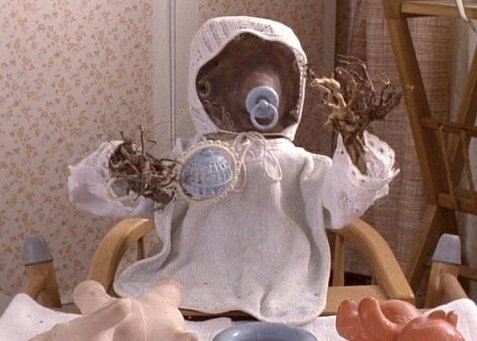
Ba-boo.
It is the type of work that is creepy, unpleasant, and yet habit-forming. Maybe that's the way it is with works that have a lesson or "power" of their own. Parents who justify everything their "child" does. It's normal, isn't it? And watching this film, I also thought to myself, "Having a child is something you have to be prepared for. It's easy to be insensitive and say, "Mr. and Mrs. Horak, you should have just put up with cats and dolls." But the couple couldn't do that. The film depicts various kinds of mental absurdities that human beings have (such as feeling that there are nails in the wife's cooking, or that even the fish in the fish pond look like babies), sometimes fantastically, and sometimes as they are in reality. The neighbor girl looks more "parent-like". She trains her children well, and O'Tique listens to her. Is it the immature girl's self-satisfaction, friendship, or brotherly love that is there? Should Mr. and Mrs. Horak have gotten rid of O'Tique... I hope young people will watch and discuss this film, which reminds us of the "greed" of wanting what we do not have.
