
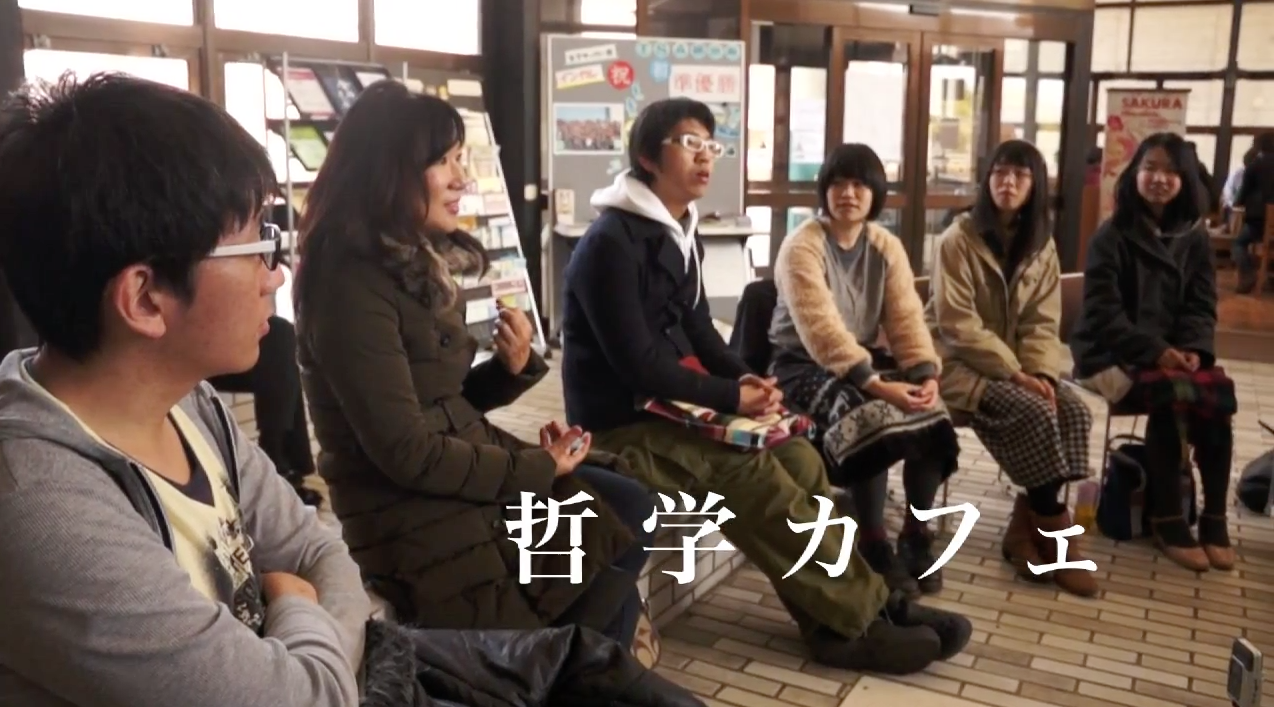
Philosophy" was featured in the popular NHK program "Asa Ichi.
Many people, upon hearing the word "philosophy," probably think, "Oh, I can't do that, I don't understand it," and close their doors to it.
But wait a minute. It seems that the current trend is to think that philosophy is actually something fun.
The "Illustrated Book of Philosophical Terms" was a big hit, selling over 100,000 copies!

The "Philosophy Glossary" (written by Masato Tanaka and edited/supervised by Tetsuya Saito), currently on sale from "President Inc.", has become a big hit, selling more than 100,000 copies, which is unusual for a book of this type.
In other words, interest in philosophy is growing to that extent.
About This Book
The following is a quote from a website that gave the following assessment of the contents of this book.
The strength of this book lies in its structure and editing. Usually, even if a book is called an "introductory book," the topics covered are often unbalanced, or the amount of text is so large that it is surprisingly difficult to get through. In this respect, this book is very innovative in the following respects.
(1) It dares to abandon detailed explanations, and although they may seem a bit rough to specialists, the book makes the point that "this is what it all comes down to.
(2) Emphasis is placed on comprehensiveness and a time axis, so that even beginners can easily understand the overall picture (however, this time the focus is on Western philosophy and does not touch on Eastern philosophy).
(3) The language is plain.
(4) Bold use of charts and illustrations to make the book accessible to the comics generation.
All of these are important elements of this book, and their novelty is evident when one considers that most philosophy books in the world are the opposite of these.
I was particularly impressed by 1). The difficulty of philosophy lies in its high level of abstraction and depth. To a certain extent, the high level of abstraction can be made more comprehensible to the reader by using concrete examples, but the depth of depth is a difficult problem. Many conscientious authors try to explain their philosophy seriously and end up making their books difficult to read for the general public.
This book, however, gracefully abandons such depth and strips away words to the point where one wonders, "Is it really necessary to go that far? For example, the book is very much like Francis Bacon's "The Knowledge of Francis Bacon". For example, regarding Francis Bacon's "Knowledge is power," the author says, "I believed that the improvement of life comes not only from doctrines, but also from understanding the mechanisms of nature (conquest of nature) through experience and experimentation. There is also a capture regarding the contrast with the Schola philosophy, which is almost identical in terms of the amount of text.
Source: globis.jp
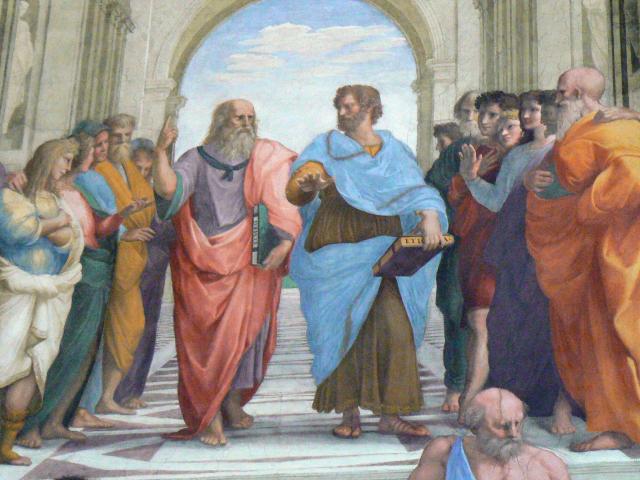
A word from the creator's side
On the other hand, there was a postcard-like comment from the creator.
It all started last April. I was approached by Ai Nakajima, whom I had known for a short time at President, about editing this book.
I went to a meeting with her and was amazed at the amount of work that had already been done. I was surprised to find that a huge number of illustrations and explanatory text had already been almost completed, and I was even more astonished by the wonderful illustrations.
I fell in love at first sight and decided that I wanted to be a part of this project no matter what, and after many meetings with Mr. Tanaka to refine the contents, we finally decided to publish the book.
I don't think there is probably any introductory philosophy book in the world that is so richly illustrated.
Of course, we are well aware that there are critics who say, "How can you understand philosophy with illustrations?" But we wanted to make this book so friendly that people who do not read much, let alone philosophy, would happen to pick it up at a bookstore, flip through it, and buy it, thinking, "This looks interesting.
Source: homepage2.nifty.com
Some of the contents of this book
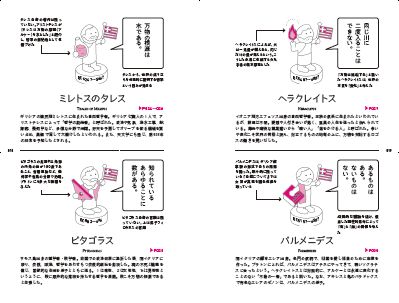
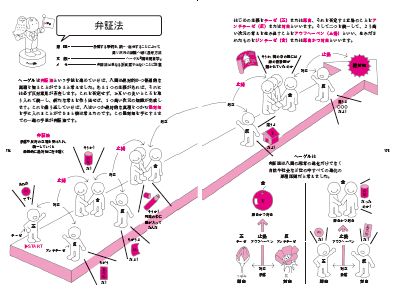
Philosophy Café for Mothers Raising Children
Now, as I wrote in the beginning, one day "Asaichi" had philosophy as its theme, and there was a report on a "philosophy café" where young mothers with their babies gathered.
These new mothers are raising children for the first time and probably face a series of "unknowns" and "perplexities" every day.
At the Philosophy Café, they had unexpected "realizations" as they talked with others who were in similar situations.
For example, they had been thinking that they were "bad mothers" who got extremely angry at their children who would not listen to them, but once they realized, "Doesn't that mean that I love and worry about my children so much that I am like that? This is a very familiar story.
Circle of Philosophy Cafes Spreading Nationwide
The "Asaichi" program also introduced the increasing number of places across Japan where multiple people gather to discuss a single theme.
In such places, there is a facilitator, a kind of "moderator.
However, that person's role is never to "decide something or organize the conversation toward some single goal.
In principle, anyone is free to talk about anything on the spot.
The rule is that when one person is speaking, the others must listen attentively to the end of what is being said, and never interrupt in the middle. That is all.
The facilitator plays the role of a steering person to make sure that everyone's talk does not get bogged down within the scope of these rules.
About the Philosophy Cafe
The following is a clear explanation of the Philosophy Café.
The Philosophy Café is a place where "dialogue" is attempted.
Even if we are all in the same environment or experiencing the same events, we all think and feel differently.
At the BunDoku Philosophy Café, we want to carefully repeat the simple act of talking, listening, and thinking about a single theme among the people gathered that day.
We will briefly express what we think about a certain theme.
Listen to what others have to say and ask questions if you don't understand something.
Through this repeated exchange, each person's thoughts will gradually deepen and the awareness of the various issues involved in the theme will be shared.
This is not a debate, so there is no preference in what is said.
There is no final answer.
The issues shared on the spot will continue to "moot" within each individual even after the Philosophy Café is over. But that is why we would be happy if you could take that "mumbo jumbo" home with you and reflect on it in your own mind, and come to some new awareness.
Source: bundoku.jimdo.com
No question of superiority or inferiority in speaking style or content
It is often said that Japanese people are not good at debating compared to Westerners.
Is it my backwardness that makes me feel as if being bad at debating is a "bad thing"?
But at the Philosophy Café, we don't worry about whether you are a good or bad speaker.
I appreciate this very much. I am not a very good public speaker myself, so it is nice to be able to say what I think in my own words and not have anyone criticize me for it.
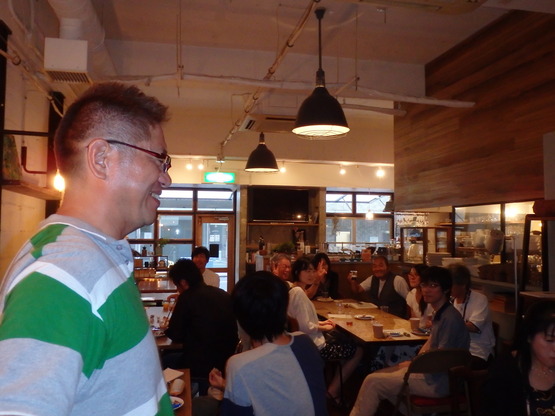
This is a view of a gathering at the Philosophy Cafe Shizoka in Shizuoka in the summer of 2015.
You can see that it is quite crowded.
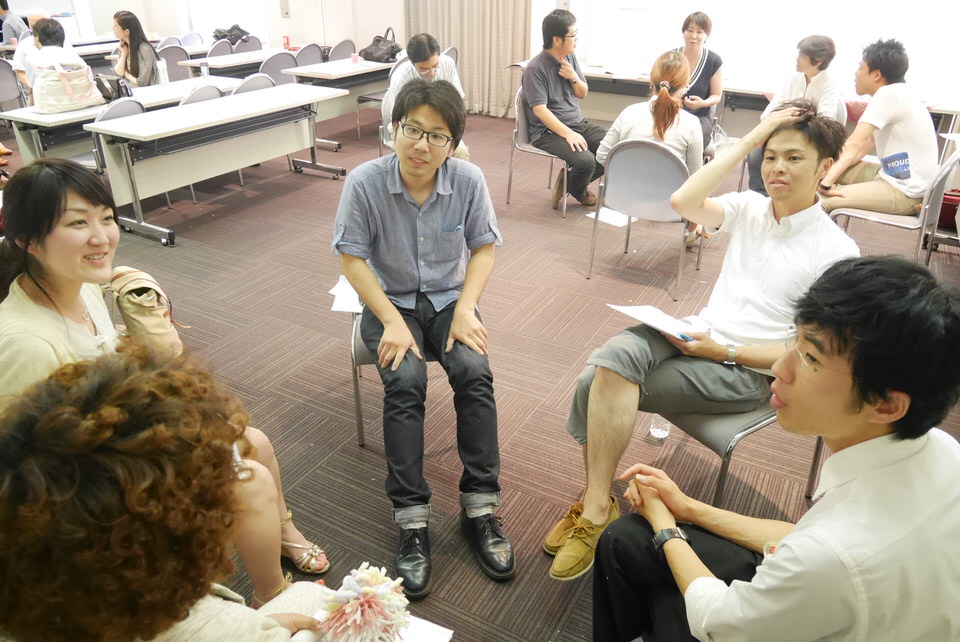
This is a shot from an introductory course for people who want to become facilitators at the Children's Philosophy Dialogue.
It was held in Tokyo in the summer of 2014.
The talk theme at that time was chosen by each group from the three topics of "Life," "Work," and "Happiness.
Many participants said that they could understand how difficult it is to actually facilitate.
summary

Contents
- The "Illustrated Book of Philosophical Terms" was a big hit, selling over 100,000 copies!
- About This Book
- A word from the creator's side
- Some of the contents of this book
- Philosophy Café for Mothers Raising Children
- Circle of Philosophy Cafes Spreading Nationwide
- About the Philosophy Cafe
- No question of superiority or inferiority in speaking style or content
- summary