
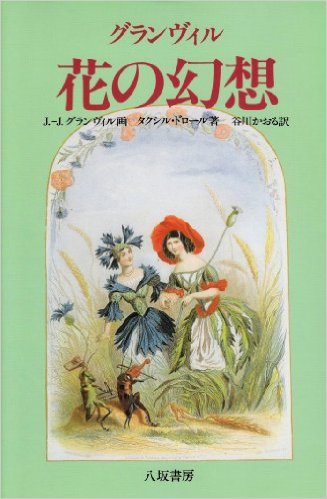
Granville's masculine drawings, such as anthropomorphic animals, are impressive. His posthumously published work of anthropomorphic flowers, "Fantasies of Flowers," was a delicate, feminine, and lyrical series of illustrations that was a complete change from his previous works. Some of the illustrations of this beautiful work are introduced here, along with a synopsis of the stories that the flowers tell.
About J.J. Granville
Born in Nancy, southeastern France. His pen name, "Granville," was named after his grandparents, who were actors. At the age of 21, he went to Paris and published a collection of lithographs entitled "Les Tribulations de la petite proprieté. He later established his reputation with "Les Métamorphoses du jour" (1828-1829), a series of lithographs in which the body is a human figure and the neck a human figure. This was a collection of caricatures in which the bodies were human and the heads were animals. In later years, his style shifted from caricatures of the establishment to a more fantastical style, and he left behind a collection of anthropomorphic flowers, "Fleurs animations," and a more fantastical "Other Worlds," among other works.
Source: ja.wikipedia.org
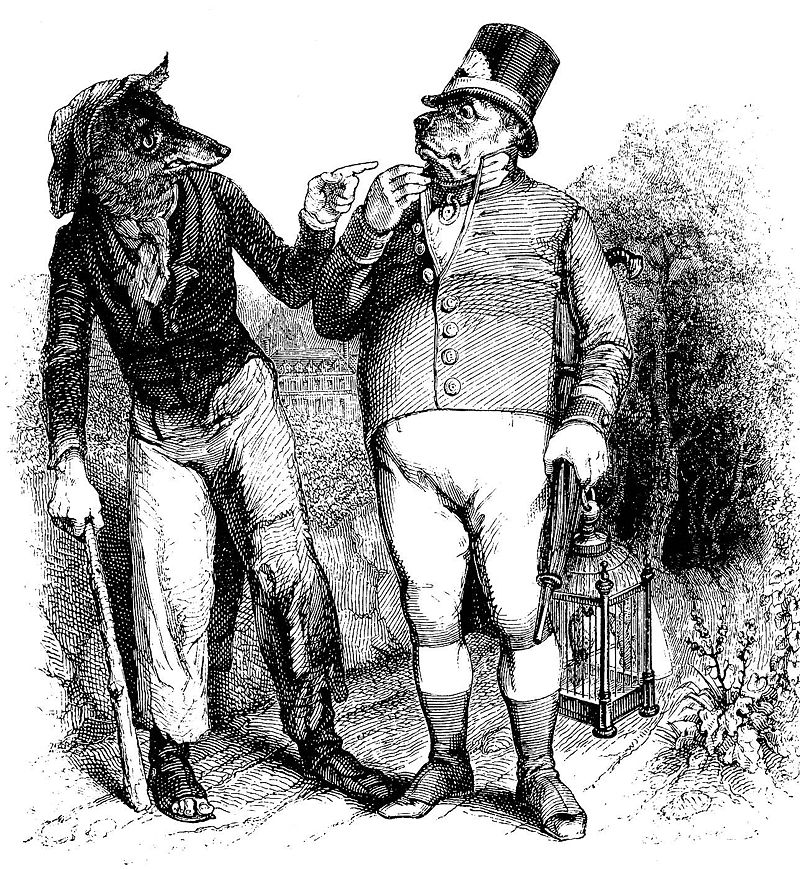
The artist is known for his detailed and delicate drawings and sharp satire. He is known primarily for his anthropomorphic animal drawings, such as the one above.
violet (any flower of genus Viola, esp. the Fuji dawn, Viola mandshurica)
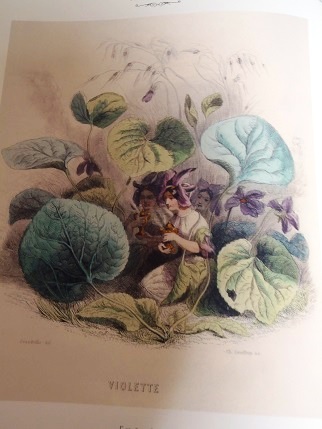
Marcelle wished to "become a little flower." The flower fairies, struck by her innocence, transformed her into a violet.
But on a whim, Marcel reverted to human form and became a man of luxury. Soon, however, Marcelle grows tired of the noise of her luxurious life and longs to return to her flower form.
With only one thing in her mind, "repentance," she was able to return to being a violet again...
Chronicle of Roses
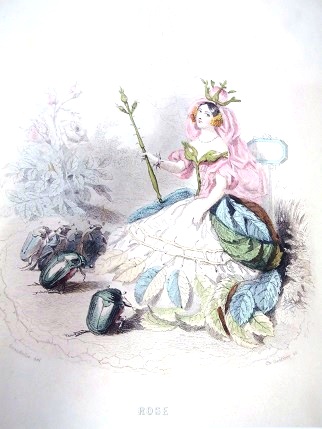
Since ancient Roman times, the rose has reigned supreme as a flower and as a woman.
The flower fairy, who would not tolerate her vanity, punishes her by telling her to become an old woman and die.
The flower fairy would not allow the rose to die of old age until the funeral bells sounded...
Pinus densiflora and calendula
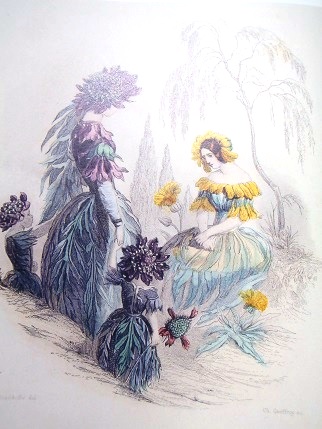
The calendula is always lamenting its own situation.
The widow Pine Siskin, with her two young children in tow, said to her, "It's not good to be a misanthrope.
It is not good to be misanthropic. If you want to be happy, give your heart to one lover.
Margaret - The Little Prophetess of the Pasture
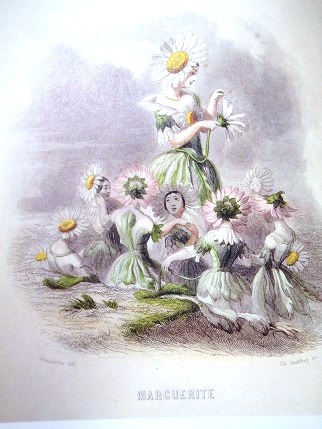
One night at dawn, the maiden Anna plucked a marguerite flower and asked, "Does he love me?
Does he love me?"
Margaret's flower replies, "Do you love me?
"Do you love me?" "Do you love me? They want to know the answer to both questions. And when they have plucked them all, they will cast you away.
Tsubaki's Regret
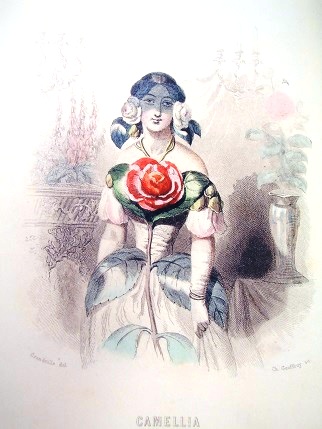
A beautiful looking but scentless camellia. When she was born as a human being, she became a woman who cruelly did not know love. A flower without fragrance can live, but how can a woman without love live?
A camellia that drove her lover to suicide. She says that after she returned to her original flower form and continued to think of her lost lover, a single camellia tree suddenly grew and blossomed at his grave.
forget-me-not (esp. the water forget-me-not, Myosotis scorpioides)
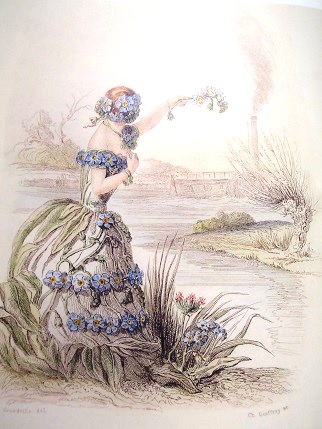
A woman's message to her beloved.
If another love approaches you, this flower will softly whisper. Don't forget me! And..."
multiflora rose (Rosa multiflora)
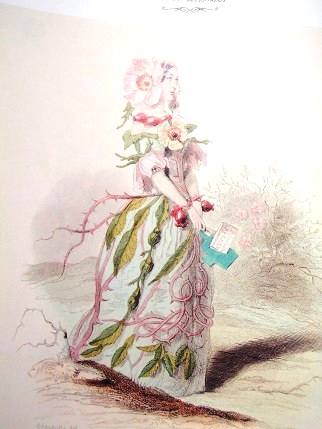
Wild rose who came to the world of people, her wish was granted and she became a female writer.

Contents
- About J.J. Granville
- violet (any flower of genus Viola, esp. the Fuji dawn, Viola mandshurica)
- Chronicle of Roses
- Pinus densiflora and calendula
- Margaret - The Little Prophetess of the Pasture
- Tsubaki's Regret
- forget-me-not (esp. the water forget-me-not, Myosotis scorpioides)
- multiflora rose (Rosa multiflora)
- References