
Long ago, when food imports were still not as active in Japan and food was not as plentiful as it is today. Even in such a situation, people used to make rice with water plants, insects, nuts, and pseudo-sugar, and devised various ways to prepare food. In this issue, we introduce an excerpt from "Historical Map of Food in Japan" (Seijin Shinsho, written by Seiji Yoshikawa and Yasuyoshi Ohori), which describes such good old Japanese food habits. (Titles omitted)
Echigo hishinomis (Niigata Prefecture)
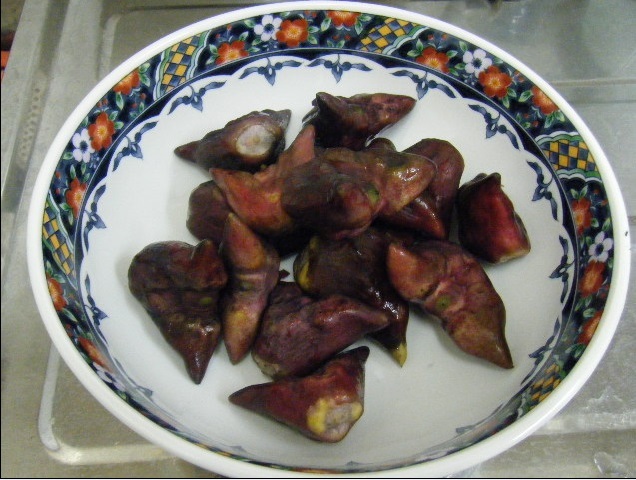
When even rice-producing areas were paying taxes, waterweeds were one of the very appreciated sources of nutrition. Hishino nuts, a type of waterweed, were boiled in salt and served at the family table. The atmosphere is similar to that of edamame, a summer delicacy today.
Tosa no kashikiri (Kochi Prefecture)
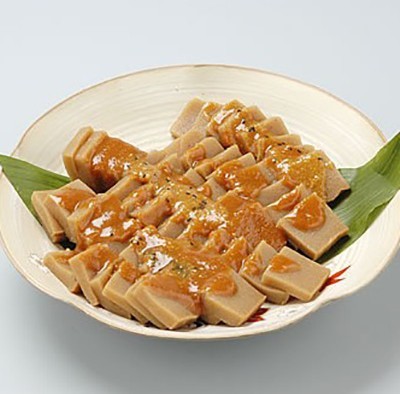
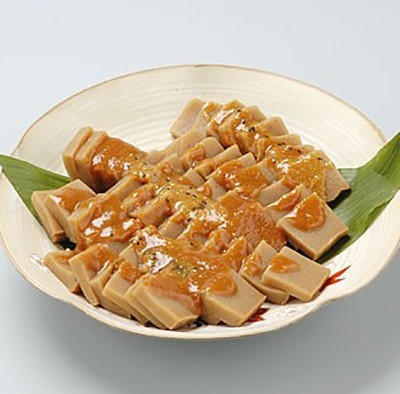
Acorns are ground into a powder, poured into a mold, and hardened into a tofu-like ingredient. The sauce of miso, garlic, and yuzu (a type of citrus fruit) is poured over the tofu, which is still loved by the people of Kochi as a snack for sake.
Ena no hebo-meshi (Gifu Prefecture)
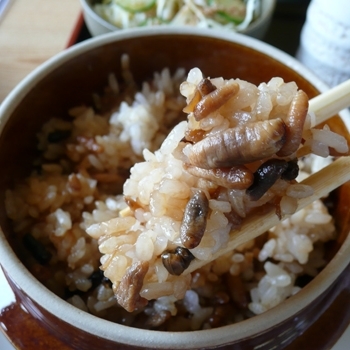
It was also a valuable source of protein in this mountainous area where fish were rarely available.
Hebo" refers to the black hornet. The larvae of these wasps are picked up one by one from the nest with tweezers, boiled in soy sauce, sugar, or sake, and poured over freshly cooked rice to make so-called "hebo-meshi" (hebo rice).
Wasanbon Sugar from Awa and Sanuki (Kagawa Prefecture)
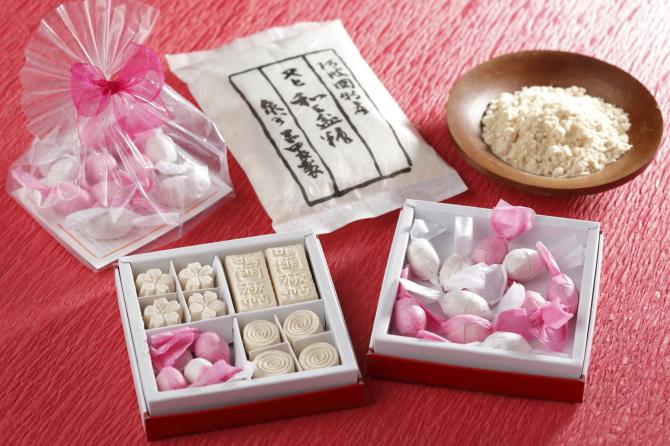
It is very difficult to produce sugar in Japan. In the early Edo period (1603-1867), the default was to use expensive imported sugar from the Nagasaki domain for confectioneries presented to the shogun in Edo.
Against this backdrop, the 8th Shogun Yoshimune, known for his frugality and financial restructuring, devised the idea of growing sugarcane in the warmer regions of Awa and Sanuki, and was Sanbon sugar was born. Today, it serves as a specialty confectionery for tourism.
summary
Even if the land is poor, sources of nourishment can be found in familiar places. It was deeply moving to think that what now seems to grow vaguely in the middle of a stroll was once a food source.
References
Historical Map of Japan and Food (Seikatsujin Shinsho) Seiji Yoshikawa, Yasuyoshi Ohori Books - Mail order Amazon.co.jp
www.amazon.co.jp
Amazon.co.jp offers a wide selection of Amazon.co.jp products, including a wide variety of Amazon.co.jp products.
