
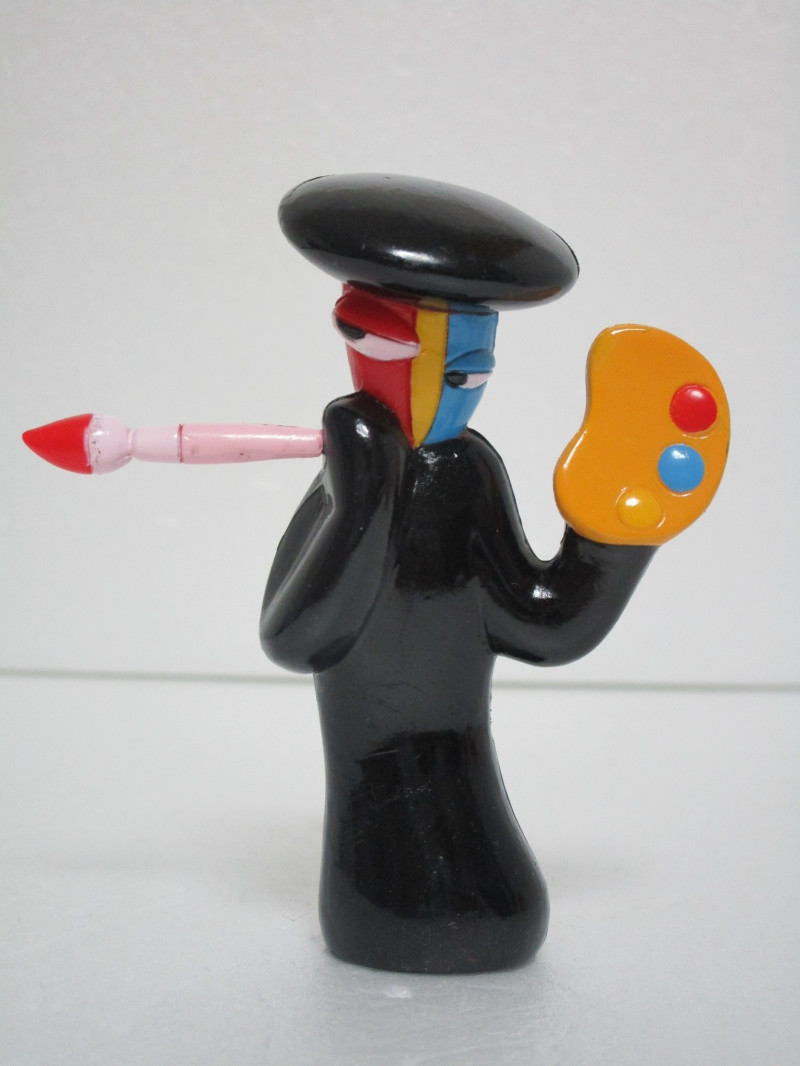
Every once in a while you see or hear the word "surreal". It was only in the late 1990s that the word became popular, but in the early 1990s, there was a character called "Mr. Surreal. In the early 90s, there was a character called "Mr. Surreal. He was one of the main characters in the early morning children's TV program "Ugo-Ugo-Ruga," and although his impact was traumatic, he was the most popular character.
What's "Ugo-Ugo-Ruga"?
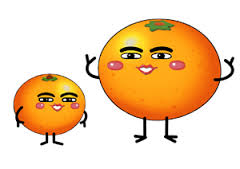
One of the most popular characters, Mikan Seijin.
October 1992. It began suddenly, at the very early hour of 6:10 in the morning. It started very early, at 6:10 in the morning. Although it was supposed to be a children's program, the content was radical and avant-garde. It used a lot of computer graphics, which was rare at the time, and randomly switched between a mini-corner and the main section. The program is so rushed that it introduces a masterpiece of literature in just a few minutes x 5 days. Some of the material was "too early for children," and some of it was almost traumatic. Despite this, the show exploded in popularity and became a social phenomenon. In the main corner, child actors Ugo-Ugo-kun and Ruga-chan would summon a different CG character for each day of the week to talk. And Shur-kun was one of them.
What kind of character?
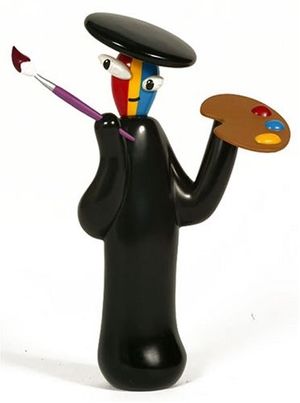
They say he is a genius painter. Is he human or what....
I am not sure if they are cute, cool, or creepy. Other characters are easy to recognize, such as "Tomato-chan" and "Robot-kun," but only one has an avant-garde art style and a name with words that were unfamiliar to children at the time. The show itself was quite good, but his personality was also strong, and he captured the hearts of the fans. He is a rare character who has captured the hearts of not only children but also women. During the summer vacation special, we received illustrations by fax, most of which depicted Shur-kun. This fact shows how popular he is. The main character lurked in a space that looked like a child's room made of computer graphics, and was summoned by a summoning spell to talk about riddles and problems. Shur-kun was inside the painting. When summoned, the entire canvas shakes and pops out.
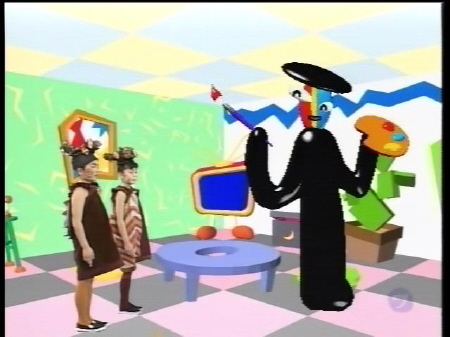
Hanging on the wall on the left side of the image is the "painting" in which Mr. Schur appears. Not only does he just stand there, but his expression changes, he turns his brush and palette, and his hat jumps up in surprise.
intelligence
According to the official website, he is a "self-proclaimed Frenchman" and speaks fluent French. The first thing he did when he came out was to give an "Oh French Lecture," and after that he started talking. In his case, he had a two-choice quiz called "Kimetekimete. According to him, it was a "play on words," but it was a very sophisticated one involving current events and satire. He would weave in a good pun as shown below.
Which is more difficult to accept, the Haneda faction's flag-raising or the hatahata's karaage?
Source: ja.wikipedia.org
He's too good-looking for his face.
Sometimes this happens.
She has a beautiful voice with such a face. He has a very good-looking voice. The voice was done by a staff member, not a professional voice actor, but he was aiming to be an actor. He also played other characters. Incidentally, the most popular theory is that he left Fuji Television after the show ended and is now a music producer.
The French singer, Jordi, appeared in this episode.
Adult in many ways
During summer vacations and other times when children from the general public would attend, he was quite gentle (although it could be taken as a throwaway), saying "Jutame" to the fan children and giving them fan service. He was also very strict with Ugo-Ugo-kun, but it was probably out of love. He apologized to Ugogo for "picking on him a little too much" and told him, "It's good that you don't get discouraged. He was a mature man. However, there were many times when his mature side went out of control and he would make a lot of jokes.
The last episode is coming up soon, and all this stuff keeps popping into my head, so I'm going to do it! The DVD includes this episode.
In 1993, "Ugo-Ugo-Ruga No. 2" was broadcast in the prime time slot. In 1993, "Ugo-Ugo-Ruga No. 2" was aired during a prime-time slot, and there was a corner where children were invited to draw pictures on a computer. One time, the theme was "things I like. Ruga-chan was asked, "What do you think I would draw? and the answer was "a woman. The answer was "a woman," to which she responded with a "ding dong.
In 1993, a brother-sister program called "Ugo-Ugo-Ruga No. 2" began airing. In that program, he was in charge of a corner in which ordinary children and celebrities (adults) were invited to draw pictures on a personal computer. During one of these sessions, Mr. Maki Nomiya of Pizzicato Five attacked me, saying, "If Shul-kun were single, I would like to go out with you. Of course!" he replied happily, but the words that should not have come out of Ruga-chan's mouth were.... What about your 21-year-old piano teacher?" Don't say anything unnecessary..." I wonder what happened to him. Incidentally, I performed with this Mr. Nomiya on a CD called "Pizzicato Five's Ugo-Ugo-Ruga. At the end of the song, he asks, "Are you an adult?" and ended in a meaningful way, as if he was asking her out on a date. The voice actress in charge of the song later married Mr. Nomiya.
In the last episode, he said that he could love both men and women, and that he would have loved to have gone out with Ugo-Ugo-kun (as a lover) if only he could have. He was probably joking, but the schedule for the show was extremely demanding, and in the final stages of the show, there were times when almost nothing was written in the script. In other words, the "middle person" was almost always the real person. In fact, it is unclear if the person in the middle is someone who can love both or if it is Shur-kun's character.
Character Transition
In the early days of the program, he was an onee character with an onee tone, perhaps from the symbol that many artist characters are onee. When he left the show, he asked if he was a man or a woman, or recited poetry. She often said, "Love is important.
After that, she began to speak in honorifics and changed her tone to more masculine rather than onee or onee-ae. He was also often seen conversing in a friendly manner with a sassive tone.
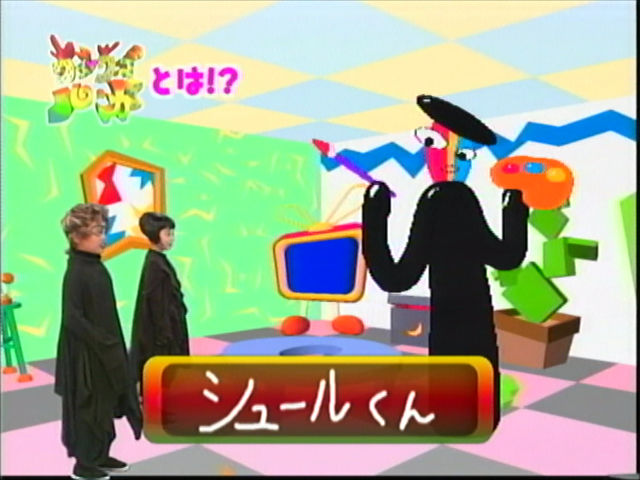
Source: blog.livedoor.jp
This is the memorable first appearance of the actress, who was a "onee" at the time. The CG is rough because, according to her, she was "not accustomed to Japan.
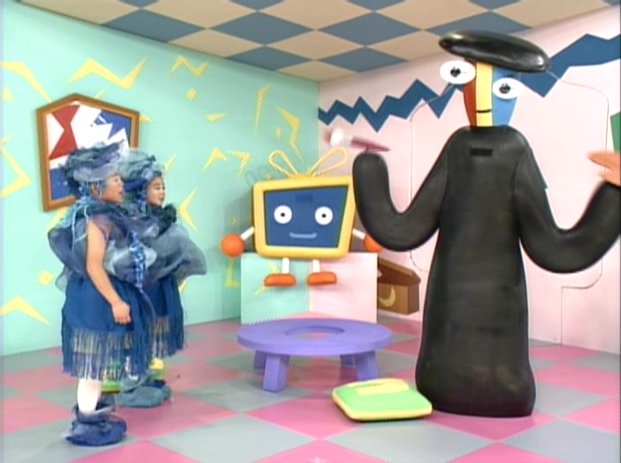
Source: twstat.org
Live action times without any CG. He performed a brilliant dance, showed the back of his head, and said, "Let's play with your body today. First of all, he called it "preparatory exercises" and ran.
It was supposed to be "surreal" in nature, right?
The character's appearance was reminiscent of surrealism, and perhaps the character was conscious of "excessive reality" in the original sense of the word. Perhaps that is why the content of "Kimetekimete" was so radical.... However, I am sure that "surreal" was one of the factors that created the image of "surreal" as meaningless and difficult to understand. The word "surreal" has started to walk by itself and is still used today. Like Ugo-Ugo-kun and Ruga-chan, who have long since come of age. At any rate, his character and appearance are deeply etched in the minds of fans of the time. He is a very strong character in many ways, both in his character and in the show.
