
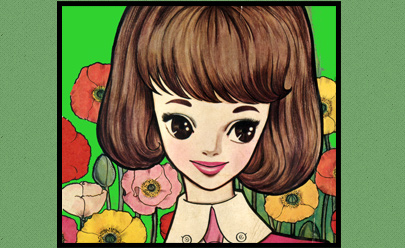
Kawaii" is now an important part of Cool Japan. It is a strange feeling whenever I see people from other countries saying "kawaii" in the media, as if it were a matter of course, but an exhibition of works by Rene Naito, the originator of kawaii culture, will be held.
We would like to explore the world of Rene Naito, with some surprise that such a body of work has already existed for more than 50 years.
Rene Naito Biography
René Naito (November 20, 1932 - October 24, 2007) was an illustrator and designer from Okazaki, Aichi Prefecture. His real name was Isao Naito.
He studied under Junichi Nakahara and published illustrations and doll works in girls' magazines such as "Junior Soreyu" from the mid-1950s. He gained popularity for his fashionable illustrations of girls with childlike faces and worked extensively on illustrations for magazine covers and supplements, as well as designs for dolls and sundries.
He is also known for drawing the cover of the male homosexual magazine "Rose Tribe" for many years.
In 2012, he established Rune Inc. as a master licensor. Ltd. and began its operations as a new licensor in Harajuku, the mecca of kawaii. He regularly holds exhibitions of his original drawings and other events.
Source: ja.wikipedia.org
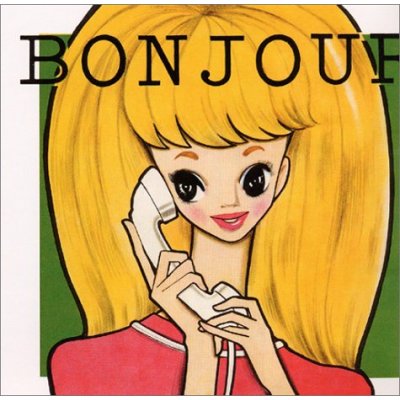
Overlap with Kyary Pamyu Pamyu's world view
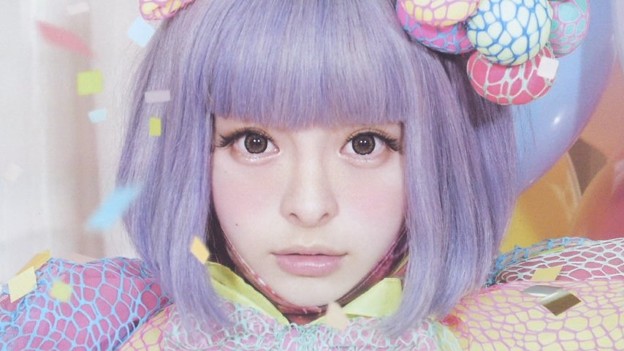
This is Kyary Pamyu Pamyu, as you know.
I think we can all agree that she is a representative of Japan's "kawaii" culture.
The word "kawaii" has already acquired a global status, and people in other countries now use the word "kawaii" to describe a variety of things without hesitation.
Kawaii" has become a word that has its own meaning without the need for translation.
And this Kyary's image appears to overlap with the girls drawn by Rene Naito.
Exhibition of works by Rene Naito, the originator of "Kawaii" culture
An exhibition by Rene Naito, creator and "founder of kawaii culture," will be held at Isetan Shinjuku from October 21 (Wed) to October 26 (Mon), 2015.
Illustrator, doll maker, designer, essayist... He got his big break in the 1950s and 1960s when he was in charge of cover art and illustrations for the popular fashion magazine "Junior Soreiyu," and he has been designing and characterizing everything from animals to vegetables, fruits, flowers, and fashion interiors, He has produced more than 10,000 works of art, including designs of animals, vegetables, fruits, flowers, fancy goods, and other "kawaii buds" that had been overlooked until then.
Source: www.fashion-press.net
Roots of Kawaii - "Rene Naito" - Past, Present and Future|Isetan Shinjuku
www.isetanguide.com
Wednesday, October 21 - Tuesday, October 27, 2010 (Exhibition ends at 6:00 p.m. on Monday, October 26, 2010) Many Rene character items are also on display.
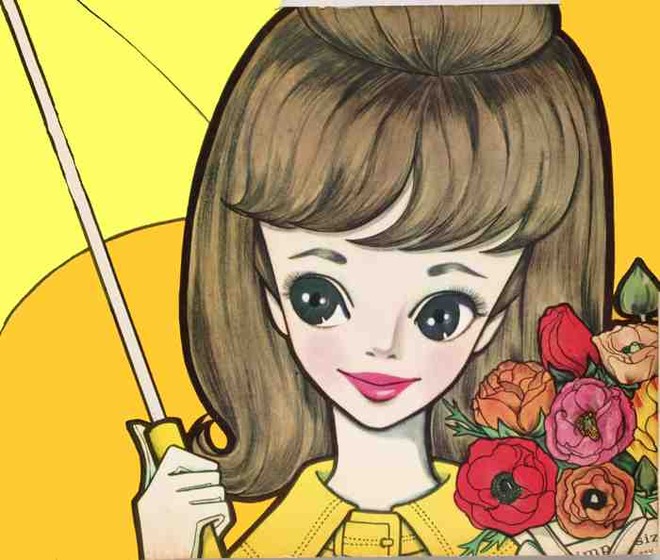
This is a picture of so-called "Renegal" girls with brown hair, blonde hair, and big eyes.
Come to think of it, I used to like to draw pictures of girls like this when I was a child.
Perhaps I was influenced by them without realizing it.
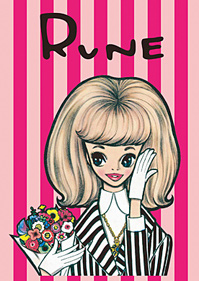
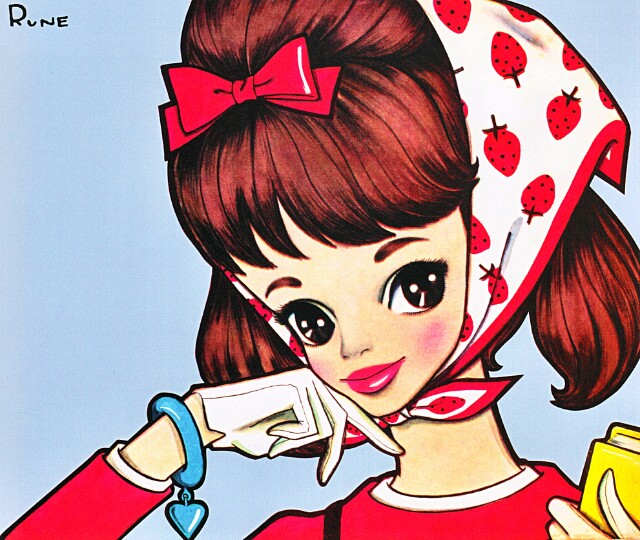
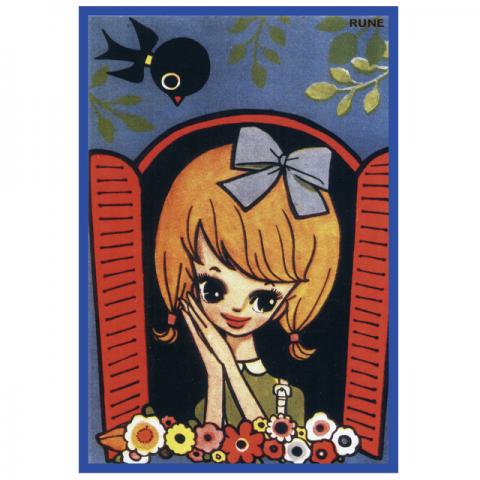
New girls in "Junior Soreiyu
The illustrations of girls that Rene Naito began to draw for Junior Soreyu, a magazine that was extremely popular among girls at the time, were completely different from her previous illustrations of girls. In contrast to the "melancholy," "downcast," and meek girls of the past, the girls Renée drew had "deformed, large eyes," "small faces," and "long, long proportions of a hyo-lo face. In contrast, Renée painted "cheerful" and "bright" girls with "deformed large eyes" and "small faces with long, long proportions. She is said to be the first artist to abandon the sentimental lyricism of girl paintings.
Source: www.naitou-rune.jp
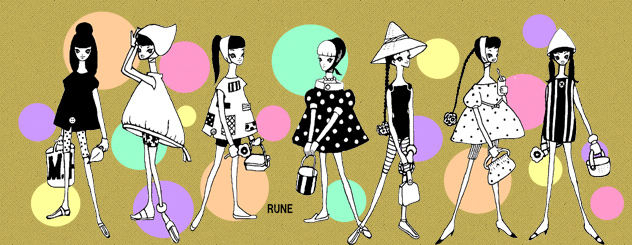
Here is a picture of more fashionable girls called Mode Girls.
Here is an image of the girls that appear in today's fashion magazines.
In fact, it is also driving a boom in fashion and interior design.
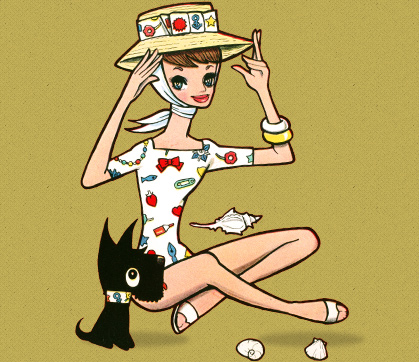
Renée was not only a completely new illustrator, but also pioneered "firsts" in a variety of fields. In fashion, he introduced Coco Chanel and Yves Saint Laurent before they were even noticed in Japan by popularizing the use of can-can hats, short white gloves, and large buttons. He is also credited with sparking a huge boom in Japan of bisque dolls, antique dolls that were popular among European ladies in the 19th century. In the field of interior design, he created the "white furniture/white room" craze by painting discarded medical cupboards white and turning them into display cabinets.
Source: www.naitou-rune.jp
Mr. René was the first to create "fancy goods."
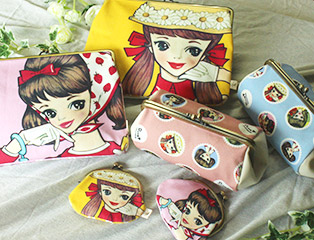
In 1961, the "Billiken Doll" from the American movie "Sadness" was made into a small mascot doll in a standing pose made of ceramic. The ceramic Billiken doll was made by a ceramic manufacturer and has now been commercialized. Other designs centering on strawberry patterns, such as fruits, animals, and flowers, were used as stencils, stationery, tableware, fashion items, and other products to adorn the lives of young girls of that time. Keiko Nakamura, curator of the Yayoi Art Museum, says, "I think it was Rene Naito who started drawing ribbons after the war, around the 1950s. Today, we see ribbon-patterned goods everywhere. The artist Rene Naito had a great impact on the world of girls' goods," she says.
Source: www.naitou-rune.jp
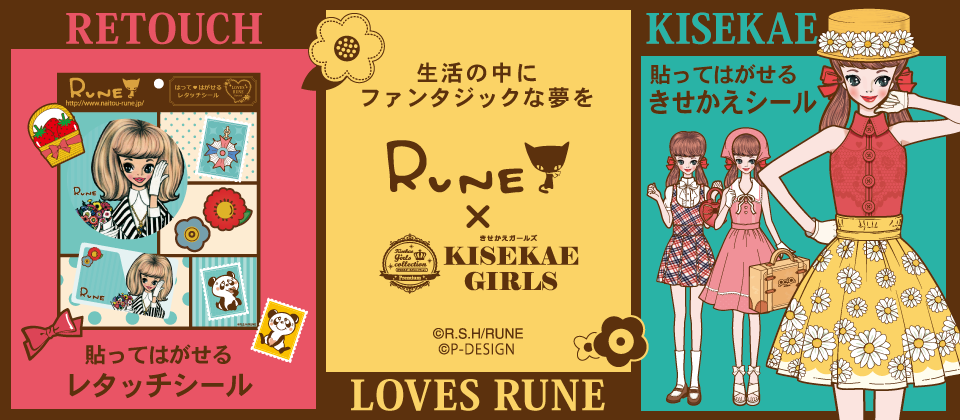
About "Rene Panda
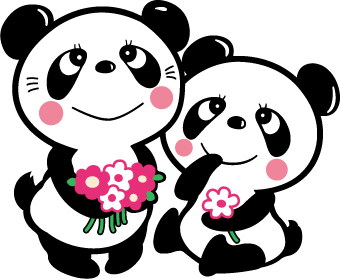
The panda character was created by Mr. Rene who saw a panda for the first time at a zoo in London in the early 1970s.
Today, there are many products featuring pandas, but Mr. Rene was the first artist in Japan to create a panda character.

Tags
Contents
- Rene Naito Biography
- Overlap with Kyary Pamyu Pamyu's world view
- Exhibition of works by Rene Naito, the originator of "Kawaii" culture
- New girls in "Junior Soreiyu
- In fact, it is also driving a boom in fashion and interior design.
- Mr. René was the first to create "fancy goods."
- About "Rene Panda
- Mature illustrations like this one
- Finally.