
Foreign literature and world history are closely related. The social conditions and political background of the time are connected to ideas, and literature is depicted with ideas at its center. This section traces American literature through the ages, as ideas shifted with independence at the center.
Seventeenth-century American literature was...
The literature of this period, the gateway to American literature, is dominated by works that meditate on themselves and on God.
Instead of "novels" as literature as we know it today, many of these works were diaries and autobiographies.
It can be said that this was a time when we can see that "religion" and "the Bible" had a great influence on people.
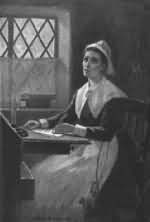
Anne Bradstreet was the first American poet and the first woman to have her books published.
In "To My Loving and Gentle Husband," she talks about her love for her husband, focusing on religious themes.
Eighteenth-century American literature was...
Both positions insist on each other's opinions, as the religion-centered ideas of the 17th century were weakened by the Enlightenment's emphasis on reason.
Around the time of the Revolutionary War in 1776, works asserting patriotism became a hot topic.
There was a trend to love the country of America and to reevaluate our consciousness toward and because of our independence.
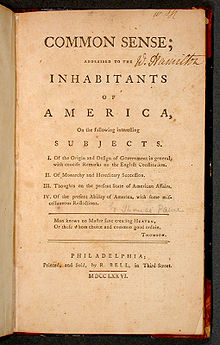
You may have seen Thomas Paine's "Common Sense" in your world history textbooks as a pamphlet that had a major impact on the American Revolution.
It is a short but succinct statement of "Why should America become independent?" and shows a strong awareness of the appeal to the values of the time.
Nineteenth-century American literature was...
In the 19th century, American literature evolved greatly and entered an era known as the "American Renaissance.
During this period, many well-known writers whose works are often heard of appeared, and they wrote masterpieces that will remain famous for generations to come.
This is the so-called "golden age" of American literature.
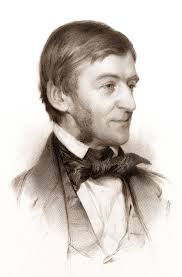
Ralph Waldo Emerson established the "Transcendental Club" and respected his instinctive spirit.
He believes in "trusting one's instincts, not reason," in looking at and talking about things.
In his compact 95-page booklet, "Nature," he argues that "in order to approach the secrets of nature, we must not dull the spirit that we have nurtured since childhood," which reveals the basis of his thought.
Salow is the writer who was strongly influenced by Emerson and was considered his first disciple.
In his work "Life in the Forest," Salou also describes how he interacts with nature, and in this work, he seems to express the viewpoint of "society as seen through nature," as well as "himself and nature.
In his work, he guides his relationship with nature in his own way, based on the ideas of his mentor, Emerson.
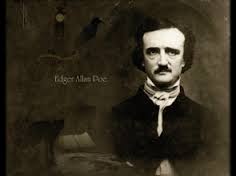
Edgar Allan Poe, a writer who depicted madness, blackness, and the grotesque, and who is known in Japan for his influence on Rampo Edogawa, also appeared in this period.
His influence on the entire world is immeasurable as he depicted a beautiful and unrealistic world while at the same time depicting black expressions.
Although best known for his mystery novels such as "The Murders in the Rue Morgue," Poe originally created poems and short sentences using rhythm and effect.
Among his works, "The Raven," which took three years to complete, is so meticulously constructed that it is hard to say, "What is good about it? Is it really a good work?" "Was Poe even serious about writing it?" Even "Watarigarasu" is under discussion.
