
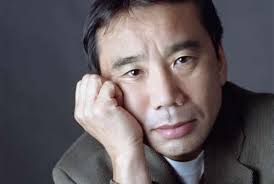
The Nobel Prize winners have been announced again this year, and while Haruki Murakami was mentioned as a possible winner of the Nobel Prize in Literature, he failed to win again this year. We would like to take another look at the appeal of Haruki Murakami's works and the American literature that is said to have influenced him.
What are the characteristics of Haruki Murakami?

Since his debut with "Listen to the Wind Sing," Murakami has released many works that have attracted much attention.
He is considered one of Japan's leading contemporary writers, and his full-length novel "1Q84" is said to have sold more than 3 million copies.
Norwegian Wood" has also been made into a movie, with the music provided by Jonny Greenwood.
On the other hand, the "anti-Murakami" movement is said to be very strong, and whether or not this has anything to do with it, the Akutagawa Prize and other national literary awards have failed to award Murakami any prizes, even though he has been nominated for them.
Furthermore, the Nobel Prize in Literature, a worldwide honor, is also considered a "candidate" every year, but several years have passed without a prize being awarded.
Haruki Murakami's Relationship with Foreign Literature
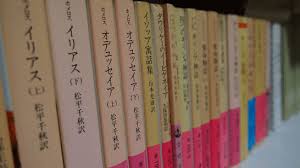
In his essay, Murakami defines "writing novels" as his "job" and "translating favorite foreign authors" as his "hobby.
In fact, the authors that Ms. Murakami has translated are numerous, as follows.
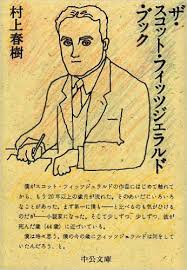
Scott Fitzgerald
One author that Mr. Murakami has a particularly strong feeling for is Scott Fitzgerald.
Many of his best-known works, including "My Lost City" and "The Great Gatsby," have been translated by Mr. Murakami.
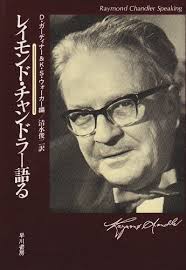
Raymond Chandler
Mr. Murakami has translated several of his works, including "The Great Sleep," "Goodbye, My Lovely Woman," and "The High Window," which were written during the economic difficulties caused by the Depression.

Truman Capote.
Breakfast at Tiffany's," which was also a worldwide hit as a movie film, was re-released in Japan in 2008 in a new translation by Haruki Murakami.
Haruki Murakami also influenced? The "Lost Generation" of American Literature

Scott Fitzgerald, a writer whom Murakami particularly admires, is often named as a representative of the Lost Generation of American literature.
The Lost Generation is characterized by its search for a new way of life, fed up with the materialistic and secular values of post-World War I America.
In Japan, there is also a movement called the "Lost Generation" or "Los Generation," which refers to a certain generation.
The definition of the Lost Generation in Japan is the generation that experienced the "job-hunting ice age" between the "Bubble Generation" and the "Yutori Generation. In particular, they are the generation that is in close contact with the problems of "freeters" and "NEETs.
What all generations in the U.S. and Japan have in common is that they are searching for what they can do and what they can be, while despairing of their environment.

Some people may feel that Murakami's works are somewhat "fashionable" and "pretentious" because of the non-Japanese items, motifs, and values found in her works, and the influence of the United States and other foreign countries.
However, perhaps what Ms. Murakami is depicting is the muddiness of the Lost Generation that connects Japan and America.
Murakami's work has been widely discussed by many people, and no other artist is on the right side of the topic.
The way he is loved and hated so much is just like the great writers of the past, but will there ever be more novelists like him in contemporary Japan?
