
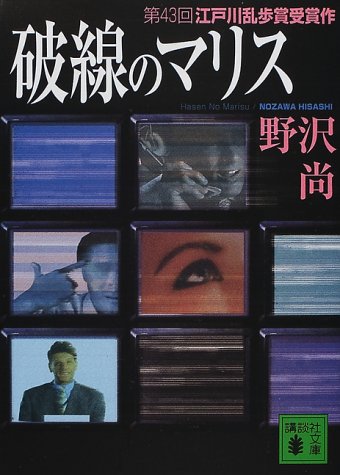
In this issue, we introduce Mr. Nozawa's Maris of the Dashed Line. The story is based on the theme of information manipulation and false reporting by television.
This work won the 43rd Edogawa Rampo Award and was dramatized for TV in 2000.
Malice means malice. The finest foo & whidanit, the tension toward the end is breathtaking.
Maris of the Dashed Line, Synopsis and Story
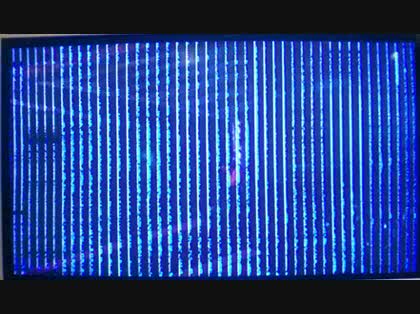
Endo Yayoko is a video editor with skillful video montage techniques, and is in charge of editing the news program "Nine to Ten" on Capital TV. Because Yaoko finishes editing the video just before the airing time, it has become a common practice for edited footage to slip past the checks of her superiors and be shown on the program as a false report. Many of her colleagues and superiors are dissatisfied with this, but on the other hand, Yaoko's editing of the footage supports the program's high viewer ratings.
Source: ja.wikipedia.org
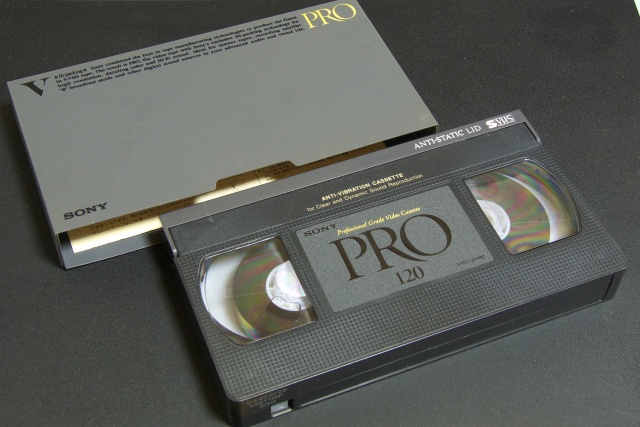
One day, Yaoko is given a videotape by Seiichi Haruna, a postal bureaucrat. The content of the videotape was an accusation that the death by fall of Teruo Yoshimura, a civic group leader and lawyer, was actually a premeditated murder involving a corruption case involving a senior official of the Ministry of Posts and Telecommunications. Yaoko edits the tape to make it appear as if Kimihiko Aso, a postal bureaucrat, is the murderer of the lawyer, slipping past the checks of her superiors and airing it over the airwaves.
Source: ja.wikipedia.org
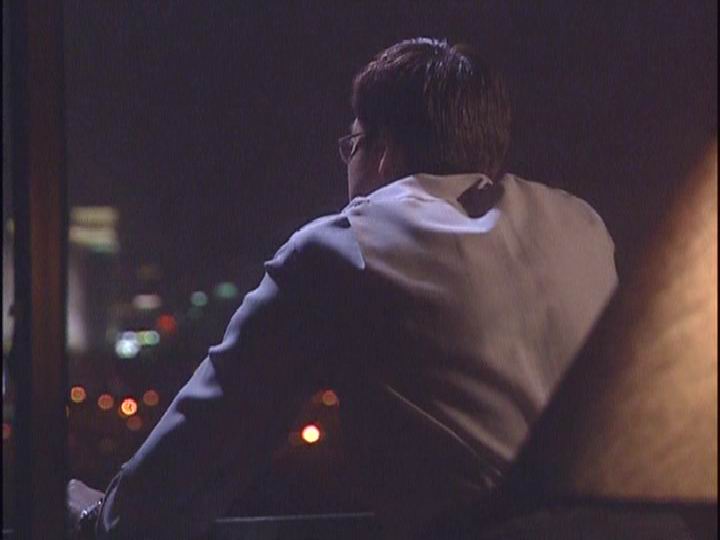
The key theme of this story is the difference between the "facts" and the "facts as I feel them," which Yaoko, who has absolute confidence in her video editing, falls into. The relationship between sender and receiver, which is a problem in today's media, is beautifully portrayed. The reality of this story is wonderful in this day and age when it is difficult to know what the real facts are.
What were the facts that Yaoko found?
Maris and Impressions of the Dashed Line
I thought this work depicted the gap that we feel when we think about our relationship with the media. The people who belong to the media, whose faces are invisible, are people who live their daily lives no different from myself. However, when I receive their messages through media such as television, I receive them as fact.
The fact that sponsored media, news received and digested by people who are no different from me, are being sent out is not something I normally perceive. The danger of receiving information without question can be felt by the protagonist and the people around her.
It is a masterpiece that makes us feel the fear of today's world where information can be easily obtained.
However, it is also true that I could not sympathize with the main character's way of thinking and felt hostility toward her. It is a work that can be seen in completely different ways depending on the person who receives it.
Visualized dashed maris
Officially entered in the 12th Tokyo International Film Festival and the 29th International Film Festival Rotterdam.
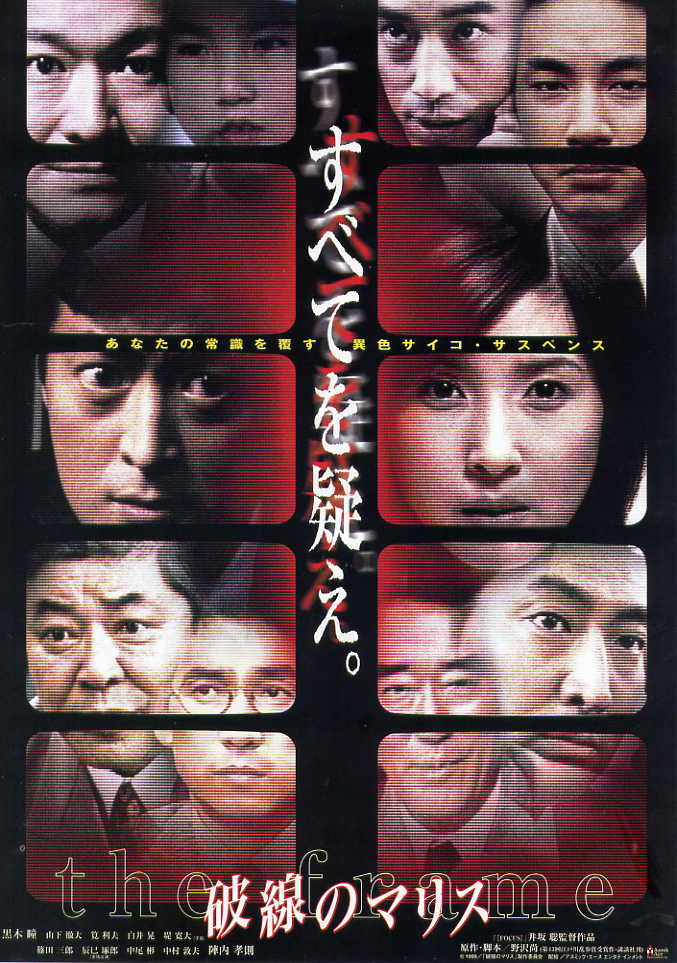
Cast
Yaoko Endo: Hitomi Kuroki
Kimihiko Aso: Takanori Jinnai
Naoki Akamatsu: Tetsudai Yamashita
Ichiro Morishima: Toshio Kakei
Seiichi Haruna: Akira Shirai
Kenji Kurashina: Saburo Shinoda
Source: ja.wikipedia.org
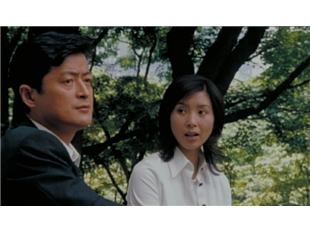
Hitomi Kuroki as Yohko Endo and Takanori Jinnai as Kimihiko Aso.
Mr. Jinnai may be quite into the role.
I urge you to read the novel before seeing the movie.
The movie is also a well-made work, but by summarizing it in a short time, it does not express the entire world of the work.
Please use your own imagination to take in this novel.
