

Do you know the Jewish philosopher Hannah Arendt? She was the first woman to become a full-time professor at Princeton University in the U.S. and gained fame as a renowned scholar. However, things took a turn for the worse when she was bashed by the world for a certain article. What was the "banality of evil" that she kept insisting on? We introduce the film "Hannah Arendt," which depicts the life of a Jewish female philosopher who lived a life of justice.
What is the film "Hannah Arendt"?
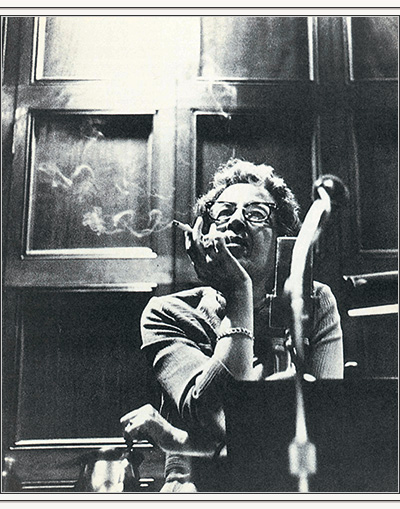
The film "Hannah Arendt" is a German-Luxembourg-French co-production released in 2012. The film focuses on the Jewish philosopher Hannah Arendt and powerfully depicts her way of life. Hannah Arendt, a German Jew, escaped from a Nazi concentration camp during World War II and found asylum in the United States. Later, her achievements as a philosopher earned her fame as the first full-time female professor at the prestigious Princeton University in the United States.
In the 1960s, working for The New Yorker magazine, Arendt observed the trial of Nazi war criminal Adolf Eichmann in Israel and published her report in the magazine. The shocking content of the report was met with a worldwide outcry. Eichmann was responsible for sending many Jews to the gas chambers. Arendt, however, insisted that Eichmann's "banality of evil" was nothing more than a petty official who had stopped thinking. Arendt's argument was condemned in the public eye because it was interpreted as a defense of the Nazis. What was her powerful message, which was to persist in her belief that "thinking makes us stronger," and to continue to preach the horror of cessation of thought? This film about Hannah Arendt, a Jewish female philosopher, is a very profound film.
Nazi war criminal Adolf Eichmann hanged
Eichmann's trial (actual footage) that Arendt was observing.
After dropping out of high school, he joined the Nazi SS in 1932, was assigned to the Jewish section in 1935, and emerged as a specialist in the expulsion of Jews. After serving as the chief of Jewish train transport until the end of the war, he escaped to Argentina with a Vatican-issued visa and a false name, was abducted by Israeli intelligence (Mossad) in 1960, and was hanged in 1962.
Source: www.cetera.co.jp
<Arendt continued to insist on the banality of evil.
A concept introduced by Arendt in his report on the Eichmann trial. It means that petty officials like Eichmann, who dutifully follow orders from above, abandon thinking and become cogs in a bureaucratic organization, thus becoming complicit in a great evil like the Holocaust. It refers to a situation in which evil is not created by fanatics and perverts, but by ordinary people who think they are living a very normal life.
Source: www.cetera.co.jp
Excerpts from a review of the film Hannah Arendt
The film "Hannah Arendt" also uses actual footage of the "Eichmann Trial" held in Jerusalem in 1961. Eichmann conducts the trial from inside a glass box to prevent attacks from the audience. Eichmann testifies that he carried out his mission in accordance with orders from above. Arendt then analyzes it this way. Eichmann was not a villain, but only a petty official. Arendt then proposes the concept of "the banality of evil.
Whether or not you can relate to her arguments is a topic for discussion in a different place than the film, but I would like to consider the intention of the filmmakers to use this philosopher as a subject in this day and age.
The film reminds us that the crisis of being swept away is a serious problem in any age. There is nothing difficult about it, so I hope many people will see it.
Source: www.amazon.co.jp
It was a masterpiece that made me think deeply about human thinking arising from war.
Source: www.amazon.co.jp
Through the Eichmann trial, it was discovered that "those who were involved in the satanic crimes of the Nazis have a duality in that when they change into military uniform, they act satanically without question, but when they return home and change into suits, they change into ordinary citizens.
It must have required unusual courage for Hannah Arendt to publish this idea, which is now common knowledge, in the prestigious magazine "The New Yorker" despite her Jewish origins in the "postwar" era of the 1960s.
This film is her "story of courage.
Where did her courage come from? It came from the German existential philosophy of Kant, Hegel, Nietzsche, and her mentor Heidegger.
Knowledge and thought are not weapons. The Nazis burned many books, Thomas Mann fled the country, and even Heidegger cried "long live the Führer. But "knowledge and thought" can be courage.
I thought that was what this film wanted to convey, and what Arendt wanted to leave behind for posterity.
Source: www.amazon.co.jp
summary
How was it?
Today we introduced you to the 2012 movie Hannah Arendt. Arendt makes the case that Nazi war criminal Adolf Eichmann was not a nefarious person. She then argues that He is merely an official who has stopped thinking. Arendt wanted to tell us that if we stop thinking, we are in danger of not even feeling guilty for killing innocent people, and that is what is so terrible. Arendt's report, which is the subject of this film, has been translated into Japanese under the title "Eichmann in Jerusalem," so you can learn more about her arguments.
If you are thinking of watching the movie "Hannah Arendt," please take a look at this article!
Amazon.com: Eichmann in Jerusalem: A Report on the Banality of Evil: Hannah Arendt, Kazuro Okubo: Books
www.amazon.co.jp
Amazon.com: Eichmann in Jerusalem: A Report on the Banality of Evil: Hannah Arendt, Kazuro Okubo: Books
