

We have collected popular urban legends originating in Japan. Listed here are 30 rumors told in various parts of Japan, including "The Virgin Aunt of Yokohama," "The Mysterious Eight-Shaku-Sama," "Kinkan Babaa," and more. We will introduce you to plenty of scary and mysterious stories.
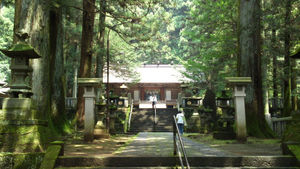
Sanyazawa Akagi Shrine
Source: xn--9oqx67ab2fnkbmy2he6h.com
Sanyazawa Akagi Shrine
Sanyazawa Akagi Shrine
三夜沢赤城神社では数十年前、千葉のおばさんが神隠しにあって行方不明になった事件が起こったところでもある。こわい:;(∩´﹏`∩);:
— しい (@c__1) 2019.01.22 20:31
Akagi Shrine is located in Miyazawa-cho, Maebashi City, Gunma Prefecture,
Akagi Shrine, located in Miyazawa-cho, Maebashi City, Gunma Prefecture, is so old that the date of its foundation is unknown,
It is considered to be the main shrine of Akagi Shrines in the Kanto area.
It is considered to be the main shrine of Akagi Shrine in the Kanto region.
Near the shrine, there remains an ancient ritual site called "Hitsuishishi.
The remains of an ancient ritual called "Hitsuishi" can still be seen near the shrine,
This is an indication that this area has been known as a power spot for a long time.
In the early summer of 1998, seven members of a family (husband, wife, daughter, grandson, uncle, aunt, and granddaughter) came to this shrine.
(husband, wife, daughter, grandson, uncle, aunt, and mother-in-law) drove to this shrine in early summer 1998 to see the azaleas.
However, it was raining that day, so they stopped the car in the parking lot,
Except for the husband and uncle, who were going to visit the shrine, the rest of the family stayed in the car and waited for the rain to stop.
While waiting, my wife said, "I'm going to make a money offering,
She took out 101 yen from her purse, put on a red umbrella, and headed for the approach to the shrine.
My daughter, who was sober, stayed in the car,
She saw her mother standing in a different place from the temple grounds.
The wife then disappeared without a trace.
This incident became a major topic of conversation and was featured on TV programs.
Furthermore, a home video of the Akagi Shrine on the day of the disappearance was discovered.
It showed the moment when the missing wife was holding a red umbrella out to someone.
Source: xn--9oqx67ab2fnkbmy2he6h.com
To be continued
https://xn--9oqx67ab2fnkbmy2he6h.com/?p=516
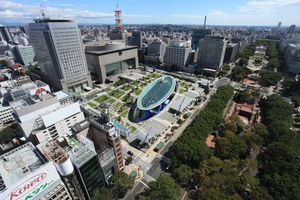
Nagoya Barrier
Source: xn--9oqx67ab2fnkbmy2he6h.com
Nagoya Barrier
Nagoya Barrier
名古屋バリアーwww よくある気がする。
— ガンギマリチワワびび@FEB80時々JB43W (@viviGT9696) 2016.10.04 00:37
家がミシッミシッ言ってんの勘弁して……隣の区は避難準備出てるし
— めい🌘 (@1059_May) September 4, 2018
こんなにすんげぇ台風は何年振りかしら。大体名古屋バリアーのお陰で全然影響受けてなかったからねぇ
The Nagoya Barrier is an urban legend that has been passed down in parts of the Tokai region.
It is an urban legend that has been passed down from generation to generation in parts of the Tokai region.
The Nagoya Barrier is said to protect against various disasters
It is said that the Nagoya Barrier protects against various disasters and even events and celebrations,
The Nagoya Barrier is said to be about to expire.
Nagoya is one of Japan's three largest economic cities. Nagoya is one of Japan's three major economic cities,
In recent years, Nagoya has suffered few disasters such as huge typhoons and earthquakes, and there have been no major incidents or accidents.
There have been few disasters such as huge typhoons and earthquakes, and no major incidents or accidents.
The urban legend says that Nagoya's ability to avoid disasters is called the "Nagoya Barrier".
However, Nagoya is also known as an economic city because of its ability to avoid disasters,
As a result, despite being called an economic city,
Nagoya has become a city without much to see and do, just like a countryside.
Examples include "Nagoya tobashi," the local baseball team "Nagoya Grampus," and the "Chunichi Dragons.
The Chunichi Dragons are in a slump and are doing very poorly.
This has caused people living in the Nagoya area to have a hard time communicating with each other.
This has created a "Nagoya barrier" in their communication skills.
The effect of this is that "Hate Nagoya" and "Hate Nagoya" feature articles are being published in the mass media.
and "hating Nagoya" have been published in the mass media and have become topics of conversation.
Source: xn--9oqx67ab2fnkbmy2he6h.com
To be continued
https://xn--9oqx67ab2fnkbmy2he6h.com/?p=2354
Nagoya Station: "Couples who pass through the legs of Nana-chan dolls will be separated."
Source: xn--9oqx67ab2fnkbmy2he6h.com
Nagoya Station: "Couples who pass through the legs of Nana-chan dolls will be separated."
Nagoya Station: "Couples who pass through the legs of Nana-chan dolls will be separated."
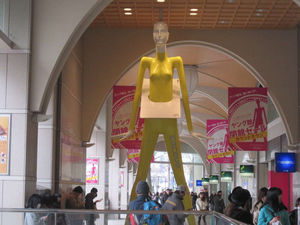
A giant mannequin "Nana-chan doll" stands in front of the Young Pavilion of Meitetsu Department Store in Nagoya Station, Aichi Prefecture.
A giant mannequin "Nana-chan doll" stands in front of the Meitetsu Department Store Young Pavilion in Nagoya Station, Aichi Prefecture.
It is now famous as a meeting place at Nagoya Station.
This Nana-chan doll was made in 1973 to commemorate the first anniversary of the Meitetsu Department Store Seven Building,
The Nana-chan doll was made to commemorate the first anniversary of the Meitetsu Department Store Seven Building in 1973.
Incidentally, "Seven Kan" is the former name of Young Kan,
The name "Nana-chan" also comes from this "Seven.
She is 610 meters tall, weighs 600 kg, and has three sizes
Bust 207 cm, waist 180 cm, hips 215 cm.
She uses these proportions to her advantage in a variety of clothing and swimsuits, depending on the season,
and uniforms of the local baseball team.
There are many urban legends about this Nana doll.
The most famous of these is that "couples who pass through the legs of Nana-chan dolls will break up.
Source: xn--9oqx67ab2fnkbmy2he6h.com
To be continued
https://xn--9oqx67ab2fnkbmy2he6h.com/?p=491
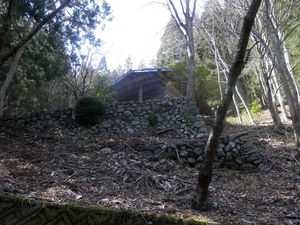
Japan's only hidden village "Omata Kyomaru
Source: xn--9oqx67ab2fnkbmy2he6h.com
Japan's only hidden village "Omata Kyomaru
Japan's only hidden village "Omata Kyomaru
小俣京丸はまじ興味深いから
— そうくす (@soukusu) April 3, 2019
もし常葉に出稽古に行ける機会がこの先あるとしたら、抱き合わせで小俣京丸の廃集落に行ってみたい。
— 大水銀 (@sugarsphinx) May 22, 2017
藤原の隠れ里なんてロマン溢れまくりだろ!
Hidden villages are villages of ninja and fallen warriors,
to Peach Blossom Village, where hermits live, are alluring to people.
But that is the world of fiction,
In reality, the villagers are not allowed to communicate with the lower world,
It is impossible for the villagers to complete their economic activities and procreation
It is impossible to complete economic activities and procreation only among the villagers.
However, in the long history of Japan,
In the long history of Japan, there is a record of a hidden village that has been discovered only once
There is a record of a hidden village that has been discovered only once in the long history of Japan.
It was found in a village called Ishikiri, Haruno-cho, located upstream from the Ishikiri River in present-day Hamamatsu City, Shizuoka Prefecture.
It was found in a village called Ishikiri, Haruno-cho, located upstream of the Ishikiri River in present-day Hamamatsu City, Shizuoka Prefecture.
It was in the middle of the Edo period.
The only place where people lived in this area, which is surrounded by steep mountains, was this village of Ishikiri-no-sato.
It was believed that no one lived beyond this point.
It was believed that no one lived beyond that point.
However, one year during a flood, bowls and other tableware
bowls and other tableware were washed into the village from upstream.
We went out to investigate, and to our surprise, we found that there was an unrecorded village upstream of the Ishikiri River,
I went out to investigate and found out that there is a village upstream of the Ishikiri River that has not been recorded in any records.
The name of the village is Omata Kyomaru.
(The name of the village is Omata-Kyomaru (it seems to have been divided into two districts, Omata and Kyomaru).
Everyone in the village bore the surname of Fujiwara,
and had lived in this hidden village for many generations.
Source: xn--9oqx67ab2fnkbmy2he6h.com
To be continued
https://xn--9oqx67ab2fnkbmy2he6h.com/?p=542
Shioren Lake, Oxen's raw head
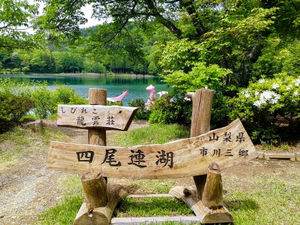
Source: d1f5hsy4d47upe.cloudfront.net
Shioren Lake, Oxen's raw head
Shioren Lake, Oxen's raw head
四尾連湖のお話
— 🐉ヱモミウラ🐉 (@emoFOX42OG) October 15, 2018
地元のおじいさんに聞いたんやけど昔は雨乞いで牛の生首とか奉納してたって本当?

Contents
- Virgin aunt in Yokohama
- The Mystery of the Eight Shaku-sama
- tawny old woman
- The Secret Behind the JR Kobe Line Station Names
- Lake Biwa Bissie
- Male island" where you have to go around the island "leftward".
- Prostitution Island (Watakano Island)
- Are spirits susceptible to erotic books?
- Kisaragi Station, a place between the afterlife and this world.
- Urban legends of Sazae-san (including the last episode)
- Ooito and his wife (rape and marriage)
- What not to do on the Karuizawa Bridge
- Uncle Skirt" at Ueda Ario Ito Yokado
- woman who earns her living by giving 100 yen a month's pay
- Ghosts at the Bottom of Lake Biwa
- Kuro-so (Kuro-kyo) on Jeungdo Island
- Dazaifu Tenmangu Shrine and Kagamato-jinja Shrine, spots for marriage and divorce
- rubbernecks
- Hot dog shop at Aoyama Pass
- Okutama "Yamai-gasawa," a place of calamity
- "Uncle Bobby's aunt."
- Japan's most obscene festival "Himegami Festival
- Sanyazawa Akagi Shrine
- Nagoya Barrier
- Nagoya Station: "Couples who pass through the legs of Nana-chan dolls will be separated."
- Japan's only hidden village "Omata Kyomaru
- Shioren Lake, Oxen's raw head
- Crayon Shinchan's Scary Initial Setup
- Words a child should not say: "Dodo (dodo)."
- Hermit at the west exit of Matsudo Station
- 13 staircase apartment in Shimokitazawa
- The Date Family Conspiracy."