

Eimi Yamada is one of the leading Japanese women writers of our time. Since her debut in 1985, she has continued to publish her works energetically, winning numerous awards, including the Naoki Prize. Her works can be divided into two main categories. One depicts adult sexuality head-on, and the other depicts the freshness of adolescent children. In this article, we will introduce the latter type of work.
I can't study."
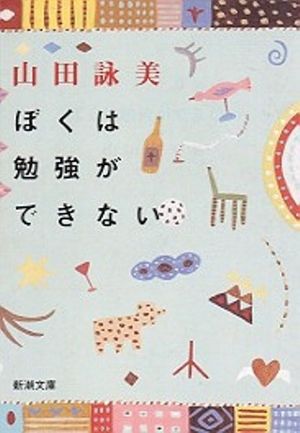
<Synopsis.
Hidemi Tokita, a high school student, is popular with girls and has an older girlfriend.
Hidemi Tokita is not afraid to say that she has more important things to do than study, and her sharp insightful and outspoken opinions about both her teachers and her classmates are, for better or worse, at the mercy of those around her.
The film depicts the school life of Hidemi Tokita.
<Things to Read
The freshness and freshness of high school students are carefully depicted. However, this work is different from typical coming-of-age novels.
There is no unification with classmates for events or club activities. Leaving those aspects to other writers, Eimi Yamada sharply focuses on the sensibilities of high school students.
The main character, Hidemi Tokita, observes her classmates, consults her family, and questions her teachers from the childlike "pre-adult" perspective of a high school student. However, she never makes fun of others.
The cute Hidemi Tokita, whom female readers may unintentionally call "Hidemi-kun," is another charm of "Boku wa kagaku ga dekinai" (I can't study).
The After-School Notes."
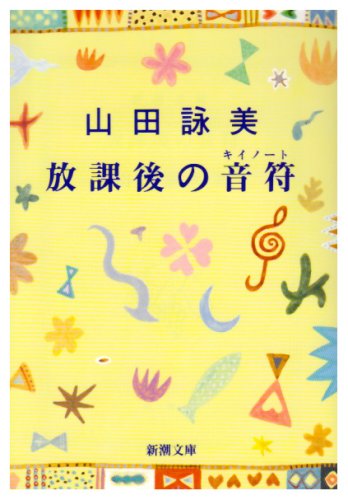
<Synopsis.
A love story about a girl or a lady who is somewhere between an adult and a child at the age of 17.
It consists of short stories, and most of the characters are different each time.
<Reading Spot>
One of the key points is that the main characters are girls this time, although they are the same age as in "Boku ha kagaku ga nai ka" (I can't study).
It is said that girls are generally more precocious than boys, and because of this, they have a strong yearning for adult women, but they do not know what exactly to do about it. Many of you may have experienced this frustrating feeling before.
Such delicate mental images are beautifully depicted with fashionable episodes (for example, when asked why the letterheads they write to their lovers are simple, they reply, "Because writing is my passion," or they drop cigarette butts into jewelry boxes).
summary
What did you think?
Eimi Yamada writes adult romances, but she also writes wonderful novels with a subtle mixture of adults and children.
I think you can relate to many of them and think, "I remember feeling this way myself...".
The works discussed in this issue are available in paperback, so we recommend that you feel free to pick them up and read them!
