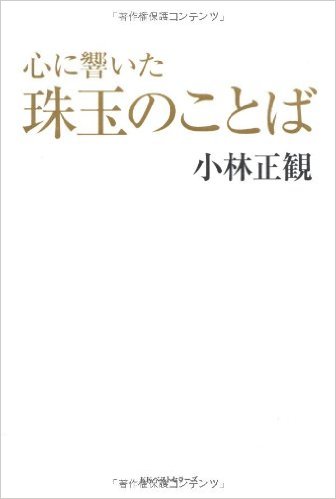
Do you know Mr. Masakan Kobayashi? D. in psychology, education, and sociology. Although he passed away in 2011, he traveled around Japan giving many lectures and writing many books to inspire those who are struggling to live. Here we introduce some of the poignant words from his book, in which he has selected and explained the sayings of great people.
Rigyo - Words of the Buddha
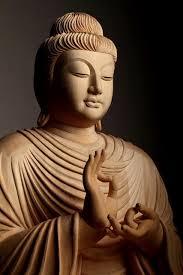
Rigyo. This is one of the four regents, or the four virtues by which bodhisattvas help sentient beings (the general public).
(1) Fufu (giving gifts of things, thoughts, ideas, etc.)
(2) Ai (to speak words that give peace)
(3) Beneficial action (bringing benefit to others through one's own actions)
(4) Do the same thing (wear the same clothes and work in the same way as those around you).
All of these are acts of virtue that help others and that he himself accumulates on a daily basis. Mr. Kato said that the idea of "Rigyo" is particularly amazing.
We are taught from childhood to have dreams and hopes. We are taught from an early age to have dreams and hopes, but only from the perspective of our own axis, that is, "I want to be this way. We were never taught to make others prosper.
In this book, the amazing effect of "Rigor" is illustrated with an example. A salesman worked hard and reached the top of his field, but when he became complacent and slacked off, he quickly fell back from the top. He then tried his best to regain the top position, but his efforts did not go very well. He was a salesman who could not improve his performance despite his best efforts. The company informs him that if his performance continues at this level, he will be asked to quit in two months. The salesman then thought, "If I am going to be fired anyway, I might as well stop thinking about improving my own performance and do my best for my colleagues. He then spent the next two months providing thorough support to his colleagues who were busy making outside calls, such as writing down their telephone requirements and leaving them on their desks. Then, miraculous things happened one after another, such as a major new customer order coming in, and eventually, two months later, he was back at the top of his game.
God and the universe do not support those who act only for their own benefit. In other words, God and the universe are on the side of those who think and act for the benefit of others. First of all, we must enrich the other person. This will result in a good return to you in the end. This is the "Law of the Universe.
I only know that I am enough - Words of Mito Komon
Mito Komon, real name Tokugawa Mitsukuni. He was the third son of Yorifusa, the founder of the Tokugawa family.
He was a great ruler who focused on the promotion of agriculture, and he loved the phrase "I only know what is enough. In other words, "Know how blessed you are. Human beings are a mass of greed, and when one desire is satisfied, the next one will appear. There is no limit. This in itself is not a bad thing, but it is not always pleasant and peaceful. I believe that only when we can let go of our attachments to things can we find true happiness in our hearts. Also, as long as we keep asking for one thing after another, we forget how much we appreciate what we have, and our sense of gratitude fades away. Therefore, I feel that this is also a message from Koumon-sama, who said, "Look at what you have now and be thankful for it. In this sense, I think these words, though short, are very meaningful.
Please wait until after you pass through my body - The Emperor's Words
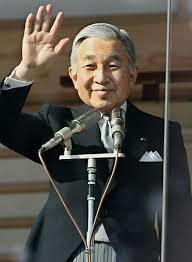
When I saw these words, I was truly shocked and moved to the point of shaking. It is said that every year in the early morning of New Year's Day, people pray to the sky in the east, west, south, north, and south, as follows.
If there is to be a disaster in Japan this year, let it first pass through my body.
This is called "Shiho Worship," a ritual that has been practiced by emperors for generations, and is said to have been taught since the time of the Crown Prince. In other words, the Emperor's noble spirit of wishing for the safety and peace of all the people of Japan is expressed in the words, "If there is any misfortune that disturbs the peaceful life of the people of Japan, I myself will take it in my stride. I feel this keenly from these words.
Illness and calamity are things that anyone would like to avoid if possible. However, the Emperor dares to accept them and wishes for the happiness of his people. If it was for the sake of someone he cared about, he would be grateful for that too. It would be a happy thing if he thought that he was taking on the pain and suffering that his loved ones might have gone through. If we could think like that, illnesses, injuries, and disasters would not be so painful. These are truly amazing words.
In this book, Mr. Kato said, "I am very grateful to the people who were affected by the Great East Japan Earthquake. When he visited the victims of the Great East Japan Earthquake, the emperor kneeled down and said to him, "You have really suffered a lot. He was not merely consoling or encouraging them, but was probably feeling "sorry" that he could not support them with his own body. Mr. himself was quite shocked by these words.
I felt truly grateful to be able to touch the Emperor's noble heart. Although it is not easy to reach that level, I feel that my way of thinking about illness and other calamities has changed a little. I now think that illnesses and other calamities are not something to be taken so seriously or abhorred. It was a word that had such a strong impact on me.
Finally.
Once again, I felt the "power of words" from this book very keenly. I am very glad that I came across this book. In the words of the Buddha, there is a phrase "fushisetsu (to give a gift)," which is one of the four regents. I feel as if I have received the gift of his words through this book. In this book, Mr. Shakyamuni explains the words left by many great people such as Ryokan, Kukai, Masaoka Shiki, and Christ, and also shares his own thoughts. We encourage you to pick up a copy and read it for yourself.