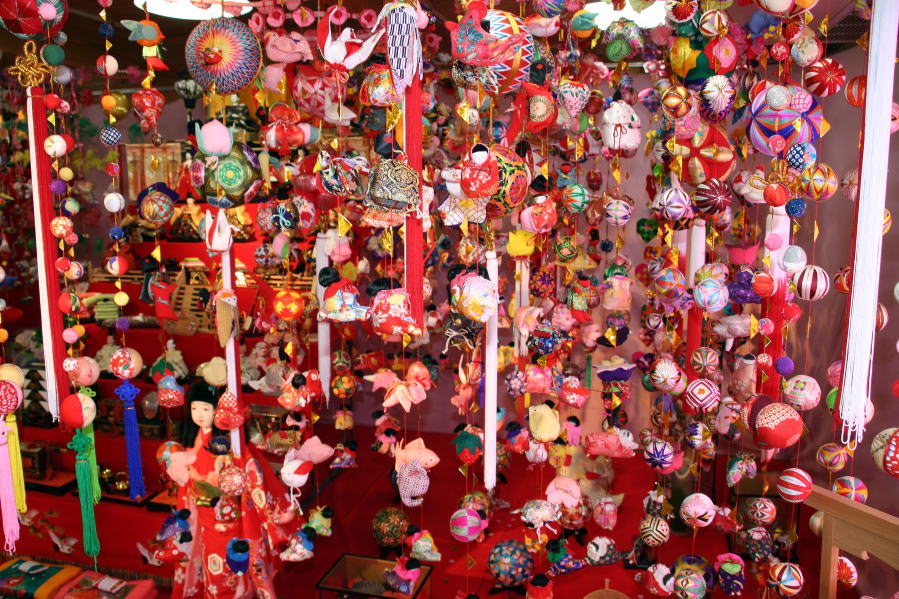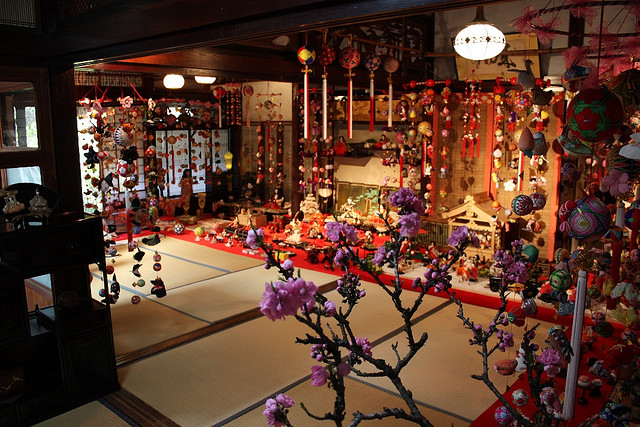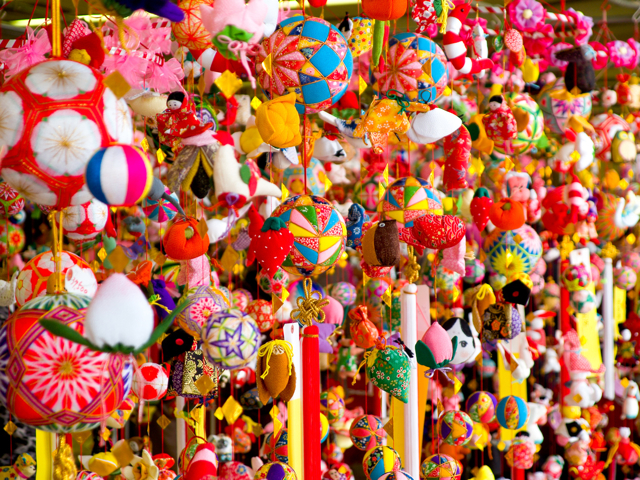
Hanging Hina dolls developed among the common people who could not afford extravagant Hina ornaments for the Girls' Festival in spring.
In Yanagawa City, Fukuoka Prefecture, they are called "Hashimon," meaning something to lower or hang down.
In Higashi Izu Town, Shizuoka Prefecture, "Hina no Tsurushi-zukuri" (Hina hanging ornaments), and in Sakata City, Yamagata Prefecture
It has been handed down in Sakata City, Yamagata Prefecture, under the name of "kasafuku (umbrella-shaped).
Hanging dolls are believed to have originated in the Edo period (1603-1868).
Hanging Hina dolls were hung on festive occasions with small sewn goods with various meanings and good luck charms to pray for the girl's health, good marriage, wealth, and other good fortune.
From the old days, sacks and other items used to hold koto-nails and other items for princesses born into noble families, as well as temari, a ball of playthings,
The name "Hashi-hina" comes from the custom of the maidens of noble families making the bags for the princesses to carry their koto-nails in and the balls for their playthings.
With the return of the maidens to their hometowns, the custom spread to the villages of common people for celebratory occasions,
They were made out of scraps of paper for girls' festivals, and wealthy families would invite guests and display them around the dolls' altar,
In wealthy households, they were displayed around the Girls' Festival altar to invite guests, and in common people's homes, they were made to pray for good health of their children and grandchildren, as a celebration of the Girls' Festival, instead of an expensive altar.
Among them, Yamagata Prefecture's kasabuku is characterized by the fact that it is hung from the bottom of the umbrella, which is covered with a cloth.
All of them were hand-sewn, and people brought their surplus cloth, accessories, strings, and threads to this custom of the common people, who devised various ways to make them.
Yanagawa's sagemon is officially a bamboo ring about 40 cm long with red and white cloth wrapped around it,
The total height is about 150 cm, and is made up of 49 pieces in 7 rows of 7 pieces, alternating between crafted pieces and Yanagawa marari,
The number of pieces is meant to represent the feminine elegance.
Even today, the dolls are decorated around the doll stand in good houses in Yanagawa on spring festivals, and are shown to tourists and visitors,
They are displayed around the dolls' beds and entertained by tourists and visitors during the spring festivals.
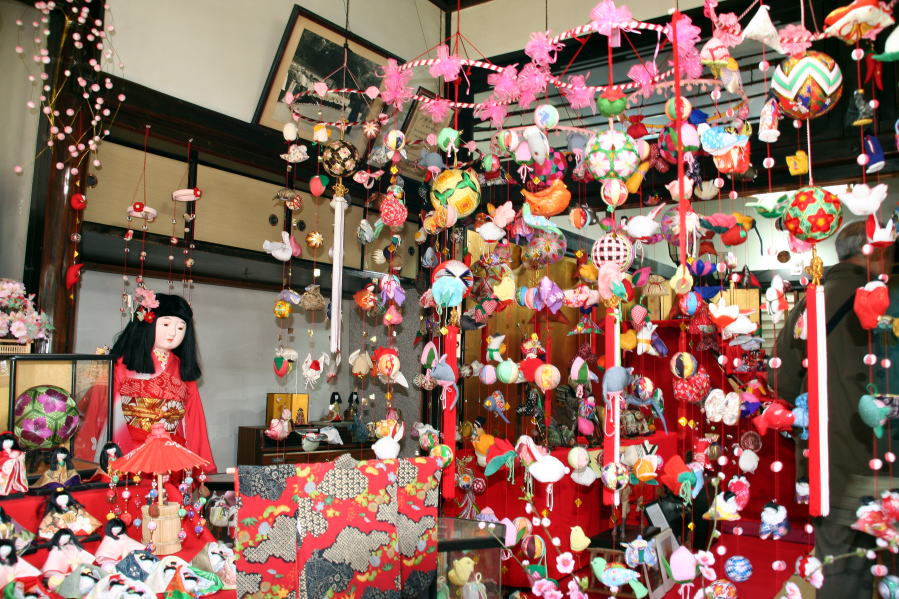
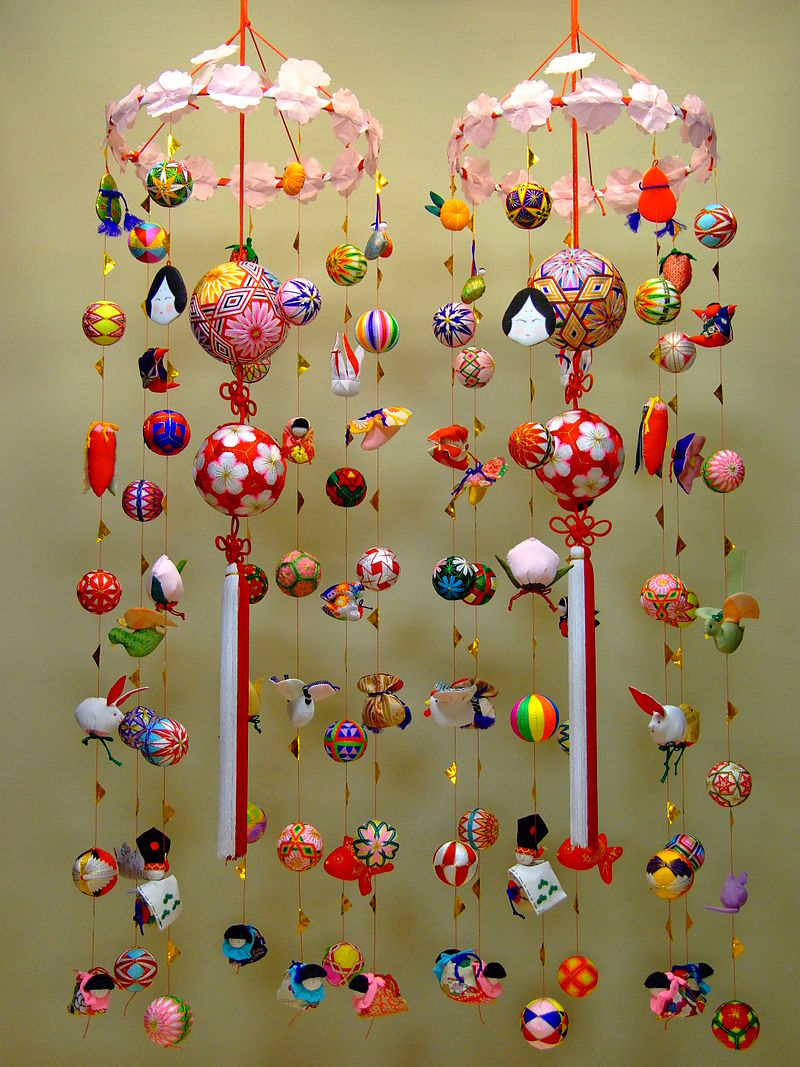
Wishes for the girl's happiness and the meanings that people put into each wish.
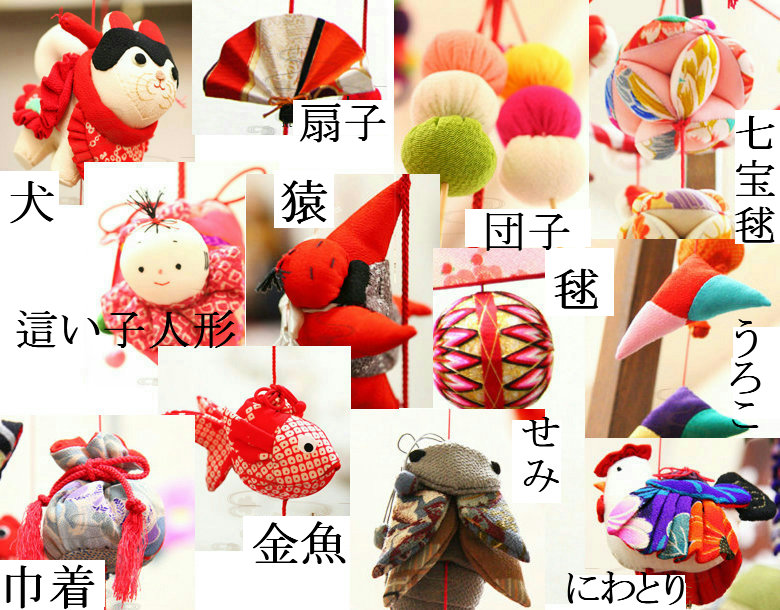
The images above are just a few examples.
Festive animals such as rat, dog (inu) horse, rabbit, crane, turtle, bush warbler, chicken, cicada, and sea bream.
Vegetables for good luck, such as turnips, bamboo shoots, and lotus roots.
Crawling dolls, hagoita or string puppets, oedama, temari, paper balloons, zori, kinchaku, and uchiide no kozuchi (a small hammer that strikes the ground).
Flowers such as plum blossoms, cherry blossoms, and irises.
Red color means "to ward off evil spirits," so red dolls.
Clam, scallion, and other animals and plants that bring prosperity and good luck to offspring,
They are also associated with feminine grace and happiness, as well as wealth, health, and fortune,
Many of them have been invented and passed down from generation to generation,
The tradition has been handed down from generation to generation.
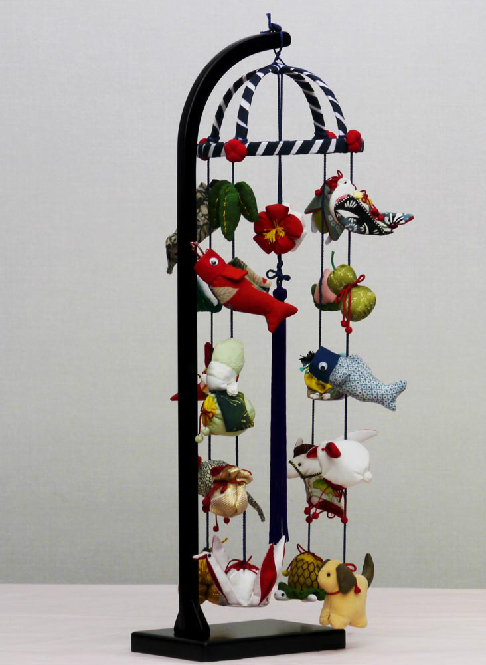
This is a "Tsurushi Hina" for boys from Izu Inatori, the home of hanging ornaments.
It is made of gold brocade, brocade, gauze, crepe, etc., wishing for the child's good health and happiness.
You can feel the warmth that only hand-stitching can bring.
Some Hashirushi-hina are designed to be used as ornaments.
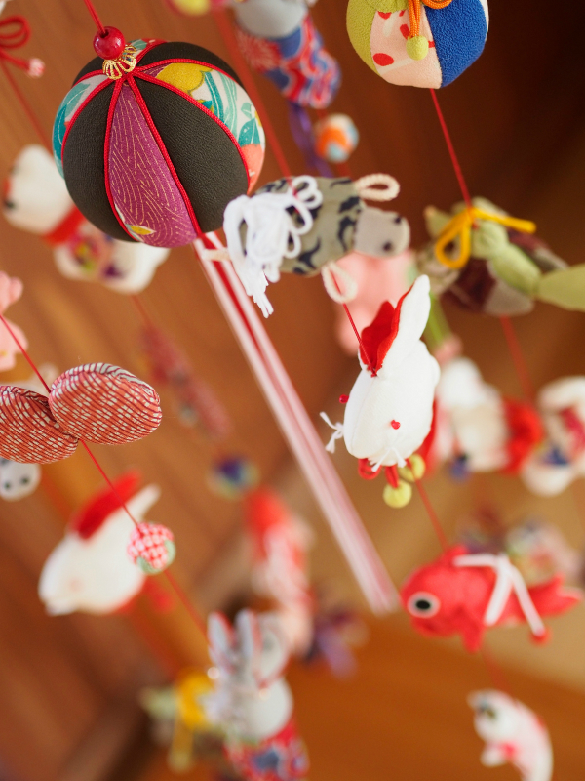
**How to make it List of works **
nunoasobi.x0.com
How to make simple handicrafts♪ I am reiko of Nuno Asobo. I introduce how to make various handmade handicrafts. Please try making them. Let's enjoy handmade handicrafts together.