
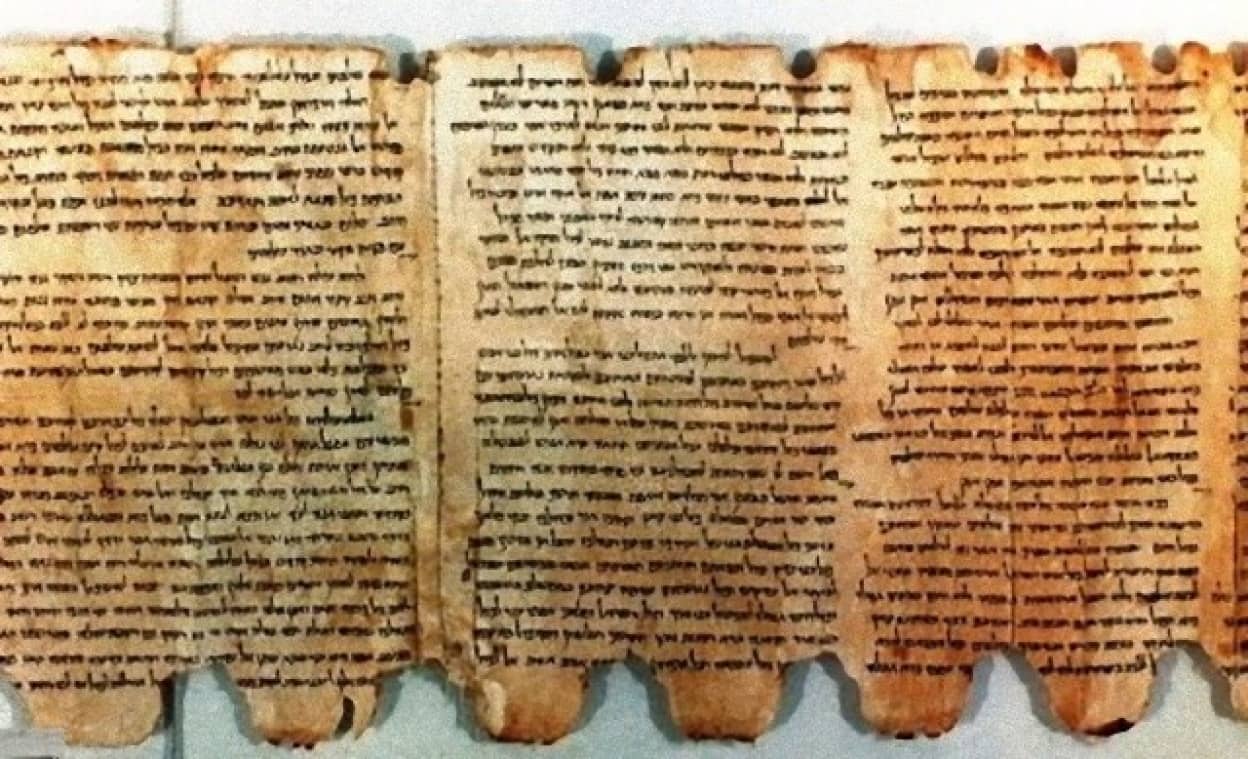
We have compiled a list of the 15 strangest books in the history of mankind. These include the Voynich Manuscript, whose contents have yet to be deciphered, and the Dead Sea Scrolls, which appeared in the popular anime "Evangelion. Here we will introduce explanations of each book, as well as urban legends and occult episodes related to the books.
Source: www.businesspundit.com
Dead Sea scrolls
It is that thing made famous by Evangelion.
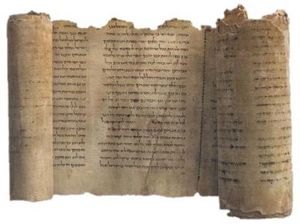
The Dead Sea Scrolls, or Dead Sea Scrolls, is a collection of approximately 850 manuscripts containing fragments of the Hebrew Bible that were discovered between 1947 and 1956 in 11 caves near Qumran, a fortress city northwest of the Dead Sea in Israel.
The documents were written in Aramaic and Greek, as well as Hebrew, between the 2nd century BC and the 1st century AD. It is virtually the only Jewish biblical document written during this period, and is regarded as a valuable source of evidence for the history of the relatively accurate transmission of the biblical text without deterioration of its contents through manuscripts. <wikipedia>
Dead Sea Scrolls - Wikipedia
ja.wikipedia.org
Prodigiorum Ac Ostentorum Chronicon
Source: www.businesspundit.com
Prodigiorum Ac Ostentorum Chronicon
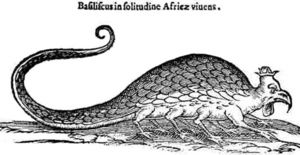
Prodigiorum by Conrad Lucosthenes.
A collection of prophecies and omens spanning the known history of Europe from Greek and Roman times to prophecies of the same period.
Nostradamus - Classic Sources
www.propheties.it
Conradus Lycosthenes - Wikipedia
ja.wikipedia.org
Red Book (ancient Egypt)
Source: www.businesspundit.com
Red Book (ancient Egypt)
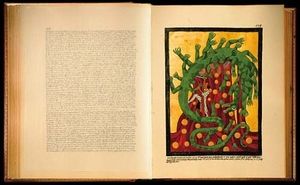
The Red Book, also known as Liber Novus (Latin for "The New Book"), was written by psychologist Carl Gustav Jung. Jung, who was in an unstable state of mind before World War I, wrote down his dreams and visions in a notebook with a black cover. This is called "The Black Book. Later, Jung added annotations and illustrations, and transcribed them in his own hand into a large leather-bound notebook with a red cover. In the Red Book, the illustrations are richly colored, and the text is written in a decorative calligraphy reminiscent of medieval manuscripts.
The Red Book was written between 1914 and 1930, but unlike Jung's other works, it was never published. The Red Book was stored in a black trunk in a Swiss bank vault. Only a small portion of it was made available to the public. After negotiations with the bereaved families, the book has been published in various languages since 2009.
The Japanese translation was published by Sogensha on June 26, 2010. <wikipedia
The Book of Red - Wikipedia
ja.wikipedia.org
Codex seraphinianus

Source: www.businesspundit.com
Codex seraphinianus
Codex Seraphinianus is a book written and illustrated by Italian architect and industrial designer Luigi Serafini over a period of 30 months between 1976 and 1978. The book is approximately 360 pages long (depending on the edition) and has the appearance of an encyclopedia about an unknown world, written in one of its languages, an unintelligible (at least to us) alphabet. <wikipedia>
Codex seraphinianus - Wikipedia
ja.wikipedia.org
long, long, long way
Source: www.businesspundit.com
long, long, long way
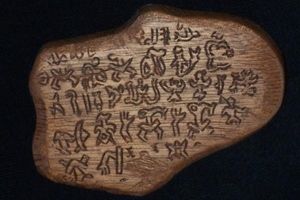
Is this also famous for...
Rongorongo (Rapa Nui: [ˈɾoŋoˈɾoŋo]) is a system of symbols, possibly letters or proto-letters, discovered on Easter Island in the 19th century. It has not been deciphered to this day. If rongorongo is proven to be a written language, it would be one of the few uniquely developed writing systems in human history. <wikipedia>
Longo Longo - Wikipedia
ja.wikipedia.org
Codex Mendoza
Source: www.businesspundit.com
Codex Mendoza
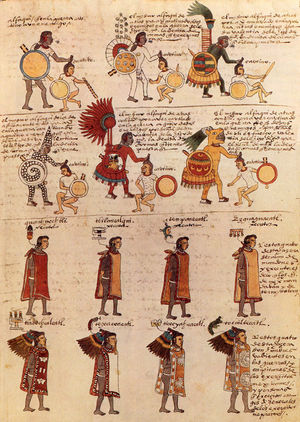
Maya, Aztec, and other pictorial documents are also called codex or (western) codice. The material is made from fig or other tree fibers, bark, or deer skin, coated on both sides with white lime, and folded into a folding screen. Letters and drawings were probably painted with two types of hard writing tools, one with a flat tip and the other with a pointy tip. After the lines were drawn, vivid colors were applied. The documents were basically made to be read from left to right, then turned over and read again from left to right. It is thought that there were probably pictorial documents in the Classic period as well, since some Maya vessels from the Late Classic period have pictorial documents with painted pictures and text, but none from that period have been found today. However, there are some surviving pieces from the Postclassic period, which describe calendars, rituals, myths, trade, tribute payments, as well as animals and plants. <wikipedia
Colonial pictorial documents
Codex Mendoza
Posthegemony: Codex Mendoza
posthegemony.blogspot.com
Codex - Wikipedia
ja.wikipedia.org

Contents
- 15 Strange and Enigmatic Books in the History of Mankind
- Voynich Manuscript
- The Book of Soyga
- Popol Buch
- Repliee Scroll
- Rechnitz manuscript
- Dead Sea scrolls
- Prodigiorum Ac Ostentorum Chronicon
- Red Book (ancient Egypt)
- Codex seraphinianus
- long, long, long way
- Codex Mendoza
- Nostradamus Prophecy Book
- Nag Hammadi manuscript
- Sangorski's version of the Rubaiyat
- The Story of Vivian Girls