
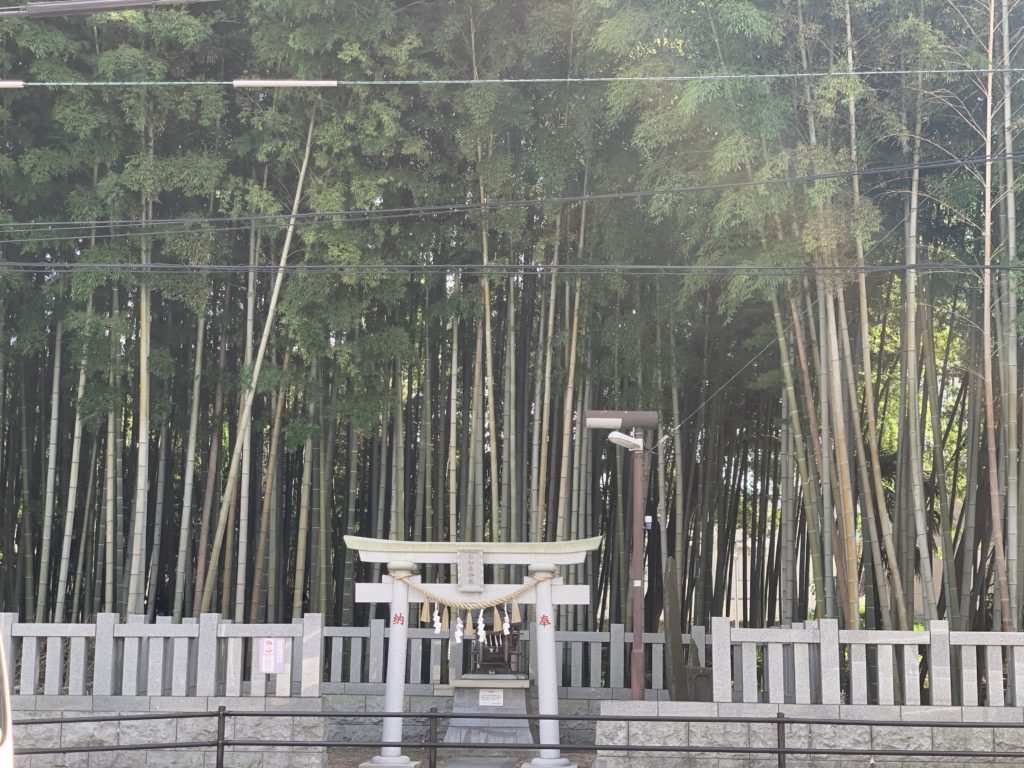
Urban legends, ghosts, and scary folklore from the Kanto region are compiled here. Included are an anecdote about "Hachiman-no-Yabusawa," a forbidden area in Chiba Prefecture, and a scary story about "Kisaragi Station" in Shizuoka Prefecture, which is famous on the Internet. From mysterious stories to horrifying tales, we will introduce you to the rumors that have been passed down through the generations in the Kanto region.
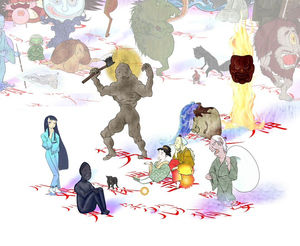
Source: youkaitama.seesaa.net
Kawabotaru" (fireflies) in Inba-numa
Kawabotaru" (fireflies) in Inba-numa
In the Inba Marsh in Chiba Prefecture
a monstrosity called "Kawabotaru" has been known since the Edo period (1603-1867).
Kawabotaru is shaped and sized like a ball,
It is said to emit light like a firefly,
They are said to appear on rainy nights in summer and fall,
They are said to appear on rainy nights in summer and fall, and their appearance has been documented as they drift about on the surface of the lake at Inba-numa.
The Tone River Zushi, a record related to the Tone River basin
Tone River Zushi, a record related to the Tone River basin, also has a description of Kawabotaru.
In fact, in "Tonegawa Zushi
Tonegawa Zushi" also has a record of catching
In this record, a firefly appeared near a fisherman's boat,
The fisherman smashed the firefly as hard as he could with his pole.
the fisherman smashed the firefly as hard as he could with his pole.
Source: xn--9oqx67ab2fnkbmy2he6h.com
Read more
https://xn--9oqx67ab2fnkbmy2he6h.com/?p=2452
Chiba Prefecture Naked straw fisherman
Source: navi.tateyamacity.com
Naked straw fisherman
Naked straw fisherman
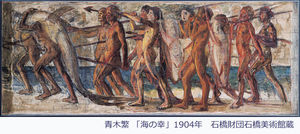
The painting depicts fishermen on the Boso Peninsula in Chiba Prefecture,
Painting from the Meiji era, "Fortunes of the Sea (Shigeru Aoki, 1904)."
In this painting, naked fishermen return from fishing,
The painting depicts nude fishermen returning from fishing with a dynamic touch.
In the old days, fishermen on the Boso Peninsula in Chiba Prefecture
They used to go out to sea wearing only their "warashibe".
When I heard these words,
Clothing is a hindrance to fighting the sea on a boat,
Men go out to sea wearing only their Warashibe as a talisman.
Such are the fishermen who live with the sea,
I felt the rugged spirit of fishermen who live with the sea.
I felt the rugged spirit of the fishermen who lived with the sea.
However, there was a reason why the fishermen were naked,
There was a reason why the fishermen were naked.
The reason why fishermen on the Boso Peninsula were naked,
Fishermen on the Boso Peninsula were naked because they were not allowed to wear clothes freely.
They were completely naked when they walked the streets of the city,
It seems to have been a normal sight for the local people.
Nudity was not a custom born of necessity,
It was not a custom born out of necessity, but an unspoken law, a pressure that prevented people from wearing clothes.
Source: xn--9oqx67ab2fnkbmy2he6h.com
Read more
https://xn--9oqx67ab2fnkbmy2he6h.com/?p=790
Kawagoe City, Saitama Prefecture Miyoshino Shrine "Birthplace of Doriyanse
Source: xn--9oqx67ab2fnkbmy2he6h.com
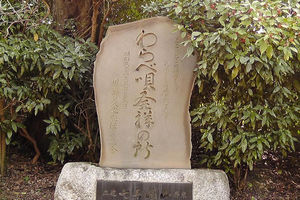
Miyoshino Shrine, "Birthplace of Doriyanse"
Miyoshino Shrine, "Birthplace of Doriyanse"
Doriyanse Doriyanse~!
There is a famous children's song that starts with the words "Doriyanse Doriyanse~.
It has a dark melody unique to nursery rhymes and the words
and the lyrics, "It's good to go, it's bad to come back.
combined with the lyrics of "To go there is good, but to come back is scary
stirs up an image of uneasiness.
Well, there is a theory that "Doriyanse" originated at Miyoshino Shrine in Kawagoe City, Saitama Prefecture.
Kawagoe City, Saitama Prefecture.
In the old days, Miyoshino Shrine was located inside the Kawagoe Castle
and the security was very strict.
People who pretended to be visitors to the shrine and tried to take confidential information out of the shrine were warned and interrogated,
and interrogated those who tried to take out confidential information.
I guess the fear of being interrogated makes people "afraid to go back home".
That's what the truth is about, if you look into it carefully,
For some reason, "Doriyanse" has an eerie image.
What is "Tenjin-sama" anyway?
In the Shinto world, there is a belief in Sugawara Michizane as "Tenjin-sama," or "God of Thunder.
In the Shinto world, there is a belief in Sugawara Michizane as "Tenjin-sama," or "God of Heaven.
Sugawara no Michizane is now widely regarded as the god of learning.
The Miyoshino Shrine is also said to bring blessings for academic success.
In fact, "Doriyanse" is a song about a parent who goes to abandon his/her child.
In fact, there is an interpretation that "Doriyanse" is a song about a parent who goes to abandon his/her child.
Source: xn--9oqx67ab2fnkbmy2he6h.com
Read more
https://xn--9oqx67ab2fnkbmy2he6h.com/?p=582
Legend of the Kappa of the Hittomata River (Yanase River), Shiki City, Saitama Prefecture
Source: xn--9oqx67ab2fnkbmy2he6h.com
The Legend of the Kappa of the Hittomata River (Yanase River)
The Legend of the Kappa of the Hittomata River (Yanase River)
There are several yokai legends in Saitama Prefecture.
They are introduced in Shigeru Mizuki's "Illustrated Compendium of Japanese Specters,
The most famous yokai legend in the prefecture is that of the Sodehiki Kid.
The most famous yokai legend in the prefecture is the Sodehiki Kid, although it may be less well-known than the Sodehiki Kid,
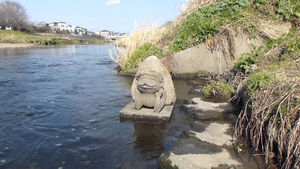
Shiki City, located in the southwestern part of Saitama Prefecture, has a legend of kappa (water imps),
There is a legend of kappa (water imps) in the city of Shiki, located in the southwestern part of Saitama Prefecture.
Shiki City is surrounded by three rivers,
The legend of kappa has been passed down from generation to generation.
The Higuimata River is probably the Yanase River that flows through the city,
The Hittomata River is probably the Yanase River that runs through the city.
This story is also introduced in Kunio Yanagida's "Yamashimin Tanshu" ("A Collection of Tales of Mountain Islanders").
Yanagida Kunio's "Yamashimin Tanshu" (Tales of Mountain Islanders).
There are other legends of kappa in Shiki City.
As the number of legends shows, there are 23 statues of kappa in the city,
There are 23 statues of kappa in the city.
The statues are so familiar that they are given nicknames
Each of them has its own nickname.
Source: xn--9oqx67ab2fnkbmy2he6h.com
Read more
https://xn--9oqx67ab2fnkbmy2he6h.com/?p=720
Kanagawa Prefecture "Yokohama Three Pagoda Story" where wishes come true
Saitama, Japan Uncle Chanel

Source: livedoor.blogimg.jp
Uncle Chanel.
Uncle Chanel.
Buildings made of warehouses, temples, and shrines line the street,
The city is crowded with floats during festivals,
Kawagoe City, a small Edo town in Saitama Prefecture.
Perhaps due to the influence of the NHK morning drama that was broadcast a few years ago, Kawagoe City attracts a large number of tourists,
It is a place that attracts a lot of tourists.
The shopping arcade that stretches from the station is lined with many shops.
The shopping arcade stretching from the station is lined with many stores,
The shopping arcade stretching from the station is lined with many shops, and is crowded with students and women shoppers both on weekdays and holidays.
It was a long time ago,
I went to high school in Kawagoe City,
I used to play around Kawagoe station after school,
I also had a part-time job when I was in junior college,
I think I have been in Kawagoe quite a bit.
Even so, there is a rumored person whom I could not meet.
That person is "Mr. Chanel.
He is called "Uncle Chanel,
He is a slender man who wears Chanel all over his body.
He likes flashy hats, sunglasses, and enamel bags.
There are rumors that he is a very rich uncle,
No, actually, Chanel's clothes are not.
The theory is that he collects them at flea markets, etc,
He wears a memento of his late wife,
Formerly in the Self-Defense Forces, an executive, a company owner, or just a regular guy,
There are various kinds of information about him.
Source: xn--9oqx67ab2fnkbmy2he6h.com
Read more
https://xn--9oqx67ab2fnkbmy2he6h.com/?p=125
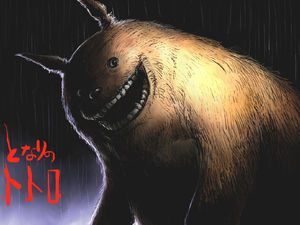
Saitama Prefecture, Sayama City "The Real Scary Tonari no Totoro
Source: pbs.twimg.com
Sayama City "The Real Scary Tonarino Totoro
Sayama City "The Real Scary Tonarino Totoro
In May 1963, a girl was kidnapped and murdered.
The incident is called the "Sayama Incident,
The case has many similarities with the setting of My Neighbor Totoro.
First of all, Totoro takes place in Saitama Prefecture,
(In the beginning of the movie, a girl moves to a new house and is killed by her father.
(In a scene early in the movie, when the family is cleaning up after moving out of the house, there is a cardboard box with the word "Sayama-cha" written on it.
There is a cardboard box labeled "Sayama Tea.")
The fact that "Satsuki" and "Mei" in Totoro are both words that refer to the month of May.
Both words refer to the month of May,
coincide with the month of the incident.
During the incident, the older sister saw the body of her murdered sister,
She said, "I saw a ghost of a cat," "I met a big raccoon dog," and so on.
She said she saw a ghost of a cat" and "I met a big raccoon dog.
Furthermore, Hayao Miyazaki said at the press conference announcing the production of the film
Miyazaki said at the press conference announcing the production of the film, "This film is the liberation of Satsuki and Mei's souls.
Miyazaki also made a mysterious statement at the press conference announcing the production of the film,
The last part of the film is actually about Satsuki and May,
The last part of the film is an urban legend that Satsuki and May are actually dead.
Satsuki and May are actually dead in the final scene.
Source: xn--9oqx67ab2fnkbmy2he6h.com

Contents
- Chiba Yabu-kunin (forbidden land) in Yawata, Chiba
- Chiba Prefecture, mysterious small "reverse-blade sword"
- The Truth About Tokyo Disneyland's "Emergency Inspection of Big Thunder Mountain
- Hamayado Coast, Chiba Prefecture (Coast that disappeared from the map)
- Chiba Prefecture Young Leaf Markers Beware! Yabashira Cemetery" that you will not be able to get out
- Hermit at the west exit of Matsudo Station, Chiba
- Kawabotaru" in Inba Marsh, Chiba Prefecture, Japan
- Chiba Prefecture Naked straw fisherman
- Kawagoe City, Saitama Prefecture Miyoshino Shrine "Birthplace of Doriyanse
- Legend of the Kappa of the Hittomata River (Yanase River), Shiki City, Saitama Prefecture
- Kanagawa Prefecture "Yokohama Three Pagoda Story" where wishes come true
- Saitama, Japan Uncle Chanel
- Saitama Prefecture, Sayama City "The Real Scary Tonari no Totoro
- Utsunomiya, Tochigi Prefecture "Anyone can take home the flowers from the wreath of flowers in celebration of a newly opened store" legend
- Tochigi Prefecture "Real☆DRAGONBALL" The Legend of Nanatsuishi
- Tochigi, Japan Cave Oji
- Tochigi Prefecture Nasu Yumoto Onsen "The Legend of the Nine-Tailed Fox and the Killing Stone
- Kanagawa Prefecture "Enoshima" and "Mt. Fuji" are connected!
- Kanagawa Prefecture Couples Separate on Enoshima Island
- Kanagawa Prefecture "Yokohama Three Pagoda Story" where wishes come true
- Chigasaki City, Kanagawa Prefecture "Eboshi-iwa (Legend of Uba-iwa)
- Virgin aunt in Yokohama, Kanagawa, Japan
- Haunted Tunnel (Kotsubo Tunnel), Kanagawa Prefecture
- Enoshima, Kanagawa Prefecture: The Legend of the Tennyo (Heavenly Maiden) and the Five Dragons
- Legend of the three most handsome men in Japan (Tokyo, Fukuoka, Kanagawa)
- Gunma, Japan White Soarer
- Gunma Prefecture, Sanyazawa Akagi Shrine, hidden by the gods.
- Gunma Prefectural Tsutsujigaoka Park "Sad Pine Tree
- Kisaragi Station, a place between the other world and this world, Tsukuba City, Ibaraki Prefecture.
- Ibaraki Prefecture Kinugawa "A Ghost Story of Rakegafuchi" (Kinugawa River, Ibaraki Prefecture)
- Ushikunuma Kappa Legend, Ibaraki Prefecture
- Legend of Japan's three biggest uglies (Mito, Sendai, Nagoya)
- We also recommend this summary