
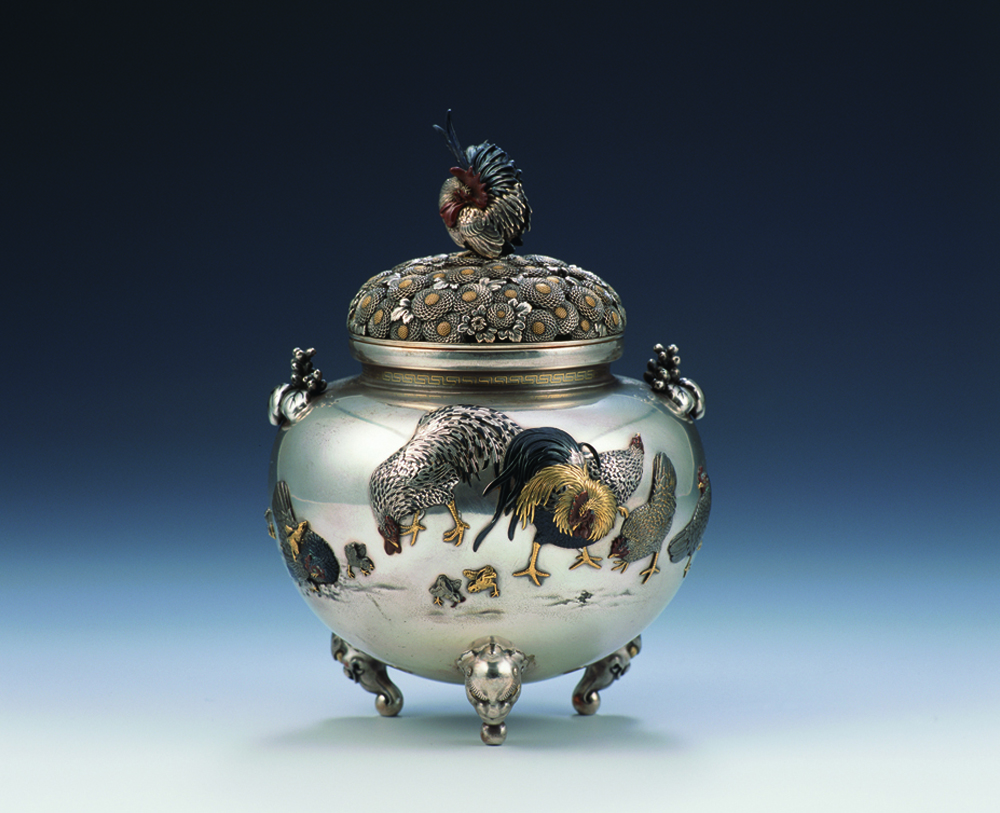
Katsuyoshi Shoami (April 28, 1832 - December 19, 1908) was a goldsmith active in the Meiji era. His engraved metal crafts were a source of inspiration not only for Japan, but also for the rest of the world at the World Exposition in Vienna, where the prestige of the Meiji government was on display.
Originally, the Shoami family had been making sword accessories for the feudal lords for generations, but after the Meiji Restoration, the employment relationship with the Okayama domain was cut off due to the abolition of feudal domains and the loss of livelihood. The traditional goldsmithing skills that had been passed down from generation to generation almost went out of business.

While other metal engravers in the same line of business were going out of business, Katsuyoshi switched to making interior decorations such as vases and incense burners, statues, tea utensils, and other arts and crafts, and managed to make a living by making use of his skills.
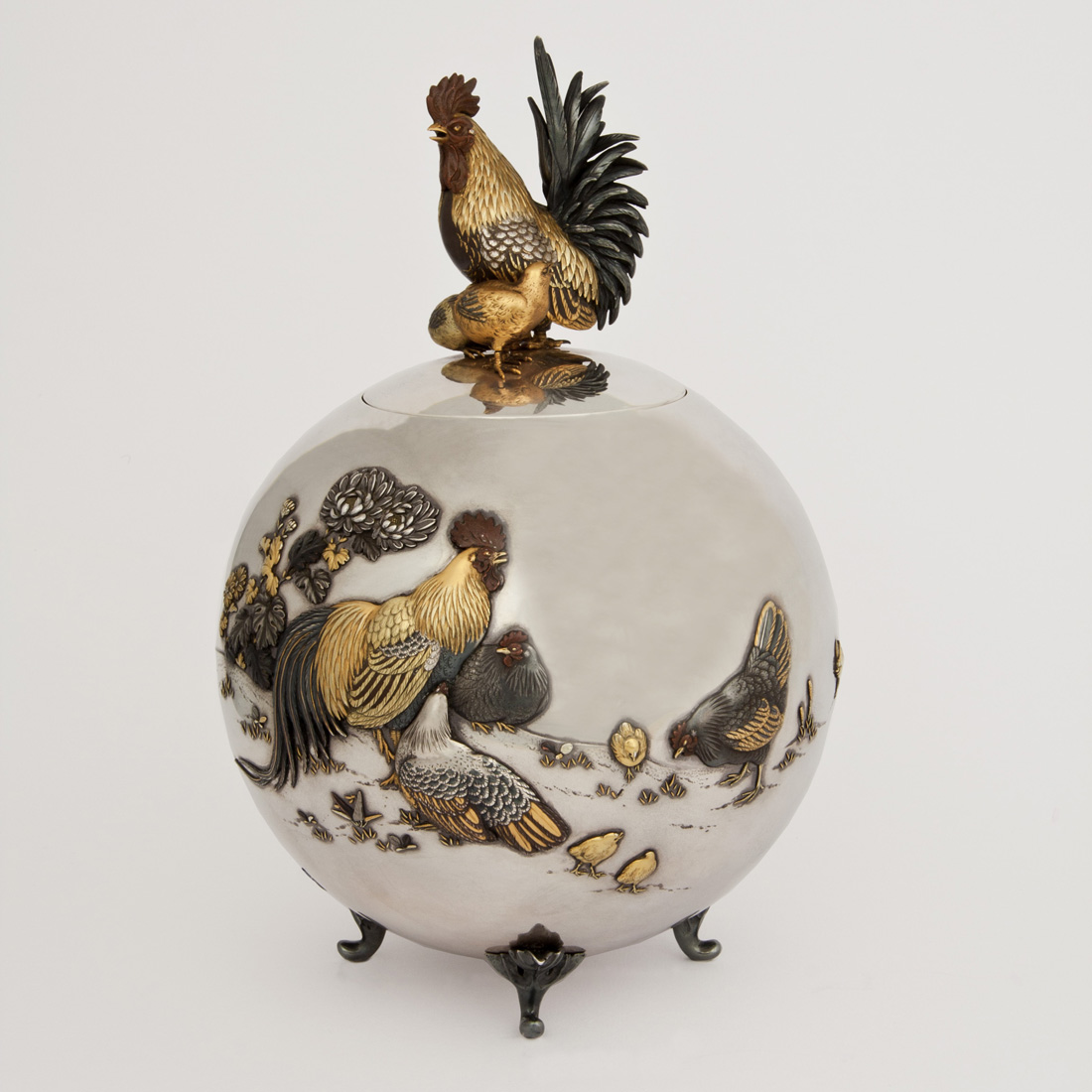
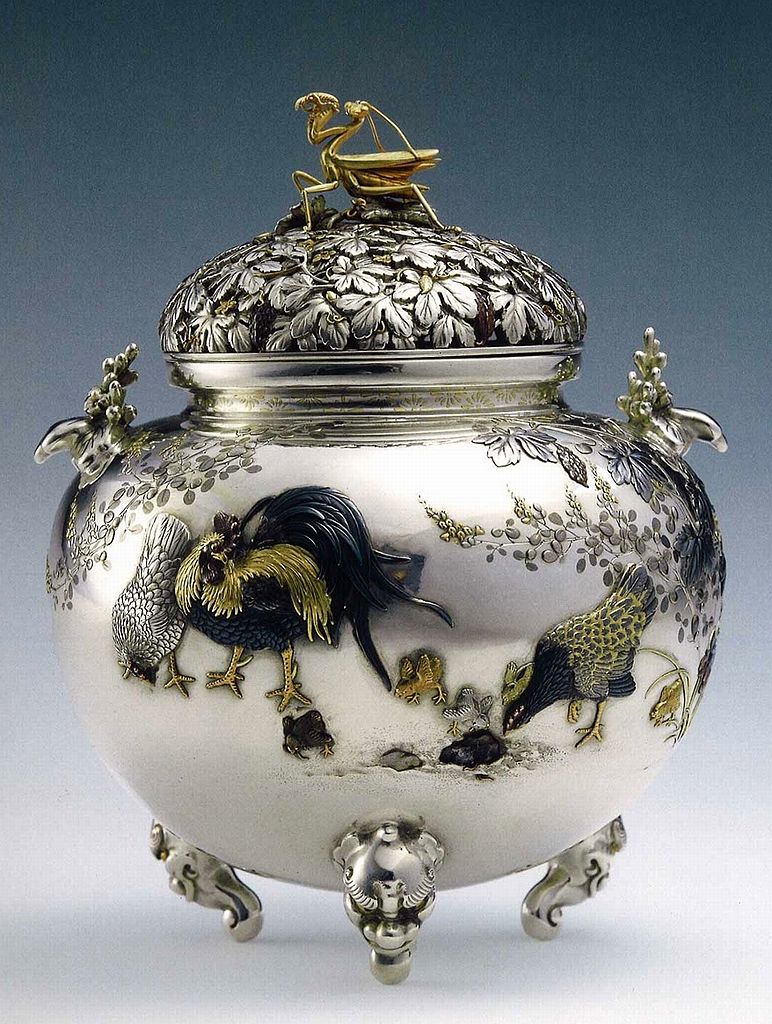

When we see the numerous masterpieces left by Shoami Katsuyoshi today, we are truly impressed by his "superb technique," which is so impressive that it is hard to believe that it is the work of a human being. Alongside the greatness, there is a sense of "stylishness" and "stylishness" that adds to the superb technique.
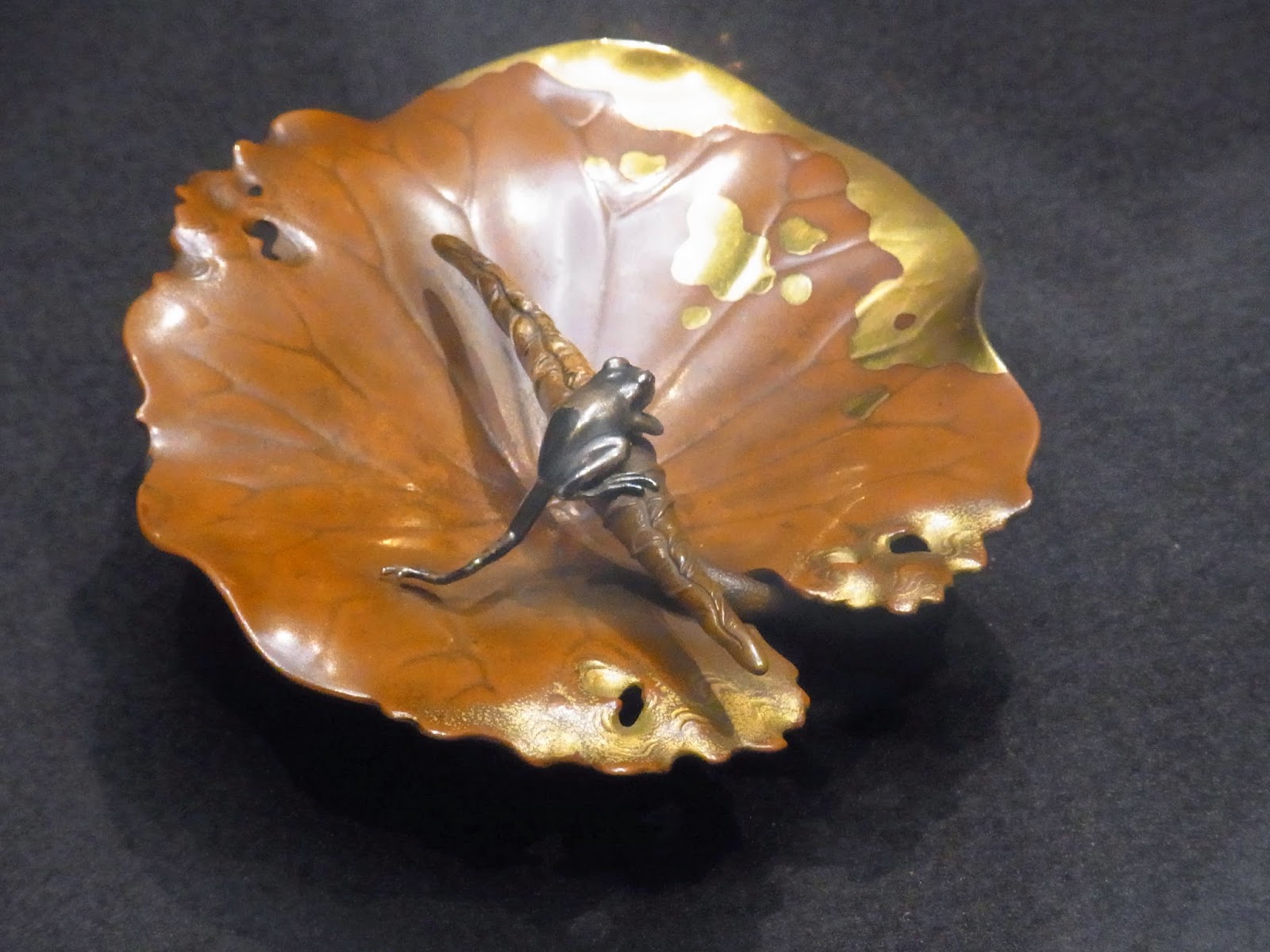
The Japonism boom at the Vienna World's Fair gave Shoami Katsuyoshi's works a chance to go abroad, and it seemed that the craftsmen of swordsmithing were on the right track, letting their superlative skills blossom into a new world. However, the trend of the times was toward mass production and the distribution of inexpensive products, and Japan's "superb techniques" gradually disappeared into the darkness of history.
Today, in the 21st century, Shoami Katsuyoshi's "superb technique," which had been sealed away in the darkness of history, is once again resurrected as the pride of Japan, as if it had been waiting for 100 years to shine.
