
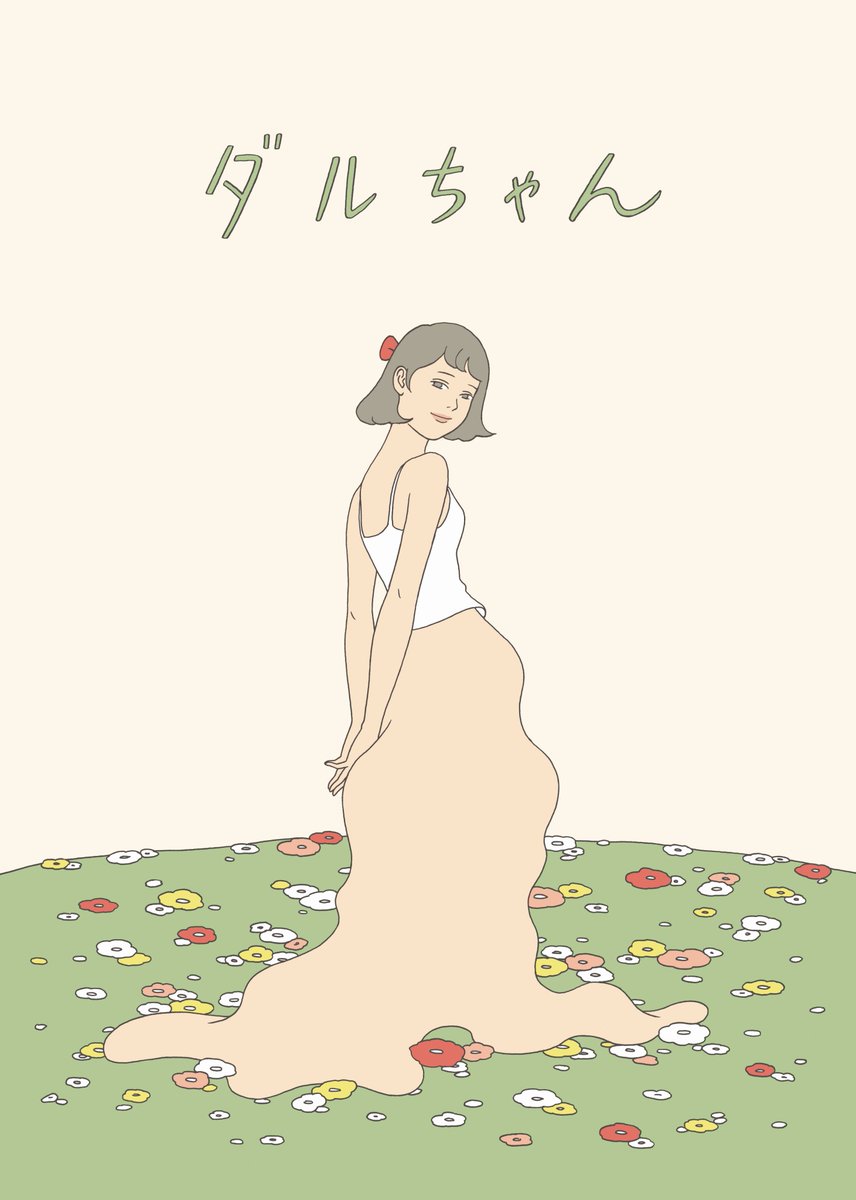
Dal-chan" is a comic work serialized by manga artist Haruna Lemon in Shiseido's web media "Hanatsubaki" from October 2017 to October 2018, and published in book form by Shogakukan in 2018. It was the first comic work to win the "Arai Award," which became a hot topic. The story is about the main character Dar-chan, who hides her true identity as a "Dardaru Seijin" (an alien) and mimics the appearance of an ordinary dispatched female office worker, Narumi Maruyama, to live her life, and how she finds her true self and happiness through poetry. The story deals with the difficulties that women face in life, and has gained the sympathy of many people.
Ms. Satow's words to Dar-chan, who kept laughing and listening to Ms. Sugita's insulting remarks at the drinking party. Ms. Satow pointed out that Mr. Sugita "was looking down on Dar-chan just because she was a woman and had an office job and made her feel good," and lectured Dar-chan, who had been laughing at Mr. Sugita's words, saying, "I don't want you to treat yourself like that.
He told her, "I don't want you to treat yourself like that. At first Dar-chan was repulsed by Sato's harsh words, but later she realized that they came from a painful experience in her past, and that she could not leave Dar-chan behaving like her former self alone.
Mr. Koda: "There is no such thing as a normal person in this world. Don't think that a nonexistent maboroshi is the key to happiness."
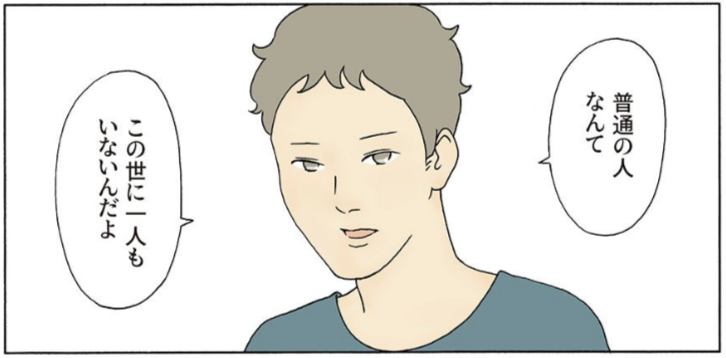
Mr. Koda's words to Dar-chan, who cries, "I can't be happy because I'm not normal.
Dar-chan, who has been trying her best to mimic the appearance of a normal human being, but has been hurt by her lack of success, is even angry with Mr. Koda, who does not try to hide his Dardal alien form, saying, "That's not normal. However, Mr. Koda tells Dar-chan, "There is no such thing as a normal person in this world. Don't think that a nonexistent mirage is the key to happiness.
Dar-chan is shocked by his words, and the shock he feels at that moment becomes the catalyst for him to resume writing poetry.
Dar, "I'm the only one who can make me happy."
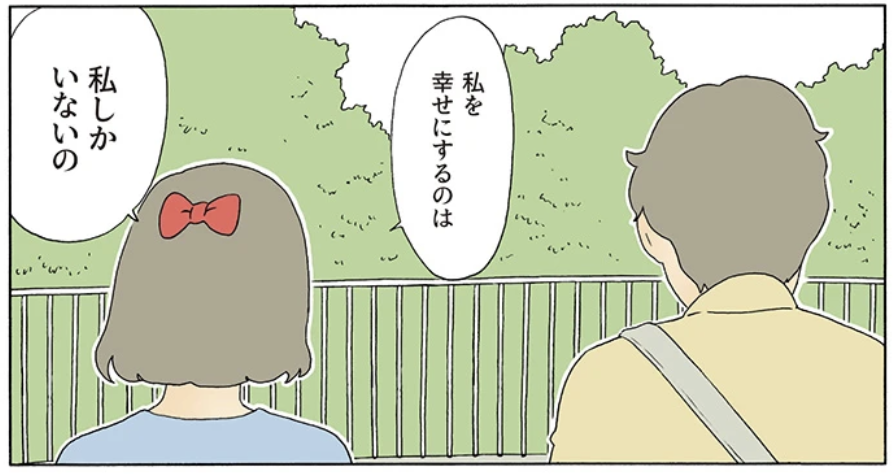
The words Dar-chan said when she said goodbye to Hirose. Dar-chan once made up her mind to stop writing poetry in order to be with Mr. Hirose, but she reaffirms that expressing herself through poetry is what makes her happy.
Dar-chan has been thinking about what she should do to be happy with Mr. Hirose, but she realizes that it was arrogant of her to think that she might be able to make someone other than herself happy in the first place. On our date at the museum, Dal-chan said to Hirose, "All I can do is make myself happy, that's all. I am the only one who can make me happy. Mr. Hirose tells Dal-chan that her current expression is "very nice" and accepts the parting.
These words are a sign of growth for Dar-chan, who had always thought only of how to fit in with those around her, but now, for the first time, she is putting her own happiness first.
Backstories, trivia, small stories/episodes, and anecdotes from "Dal-chan
Received the Arai Prize, a literary award chosen by booksellers at their own discretion.
The Arai Prize is a literary award in which Mieka Arai, a bookseller at Sanseido's Yurakucho store, selects a book she "personally recommends" on the same day as the Naoki and Akutagawa prizes, in order to promote it in the store. Although the prize is a literary award chosen at the sole discretion of a bookseller, the winning books have been attracting attention as their sales exceed those of the Naoki and Akutagawa prizes.
The first award was given in 2014 to the novel "Otoko tomodachi" by Akane Chihaya. Since then, only literary works have been selected, but the 9th award-winning work, "Dal-chan," was a comic work, which is unusual for the Arai Prize. Mieka Arai posted on Twitter, "Who decided that the Arai Prize must be a novel?
The story begins with the image of "a girl who writes poetry."
Dal-chan" was serialized in Shiseido's web media "Hanatsubaki". Before the serialization began, the author, Haruna Graduates, heard from the person in charge of the media that "we have an open call for poetry, and ordinary housewives and office workers are very enthusiastic about submitting their poems," and was impressed by the fact that "writing poetry is an expression of a desire to express oneself that is not shown to society. From there, I got the idea of "telling a story about a girl who writes poetry," and the serialization started with only the outline of the story in mind.
The characters came to life as if they had been given life by starting the story without deciding on the details, and the episode "Dal-chan hates Satou-san" was unexpected even for the author.
Dal's poem is the author Haruna Graduates' own work
The poems about Dar-chan that appear in the book were written by the author, Haruna Graduates, herself.
She says that she wrote the poems to convey Dal-chan's feelings in each scene rather than the perfection of the poem.

Tags
Contents
- Overview of "Dal-chan
- Synopsis and story of "Dal-chan
- Dal has lived his life hiding himself.
- Dal is heartbroken over the incident with Mr. Sugita.
- Start of poetry writing with my new friend Satou
- My First Love with Mr. Hirose
- Dal gives up writing poetry for Mr. Hirose.
- Dar's happiness and farewell to Mr. Hirose.
- Dal realizes, "I'm fine with who I am."
- Characters and characters in "Dal-chan
- protagonist
- Dal-chan, Narumi Maruyama
- Company people
- Mr. Sato.
- Mr. Sugita.
- Mr. Fukuda.
- Hirose acid
- Other
- Mr. Koda.
- Terms for "Dalchan
- dah-dah-dah star
- temporary worker
- Open Call for Poetry
- Famous quotes, lines/scenes and scenes from "Dal-chan
- Mr. Satow said, "Don't smile like that at those who trample on your dignity. They will easily take advantage of you and control your life.
- Mr. Koda: "There is no such thing as a normal person in this world. Don't think that a nonexistent maboroshi is the key to happiness."
- Dar, "I'm the only one who can make me happy."
- Backstories, trivia, small stories/episodes, and anecdotes from "Dal-chan
- Received the Arai Prize, a literary award chosen by booksellers at their own discretion.
- The story begins with the image of "a girl who writes poetry."
- Dal's poem is the author Haruna Graduates' own work