
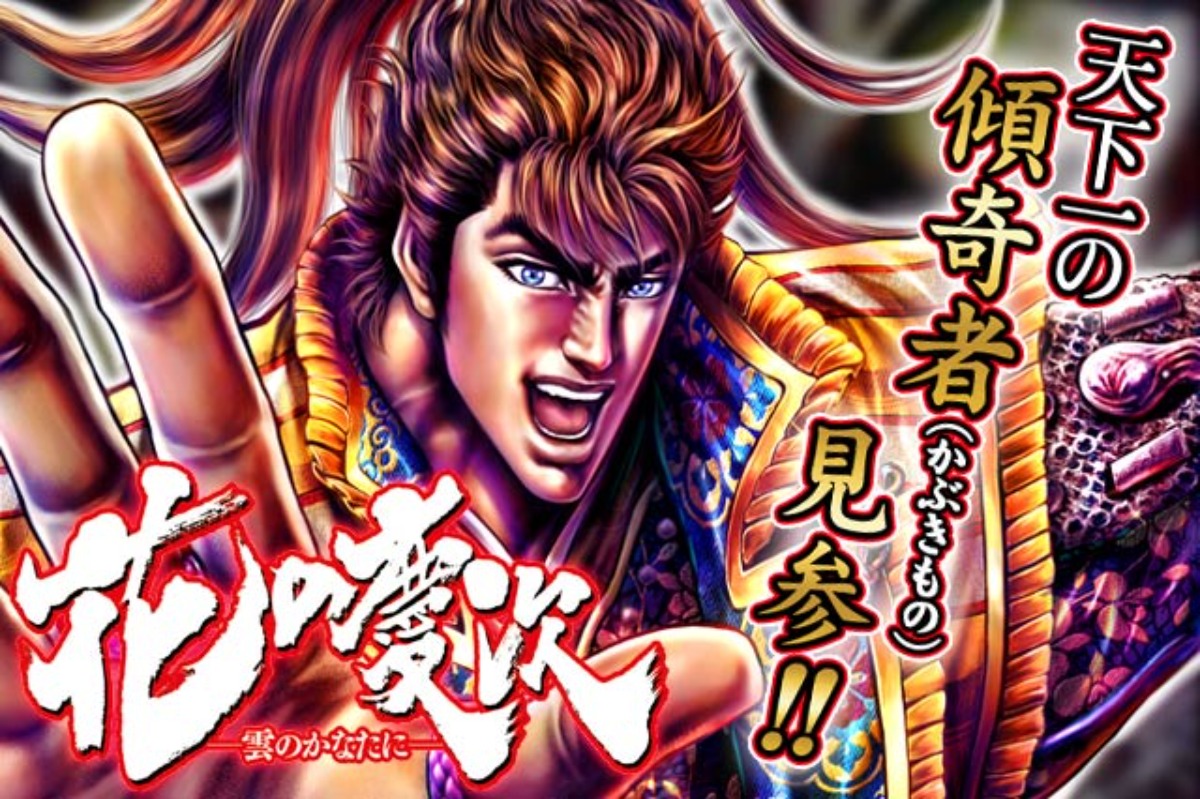
Hana no Keiji - Kumo no Kanata ni" is a manga by Tetsuo Hara that was serialized in "Weekly Shonen Jump" from 1990 to 1993. It is based on the historical novel "Hitomuan Furyuki" by Keiichiro Takashi.
Set at the end of the Sengoku period, the manga depicts the epic drama of Maeda Keiji, the nephew-in-law of the Sengoku warlord Maeda Toshiie, who is the most eccentric person ever to have lived in Japan. The main character, Maeda Keiji, and the diverse characters that surround him are fascinating, and their bold and poignant behavior and daring tactics made them popular. Many famous quotes were also created, and the game later became popular as a pachinko (Japanese pinball) machine.
Outline of "Hana no Keiji - Kumo no Kanata ni
Hana no Keiji: Kumo no Kanata ni" is a manga work by Tetsuo Hara, which first appeared in Shukan Shonen Jump (1989) in issue #50 and was well received, and was serialized from 1990 issue #13 to 1993 issue #33. The original story is based on Keiichiro Takashi's "Ichimuan Fuyuki," and the content is largely the same as the original, but Tetsuo Hara rearranged some parts of the story for the shōnen version and added original episodes.
The story depicts the human drama of the hero Maeda Keiji, who has both kindness and chivalry, and the various characters surrounding him. After the serialization of the very popular manga "Hokuto no Ken" (Fist of the North Star), Tetsuo Hara, who created the artwork, tried to produce a work that would surpass it by trial and error, but he was unable to find a good idea and stagnated. It was then that he came across Keiichiro Takashi's "Ichimuan Furyu Ki," which inspired him to draw this work based on the image of the main character who embodies the way of life inspired by "Kabuku. Tetsuo Hara himself later said, "If I had not met Mr. Takashi at that time, I would not be the manga artist I am today," and this work became a catalyst for the development of his confident manga career.
The comic series began with Jump Comics (18 volumes), followed by a paperback edition in 1999 (Shueisha, 10 volumes), a convenience store comic (Shinchosha, 21 volumes) in 2001-2002, a complete edition in 2004-2005 (Tokuma Shoten, 15 volumes), a convenience store comic wide edition in 2007 (Tokuma Shoten, 8 volumes), and a comic book edition in 2009 (Tokuma Shoten, 8 volumes). (8 volumes), Bunch Comics Deluxe Edition (Shinchosha, 12 volumes) in 2009, Zenon Comics Deluxe Edition (Tokuma Shoten, 12 volumes) in 2011, and various other publishers.
The story of "Keiji Hana no Keiji - Kumo no Kanata ni" (Keiji Hana - Kumo no Kanata ni)
Encounter with the giant horse "Matsukaze
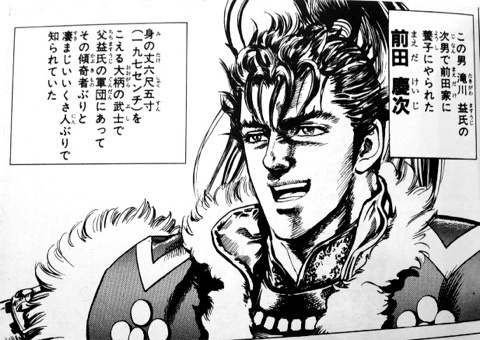
Maeda Keiji is known as "the eccentric man of the world.
The Warring States Period. Maeda Keiji, nephew of Maeda Toshie, lord of Kaga, was known as "Kabuki Kimono," a man of eccentric appearance and outlandish behavior that caused a stir in the world. His unrestrained behavior caused a stir among those around him, but no one could stop him because of his bravery and charm, which became a source of worry for Toshiie.
One day, Keiji spots a magnificent black horse galloping majestically through the fields and mountains. Keiji is so taken with this black horse that he decides to make it his own, and instead of capturing it, he spends time with it and tries to open its heart to him. The black horse ignores Keiji at first, but eventually connects with him and allows him to ride on its back. The black horse is given the name Matsukaze (松風) and becomes Keiji's beloved horse and his first partner.
In the Warring States period, when the lines of status and position were sharply drawn, Keiji's freewheeling way of life made him many enemies. At one time, he was the target of a ninja, and at another time, a samurai, but he was able to turn the tables on them with his extraordinary bravery. In the midst of this, Keiji was taken in by the ninjas Sutemaru and Iwabei, who had once faced him as enemies, and took them as his subordinates.
Keiji made too many enemies in Kaga, and eventually came to be targeted by the Toshiie clan. After the death of his father, Toshihisa Maeda, he leaves Kaga and goes to Kyoto with Matsukaze and others.
Meeting with Hideyoshi Toyotomi and "Kikkai Gomen no Gyoi
On April 14, Tensho 16, Toyotomi Hideyoshi, the Grand Minister of State, invited Emperor Goyozei to his residence, Jurakudai. The emperor's visit to Toyotomi Hideyoshi, his direct subordinate, was a major historical event, as it was evidence of the expansion of Toyotomi Hideyoshi's power. This event was later called "Juraku Gyoko," after Hideyoshi's residence. The "Juraku Gyokou" was attended by all the feudal lords who had surrendered to Hideyoshi, including, as a matter of course, Keiji's uncle, Maeda Toshiie. Hideyoshi is delighted that Emperor Goyozei is coming to his residence, and he is elated and elated, saying, "When it comes to anything for the emperor, I cannot go against myself as a Sekihaku (chief advisor to the Emperor). During the five days of the Jyugaku excursion, Hideyoshi had the feudal lords write and submit a written pledge in front of Emperor Goyozei, stating that they would not raise any objections to the imperial domains and that they would never disobey Hideyoshi's orders. From this time on, he steadfastly maintained his position as Grand Minister of the Grand Council of State and further expanded his power.
After completing his visit to Jyuraku, Hideyoshi, having heard of Keiji's reputation for various actions, waited for his interest and called his uncle, Toshiie Maeda, and urged him, "When are you going to let me see Keiji? However, if he continued his usual style of being "eccentric" in front of Hideyoshi, it would anger Hideyoshi and put him and the Maeda family in a difficult position, as well as Keiji's life, in danger. Everyone was well aware of the fact that this would not only anger Hideyoshi but also put the Maeda family in a difficult situation.
Although Keiji is calm in the face of this situation, he comes to a decision that "dead fish don't splash in the water" and decides to kill Hideyoshi when he visits the Jurakudai. The day finally comes. In a room called "audience room" in Jurakudai, where more than 20 lords are present, Keiji, as usual, makes a spectacular tilt in front of Hideyoshi's eyes, to the surprise of all the participants, but Hideyoshi laughs a lot and shows a relaxed expression for a while. Keiji manages to approach Hideyoshi and attempts to kill him, but since this is Hideyoshi's residence, "Juraku-dai," he understands that if anyone approaches Hideyoshi, his vassals, who are hiding in various places, will immediately kill him. As the stalemate continues, Keiji suddenly begins to perform "monkey tricks," again surprising the feudal lords. It is a well-known fact that Hideyoshi feels complex about his monkey-like face, and it is obvious that making fun of him will cost him his life, but this time Keiji does it effortlessly and finally angers Hideyoshi.
Hideyoshi wonders, "Why is Keiji going out of his way to provoke me?" But then he notices Keiji's sharp, murderous temper, and he shows his face as an "ikusajin" rather than a sekihaku (a chief advisor to the Emperor). The feudal lords also noticed his color, and the audience hall was once again filled with tension.
Hideyoshi asks Keiji why he decided to kill him, but Keiji says it was his "will. He says it is his "will as a human being. He said it was his "will as a human being" and that he did not want to call people out and expose them just for the fun of it. Hideyoshi thinks that "the feudal lords will probably cut down Keiji after this," but he refuses to do so. This is because Hideyoshi is also a "leaner" and has a character that does not like to act as others around him think he should. To Hideyoshi's question, "Do you think you can carry through with your intention?", Keiji answered honestly, "I don't know", which made Hideyoshi interested in Keiji's grand gesture and implicitly understood his consideration for the Maeda family and "Omatsu" so that they would not be wronged. Hideyoshi, for the first time, acknowledged Keiji's status as an eccentric, saying, "It was a great deed," and issued the "Gyoi of Gyoi Gomen," which allowed him to behave as he wished anywhere and with anyone. This meant that no one would be able to come after Maeda Keiji.
Meeting with allies and defeating Hojo
At the end of August of Tensho 16, Keiji was visited by Kusama Yanosuke, a vassal of Uesugi Keikatsu, a feudal lord of 1 million koku, which led to his meeting with Naoe Kanetsugu, who would later become his ally. This led to Keiji's participation in a battle against the "Honma Army of Sado," a rival army of Naoe Kanetsugu and Uesugi Keikatsu. He attacked and defeated the Honma army's stronghold, Kawarada Castle, and successfully drove the Honma clan from Sado Island.
In Tensho 18, two years after Hideyoshi Toyotomi Hideyoshi's power was unshakable, Toyotomi Hideyoshi had a hostile relationship with Hojo's army. At this time, Hideyoshi's vassal, Sanada Masayuki, who owned Nagomomo Castle, was preparing to attack the Hojo clan on the grounds that he had been attacked by Inomata Norinao, a vassal of the rival Hojo clan.
While Keiji is relaxing in the Hanamachi (flower district), keeping Matsukaze in Yanagimachi, Kyoto, Sanada Yukimura, second son of Sanada Masayuki, discovers Matsukaze and falls in love with him, just as Keiji did in his early days. To Yukimura, Keiji tells him that he may ride Matsukaze if Matsukaze allows it, but no matter how many times Yukimura tries to ride Matsukaze, he is shaken off. Then, Yukimura, unable to bear the sight of Keiji's retainer Sutemaru being verbally abused by a samurai from the Kaga domain due to a past relationship, kills the Kaga samurai. Yukimura offers to offer his own death as an apology to the Maeda family, but Keiji responds with a laugh, "It would be shameful if I were to die in a fight between warriors in the Hanamachi district, so I will pretend that this incident never happened. On the contrary, he feels indebted to Yukimura for saving Sutemaru, and later, when the Hojo family invades Odawara Castle, he presents Yukimura with "Nofu," the second most famous horse after Matsukaze, and declares that he will help the Sanada family.
When Masamune Date of the Sendai clan is trying to calmly decide which side to take in the battle between the Hojo and Toyotomi forces, he is told by Keiji to join Toyotomi's side. In this exchange, Masamune sees in Keiji an image similar to that of his father, and decides to join Toyotomi's side. Toyotomi Hideyoshi, now overwhelmingly superior in military power, wins the battle against Hojo's forces.
Journey to Ryukyu
When a magistrate sees Yoshiro, a child of Sen no Rikyu, praying with his hands to a standing statue of his father Sen no Rikyu, who was ordered to commit seppuku for opposing Toyotomi Hideyoshi's invasion of Korea, he is blamed and beaten up. Keiji, seeing this, complained to the lord of the Shiga domain that Ishida Mitsunari was narrow-minded, saying, "A tea master or two may be in the way, but that doesn't change anything under heaven. He told Yoshiro that he had come to Sakai to report to the standing statue of Rikyu that his mother had died and that the Bantenren (Bateren) were pretending to be missionaries and aiming to invade Japan.
He was confronted by Carlos, a missionary from Hispania, and defeated. At that time, Yoshiro asked Keiji to tell his son Yojiro of his death, and also entrusted him with a portrait of his daughter, Risa. When Keiji sees Risa's portrait, he is attracted by her beauty and longs to meet her. He then meets Yojiro and decides to go with him to Ryukyu, where Risa is, and joins Yojiro on his ship. On the way to Ryukyu, Yojiro's ship sinks, and Keiji and Matsukaze are thrown overboard, but they manage to drift to the island of Ryukyu. Keiji was blinded by the sea breeze, and it was Risa, the purpose of the trip, who nursed him back to health. Keiji is unknowingly drawn to Risa by her warm and gentle care.
Risa's beautiful appearance made her the target of various enemies, including Shonei, the king of Ryukyu. Risa is taken away to Naha by Shonei's vassal, Oyakata Moutora. Keiji, who was following her, joined Yojiro, Sutemaru, Iwabei, and others on a boat trip to Naha and ended up at Shonei. Surprisingly, he liked the character of Shonei, who protected the country and loved peace, and said, "I can entrust Risa to this person," and tried to leave Risa there for the mainland, but Risa herself wanted to "go to sea in freedom," so she and Keiji went to the mainland. However, Risa herself wanted to "go out to sea freely," so she went to Kyoto with Keiji and others, and from this point on, Keiji and Risa became lifelong companions.
The Last Great Tilt
Toyotomi Hideyoshi's insistence on the Korean invasion gradually forced his vassals to turn against him, and he gradually lost control of the country. Hideyoshi died saying that he would entrust his successor to his successor Tokugawa Ieyasu and Maeda Toshiie, and it is a well-known fact that Tokugawa Ieyasu would take the reigns of the country thereafter. The feudal lords also knew this and joined the Tokugawa forces, but only Uesugi Kagetsugu was prepared to resist the Tokugawa forces. Keiji and Naoe Kanetsugu, a close ally and loyal retainer of Keikatsu, were prepared to die in order to side with the Uesugi forces.
At the time of the clash between Ishida Mitsunari and Tokugawa Ieyasu at Sekigahara, Keiji was fighting the allied forces of Date and Mogami as a member of the Uesugi army. His objective was to keep the forces siding with the Tokugawas pinned here so that Ishida Mitsunari would have the upper hand in the battle, but the news of "defeat on Ishida's side" arrived here. Uesugi's forces, having lost their reason to fight, hurriedly retreated, but the allied forces of Date and Saikami attacked them.
Keiji decided that "this is the last great battle," and together with other brave men who were prepared to die as he was, he charged the pursuing enemy forces with only seven men. The Date and Mogami allied forces, who had been chasing the fleeing enemy thinking only that "victory was already assured" and "I want to earn credit by chasing after the fleeing enemy," were terrified by Keiji's death-defying bravado, as if to say, "I will take you with me and scatter here in a spectacular manner. The Uesugi forces succeeded in their retreat, and Keiji and his men returned safely.
Ieyasu's treatment of the Uesugi family, which had joined Ishida's side, was harsh, but thanks to Naoe Kanetsugu's skillful speech, the family was spared from being crushed, and was transferred to Aizu with its stone value greatly reduced. When Naoe Kanetsugu asked Keiji to come with him, Keiji agreed, and together with Risa, Matsukaze, and others, he left his familiar home in Kyoto to officially become a vassal of the Uesugi family.
Characters in "Hana no Keiji - Kumo no Kanata ni" (Keiji Hana - Kumo no Kanata ni)
Keiji (Keiji's friends)
Keiji Maeda
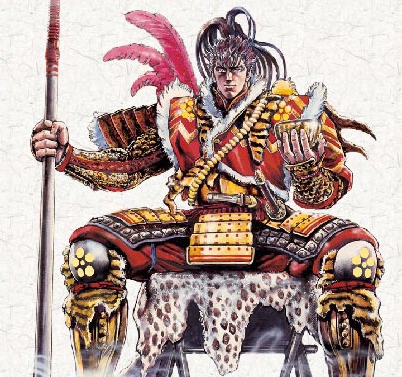
Keiji Maeda
He is the main character of this work and his real name is Maeda Keijiro Hitoshi. He was the most famous wanderer under heaven active in the late Sengoku period (Azuchi-Momoyama period), and was also a sumo wrestler standing 6' 5" (197 cm) tall. Despite his large stature, he was a lightweight due to his background as a Koga ninja. He is a man with his own principles and a free-spirited spirit. He likes to join the underdog, saying, "Losing a battle is what an ikusajin should be. Originally born as the second son of Takigawa Masuji, a cousin of Takigawa Kazumasa, he was adopted by Maeda Toshiie's elder brother, Maeda Toshihisa, and although he did not get along with Toshiie, he stayed in Kanazawa until he saw Toshihisa through his life. He is also a cultured person of elegance, having been in contact with Sen no Rikyu.
Matsukaze (wind blowing from the pine tree)
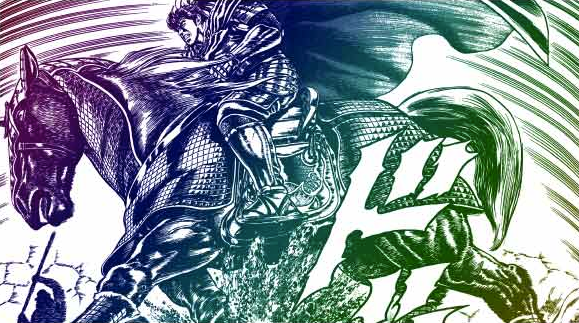
Keiji Maeda riding his beloved horse "Matsukaze
Keiji's favorite horse. His horse is powerful enough to kill a man with a single kick.
Originally a wild horse that no one could catch, Keiji captured it and rode it, and it was through this experience that he and Keiji developed a rapport, and since then, they have gone through many ikusa together. He has a keen intuition and rarely allows anyone other than Keiji to ride him, and even limits the number of people who can get close to him to a certain distance. He understands human language, and once said in a descriptive voice, though not an actual voice, "What are you talking nonsense? Also, while entrusting Keiji with the care of a pony that was dying during Matabei Goto's horse hunt, tears streamed from his purple eyes.
SUTEMARU
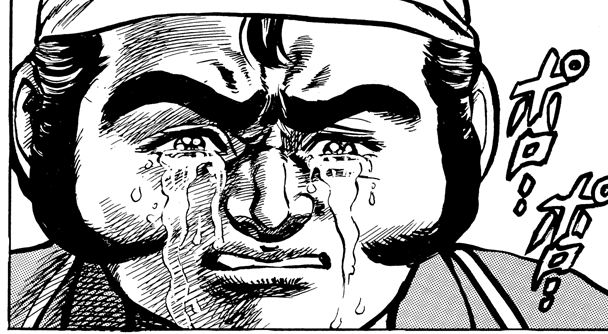
SUTEMARU" shed tears when touched by Keiji's kindness

Related Articles
Summary of Hana no Keiji's Weapons, Schools, and Special Moves
Hana no Keiji Kumo no Kanatani is a boys' manga by Tetsuo Hara. It is based on the historical novel "Hitomuan Furyuki" written by Keiichiro Takashi. The main character is the real-life Keiji Maeda, and the story depicts a "leaner" who lived during the Warring States Period. Since the game is set in the Warring States period, where battles were fought repeatedly, various weapons and special moves using those weapons appear in the game. Keiji's signature weapon, the Shu-Yari (spear), the Roarakudama (hand grenade), the most powerful weapon of the Warring States period, and the Hinawa-gun (firearm), the most powerful weapon of the Warring States period, all appear in the film. Here we introduce the weapons, schools, and special moves that appear in "Hana no Keiji - Kumo no Kanata ni".
Read Article
Summary of Keiji Hana no Keiji's famous quotes, lines/scenes, and famous scenes
Hana no Keiji" is a historical manga by Tetsuo Hara, based on the historical novel "Hitomuan Furyuki" by Keiichiro Takashi. Maeda Keiji, one of the most eccentric characters of his time, goes through a tumultuous period in the Warring States period. The main character, Maeda Keiji, and many other unique characters in this work are full of humanity, and there are many quotations that are full of flavor.
Read Article
Spoiler commentary and discussion of Fist of the North Star (manga and anime)
Fist of the North Star" is an anime that was broadcast from 1984 to 1987. This work is based on "Fist of the North Star" by Takeru Takemono. The story is set in a world that has collapsed due to nuclear war, and it depicts the life of Kenshiro, the Hokuto Shinken master, in a world where violence reigns.
Read Article
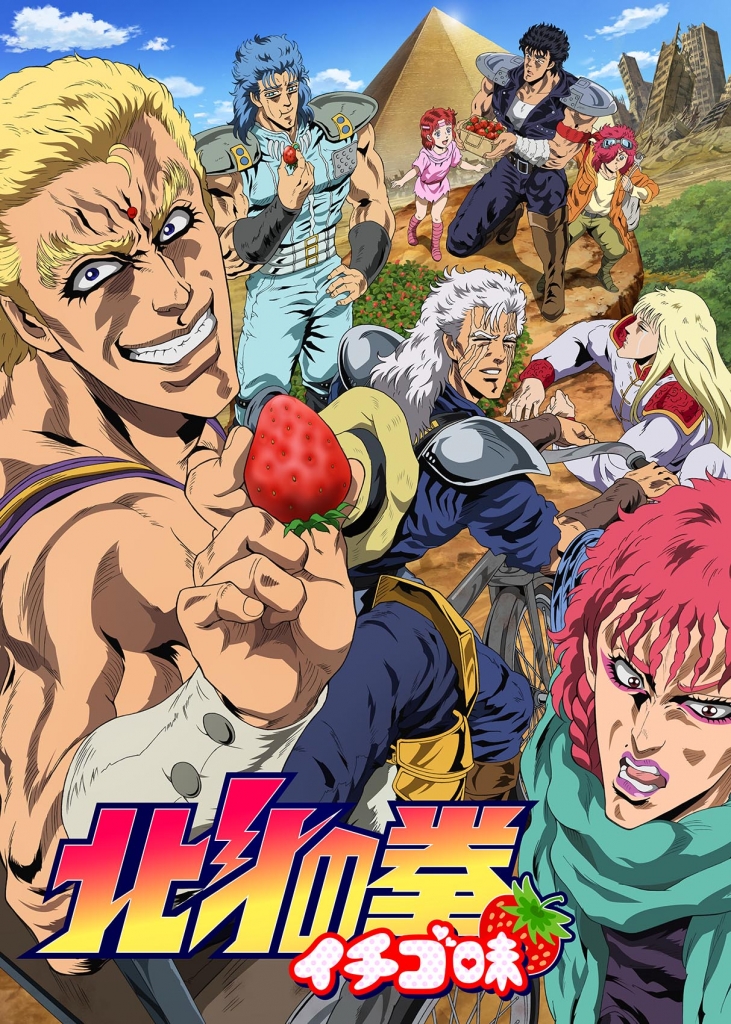
Fist of the North Star: Strawberry Flavor (manga and anime) spoiler commentary and discussion
Fist of the North Star: Strawberry Flavor" is a manga by Tetsuo Takemono and Tetsuo Hara (original idea), Yushi Kawada (scenario), and Gyotsuko Imo (artwork), and an anime work based on it. It is a parody gag manga based on "Fist of the North Star," which dominated the 1980s, and stars Seitei Souther, the man of the Nanto Rokuseiken "Shosei" (the six sacred fists of Nanto). It is characterized by a series of gags with drawings that resemble those of "Fist of the North Star. In 2018, the manga was put on indefinite hiatus due to the artist Gyotsuko's poor health.
Read Article
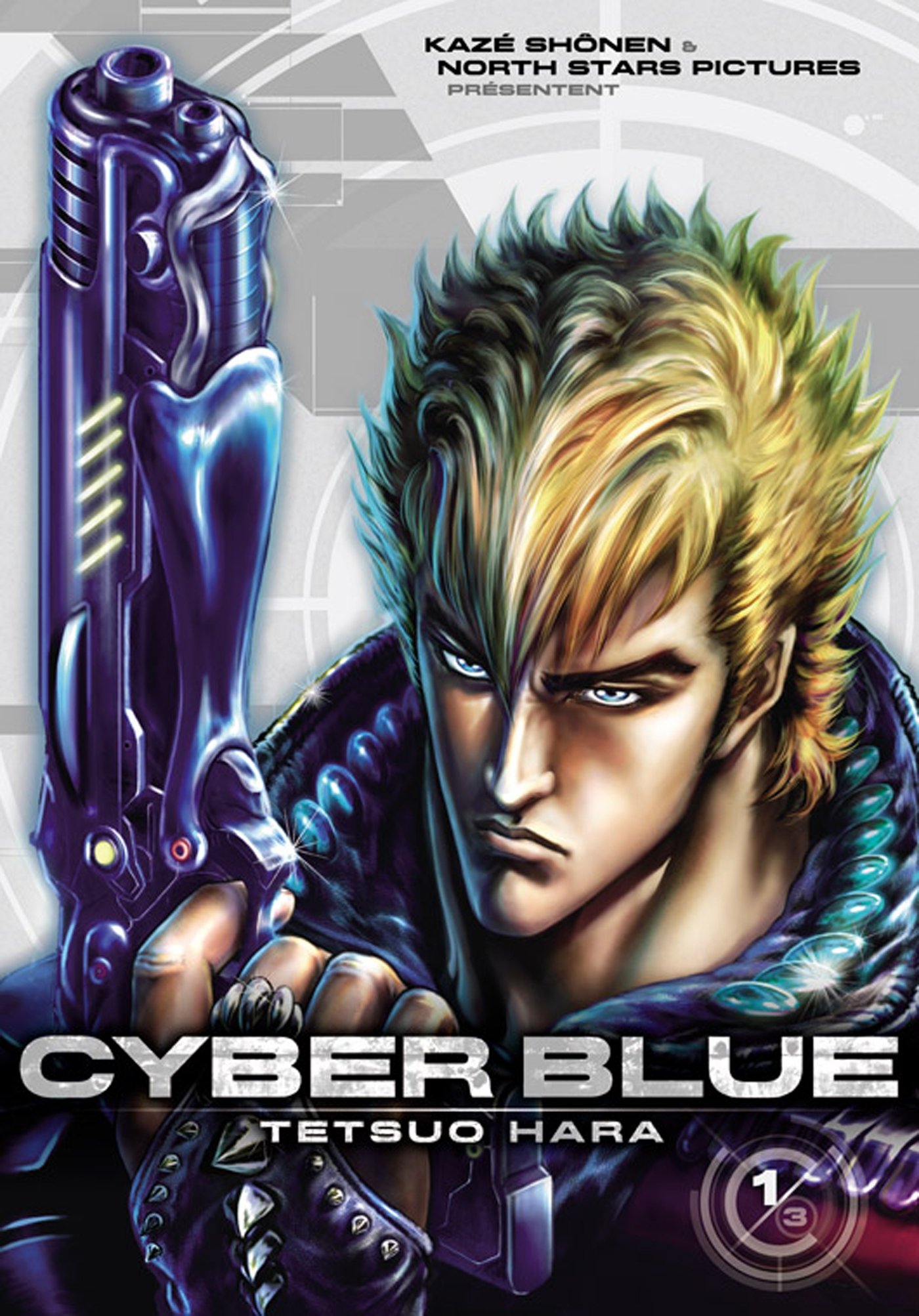
CYBER Blue (manga) spoiler commentary and discussion
CYBER BLUE" is a science fiction violent action manga written by bob, script by Ryuichi Mitsui, and art by Tetsuo Hara. It was serialized in Shueisha's Weekly Shonen Jump from 1988 to 1989. The series was published in four volumes in Jump Comics. In a science fiction world set on the devastated planet Tinos, the boy Blue, who has become an invincible superhero cyber being, battles to defeat the evil forces of the Elders. After the series ended, several remakes have been released, and a pachinko (Japanese pinball) game was released in January 2013.
Read Article
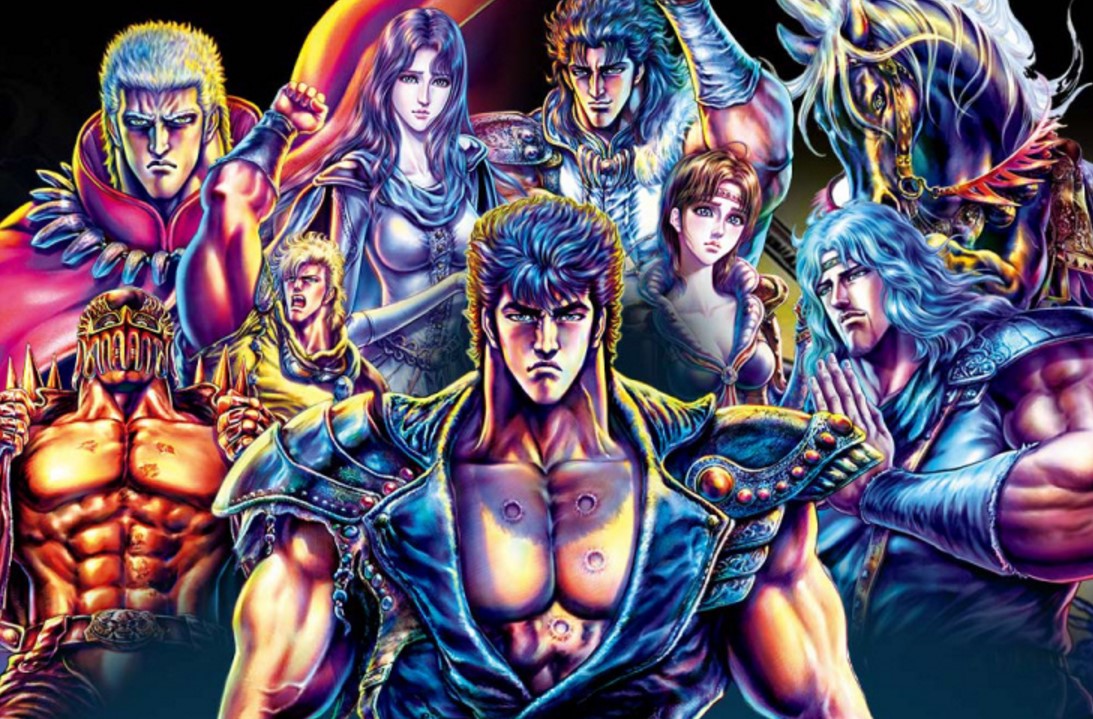
Summary of Fist of the North Star Special Moves
Fist of the North Star" is a Japanese manga written by Takeru Takemono and drawn by Tetsuo Hara. The story takes place at the end of the century in the year 199X, when civilization and order have been lost due to a nuclear war, and people are fighting over resources. It is a hard-boiled action movie that depicts the life of Kenshiro, the legendary Hokuto Shinken assassin who appears as a savior in such a world. This time, we will introduce a number of Hokuto Shinken techniques that everyone must have admired and imitated at least once.
Read Article
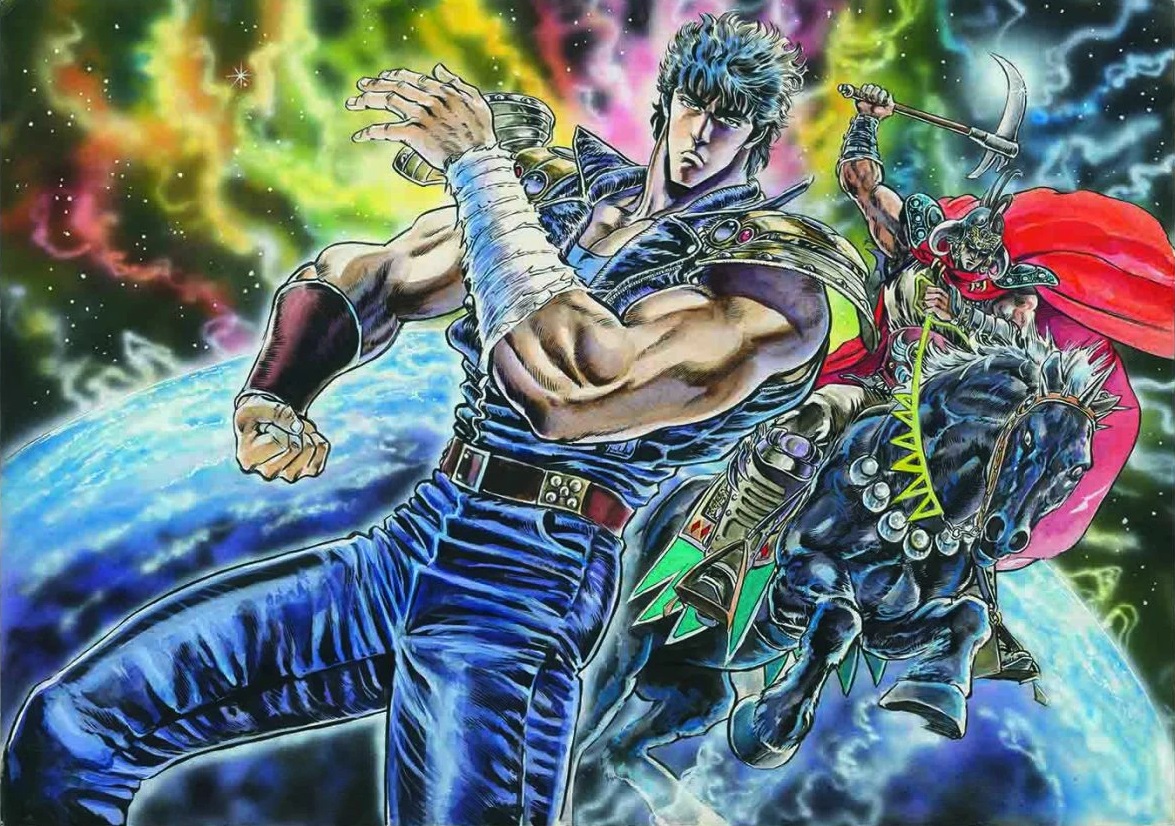
Summary of onomatopoeia, onomatopoeia, onomatopoeia, and breakdowns in Fist of the North Star
Fist of the North Star" is a manga work written by Takeru Takemono and drawn by Tetsuo Hara. It is one of the most popular works of the 1980s, and was followed by a series of anime, video games, and extra editions. The main character, Kenshiro, uses Hokuto Shinken, which "exerts various effects by piercing secret holes in the human body," and its unusual onomatopoeia and impressive demons have become one of the features of the work. Here, we introduce a collection of unique onomatopoeia, onomatopoeia, and demons that appear in "Fist of the North Star.
Read Article
Fist of the North Star, lovable little fish character
Fist of the North Star, a work that has left numerous influences on future generations. It is also a legendary masterpiece. Naturally, the more Kenshiro is beaten up, the more people die, and many of them face a tragic end. This time, let's focus on the side that has been shibaed. Are they all right? No, they will probably die.
Read Article
Summary of Jump's past heroines
Weekly Shonen Jump, the most widely circulated manga magazine in Japan, is at the pinnacle of manga culture in terms of popularity and name recognition, and has produced many masterpieces. As a shōnen manga magazine, most of the main characters are male, but the heroines who support them are also fascinating characters. Some are adults, some are children, some are just protectors, some are sidekicks who fight alongside the hero, some are heroines who have kicked out the regular heroines and are united with the hero, and some are heroines and female protagonists that go beyond the norm of "shōnen manga. Here we introduce some of the heroines who have graced the pages of JUMP.
Read Article
Summary of famous words and lines/scenes/scenes from Fist of the North Star
Fist of the North Star" is a hard-boiled action manga series written by Takeru Takemono and drawn by Tetsuo Hara, which was serialized in Weekly Shonen Jump magazine. The fierce battles and passionate friendships depicted in the series remain highly popular even after the serialization has ended, and the series has expanded into a variety of media, including anime and video games. The main character, Kenshiro, and other unique characters leave behind unique lines that can be considered famous sayings and superlatives.
Read Article
![Weekly Shonen Jump] Manga from the late 80's to the mid 90's [Golden Age].](https://renote.net/files/blobs/proxy/eyJfcmFpbHMiOnsiZGF0YSI6MjM4ODkzLCJwdXIiOiJibG9iX2lkIn19--cc2dd65e70fb4742d9b63b02febb4cbc447f7095/db19ee5b.jpg)
Weekly Shonen Jump] Manga from the late 80's to the mid 90's [Golden Age].
Manga from the Golden Age of Jump (manga started in the late 80's to mid 90's) are summarized here.
Read Article
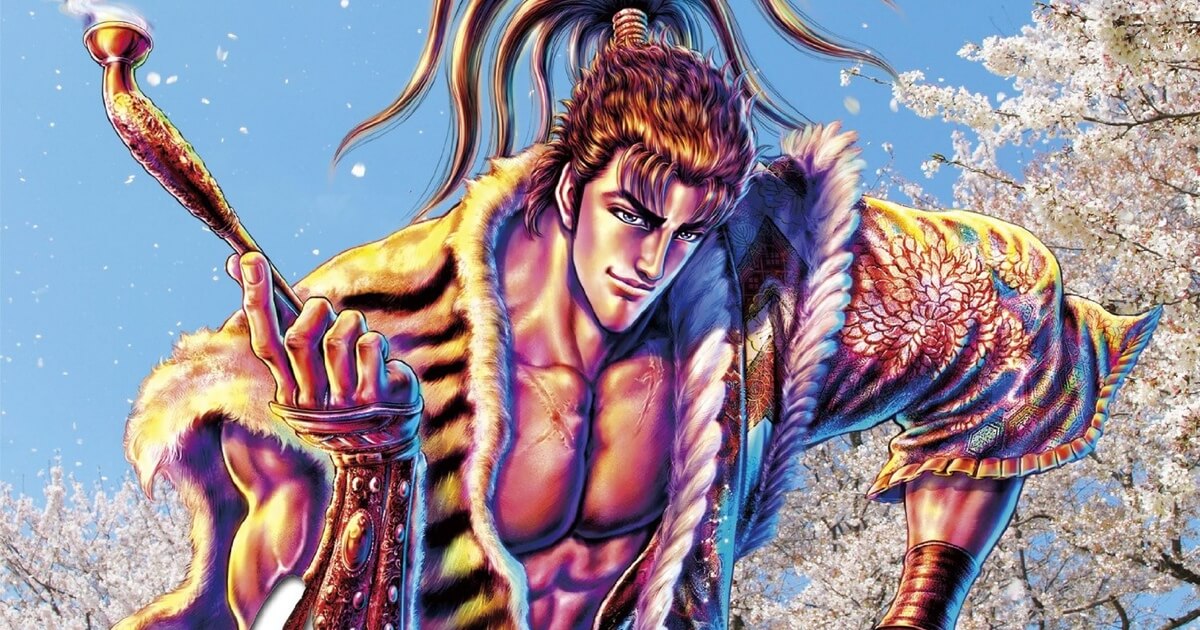
Introducing the characters in "Keiji Hana no Keiji! [Complete Version
Hana no Keiji" is a manga by Tetsuo Hara, based on the historical novel "Hitomuan Furyuki" by Keiichiro Takashi. This article introduces the characters and characters with images. Since there are many characters in the work, the contents of this article will allow you to see what kind of people are in the work.
Read Article
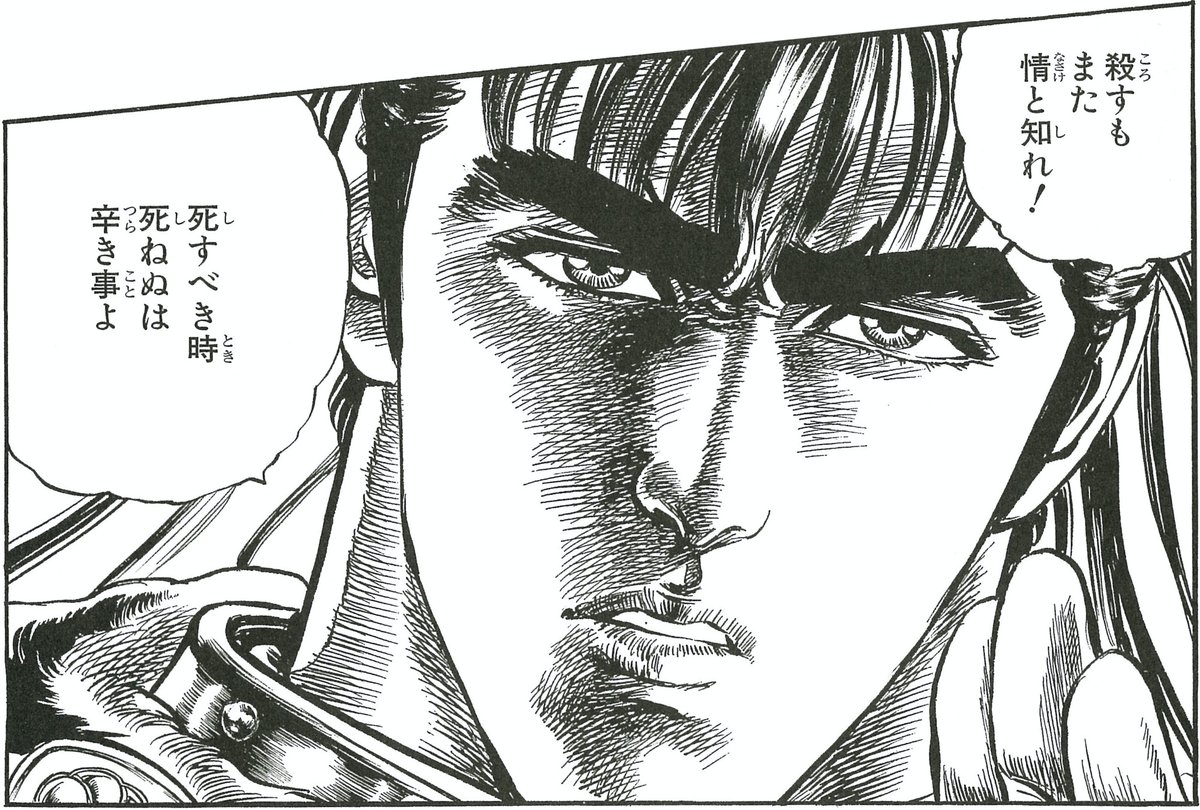
Keiji Hana no Keiji," the life style of the eccentric is the coolest in the Sengoku Manga!
Keiji Hana no Keiji" is a work featuring the warlord Keiji Maeda. As a "Kabukimono," he lives a slightly different life from others, but this is what strikes a chord with readers, and Keiji seems to have many fans. In this article, we have collected many cool images of him.
Read Article
Fist of the North Star: Too Excellent! A "bokete" masterpiece suitable for the end of the century
Fist of the North Star" is a well-known manga that depicts the passionate battles between men. The background of the work is the end of the century, when violence rules the world, but this work, which is supposed to be devoid of any comedic elements, is quickly transformed into a comedy by the "bokete" comedy site! This article summarizes the masterpieces that have been created on "bokete. The laughter at the end of the century is very surreal!
Read Article
The most popular Hokuto Shinken techniques! A compilation of Hokuto Shinken techniques you don't want to miss!
The famous "Atta-ta-ta-ta-ta-ta-ta!" and "You're already dead!" and "You're already dead", but what other techniques does the main character Kenshiro use besides Hokuto Hyakusai Ken? This time, for those who have never seen the original manga or anime, I will introduce various Hokuto Shinken techniques that I personally find terrifying.
Read Article
Resurrection from the dead⁉Summary of characters thought to be dead but resurrected
A compilation of characters who should have died and been in the storyline, but lived for some reason or another, and then came back to life as if nothing had happened.
Read Article
The death scene made me cry! Summary of shocking characters in Taki Namida
Here is a collection of characters who had a moment of death, a moment of brilliance, and a shocking scene.
Read Article
![Dragon Ball] Must Laugh! Anime and Manga "Bokehtee" Masterpieces [Fist of the North Star].](https://renote.net/files/blobs/proxy/eyJfcmFpbHMiOnsiZGF0YSI6NzM1MTg3MSwicHVyIjoiYmxvYl9pZCJ9fQ==--291255dec421d49d9d752b6deba8eccef105f2e5/bejita.jpg)
Dragon Ball] Must Laugh! Anime and Manga "Bokehtee" Masterpieces [Fist of the North Star].
Have you ever heard of a Japanese comedy site called "bokete"? Users who see the "subjects" posted in the form of images and text are asked to respond with a "bokete" response. In this article, we have carefully selected and compiled a selection of masterpieces that are sure to make you laugh. How can you come up with such brilliant bokeh? Your sense of humor is truly amazing! Why don't you try your hand at it?
Read Article
Surprisingly interesting summary of medal games as of 2015.
Many people in Japan do not go to game arcades these days, partly because of the diversification of hobbies and entertainment. However, it is not only the peripheral technology that has evolved and become more powerful over time. The arcade and medal games that used to be fun in the past are getting better and more interesting day by day. In this issue, we have compiled a list of medal games that need to be reevaluated, along with some interesting points.
Read Article
(2) 《Vol.16〜30》Summary of 《Anime and Manga》Story Performers by DVD of "AMETTOKU
This is a compilation of "Ametalk" DVDs from vol.16 to vol.30. All the DVDs are 2-disc sets, and they also come with special bonus videos that have not been broadcast on TV.
Read Article
A compilation of the best quotes and lines from Shonen Jump throughout history.
This page introduces a selection of famous quotes and lines from popular manga serialized in Weekly Shonen Jump from the Showa to the Heisei eras. All of them are well-known and have great impact. Whether you read them as food for your own life or to experience the excitement of the masterpieces anew, please enjoy them as you wish.
Read Article
Urban legends and trivia about "Fist of the North Star
Urban legends and trivia related to the masterpiece "Fist of the North Star" are compiled here. We have included episodes such as the original story of the movie "Mad Max" and the story of the birth of "Hidebu," a desperate cry for help. We will introduce a lot of rumors that you will want to tell someone if you know about them.
Read Article
![Fist of the North Star: All Gamblers Cry with Happiness? The Melancholy of Haruhi Suzumiya] 9 new standard slots with an amazing 10,000-piece breakthrough rate.](https://renote.net/files/blobs/proxy/eyJfcmFpbHMiOnsiZGF0YSI6NzI1NzA2MCwicHVyIjoiYmxvYl9pZCJ9fQ==--c8a52ba8d1898680f1f081cbc68351096dbb8a2e/m58940490252_1.jpg)
Fist of the North Star: All Gamblers Cry with Happiness? The Melancholy of Haruhi Suzumiya] 9 new standard slots with an amazing 10,000-piece breakthrough rate.
For those who love to gamble, pachinko and slots are definitely the way to go. For those who do, this article summarizes the new standard slot machines that have been talked about for their amazing 10,000-piece breakthrough rate. These things are made to be hard to hit, but the new standard ones seem to pay out quite a bit. It may be a great scream for gamblers!
Read Article
Tags
Contents
- Outline of "Hana no Keiji - Kumo no Kanata ni
- The story of "Keiji Hana no Keiji - Kumo no Kanata ni" (Keiji Hana - Kumo no Kanata ni)
- Encounter with the giant horse "Matsukaze
- Meeting with Hideyoshi Toyotomi and "Kikkai Gomen no Gyoi
- Meeting with allies and defeating Hojo
- Journey to Ryukyu
- The Last Great Tilt
- Characters in "Hana no Keiji - Kumo no Kanata ni" (Keiji Hana - Kumo no Kanata ni)
- Keiji (Keiji's friends)
- Keiji Maeda
- Matsukaze (wind blowing from the pine tree)
- SUTEMARU
- Iwabei
- charm
- Risa
- The Maeda Family
- Toshie Maeda
- Mats Maeda
- Okumura Sukuemon
- Yotsui Shuma
- Arai Gankibo
- Toshihisa Maeda
- Oharu.
- Toshinaga Maeda
- Uesugi family
- Kanetsugu Naoe
- Uesugi Kagekatsu
- Yanosuke Kusama
- Oda family members
- Nobunaga Oda
- Kazumasa Takigawa
- Narimasa Sasa
- The Toyotomi Family
- Hideyoshi Toyotomi
- Mitsunari Ishida
- Cha-cha-cha.
- Gen'i Maeda
- Masazumi Ishida
- Yoshitsugu Otani
- The Tokugawa Family
- Tokugawa Ieyasu
- Hattori Hanzo
- Hideyasu Yuki
- Masanobu Honda
- Senke people
- Sen no Rikyu
- Sen no Doan
- The Sanada Family
- Yukimura Sanada
- Sasuke Sarutobi
- Masayuki Sanada
- The Hojo Family
- Ujimasa Hojo
- Ujinao Hojo
- Masashige Daidoji
- Kotaro Fuuma
- Date Family Members
- Masamune Date
- people of the sea
- Yoshiro
- Yojiro
- Carlos.
- Shonenei
- tolerance
- bone
- Fuuma no Hibikato (The Flying Kato of the Wind Demon)
- Terms of "Hana no Keiji - Kumo no Kanata ni" (Keiji Hana - Kumo no Kanata ni)
- Kabukimono
- warriors
- Juraku-dai
- Minister of Kampaku and Dajo (Grand Minister of State)
- Kokuzoin Itto-ryu
- Hyakumangoku no Sake (Sake of Hyakumangoku)
- Hand (Tei)
- Koyo-ryu Ninjutsu
- Famous quotes, lines, scenes and scenes from "Keiji Hana no Keiji - Kumo no Kanata ni
- Keiji: "But I like that! I like that scar! This is the armor of loyalty that you have defended your lord with all your life."
- Keiji: "It is not always possible to live by running away. There are times when it is better to go forward to survive. It is the way of an ikusajin to be able to choose without error!
- Keiji: "Better to trust and be betrayed than to doubt and stay safe."
- Keiji: "You fool, Ikuji, losing battles is what makes them interesting!"
- Hideyoshi: "Drink with all your heart, sake of a million stones."
- Keiji: "In a fight, there is no hierarchy of status, so let's fight without rudeness."
- Keiji: "It is my will as a human being, that it is!"
- Keiji: "Then I will speak with my fists! Fist is the word!"
- Yukimura Sanada: "Listen, you humans have pain that must not be touched! Once you touch it, there is nothing left but the exchange of life!
- Backstory, Trivia, and Anecdotes of "Hana no Keiji - Kumo no Kanata ni" (Keiji the Flower: Beyond the Clouds)
- Historical Maeda Keiji
- Aspects of an Entertainer
- Fights with shopkeepers with bad attitudes
- Prank on Toshiie Maeda
- The reason why Toshiie hates Keiji is because of the Arako castle standoff and jealousy.
- Iga, Koga, and Kaga Ninja existed in the shadows of the Warring States period
- Theme song and insert song for "Hana no Keiji - Kumo no Kanata ni
- CR Hana no Keiji
- Theme song: "Kakushiki Sha Koiuta" by Noburo Kakuta
- Theme song: "Hanhana" by Shinro Kakuta
- CR Hana no Keiji - Zan
- Theme song: Noburo Kakuta, "Yosiaha Hanuta
- Theme song: "Hitohira no hana" by Azuki Hino
- Theme song: "Shining" by Azuki Hino
- CR Hana no Keiji - Love
- Theme song: Shinro Kakuta, "Shura no Hate no Tatemae
- Theme song: Shinro Kakuta "Gifu-do!
- Theme song: "The Last Warrior - DARING WARRIOR" by Ai Nobuoka