
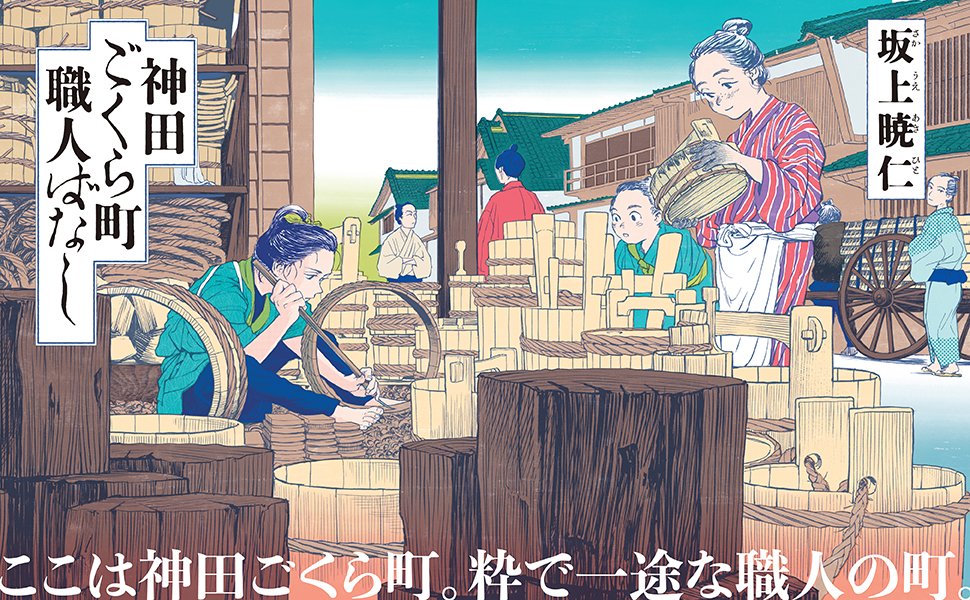
Kanda Goraracho Shokuninbutsu" is a Japanese manga work by Akihito Sakagami, published in December 2020 as a short manga in Lido's historical manga magazine "Comic Ran" and on the website "Torch Web". ranking it third in the "Otoko" section. The story depicts the daily lives, craftsmanship, and spirit of artisans living in Edo.
Outline of "Kanda Goraracho Shokunin Battles" (Kanda Goraracho Shokunin Battles)
Kanda Goraracho Shokuninbutsu" is a Japanese manga work by Akihito Sakagami, first published in December 2020 as a short manga in Lido's historical manga magazine "Comic Ran" and on the web site "Torch Web". It is mainly drawn as one complete short story, but some stories are completed in two or three episodes.
The manga has gained popularity due to its delicate illustrations drawn with overwhelming drawing ability and realistic depiction in line with historical backgrounds. ranking it third in the "Otoko" section of the magazine's "This Manga is Amazing!
The story takes place in Gokura-cho, located in Kanda in the Edo period. Each story picks up a different craftsman, such as a barrel maker, sword smith, navy blue shop owner, tatami mat stitcher, and plasterer, and depicts the daily lives, craftsmanship, and spirit of these characters.
Synopsis and story of "Kanda Gokuracho Shokunin Monogatari" (Kanda Gokuracho Shokunin Monogatari)
Oke Craftsman Edition
A woman who works as a tub maker in the town of Gokura bought some Japanese Spanish mackerel lumber for making tubs from a lumber merchant. The woman replies to the merchant, "Cedar has too strong an aroma," and "If you use it to make rice cakes, the aroma will permeate the rice.
Returning to the bucket shop, she quietly carries on with her work, receiving many visitors who ask her to repair their buckets or seek her advice. She responds to all of their requests and finishes the new tubs, and smiles with satisfaction as she drinks a glass of sake in her workshop.
Katanakaji (sword smith) version
In the town of Gokura, a rumor circulated that a samurai had cut down a child because he was in the way of traffic, and that the child's father had taken the samurai's sword and cut him back. The man who was a sword smith saw his apprentices getting excited about the story and instructed them to go back to work.
He had his apprentices forge all the tsukuri-hagane (steel) he had just purchased, which would normally be enough for three swords, and began to make one sword using only pure steel. He told his apprentices, "I want to make this sword with pure steel only," to which the apprentices replied, "Such a use of steel is a waste. Normally, a sword is made by combining shintetsu (core iron) made of soft soft steel and kawagane (skin iron) made of hard, strong steel to create a sword that "cuts well without breaking or bending. Therefore, the apprentices decided that a sword without core iron "would not be flexible enough for the cost involved. However, since they had heard rumors that the sword that had cut the child had been made by their own master, they guessed that he must have his own thoughts on the matter and could not stop him.
The sword, made entirely of steel, was presented to a certain samurai family. The moment the samurai held the sword, he felt as if his own arm had been cut, and he rated it as "too sharp. The sword was never used, but was displayed in an alcove of the samurai house.
Konya (Koya) version
A woman working as an indigo dyer was worried about the design (design and composition) of her kosode. While yuzen dyeing was in vogue, she did not like her work, indigo dyeing, and consulted a woman who was a tub artisan. When she told him that she really wanted to make vivid kosode like yuzen dyeing, he asked her why she was a navy blue craftsman, to which she could only reply, "Because it's the only thing I can do.
She wanted to see what was in fashion, so she visited a taimono shop that dealt in both indigo and yuzen dyeing. There, she was shown an indigo-dyeing process using a yuzen-dyeing technique called "shiro-agari," and realized that the designs she had been thinking about had not been designed to look good with indigo colors. She came up with a design based on the theme of "a design that brings out the best of the indigo color," and the indigo dyeing she completed was well received not only by the owner of the store but also by the people of the town.
Tatami-stitching
Craftsmen from a certain tatami mat shop visited Daikokuya in the Yoshiwara amusement quarters to reupholster tatami mats. Because of the large number of rooms, the craftsmen split up and set to work. One young man who came as a member of the tatami shop was assigned to the room of Hanazato, a courtesan, but he was unable to start work because her customers showed no sign of leaving.
Tired of the depressing customers, Hanazato takes a liking to the man who has started re-covering the tatami mats and puts some money in his pocket. Satisfied, Hanasato tells him to come as a guest this time, and lies down contentedly on the newly reupholstered tatami.
Plastering
In Gokura-cho, there was a magnificent storehouse that is said to be the "symbol (kao) of the town. The storehouse, called Choshichi-gura, was built by Choshichi, a famous plasterer, and is so famous that there is no one living in the town who does not know it.
One hundred years ago, when the construction of the storehouse began, a man named Jinzaburo, a plasterer from Kamigata, appeared before Choshichi, who was the master of the storehouse. He was favored by Chobei, the master plasterer, and became Choshichi's apprentice for a while, helping him with the construction of the storehouse.
Choshichi's work is going well with the addition of Jinzaburo, who is a skilled plasterer, but he is troubled by troublesome apprentices such as Gensuke, who has a long history as a craftsman but is not improving his work, and Rokuji, who is quarrelsome and easily gets into trouble. Choshichi, who has always felt uneasy about being in a position to organize everyone, confides in Jinzaburo his worries, saying, "People look at me differently because I'm a woman and I'm the head of the school. He then prefaces his words by saying that it does not matter that she is a woman, and sends her advice on how to treat her, pointing out the difficult nature of craftsmen as creatures.
While she is thinking about improving the way she treats her apprentice, an incident occurs in which Rokuji unilaterally assaults Gensuke. She managed to calm the situation, but when Rokuji said, "You don't have the capacity of a kashira," and quit the plasterer's shop, Choshichi became depressed, saying, "I don't have the capacity or confidence to pull others along. She told Chobei about it and tried to quit herself, but he refused, saying, "I won't allow you to quit this job. Choshichi is praised for his ability to organize the craftsmen well and for the cool warehouse under construction, and admonished to be more confident, and decides to face his apprentices and his work as a plasterer once again.
As the construction of the warehouse progresses smoothly and begins to approach completion, Rokuji again violently attacks the remaining craftsmen and destroys part of the warehouse. Choshichi, called by his apprentice, rushes to the scene, only to find that Jinzaburo, who had arrived earlier, had stopped Rokuji. Seeing this, she orders the work to be redone without being upset or angry, but when she sees Jinzaburo about to break Rokuji's arm, she grabs him by the bosom. At the thought of him "interfering with my work, and I should at least get one of his arms so that he will never call himself a craftsman again," Choshichi shouted at him, "A craftsman should not imitate a yakuza," expressing his belief that it was wrong to do something that would cut off the livelihood of the other party.
A few months later, Choshichi finished the last of his work, the black plaster finish on the Kannon door, and the warehouse was safely completed. She saw the tea room in the storehouse that Jinzaburo was in charge of and was again impressed by his skill as a craftsman. When she told him how she felt, he said, "That tea room is not finished yet. The more the master uses it, the more it will blend in like tea utensils and iron kettles," and he tells him that it will finally be completed after 100 years. While Choshichi ponders over the next 100 years, Jinzaburo leaves the future of the tea house and the clay left over from the tea house construction to his girlfriend, and sets off on a journey.
Characters in "Kanda Gokuracho Shokunin Monogatari" (Kanda Gokuracho Shokunin Monogatari)
artisan
Oke (bucket) craftsman
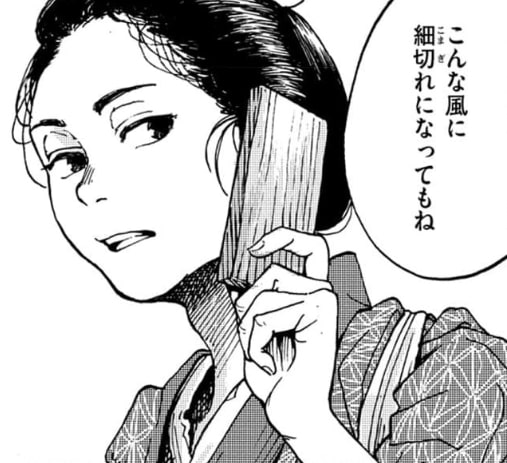
A woman who works as a tub maker in the town of Goura. Her real name is not specified.
She has a wealth of knowledge about making tubs and is very particular about the wood she uses. She accepts repair requests and gives advice to people in need even while she is working, indicating that the people of the town rely on her.
Sword smith (katana kaji)
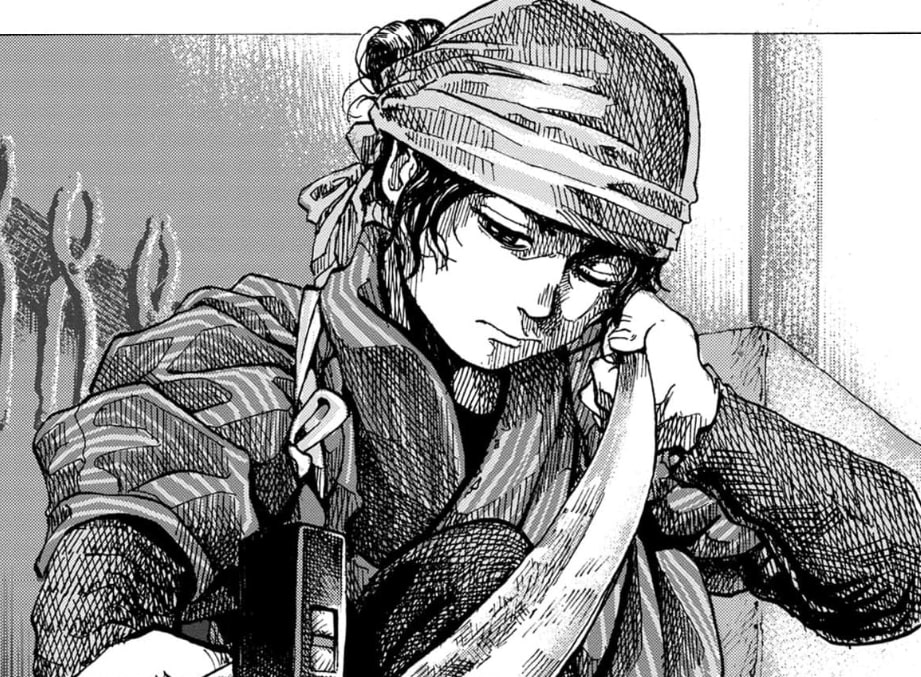
A man working as a sword smith in the town of Gokura. His real name is not stated.
He is a swordsmith with several apprentices and says "I don't care about money or work," and is very particular about making swords that he is satisfied with. The sword he finished by saying "I want to make it only with pure steel" was never used because it was "too sharp" and was displayed in a samurai residence.
Koya craftsmen / Aizome craftsmen
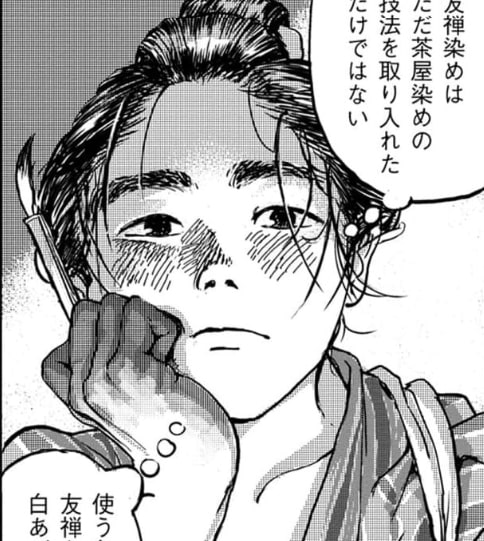
A woman working as a konya craftsman (indigo dyer) in Goraku-cho. Her real name is not specified.
The indigo colors she produces are popular because they are said to have "depth. However, she has been troubled for a while because her designs were rejected because they were said to be "uninteresting. She thought that yuzen dyeing, the fashion in town, was better than indigo dyeing, her own work, but by incorporating the advantages of both, she was able to complete an indigo dyeing process that she herself was satisfied with.

Tags
Contents
- Outline of "Kanda Goraracho Shokunin Battles" (Kanda Goraracho Shokunin Battles)
- Synopsis and story of "Kanda Gokuracho Shokunin Monogatari" (Kanda Gokuracho Shokunin Monogatari)
- Oke Craftsman Edition
- Katanakaji (sword smith) version
- Konya (Koya) version
- Tatami-stitching
- Plastering
- Characters in "Kanda Gokuracho Shokunin Monogatari" (Kanda Gokuracho Shokunin Monogatari)
- artisan
- Oke (bucket) craftsman
- Sword smith (katana kaji)
- Koya craftsmen / Aizome craftsmen
- Tatami stitch
- Plasterer / Choshichi
- Other Persons
- Hanazato
- Chobei
- Jinzaburo
- Sixth degree
- Gensuke
- Terms of "Kanda Goraracho Shokunin Battles" (Kanda Goraracho Shokunin Battles)
- Sukhavati (Amitabha's Pure Land)
- Tatami stitch
- Aizome (indigo dyeing)
- Yuzen Dyeing
- Famous quotes, lines/scenes, and scenes from "Kanda Goracho Shokunin Monogatari" (Kanda Goracho Shokunin Monogatari)
- Sword smith: "I don't care about money or work."
- Choshichi: "Don't let the craftsmen imitate the yakuza."
- Backstory, trivia, small stories/episodes, and anecdotes of "Kanda Goracho Shokunin Monogatari".
- A number of stores sold out of the first volume of the book on the first day of its release.
- The author, Akihito Sakaue, was a winner of the 71st Chiba Tetsuya Award