
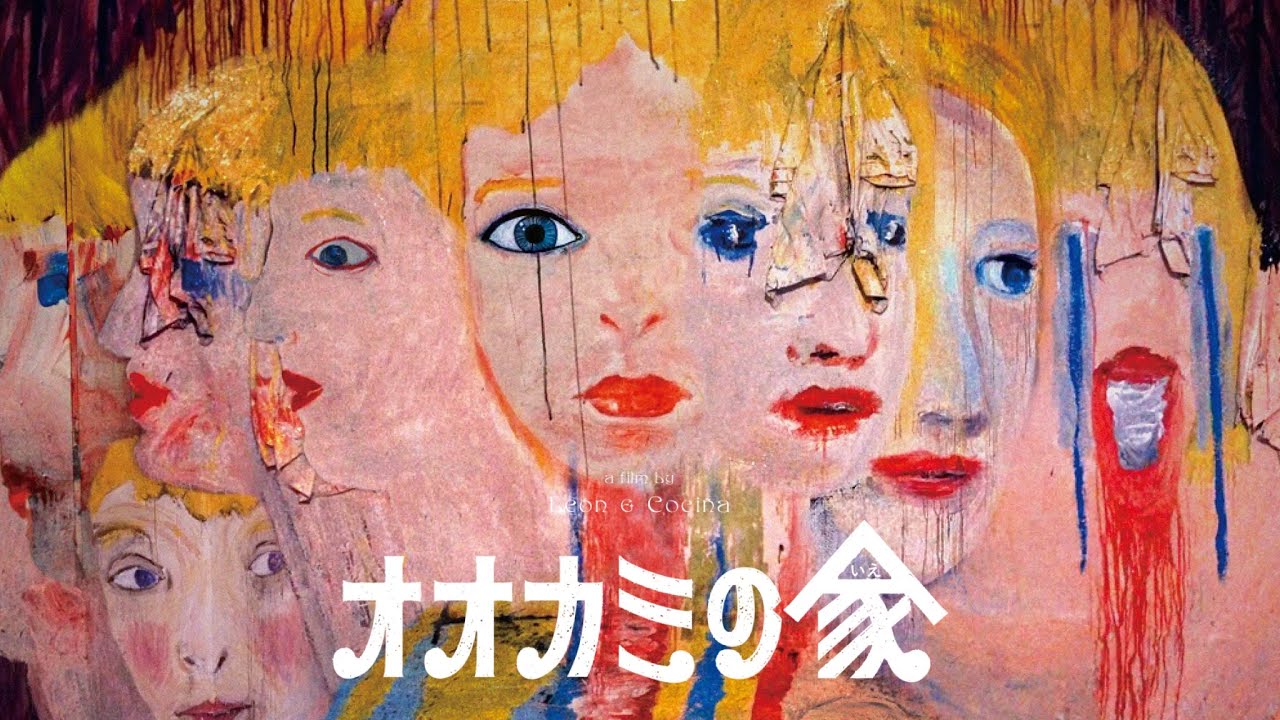
The House of Wolves" is a stop-motion animated film by Cristóbal León and Joaquín Cocinha about a real-life cult group. In Japan, the promotion involving Ari Aster, director of "Midsummer," attracted attention and created a boom, especially among people who like horror films and stop-motion animation. The short film "Bone," which was screened concurrently, was executive produced by Ari Aster.
The film won the Caligari Film Award at the 68th Berlin International Film Festival's Forum section and the Jury Prize at the 42nd Annecy International Animated Film Festival in 2018.
The will of the village from which Maria has fled is itself, a terrifying wolf that calls to Maria from outside her house. It tries to bring Maria back to the village.
Pedro.
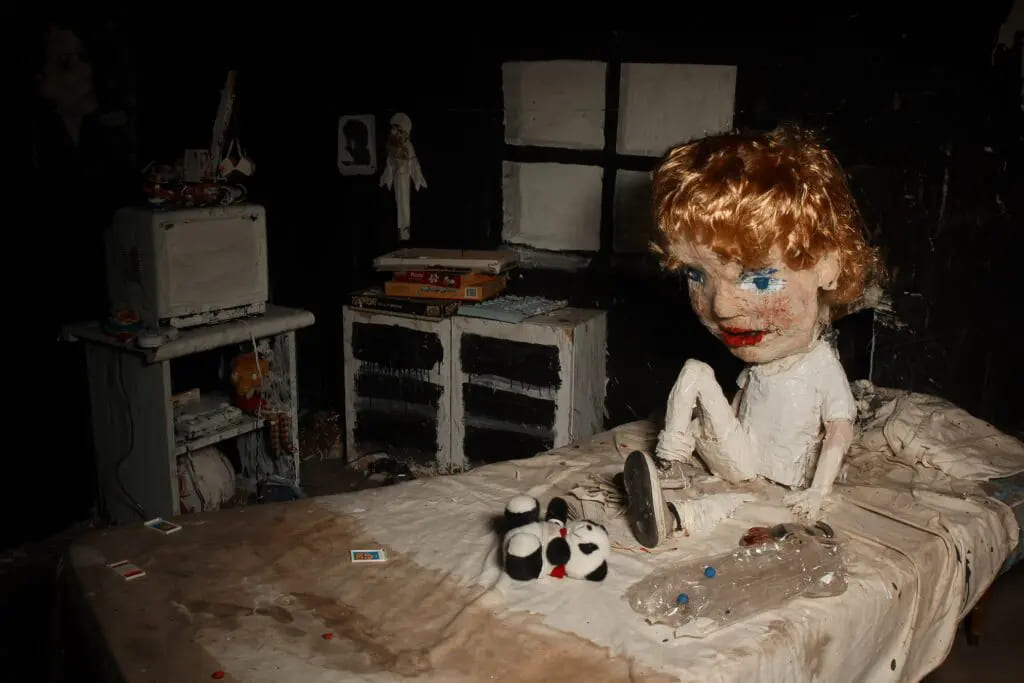
A little pig that Maria met in a house deep in the mountains. Through Maria's magic, he becomes a human boy with black hair, and through Maria's education and nectar, he becomes a blond-haired, blue-eyed boy.
announcer
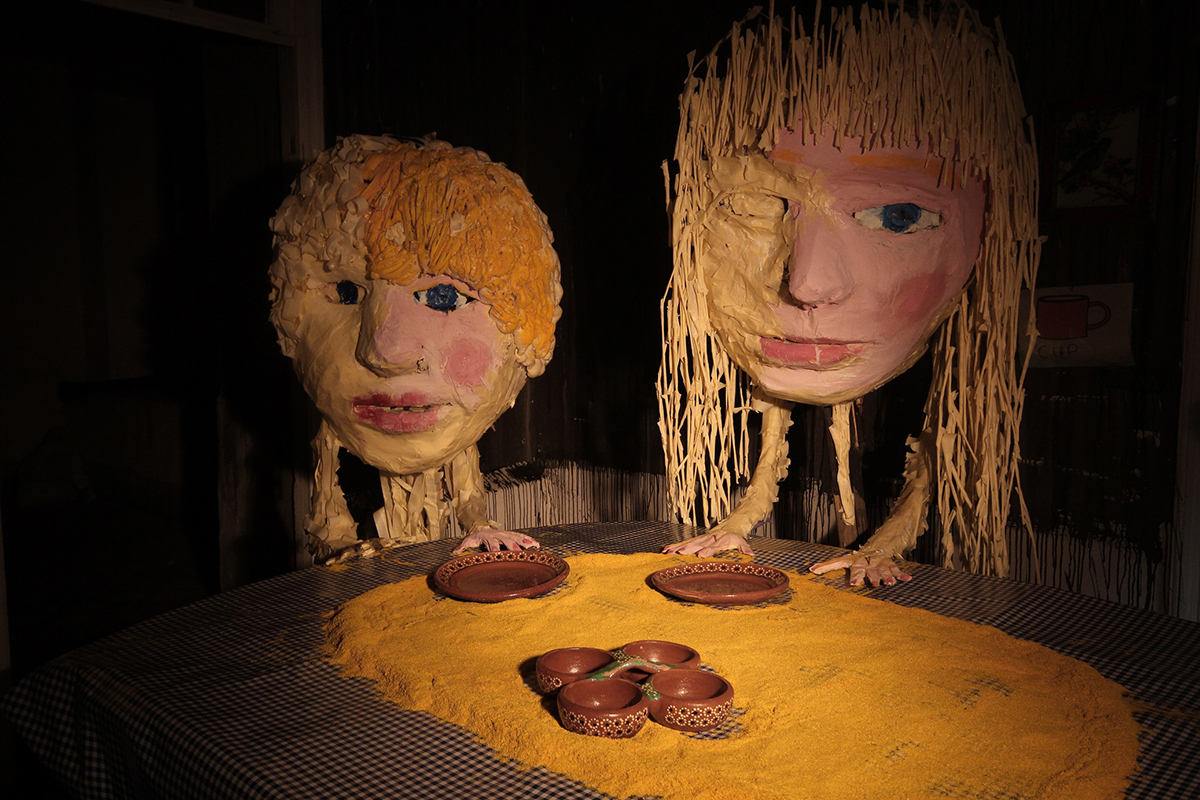
Pedro (left) and Ana (right).
A little pig that Maria met in a house deep in the mountains. Like Pedro, she becomes a black-haired girl by Maria's magic and a blond-haired, blue-eyed girl by Maria's education and nectar.
Terms of "The House of Wolves
nectar
The golden honey given by Maria to Pedro and Ana after they were burned in the film "The House of the Wolf." The honey is thought to be honey because the beginning of the film features a scene of beekeeping in the village.
This item transforms Pedro and Ana from "imperfect human beings with black gods and eyes who cannot speak" to "ideal human beings with blond hair and blue eyes who can sing. It is also a symbol of the values of the village that Maria has internalized.
Famous quotes, lines/scenes, and scenes from "The House of the Wolf"
Maria telling Pedro an old story.
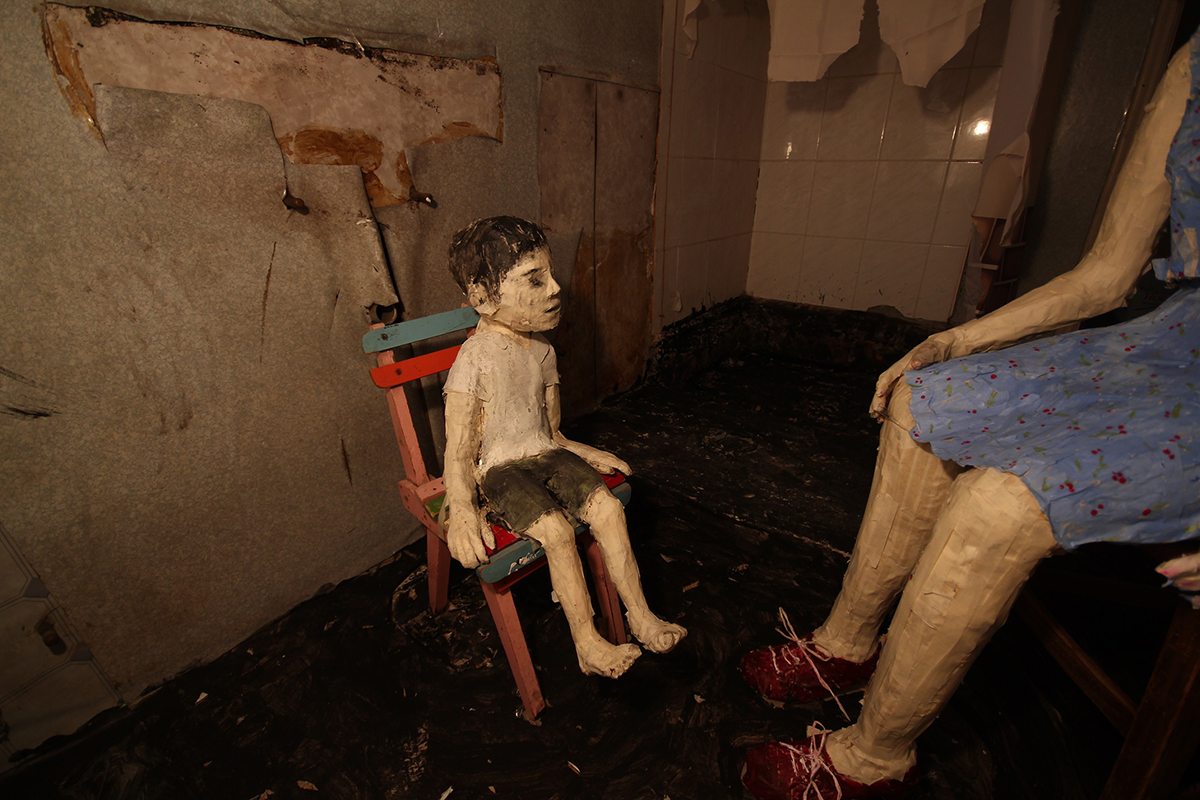
Pedro (left) is told an old story by Maria (right).
In the film, there is a scene in which Maria tells Pedro, who has taken human form but is still imperfect as a human being, an old tale. The story is about a house and a dog.
Once upon a time, a dog lived in a house. The house loved and protected the dog deeply, but the dog didn't care about the house and did whatever it liked. One day, the dog went away from the house to a place far away from the house. The dog became hurt, exhausted, and weak from being away from home. The dog realized that he was protected by the house and wished to return home. But because it was so far from home, the dog died. The family was deeply, deeply saddened to learn that the dog had left and died.
Maria, who fled the village because she could not bear the forced labor and torture, told Pedro an old story that taught him not to leave the community. This episode shows that Maria has internalized the values of the cult group.
beautiful song
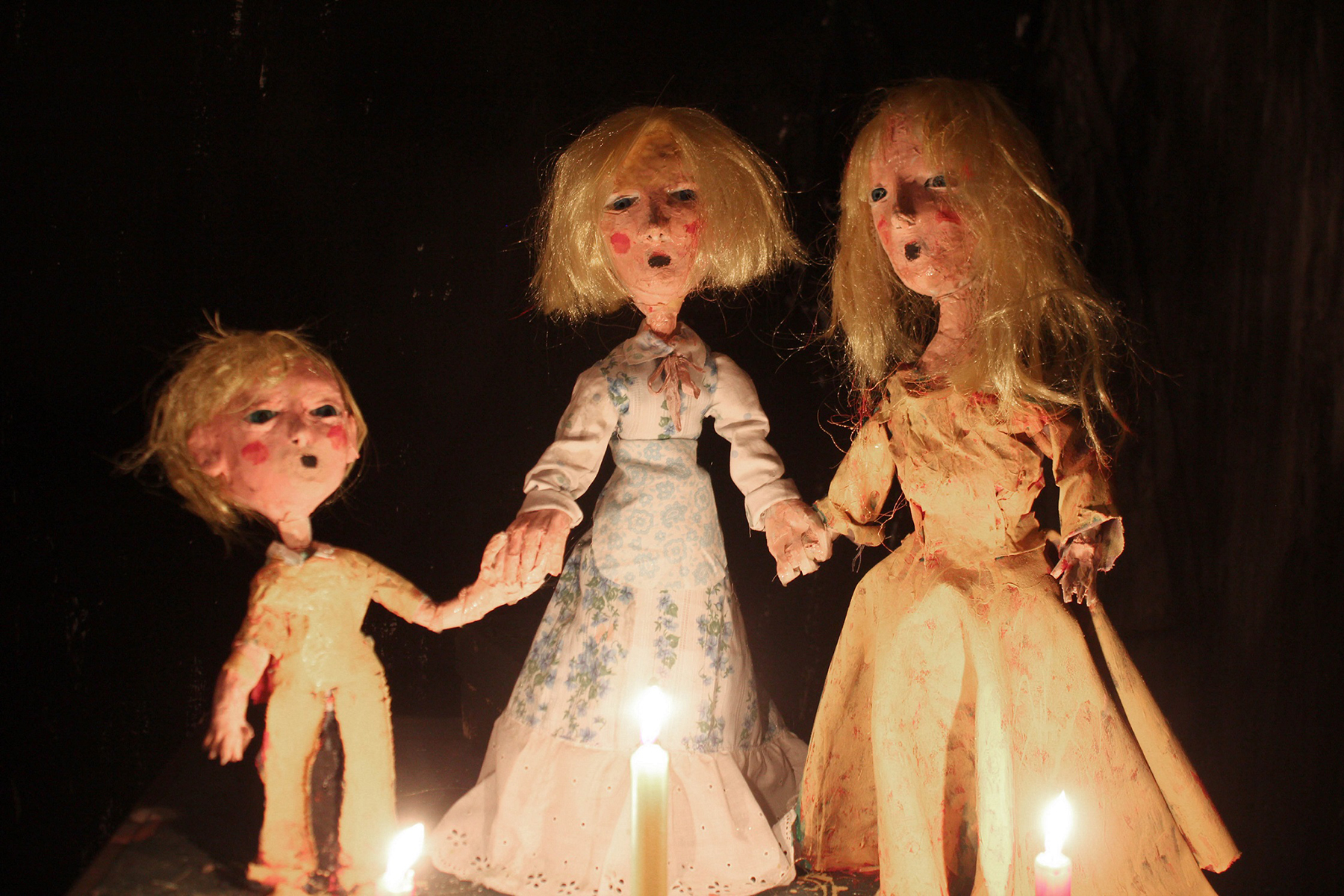
Maria (center), Pedro (left) and Ana (right) singing a beautiful song.
Through Maria's magic, Pedro and Ana take human form, and through Maria's devotion and nectar (honey produced in the village), they become beautiful with blond hair and blue eyes. Maria rejoices in their beauty, and the three of them join hands to sing a beautiful song together.
At first glance, this scene seems to be just a performance, with no particular meaning in the story, but if we follow the motif of "The House of the Wolf," we see a different picture. Colonia Dignida was "the ideal European vacation resort" for those in power under Pinochet. They enjoyed fine food, European-style hotels, and beautiful choruses sung by blond boys and girls. The "songs sung by blonde-haired, blue-eyed boys and girls" symbolize beauty and goodness in Colonia Dignida.
It is a frightening scene that shows how Maria, unable to endure life in the settlement, runs away and internalizes the values of Colonia Dignida.
Backstories, trivia, subplots/episodes, and anecdotes from "The House of Wolves"
Colonia Dignida, a real cult in Chile.
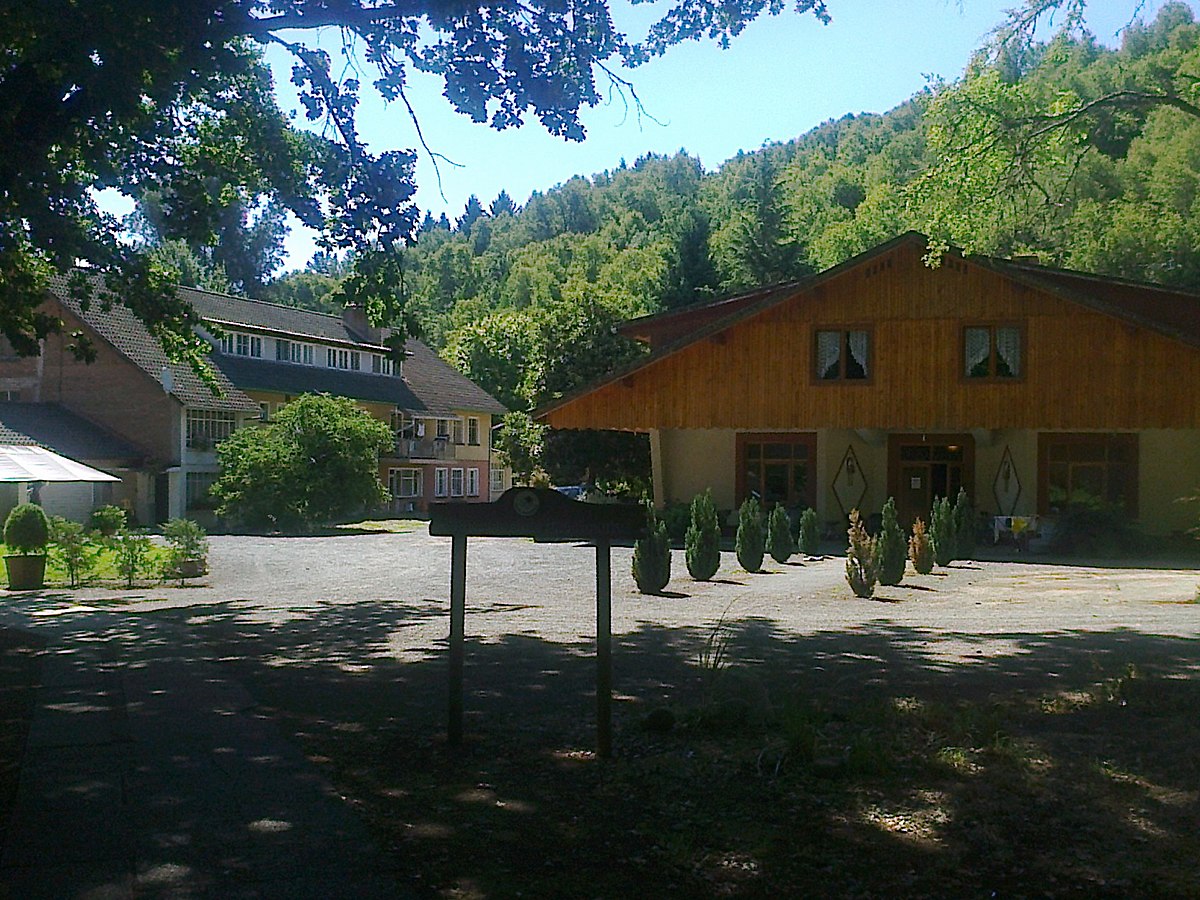
A view of the Villas Baviera.
The subject of "The House of Wolves" is the Colonia Dignida, a cult in Chile, where Cristóbal León and Joaquín Cocinha were born. It was founded by Paul Schaefer, a German who was a follower of Hitler, and for more than 40 years it practiced brainwashing, forced labor, torture, murder, child abuse, and weapons manufacturing under the protection of Pinochet's military regime. Paul Schaefer was arrested after the fall of the Pinochet regime, but the organization changed its name to "Villa Baviera" and continues to operate hotels and other businesses.
A film that is spiritually connected to the victim's experience.
Source: natalie.mu
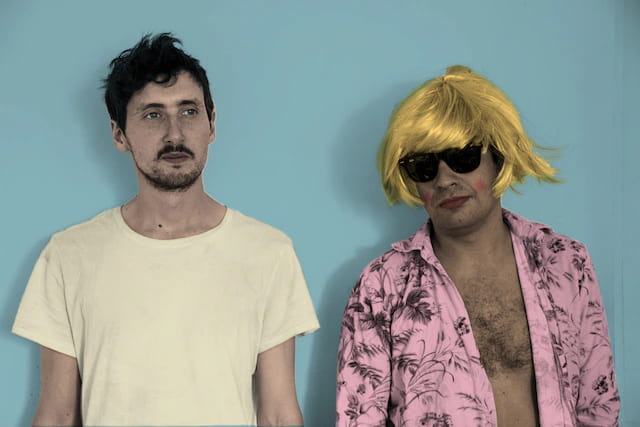
Cristobal León (left) and Joaquin Cocinha (right).
Many films about Colonia Dignida are known, including "Colonia," starring Emma Watson. Unlike those films, "The House of Wolves" does not expose the reality of Colonia Dignida, but rather takes the form of a fairy tale, but gets so close to its essence that a person who has worked with the victims said, "It is quite similar to what they told me about their experiences in Colonia Dignida, both in emotional and environmental aspects. The story is so close to the essence of the situation that it has been

Contents
- Overview of "The House of Wolves
- Synopsis and story of "The Wolf's Home"
- bone
- Wolf House
- Characters in "The Wolf's Home
- bone
- Constanza Nordenfreiz
- Diego Portales.
- Jaime Guzman
- Wolf House
- Mary (mother of Jesus)
- wolf (in sheep's clothing)
- Pedro.
- announcer
- Terms of "The House of Wolves
- nectar
- Famous quotes, lines/scenes, and scenes from "The House of the Wolf"
- Maria telling Pedro an old story.
- beautiful song
- Backstories, trivia, subplots/episodes, and anecdotes from "The House of Wolves"
- Colonia Dignida, a real cult in Chile.
- A film that is spiritually connected to the victim's experience.