
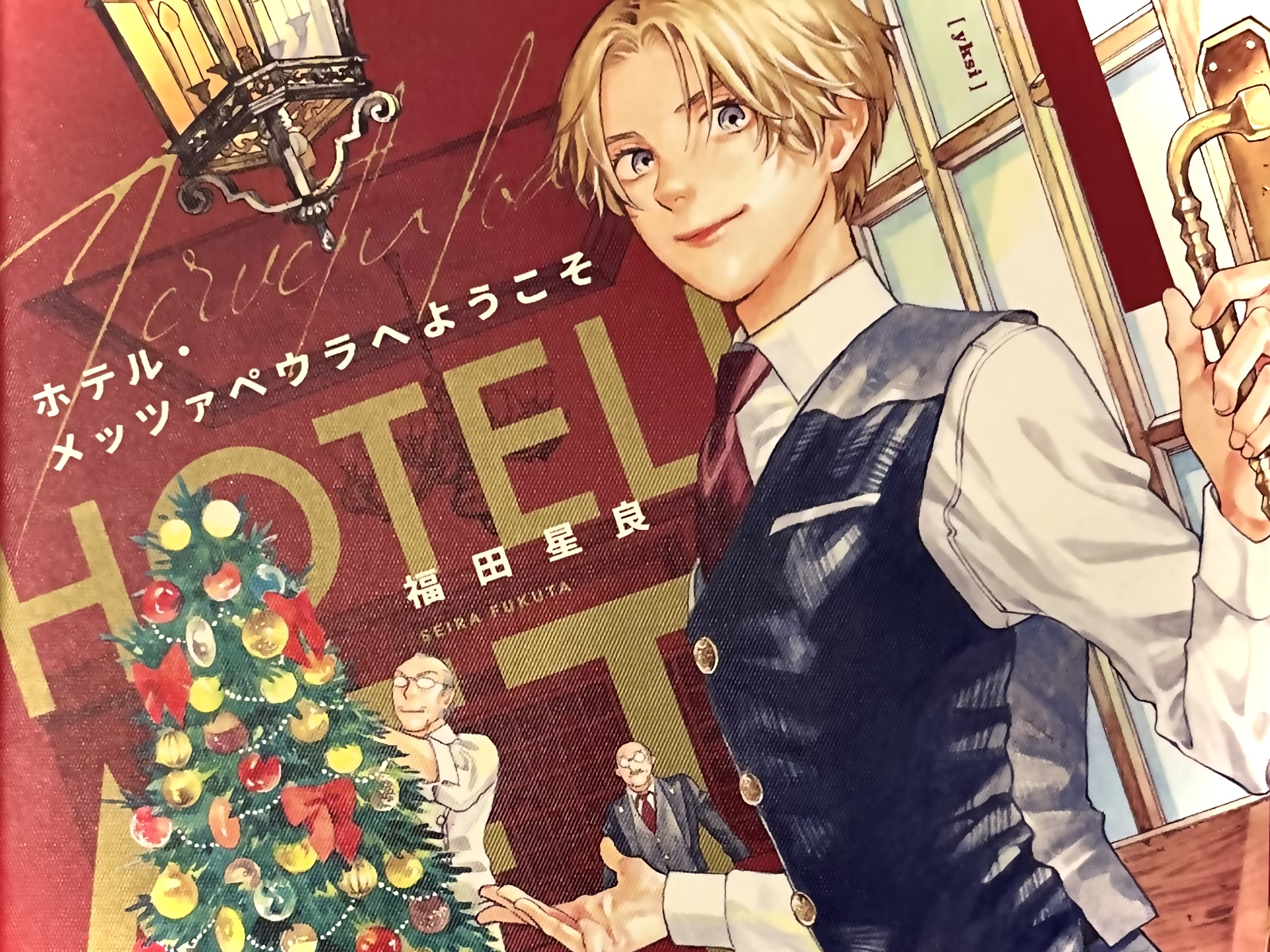
Welcome to Hotel Mezzapeura" is a human drama manga by manga artist Hoshira Fukuda, serialized in "KASOKAWA HARUTA" since 2020. It depicts the heartwarming story of two elderly gentlemen, Kusta and Ardolf, who run a small hotel, Mezzapeura, in Finnish Lapland, and a young man, Jun, who suddenly visits the hotel. The film delicately depicts the emotional state of Jun, a lonely young man, as he slowly regains his emotions and changes through his life in Finland in the middle of winter and his interactions with the hotel's guests.
This cake tastes like gingerbread, a Finnish Christmas classic.
It is accented with ginger and spiced.
Kusta made it for his daughter, Faby, but gave it to Ardolf as a souvenir.
Welcome to Hotel Mezzapeura" Quotes, Sayings, Scenes, and Scenes of Famous Quotes, Sayings, and Scenes of Famous Quotes, Sayings, and Scenes of Famous Quotes, Sayings, Sayings, and Scenes
Ardolf teaches Jun how to live in Finland.
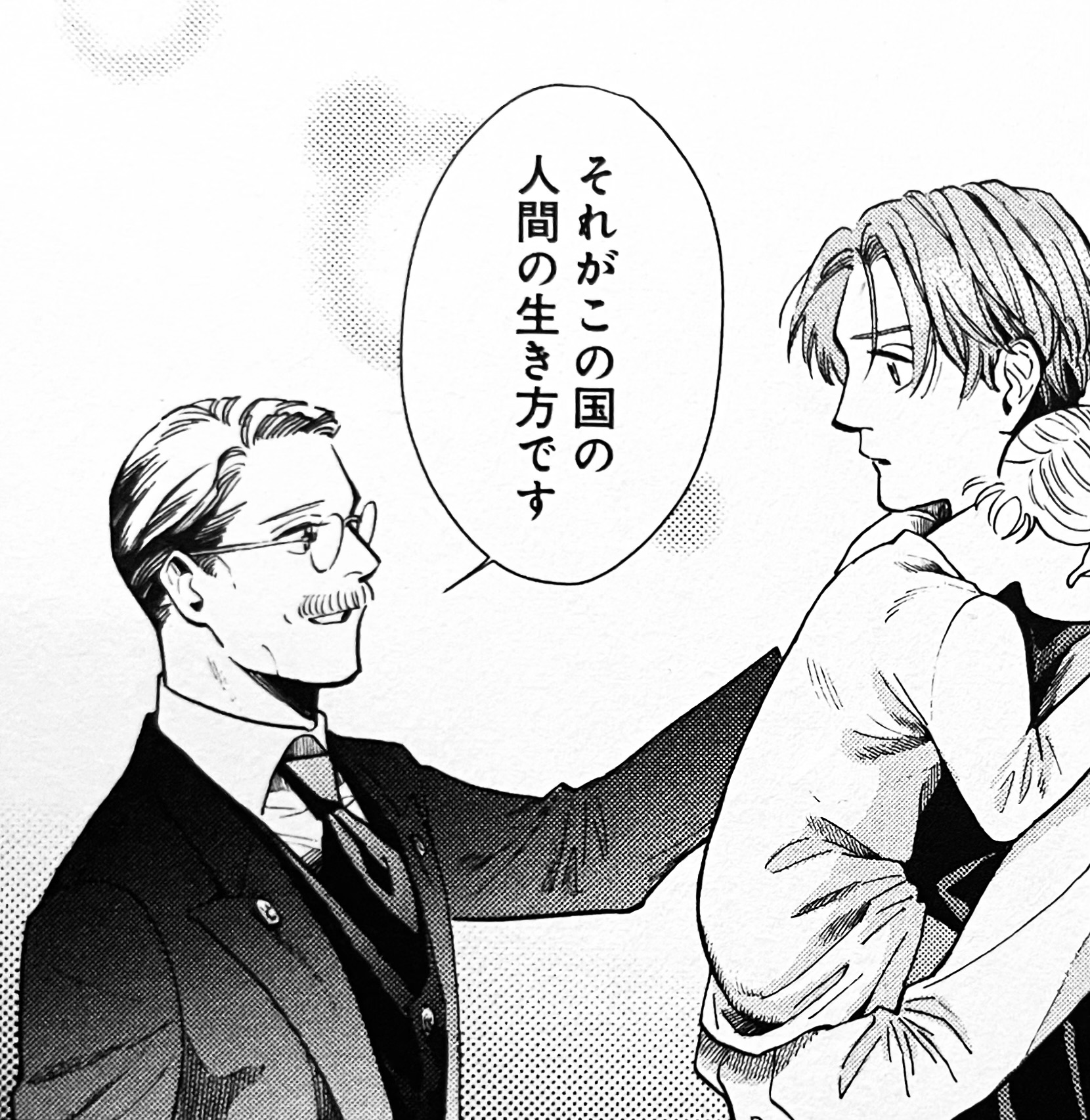
Ardolf (left) admonishes Jun (right) on his teachings.
Ardolf spoke to Jun, who had tended to be closed-minded and patient on his own since arriving in Finland, as if to admonish him about the Finnish way of life.
The Finnish winter is harsh, with only about two hours of sunlight a day in December, and the days are almost always dark. Snowfall prevents even the smallest amount of light from reaching the ground, and many people gradually become depressed living under the closed, gray skies. This causes many people to become unstable, and the suicide rate in Finland is high in the winter.
Ardolf teaches his work and says, "In order to survive in this country, we have to keep learning. And if we don't help each other, we won't survive the winter. That is the way of life for people in this country. It is a great scene in which Jun realizes that he cannot survive here by himself and that it is nothing special that Kusta and Ardolf extended a warm hand to him, a stranger.
Fabby: "A new family needs a chair, right?"
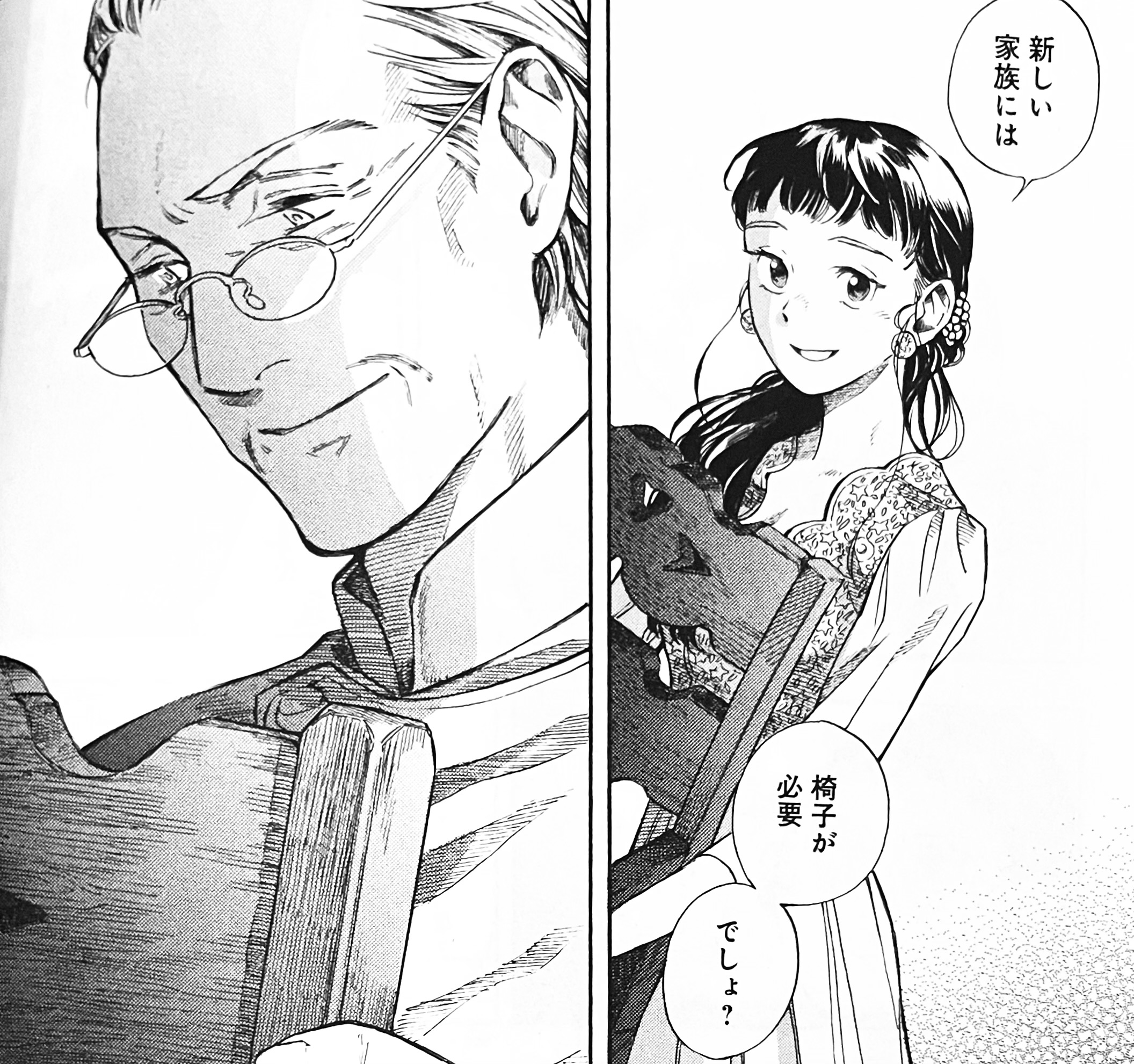
Faby's (right) words remind Kusta (left) of the old days.
Before Fabby presented the bride and groom with the chairs he had made, he said, "A new family needs chairs, right?" he said to Kusta.
The gift of a chair is an old Finnish custom in which a man makes a chair for a woman and gives it to her as a sign that he has made a place in his home for the woman to be his wife. When Faby was adopted by Kusta and his wife, he was very happy that Kusta had made a chair for him in their home. So he decided to give the chair to his childhood friend, his bride-to-be, to celebrate her new place in the family.
Fabby said, "A new family needs a chair, right?" reminds Kusta of the time when she adopted Faby in the past, and it is a great line that shows the family bond.
Jun, who follows the teachings and restores worn-out clothes.
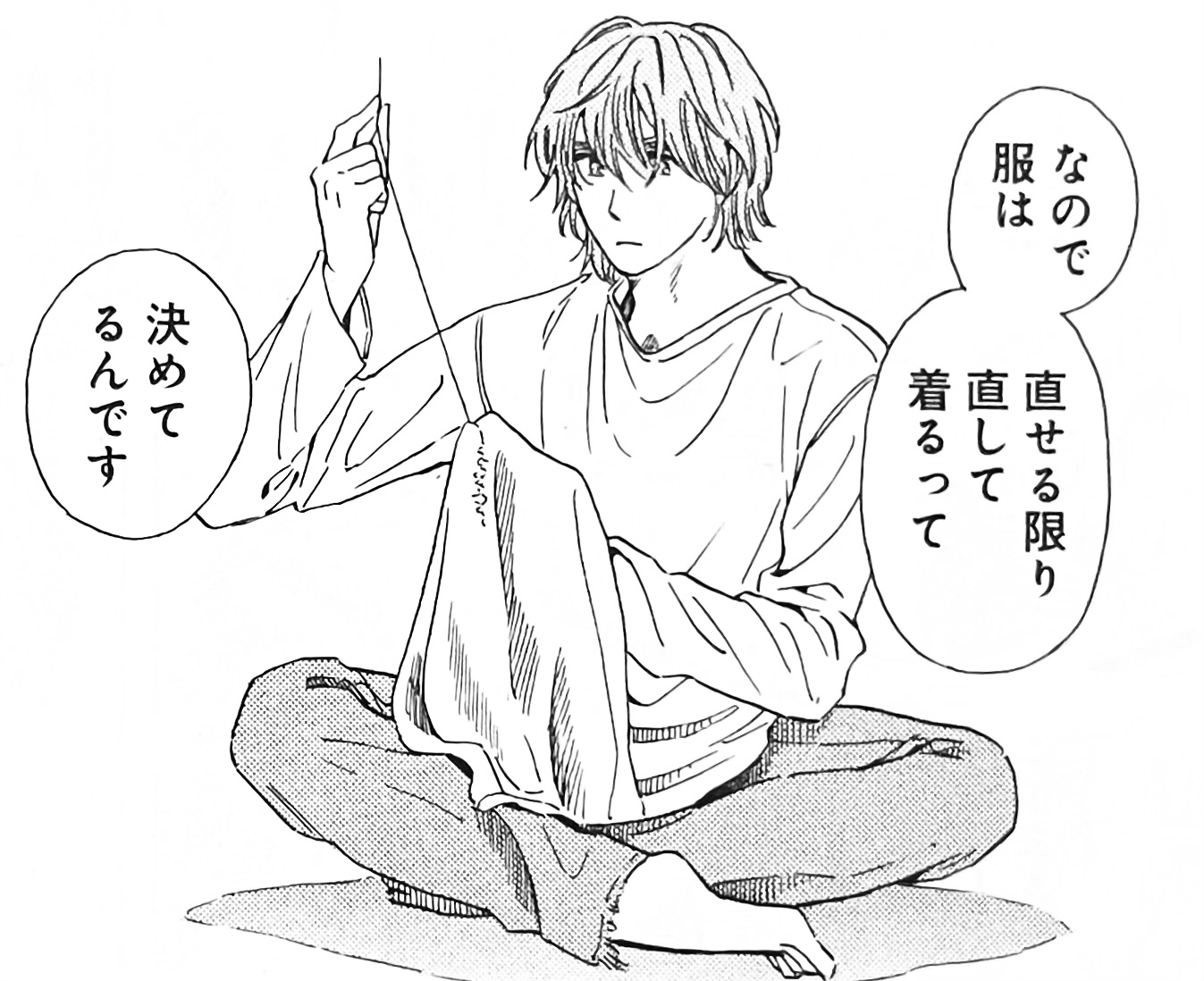
Jun mending his own clothes, as the old teaching goes.
When we went out to buy Jun's clothes, Jun told Ardolf that she did not think new clothes were a good idea and that she had decided to fix and wear her clothes as long as she could fix them.
Because Jun grew up in an institution, his clothes were basically hand-me-downs and he never received new ones. When he grew up and started hanging out with the wrong crowd, he often tore his clothes in fights and did not have the idea of taking good care of things. However, his teacher taught him sewing as a way to learn how to fix things by himself. Jun learned from his teacher the spirit of "taking good care of things," a lesson he continues to follow to this day, and has decided to mend and hang up his clothes as long as he can.
Ardolf taught Jun that Finland has a culture of taking good care of things, just like Japan. Finland has always been a country of scarcity and economic instability, which has fostered a culture of not throwing things away. For this reason, there are second-hand shops in town where people can donate their unwanted items, and many people donate their items instead of throwing them away, believing that it is better to give them to someone who needs them than to throw them away.
This is a great scene that conveys Jun's honest and earnest personality and shows the similarities between Finland and Japan.
Erkki: "Christmas is a day to give thanks."
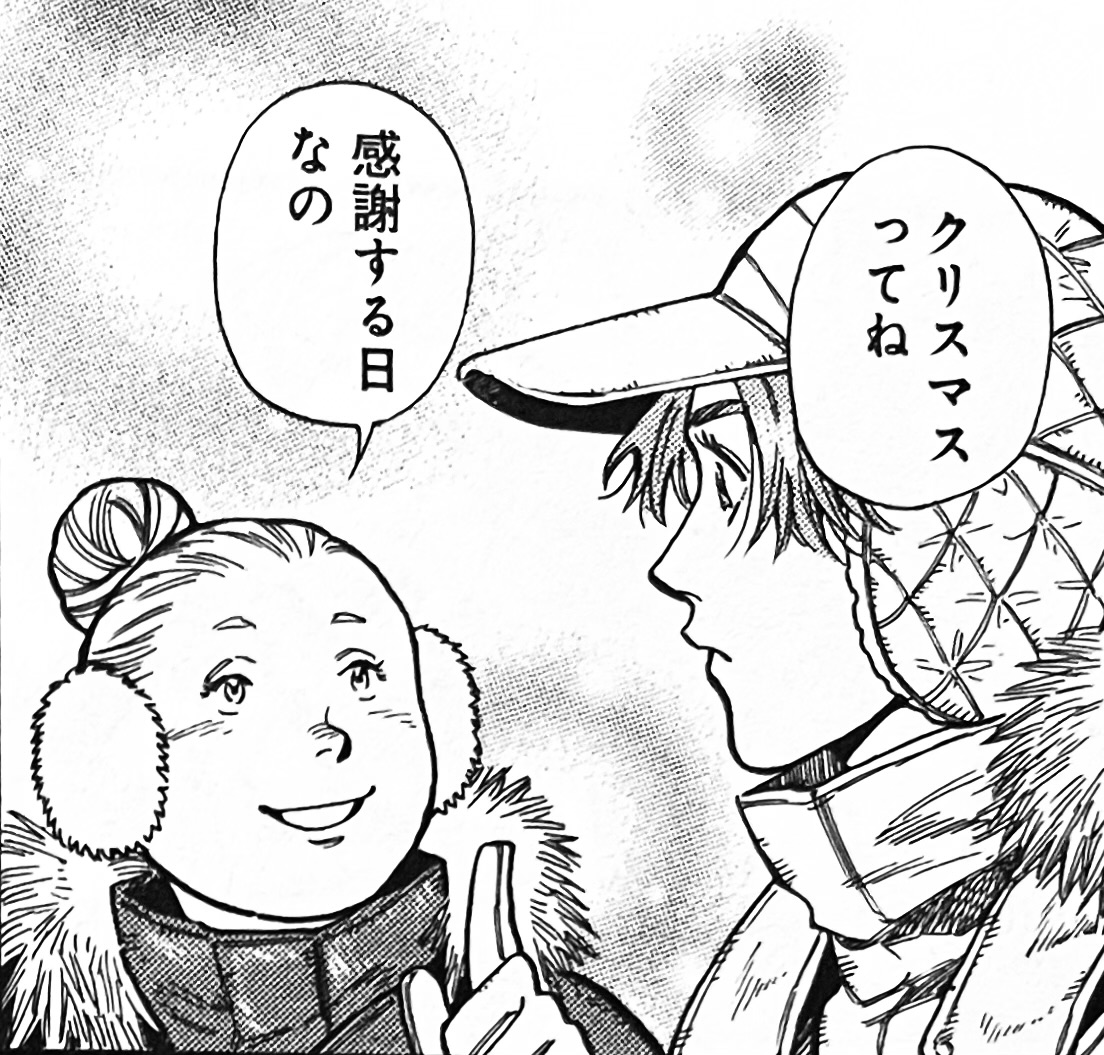
Erkki (left) teaches Jun (right) about Christmas.
When Jun was worried about Christmas gifts, Erkki told her, "Christmas, you know, is a day to give thanks.
Jun wanted to give Christmas gifts to Kusta and Ardolf, but was worried about what to give them. She had never celebrated Christmas when she was in Japan, so she did not know the general idea of Christmas. He was also depressed because all the gifts he received from Temu were expensive and in large quantities, and he felt that he would never be able to prepare such gifts.
However, Emma took Jun to the Christmas market, and Erkki taught her how to knit Christmas presents. When Jung was worried about not being able to prepare Christmas gifts, Erkki told her, "Christmas is not a day to give luxurious gifts, but a day to be thankful. It's important to take time to think about your loved ones, friends, family, and those people. Jung hears these words and realizes that it is more important to think of them than expensive things. She then knitted Christmas gifts with Erkki's help.
This is a great line that shows what is considered important in Finnish Christmas, and it is also the beginning of Jun's move to think of Kusta and Ardolf.
Backstory, trivia, and small stories/episodes and anecdotes about "Welcome to Hotel Mezzapeura".
Hotel Mezzapeura means "Reindeer in the Forest."
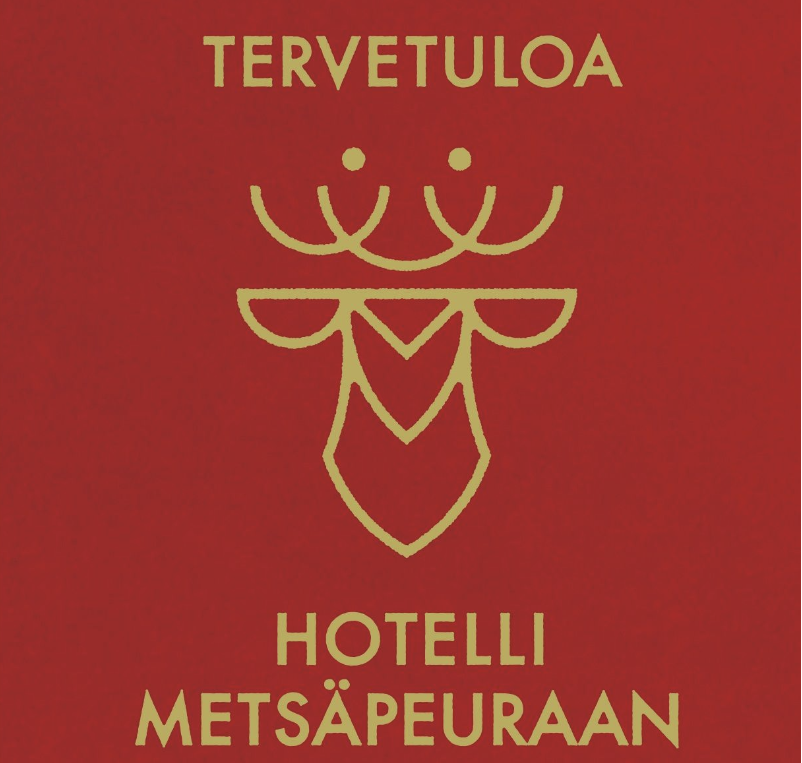
Pattern in the shape of the reindeer on the cover and on a separate sheet of paper
The title of the book "Welcome to Hotel Metsäpeura" is "metsäpeura," a Finnish word meaning "forest reindeer.
The literal translation in Japanese is "deer of the forest (metsa = forest, peura = deer)," but the meaning "reindeer of the forest" is appropriate because "metsäpeura" is the name of a rare subspecies of reindeer that lives in the Finnish forests. As evidence of this, a pattern in the shape of a reindeer is printed on the cover of this work.
Peel-off ads appear at Ikebukuro Station.
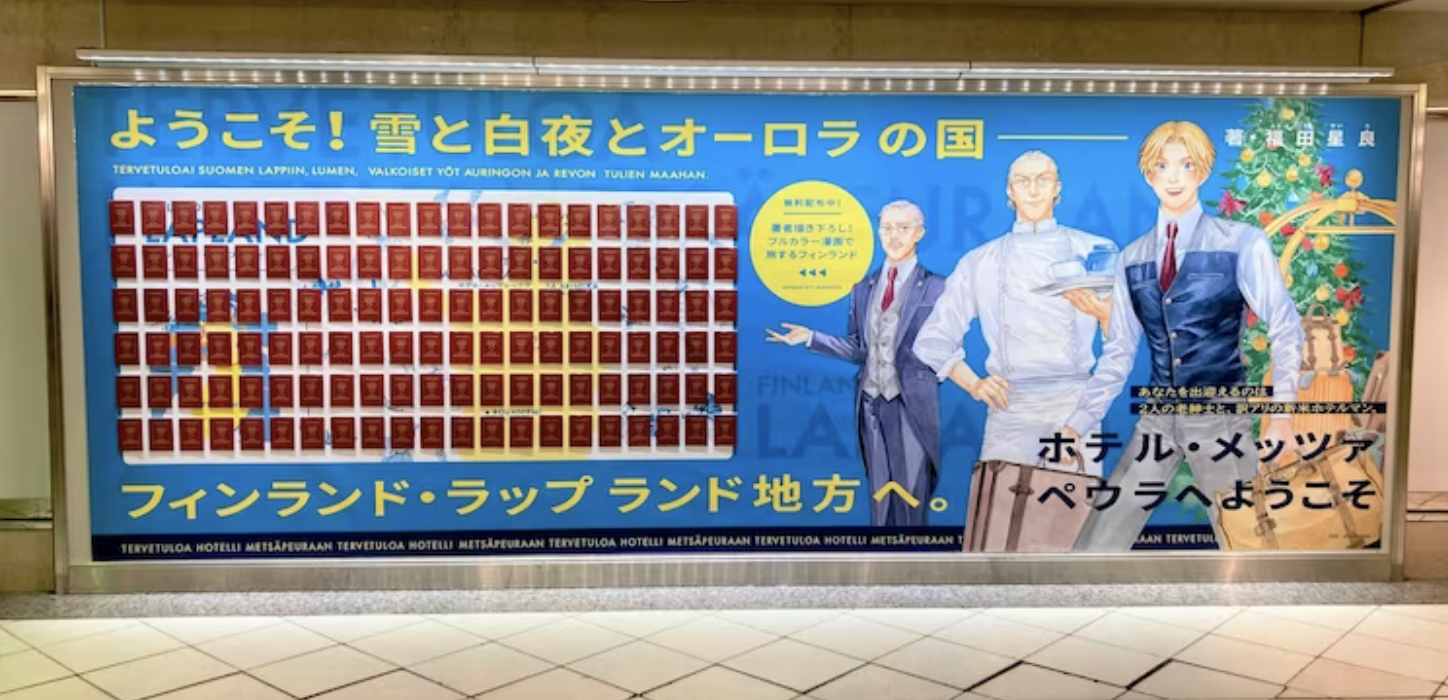
Peel-off ads appearing at Ikebukuro Station.
To celebrate the release of the third volume of "Welcome to Hotel Mezzapeura," a "peel-off ad" for this work appeared along Orange Road in the concourse outside the ticket gates of Tobu Ikebukuro Station, Tokyo, on October 17, 2022.
As the name suggests, the "peel-off ad" is an advertising campaign in which visitors can freely tear off the ads stuck to the wall and take them home. The campaign featured a large number of advertisements, including booklets containing full-color newly illustrated episodes of the film.

Tags
Contents
- Welcome to Hotel Mezza Peura" Overview
- The story behind "Welcome to Hotel Mezzapeura"
- Sudden visitor
- People of Finland
- A dark and cold day
- Wedding Gifts
- Ardolf's mentor.
- Jun's search for his mother
- Christmas Memories
- Characters from "Welcome to Hotel Mezzapeura"
- hotel-worker
- Jun Sinomiya
- costa
- Ardolf.
- family
- fabby
- Talya Left
- Hotel Guests
- Emma.
- Tem Vaananen.
- Aki Vaananen.
- Claus.
- the rest
- teacher
- long, narrow card on which Japanese poems are written (vertically)
- Terms of "Welcome to Hotel Mezza Peura"
- Hotel Mezza Peura
- Stuffed Wolf
- Söpö poika
- cirsselka
- Christmas Market
- gingerbread cake
- Welcome to Hotel Mezzapeura" Quotes, Sayings, Scenes, and Scenes of Famous Quotes, Sayings, and Scenes of Famous Quotes, Sayings, and Scenes of Famous Quotes, Sayings, Sayings, and Scenes
- Ardolf teaches Jun how to live in Finland.
- Fabby: "A new family needs a chair, right?"
- Jun, who follows the teachings and restores worn-out clothes.
- Erkki: "Christmas is a day to give thanks."
- Backstory, trivia, and small stories/episodes and anecdotes about "Welcome to Hotel Mezzapeura".
- Hotel Mezzapeura means "Reindeer in the Forest."
- Peel-off ads appear at Ikebukuro Station.