
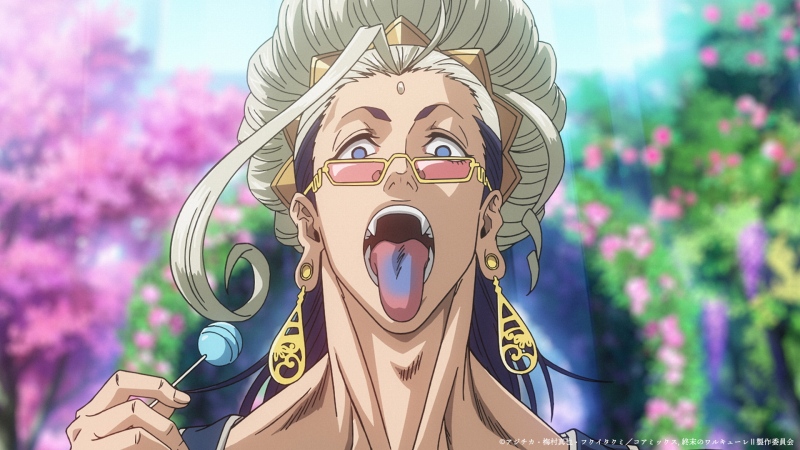
Shaka is a character in "Valkyrie of the End" serialized in Monthly Comic Zenon, which is directly based on the real-life Shaka, the founder of Buddhism. In the same work, he appeared as a member of God's side in the final struggle between God and humankind (commonly known as Ragnarok), but ultimately decided on his own to participate on the side of humankind and switched sides. He has a free-spirited personality that moves as he sees fit. His real name is Gautama Siddhartha.
A huge scythe with a disastrous blade growing out of the back of a huge dragon's head.
sharing one's lot with another
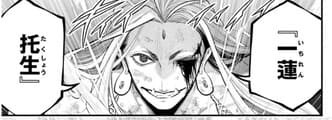
The ability to bring out the full potential of the whole body by sharing each other's destiny. In the work, he took Zerofuku's weapon in his hand and transformed it into a new weapon through compassion.
Sacred artifact "Daienjaku-to Zero" (Great Enjaku Sword Zero)
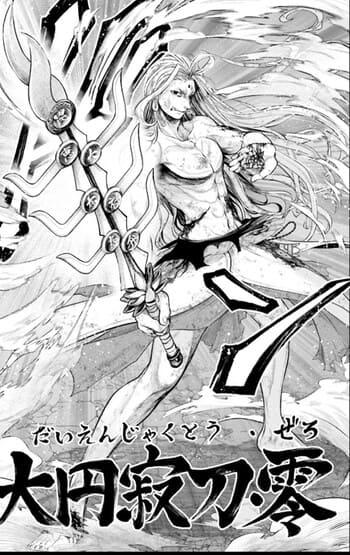
A weapon that took Zerofuku's weapon and transformed it with compassion.
Special Moves of the Buddha
Rin-ne, the circle of transmigration of karma
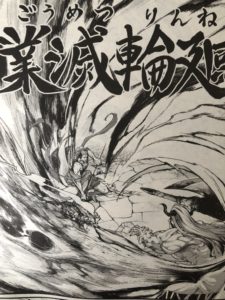
A blow that aims at the neck of an adversary, cloaked in an ominous killing spirit.
Rin-ne, Kuon
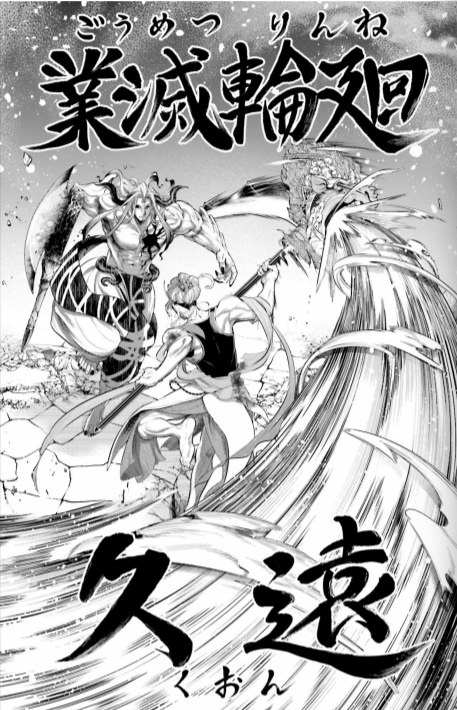
Flames spew out from the dragon's mouth, which can be made even more powerful by adding speed.
Mahabali Nirvana (Mahabali Nirvana)
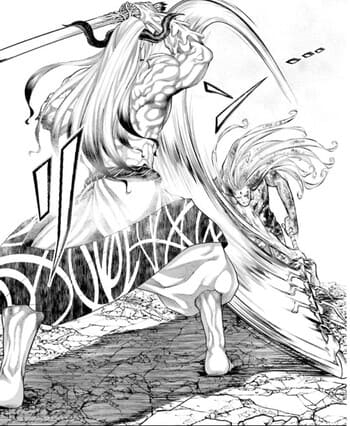
Using the sacred weapon "Daienjakutou Zero," he swings his sword in a large sweeping motion, slicing his opponent in two.
The Coming of the Buddha and His Activities
Birth of Buddha
Gautama Siddhartha, the future Buddha, was born as a prince of the Shaka tribe, a small kingdom ruling the land of Kapilavastu in ancient North India. As a kshatriya, Gautama Siddhartha had the highest status, the best food, clothing, shelter, and education as a royalty. Above all, at the time of his birth, a hermit prophesied, "This child is the best of human beings...He will eventually become king of the world. From the time of his birth, Siddhartha was given the best future promised by God. He was a prince of the Shakha tribe, helping his people without distinction of caste, giving alms, and fulfilling his duties.
Death of my brother
Siddhartha adored Jātaka, king of the kingdom of Malla, one of the sixteen great kingdoms of ancient northern India. Jataka was a distant relative, five years older than Siddhartha. Siddhartha, who had a faint yearning for a brother, called him "Brother Jataka. Jātaka, too, was fond of Siddhārtha, even though he would not allow himself to be called "elder brother" in public.
However, Jataka was suffering from a fatal disease and knew that he was dying. One day, Siddhartha said, "Brother Jataka...you are happy. Hearing this, Jataka said, "Do you really think I am happy? and confessed that he would soon die. He then spoke of his "supposedly happy" life, but then asked, "Whose life was it? He then said, "Who did my life belong to? Jataka then told Siddhartha to forget him, saying that he had become weak in the face of death, but the words and the profile of his beloved brother remained in Siddhartha's mind. Shortly thereafter, Jataka passed away. Siddhartha attended the funeral with a somber look on his face.
Encounter with Zero Fortune
However, the more he sucked up misfortune, the more he saw mankind losing sight of happiness and falling.
In despair, Zero Fortune happened to pass by the human-era Buddha in a procession with his worshippers. Zero Fortune, seeing that the Buddha and his worshippers all had happy faces, asked the Buddha why people did not become happy even though he himself had absorbed their misfortune. The Buddha explains to Zero Fortune that happiness is self-fulfilling and that "where there is misery (shadow), there is happiness (light). Buddha invites Zero Fortune to join him in enlightenment. But he feels humiliated and jealous and leaves the place, because his role in bringing happiness to people is essentially his own, and he has been handed down to a human being. Shakyamuni did not think that deeply about it; he just wondered, "Wasn't Zero Fortune an adolescent boy?" He only thought that he was.
On the other hand, Zero Fortune was humiliated by the human Shakyamuni, and his love for him turned into hatred, and he transformed into a god to take revenge on mankind. He then tries to kill people one by one, but he controls his power and splits into seven gods of good fortune (Bishamonten, Ebisu, Hotei, Benzaiten, Jurojin, Fukurokuju, and Daikokuten), giving birth to the legend of the eight gods of good fortune.

Related Articles
Valkyrie of the End (manga and anime) spoiler commentary and discussion
Valkyrie of the End" is a manga series written by Shinya Umemura, composed by Takumi Fukui, and drawn by Ajichika, which has been serialized since January 2018. In a meeting for the destruction of mankind by the Creators, the gods have given up on mankind, which continues to destroy the world. It was thought that mankind would be destroyed, but the Valkyries (War Maidens), who stand on the side of mankind, propose a final struggle (Ragnarok) between the gods and mankind. Thirteen of mankind's most powerful figures, known to all, challenge the reckless gamble of fighting against God and winning. Will mankind be able to win the war and survive? This is a battle story on a grand scale of God vs. mankind.
Read Article

Valkyrie of the Apocalypse Quotes and Lines / Scenes and Scenes
Valkyrie of the End" is a battle manga serialized in Monthly Comic Zenon since January 2018. It is written by Shinya Umemura, composed by Takumi Fukui, and drawn by Ajichika. The story is set in the final struggle (Ragnarok) between God and mankind, who are trying to destroy mankind, and depicts a one-on-one (one-on-one) battle between 13 people chosen from God and mankind, respectively. The characters fight to the death, and many famous words and scenes have been created, which will be introduced here.
Read Article
アダム(終末のワルキューレ)の徹底解説・考察まとめ
アダムとは、『月刊コミックゼノン』連載の『終末のワルキューレ』の登場人物で、全人類の始祖とされているアダムがそのままモチーフとなっている。同作では、神様vs人類の最終闘争(通称ラグナロク)において、神殺しの13人(エインヘリャル)の1人として、第2試合に人類側で登場し、ゼウスと死闘を繰り広げ、殴り合っている最中に立ったまま絶命した。 神虚視(かみうつし)と呼ばれる能力でどんな相手の攻撃でも模倣して戦うことができる。
Read Article
Tags
Contents
- Overview of Sakyamuni
- Profile of Shakyamuni, his personality
- Shakyamuni's ability
- Shōkaku arayashiki
- Sacred weapon "Rikudoukon" (six-way club)
- Ichinomichi Tendo Nyoirin Kannon Twelve Heavenly Axes (Ichinomichi: Tendo Nyoirin Kannon, Lokapala)
- Ni-no-Michi Chikusho-Batokannon Shokaku Nirvana Bodhisattva
- San-no-michi Ningen-do Fukugo-kasa-kannon Kongo Dokko-ken (San-no-michi Ningen-do Fukugo-kasa-kannon Kongo Dokko-ken)
- Yon-no-Michi: Shura-do 11-faced Kannon, the shield of the Seven Perils and Successive Destructions (Yon-no-Michi: Shura-do 11-faced Kannon, Ahimsa-no-Tate)
- Gonomichi Gakido Seikanon Aragami no Senkama (The Way of the Five Ghosts: The War Scythe of the Aragami)
- sharing one's lot with another
- Sacred artifact "Daienjaku-to Zero" (Great Enjaku Sword Zero)
- Special Moves of the Buddha
- Rin-ne, the circle of transmigration of karma
- Rin-ne, Kuon
- Mahabali Nirvana (Mahabali Nirvana)
- The Coming of the Buddha and His Activities
- Birth of Buddha
- Death of my brother
- Encounter with Zero Fortune
- Participation in the Final Struggle for Humanity (Ragnarok)
- Struggle with Seven Gods of Good Fortune (Zero Fortune)
- Struggle with Hashun
- People and Characters Related to Sakyamuni
- Brunnhilde
- Zeus
- Shichifukujin (Seven Deities of Good Fortune)/Zerofuku
- Shakyamuni Quotes, Famous Lines / Famous Scenes, Famous Scenes
- I'm leaving from the human side, so... please.
- "If God won't save you, I will. If God stands in my way, I will kill you."
- I'll take your puberty.
- Backstories, trivia, and small stories/episodes and anecdotes about the Buddha
- The strongest puberty in history
- Zeus and I speak to each other on a casual basis.
- The product name of the lollipop in his mouth is "Buddha Chaps."