

The Sixth Sleepy Night" is a novel by Riku Onda, a TV drama broadcast on NHK, and a stage production based on the novel. It is Onda Riku's debut novel and a finalist for the 3rd Japan Fantasy Novel Award from Shinchosha. In 2000, it was dramatized in NHK Educational's "Drama Love Poem". In January 2022, it was adapted for the stage and starred Ayane Suzuki of Nogizaka46.
Overview of "The Sixth Sayoko
The Sixth Sleepy Night" is the debut novel published in 1992 by Riku Onda, a Japanese novelist who has won the Honya Taisho Award and the Naoki Prize. It was also Onda Riku's first novel, which he says he wrote in about three weeks.
It was submitted to the 3rd Japan Fantasy Novel Award by Shinchosha, and was released as a paperback in 1992 after being selected as a finalist. The first edition, however, did not sell well and went out of print early. However, the appeal of the work spread by word of mouth, and it became a "fantastic novel" among fans, which led to its republication as a book in 1998, and then as a paperback in 2001.
The original is a coming-of-age story about four students at a high school. As the story progresses, however, the game called "Sayoko," which is passed down in the high school, becomes intertwined, and the story takes on a more horror aspect as the four students go through an unstable period in their high school lives.
There is a legend called "Sayoko" in the high school Sekine Shu attends: every three years, a student called "Sayoko" appears, and a play called "Sayoko" is performed at the school festival. However, it is also said that the student who becomes "Sayoko" must spend one year in the school without anyone knowing about it.
Autumn, who unexpectedly becomes the sixth "Sayoko" of the year, is very wary of a transfer student named Sayoko Tsumura, who shares the same name as the second Sayoko who died in an unfortunate accident. However, Masako Hanamiya (Masako Hanamiya), who has become Sayoko's best friend, and Autumn's best friend Yukio Karasawa (Yukio Karasawa), who has feelings for Masako, and Autumn somehow end up working together and spending their adolescent days together in their senior year of high school.
At the school festival, a play called "The Sixth Sayoko," in which all the students participate in a "call to action," is put on, but a sudden tornado strikes the students, who are panicked by the eerie content.
Autumn, who is curious about the "Sayoko" legend, sneaks into the club room of the school festival committee to take a look at the manual on "Sayoko. Then Mikako Sano, who was dumped by Aki, sets fire to the club building, and Aki, who was too late to escape, is saved by Sayoko Tsumura. The manual burns up, and it seems that the "Sayoko" legend will end this year, but someone has placed a new "Sayoko" manual in the school festival committee room in the newly built club building.
In 2000, the story was dramatized in NHK Educational TV's "Drama Love Poem," a drama series for young people, and became a big hit.
In the drama version, the setting was changed from high school to junior high school, and the story and character development were different. In addition, the drama version was drastically changed with an original character playing the main character, but all the key points such as "mysterious transfer student," "key," "red flower," and "cultural festival" were carried over, making it a popular alternative to the original work, and it has been rerun more than 10 times, which is unusual for an NHK drama series.
Anne Suzuki, who was 12 years old at the time of filming, was chosen to play the lead role of Rei Ushioda, and 15-year-old Chiaki Kuriyama was cast as Sayoko Tsumura, the key character in the story. The other students, including Takayuki Yamada, Ryo Katsuji, Marika Matsumoto, and Ikuzaburo Yamazaki, all between the ages of 12 and 14, were selected for their first-time performances.
The script was written by Yuko Miyamura, who has worked on many NHK dramas, and the music was composed by accordionist and composer coba.
Early in the morning of the opening ceremony of the second year of junior high school, Rei Ushioda, who longs to be the "sixth Sayoko," sneaks into school with a red tulip, taking the key secretly from Sekine Shu, the rightful owner of the key and her childhood friend. However, a red rose has already been planted there, and Rei sees a black-haired girl running away from the school.
In 2021, a stage play was performed in which Ayane Suzuki of Nogizaka46 played the role of Sayoko Tsumura.
The story is also different from the original story and the TV drama, and has a strong horror tone, with the ghost of the deceased Sayoko Tsumura appearing.
Masako Hanamiya, the head of the drama club, is about to perform her play at this year's festival. However, this year is the triennial "Sayoko" year, and it was said that the university admission rate would drop if they did not perform the "Sayoko" play that year. Masako and Sayoko, a transfer student, try to avoid performing the play, but the students who believe in the superstition end up performing the play and cause a blizzard. The whole thing is the work of the ghost of the deceased Sayoko Tsumura, and the present Sayoko is trying to end the curse.
The script was written by Yuji Kobayashi, directed by Tete Inoue, and the general director is Norio Tsuruta, known as the "father of J-horror.
Synopsis and story of "The Sixth Sayoko"
Drama version synopsis
Mysterious transfer student

Rei (right) tries to find out who Sayoko (left) is.
Every three years, a student who calls herself Sayoko appears at her school and makes three promises to the students. If they succeeded, a great door would be opened and a new Sayoko would appear three years later.
The student chosen as "Sayoko" would receive an envelope in her mailbox containing an old key. The student must first arrange a red flower in a vase hidden in a cupboard in front of the bulletin board at the school's main entrance to announce that he or she has succeeded to the position of Sayoko. The key sent to the student was the key to the cupboard in which the vase was kept.
That year, 2000 A.D., was the sixth Sayoko's year.
Rei learns that Sayoko's key was sent to her childhood friend, Sekine Shu. Rei, who has a crush on Sayoko, secretly takes the key from Autumn and heads to school early on the morning of the first day of school, carrying a red tulip. However, Rei is shocked to see that red roses have already been arranged there. When she hears the sound of a bell, she turns around and sees a female student running away with her long black hair flowing behind her. The headstrong Rei desperately chases after her, but she loses sight of the girl.
A transfer student arrives in Rei's classroom at the beginning of homeroom. The beautiful girl with long black hair calls herself Sayoko Tsumura.
Thinking that Sayoko might be the girl she saw earlier in the day, Rei tries to talk to her, but she is dismissed as having mistakenly seen her.
Rei, a member of the basketball club, decides to play a basketball game with Sayoko Tsumura on a whim. The game ends in a draw. That evening, Yukio Karasawa, Akira's younger brother, witnesses Sayoko laughing eerily in front of a small stone monument in the corner of the schoolyard. The monument was dedicated to a female student who had died in a traffic accident a long time ago.
Aki and Rei ask Saseko, who has excellent grades, why she came to this junior high school, but Saseko says, "Because I was called," and leaves with a mysterious smile on her face.
At school, Sayoko's rumors were spreading on their own. According to them, "a student who played Sayoko was seriously injured when she got caught under a rug," and "in the fourth Sayoko year when Sayoko's true identity was revealed, school events were disrupted, including food poisoning on a school trip and a bus accident on the route on the day of the public high school entrance examination. Hearing this, Rei and Aki were reminded once again of Sayoko's pressure.
One day, Rei is summoned to evening school by someone who calls himself "Tsumura. Rei meets Sayoko at the evening school, but Sayoko insists that she too was summoned by someone. Who are you? Sayoko replies, "I am the sixth Sayoko.
Watching from the shadows, classmate Akihiko Kato is overcome by Sayoko's power and suffers an asthma attack. Hospitalized, Kato leaves a message for Aki: "I'm back, look at the monument. Rei and Aki go to see the monument in the corner of the schoolyard. There, the exact same name as that of the transfer student is engraved: "Sayoko Tsumura, age 15, in 1988. Aki went to the library to check the graduation album, only to find that only the graduation album from the class of 1963 had been removed.
Two Sayoko
What is the relationship between Sayoko Tsumura, who died in an accident, and the Sayoko Tsumura in front of them? When Aki and Rei wonder if she is a reincarnation or a ghost, their homeroom teacher, Mr. Kurokawa, tells them, "Why don't you face the real, live Sayoko Tsumura?
Meanwhile, Masahiro Shitara, a third-year student, informs Aki that Sayoko Tsumura was the "second Sayoko" who died in a traffic accident. In the year of the "second Sayoko," there were two students who wanted to be Sayoko, and they fought over her. Since one of them, Sayoko Tsumura, died in an accident, it is said that the year with two Sayoko's is considered unlucky.
However, Rei comes to like Sayoko after she joins the same basketball team, and unintentionally suggests, "Why don't the two of us play Sayoko this year? Rei, however, has come to like Sayoko as she has come into contact with her. Naturally, Aki strongly opposes the idea, but Rei's determination is strong and she persuades him, saying, "You won't know if it's dangerous or not until you try it. However, Sayoko, feeling responsible for Kato's hospitalization, tells Rei that she will not be the "sixth Sayoko".
Rei goes to visit Kato at the hospital and meets his younger brother, Ko, who was asked by Sayoko to deliver flowers.
During Mr. Kurokawa's science class, a slide suddenly appears on the screen saying that "two Sayoko's can cause disasters. Rei says this is the work of "saboteurs," and he is determined to confront them. A message is also posted on the bulletin board claiming to be from "Sayoko," but neither Rei nor Sayoko have any idea who it is. Rei names it "fake Sayoko" and vows to confront the "saboteur" and "fake Sayoko.
Sayoko says she will get rid of "Sayoko," but she is gradually attracted by Rei's straightforward enthusiasm. When Rei hears that Sayoko has returned the key and script she received from Nise to the cupboard, she goes with Sayoko to check the cupboard, only to find that the lock has been broken and the inside is empty. Rei, fuming that it was the work of "saboteurs," promises to work with Sayoko and Aki to recover the lost scripts.
On her way home from Rei's house, Sayoko encounters Ko, who is being harassed by a gang of delinquents. The two are surrounded by delinquents who are interested in Sayoko, but Sayoko displays a mysterious power and makes a stray dog attack the delinquents. Rei rushes to the park and finds a frightened Koh and the missing Sayoko.
The next morning, when Aki arrives at school, she meets a woman named Mikako Sano, who has borrowed the graduation album of the class of 1963 from the library. She was the only "fourth Sayoko" whose name was known. Mikako, who did not believe in Sayoko's superstition, reported to the student council that she had received a key and declared that she would not be involved with Sayoko in any way.
Mikako came to Rei and her class as an intern and said, "I am here to end Sayoko.
Obstructionists and fake sayoko

Rei (left) talks to Mikako (right) about "The Fourth Sayoko."
Mikako, a science teacher, insists that "there is no such thing as a mystery without a reason" and that the Sayoko legend is just a superstition. Autumn, who had been trying to separate Rei from Sayoko by interfering with Rei and Sayoko as a "saboteur," agrees with her. She says, "Let's not get involved with Sayoko any more," but Masako Hanamiya, a member of the class council, strongly protests, "Sayoko is here! and strongly protests against it.
Masako believes in a legend that the real Sayoko will appear at 7:00 p.m. on July 7, the deadline for registration for the festival, and she promises to follow Autumn's advice and forget about Sayoko if Sayoko does not appear at that time.
After the incident at the park, Sayoko comes to school for the first time in a while after being absent from school for a while due to an injury. Sayoko tells Rei about "someone" who has been watching over her since the first Sayoko and correcting her trajectory.
After school on July 7, Sayoko did not appear before Rei, Aki, Sayoko and Masako, who remained at school. Masako, who had believed that Sayoko would come, is disappointed, and Rei and Sayoko are also depressed, thinking that this is the end of Sayoko for them.
When they go to the cupboard to return the key, they find a broken vase and a red scarf back in the cupboard. The two were happy to see the broken vase and red scarf back in the cupboard, saying, "The game is not over yet.
The application for the "Sayoko" play had been submitted, but the script had not arrived by the end of the summer vacation. However, the "saboteur," Aki, submitted the script she had retrieved from Sayoko. Hearing this, Rei and Sayoko decided to create their own original script.
After completing a script that applied the "call," the two sneak into the school at night to submit their script. Once there, they try to swap the script with the one created by Autumn, but leave the two scripts behind to take a gamble on which one the festival committee members will choose.
Fearful Cultural Festival
As the new term begins, Shitara, the head of the executive committee who is preparing for the festival, announces that this year's "Sayoko" play will be participated by all students. Rei and Sayoko join hands and rejoice that their script has been chosen.
The day before the festival, Rei is shocked when she finds out that Autumn has been a "saboteur". She had believed in a superstition that bad luck will happen the year there are two Sayoko's, and had been trying to get Rei to give up on Sayoko somehow. However, "the fake Sayoko was unexpected even to me," said Autumn.
The cultural festival begins and the play "The Sixth Sayoko" is performed. The script created by Rei and Sayoko was an application of the "call-out" method, in which each student reads out his or her lines one word at a time.
Each student was given an envelope containing a line. When Rei and Sayoko opened the envelopes, they found that their scripts had been switched. The committee members were upset as well, but Shitara decided that abruptly canceling the play at this point would cause another "Sayoko's doing" and panic, so he announced that the play was about to begin.
All the students, sitting in a row on chairs, turn on the microphone and read out their lines one after another. The play was a one-woman narrative by a female student who calls herself Sayoko, recounting the history of Sayoko in the past. However, this year's performance, the sixth in the series, changes to a performance in which Sayoko herself appears instead of her substitute, the "chosen Sayoko. Rei's class was in charge of this part of the performance, and the words "I," "here," "came," "here," "now," "here," "here," "here," "here," "here," "here," "here," "here," "here," "here," and "here," followed. the gymnasium doors suddenly opened and a gust of wind blew in. The windows of the gymnasium shatter and the lights explode, sending the students into a panic. In the midst of the chaos, Rei sees a black-haired girl standing on the stage.
The next day, the festival begins without incident, and Rei and her class are having a great time at the singing cafe. However, Masako asks Rei in front of the whole class if Sayoko was responsible for the commotion in the gymnasium yesterday. Saseko, unable to stand Masako's persistent questioning, explodes with emotion, "I'm just a 14-year-old like everyone else, so stop fussing over trivial things like the fact that I'm a transfer student or that I have the same name as a student who died a long time ago! She exploded with emotion. At that moment, a mysterious earthquake hits the classroom, startling Masako and the others, who look at Sayoko with fear in their eyes. Sayoko runs out of the classroom, and Rei chases after her, only to be rejected by the shocked Sayoko.
Identity of Sayoko
Masako and the others, who think Sayoko is supernatural, again accuse Sayoko of having such powers. Rei confides in front of everyone that "I am the sixth Sayoko of the year," in order to protect Sayoko, but her classmates, who know Rei on a daily basis, only laugh at her and do not believe her.
Rei notices that the paper on which Sayoko's message is printed and the lyric card from the song cafe have the same line on them. They were both printed by Kurokawa's word processor. Rei suspects that Kurokawa is involved in the Sayoko legend. On the other hand, Autumn is also convinced that Kurokawa was involved with all the Sayoko's in the past.
In homeroom the next morning, Aki asks Kurokawa, "Sensei, weren't you the first Sayoko?" and asked the question, "Wasn't the teacher the first Sayoko?
Autumn explains to the whole class what has happened so far. She explained that she was really the one who was sent the key, that Rei took the key without permission and tried to arrange red flowers with it, but someone else beat her to it. That someone was Saseko, and Saseko herself admits it. Then Sayoko tells how she received a letter containing the key and the legend of Sayoko during spring break when she was unsure about changing schools. When Aki pursues Kurokawa as the one who did all these things, Kurokawa asks for a little time. Kurokawa promises to tell everyone everything when the time comes, but Rei and Sayoko interfere and deny that the fake Sayoko is not him.
The rumor that Kurokawa was Sayoko spreads quickly, and an atmosphere of both relief and disappointment spreads among the students. Masako, however, insists that there is a real Sayoko whom Kurokawa does not even know.
In front of Rei, Sayoko, Autumn, and Masako, Kurokawa confesses that he was the "first Sayoko" and that he has sent a key to one student every three years to watch over them. However, he also tells the four of them that he had felt that something had been leading him to do so at some point. Kurokawa says, "I think this story has left my own hands."
have a door open

Rei under a cupboard
After discovering that Kurokawa was the mastermind behind the Sayoko legend, the festival committee decided to destroy the Sayoko legend manuals. They decided to store them in a cupboard in the north school building, where the vase is located, and burn them when the north school building is demolished.
However, Masako, who has an unusual obsession with the Sayoko legend, decides to rescue the manual. Masako sneaks into the school building at night and, with the help of Yukio, tries to remove the vase and the manual. Meanwhile, Masako posts a message on the bulletin board at the front entrance, impersonating the fake Sayoko. When Rei discovers this, Masako admits that she was the fake Sayoko and insists that she is the real Sayoko.
At that time, a fire breaks out in the north school building. Inside, Yukio collapses unconscious. Masako enters the north school building to rescue Yukio and Manual, but she loses the key on the way. Rei and Kurokawa rush in and rescue Yukio and Masako. Masako still resists to take out the manual, but is rescued by Kurokawa who holds her in his arms. Rei follows her, but he grabs the key that Masako dropped and dives into the flames to take the manual. However, she is caught between her legs by a falling cupboard and is in mortal danger. Sayoko rushes in to save Rei. Sayoko rescues Rei, but the two are surrounded by flames. Then, they saw a vision of a girl in the flames. The girl creates a path in the flames as if to open a door. Through that path, the two survived.
Sayoko was furious with Masako, who was holding the manual that Rei had taken out in her haste as if it were a treasure, but Masako admonished her, saying that Rei had taken the manual out for Masako's sake. After the tension melted away, Rei fainted and was hospitalized.
Masako goes to visit Rei and tells her why she wanted to become Sayoko. She said that her own brother was the third Sayoko, that her brother who had accomplished Sayoko had gained confidence and become a changed person, and that she thought she could be the same way if she became a Sayoko. However, she did not receive a Sayoko key for herself, and when Masako learned that there were two Sayoko's this year, she decided that she would be the "third.
Meanwhile, at school, Autumn was explaining Masako's behavior to her classmates. Masako was weak," Autumn tells her classmates. She blamed Sayoko for her complex and said that she could not get over Sayoko. Kato, who had just come out of the hospital, agreed, and the two said that there is no such thing as Sayoko anywhere, but that she exists in everyone's heart.
On the last day of school, Kurokawa told the class that Sayoko was transferring and would be leaving on today's train. Rei rushes after her and promises Sayoko that she will never forget this past year. Rei looks back on the past year and thinks that the door that Sayoko opened for them may have been the door to adulthood, where they were able to grow up a little.
A few years later, red roses are displayed at the opening ceremony of a junior high school. The story ends with a female student with long black hair coming to school with a key.
Original Story Synopsis
Programming in Logic
There is a legend that has been handed down for more than 15 years in a certain local school.
The legend was that every three years, a student would be appointed "Sayoko," and if she fulfilled three promises without anyone knowing her true identity, the university acceptance rate for that year would increase.
The three promises were as follows.
No one must know who I am.
On the morning of the first day of school, she would put a red flower on the podium in her classroom.
The students will perform a play called "Sayoko" at the school festival.
The student who is chosen as "Sayoko" will be given the key to the cabinet with the vase of flowers by the graduating class at the graduation ceremony, and will later receive a letter of instruction and the script of the play at home. The script also states that if the student decides to take over the role of "Sayoko," he or she is to arrange red flowers on the morning of the opening ceremony.
If he decides to perform the play, he is supposed to put the flowers on the podium again at the opening ceremony in September. If the play is to be performed as a "Sayoko," red flowers are to be arranged; if the play is to be performed as a past "Sayoko," only a vase of flowers is to be placed; and if the play is not to be performed, nothing is to be placed.
The above rules are basically known only to the students selected as "Sayoko" and the school festival committee members, and the general students are only aware that "there is a legend called Sayoko in this school.
Eighteen years have passed since the first "Sayoko" appeared, and the sixth Sayoko year has begun.
spring
Akihiko Kato, a member of Class 10 of the 3rd grade, receives the key to "Sayoko" from an alumnus and sneaks into the school early on the morning of the opening ceremony to fulfill the first order of "Sayoko": to arrange red flowers on the teaching platform. However, the school is supposed to be empty, but there stands a girl he has never seen before, holding a red flower just like Kato. Terrified by the sight of her, Kato screams and runs away from the scene.
After the opening ceremony, a transfer student, Sayoko Tsumura, arrives at the 3rd grade class 10. Masako Hanamiya (Masako Hanamiya) immediately becomes friends with her because of her beauty and unpretentious personality, but the boys in the same class, Shu Sekine and Yukio Karasawa, distrust Sayoko Tsumura, whose name is the same as that of "Sayoko's" year.
Yukio also sees Sayoko smiling eerily in front of a stone monument in a corner of the schoolyard. The stone monument was dedicated to the second Sayoko, Sayoko Tsumura, who died in a car accident and had the same name as Sayoko.
Kato, the original "Sayoko," sneaks into an empty classroom to steal the "key to the other Sayoko," which is in Sayoko's possession, but fails. However, Sayoko calls him out and says, "I am the real Sayoko," which frightens him and aggravates his chronic asthma, leading to his hospitalization. Kato entrusts Aki with the key, and she unexpectedly ends up in a confrontation with Sayoko.

Related Articles

Summary of spoiler commentary and discussion of What to Do About Ieyasu (Taiga Drama)
Douhou Ieyasu" is the 62nd NHK Taiga Drama to be broadcast in 2023. Screenwriter Ryota Furusawa portrays the life of the main character Tokugawa Ieyasu from a new perspective. The story takes place in Japan from the late Muromachi Period to the Edo Period. A boy who was separated from his parents and thought he would lead a solitary life as a hostage of Imagawa Yoshimoto, a feudal lord in Suruga Province, eventually becomes the lord of a weak country. The story is about a boy who makes various choices and plunges into a turbulent world, aiming for a world without warfare.
Read Article

WATER BOYS 2 (Drama) Spoiler Commentary and Discussion Summary
WATER BOYS 2" is a coming-of-age drama that aired on Fuji TV in July 2004, and is a sequel to the drama "WATER BOYS" that aired in 2003. The script was written by Hiroshi Hashimoto and Mayumi Nakatani. It stars Hayato Ichihara. Other cast members include Akiyoshi Nakao and Keita Saito. former swimmer, Eikichi Mizushima, transfers to a former girls' high school that just became co-ed three years ago, and together with Yosuke Yamamoto, they establish a synchronized club. They face various problems, but struggle to achieve their dreams. The film received a great response with an average viewer rating of over 16.8%.
Read Article

Spoiler commentary and discussion of Gintama (live-action film)
Gintama (live-action version) is a Japanese film directed by Yuichi Fukuda, released in July 2017. It is a live-action adaptation of the manga "Gintama" by Hideaki Sorachi and is based on the original full-length "Benizakura Arc. The "Red Cherry Blossom Arc" depicts the battle between the Onibeitai, who plan to overthrow the government by using the demon sword "Benizakura", and the main character Sakata Gintoki and his friends, who try to stop them. The original work is a science fiction historical comedy. The live-action version faithfully reproduces the original story and is full of gags and sometimes heartwarming content.
Read Article

Spoiler alerts and discussion of Masquerade Hotel (film).
Masquerade Hotel" is a blockbuster movie based on the popular novel "Masquerade Hotel" written by Keigo Higashino. The movie stars Takuya Kimura and has an all-star cast including Masashi Nagasawa, Fumiyo Kohinata, and Atsuro Watabe. The story follows a group of detectives from the Tokyo Metropolitan Police Department who go undercover at the Hotel Cortesia Tokyo to investigate a series of announced murders. Elite detective Nitta, along with Yamagishi, who also works at the hotel as a front desk clerk, deal with the suspicious guests who come to the hotel one after another. This is a mystery film about finding out who is the culprit who is trying to commit a murder.
Read Article

Gintama 2: Code to Break (Live Action Film) Spoiler Commentary and Discussion Summary
Gintama 2: The Code Must Be Broken is a Japanese film released in August 2018 that is a live-action adaptation of the manga "Gintama" by Hideaki Sorachi.It is a sequel to the 2017 film "Gintama" and, like the previous film, is directed by Yuichi Fukuda and stars Shun Oguri. The film, with almost the same main cast as the previous film, is a docking of the popular feature-length "Shin-Sen-Gumi Disturbance Arc" from the original work and the gag-oriented "Shogun Entertainment Arc. The "Shin-Sengumi Disturbance Arc" focuses on the rebellion of Kamotaro Ito, the chief conspirator of the Shin-Sengumi, while the "Shogun Entertainment Arc" describes the commotion that occurs when Shigemochi Tokugawa arrives at the cabaret club where Manjiya works part-time.
Read Article

Spoiler commentary and discussion of Come Come Everybody (Drama)
Come Come Everybody" is NHK's 105th television drama series, broadcast from November 1, 2021 to April 8, 2022. It is a family story spanning three generations, with three heroines, Yasuko (Yasuko), her daughter Rui, and her grandson Hinata, for the first time in the history of serial TV novels. The story begins in 1925 (Taisho 14), the year Yasuko was born, and continues for 100 years until 2025, the year Hinata becomes a casting director in the United States.
Read Article

Spoiler commentary and discussion of VIVANT (Drama)
VIVANT" is an adventure drama that aired from July 2023 to September of the same year on TBS in the "Sunday Gekijo" slot. Yusuke Nogi, a businessman, travels to the Republic of Barca to clear his name from a false money transfer charge against him. A suicide bombing incident involving Nogi in Barka eventually leads to a dark international terrorist organization and Nogi's true identity. The film features a cast of star-studded actors from Japan and abroad, large-scale footage shot in Mongolia, and a storyline with a series of unexpected twists and turns.
Read Article

Spoiler commentary and discussion of Kirin ga Kuru (The Kirin)
Kirin ga Kuru" is the 59th NHK Taiga Drama that was broadcast from January 19, 2020 to February 7, 2021. The main character is Akechi Jubei Mitsuhide (明智十兵衛光秀), who has often been portrayed as a traitor and an evil person. The film depicts the life of Jubei as he tries to build a big country without war, serving Ashikaga Yoshiaki and Oda Nobunaga while looking for someone who can call "Kirin," which appears when the world is at peace. One of the highlights of the film is the portrayal of Jubei and the generals of the Warring States period from a side completely opposite to the popular belief.
Read Article

Spoiler commentary and discussion of 20th Century Boys (manga and film)
20th Century Boys" is a manga by Naoki Urasawa, which was made into a movie from 2008 to 2009. Kenji, a middle-aged convenience store manager, is surrounded by a series of unexplainable incidents. Eventually, Kenji and his friends realize that these incidents are the realization of their childhood fantasies. Kenji gathers his friends, who together imagined the future world in their youth, and together they search for the identity of the person called "Friend," who is the mastermind behind the incidents.
Read Article

Shinjuku Swan (Manga, Drama, Movie) Spoilers and Discussion Summary
Shinjuku Swan" is an underground Japanese manga. The author is Ken Wakui. It was serialized in Kodansha's Weekly Young Magazine from issue #20 in 2005 to issue #45 in 2013. It is a story about a scout, and was Wakui's debut work in the series. The main character is 19-year-old Tatsuhiko Shiratori, a.k.a. Tatsuhiko Tatsuhiko. He is faced with the death of a rival, a gang-related illegal drug deal, and the betrayal of a trusted colleague, all of which set in motion a grand plan of revenge without Tatsuhiko's knowledge. The film depicts Tatsuhiko's growth as he faces up to his many troubles without running away from them.
Read Article

Spoiler alerts and discussion of Battle Royale (film).
Battle Royale" is a film adaptation of a novel written by Hiroharu Takami, depicting a survival game played by junior high school students selected under the "BR Law" enforced in an Asian country. Directed by Kinji Fukasaku, the master director of the "Battles without Honor and Humanity" series, the film was released in theaters in 2000. Actors such as Tatsuya Fujiwara and Kou Shibasaki also color the film and compete in their performances. The cast and crew of this film won the "24th Japan Academy Prize," "43rd Blue Ribbon Award," etc. In 2001, "Battle Royale [Special Arc]" was released in theaters, and in 2010, a 3D film version, "Battle Royale 3D," was released in theaters.
Read Article

Level E (LEVEL E) spoiler commentary and discussion summary
Level E" was published in Weekly Shonen Jump from 1995 to 1997, and was written by Yoshihiro Togashi. The previous work was YuYu Hakusho, and this manga is Togashi Yoshihiro's third work. Set in Yamagata Prefecture, the story centers around the idiot prince from the planet Dogura, who is said to be the smartest man in the universe but has a bad personality. The main characters who are pushed around by him are the earthling Yukitaka Tsutsui and Captain Kraft, a close associate of the Baka Prince.
Read Article

Bakuman. (Manga and Anime) Spoiler Commentary and Discussion Summary
Bakuman. is an anime work based on the manga by Tsugumi Ohba and Takeshi Obata. The first three series, totaling 75 episodes, were broadcast on NHK Educational channel from 2010. The main characters are "Mashiro Supreme," a highly skilled artist, and "Takagi Akito," a gifted writer and a brilliant thinker, and the two boys team up to become manga artists. The work is oriented toward realism, with many manga-related proper nouns used with real names.
Read Article

Spoiler commentary and discussion of HERO (2007 film)
HERO" is a Japanese film released on September 8, 2007, and is a film version of the same series that aired as a Fuji TV drama in 2001. Directed by Masayuki Suzuki. It was the number one grossing film at the Japanese box office in 2007 (8.15 billion yen). The main character, Prosecutor Kuryu, played by Kimura Takuya, becomes involved in an allegation against a high-profile deputy through a manslaughter case.
Read Article

Spoiler commentary and discussion summary of Hagetaka (Hagetaka)
Vulture is a TV drama/movie based on the economic novel by Japanese author Hitoshi Mayama, which was broadcast on NHK in 2007 for a total of six episodes. Washizu, a talented manager of an American investment fund, returns to Japan with a mission to take over a Japanese company, and a money game unfolds with the president of the company and the bank. Washizu seeks to save the companies, but despite his feelings, the money leads to tragedy. The drama was so well received both in Japan and abroad that it was made into a movie.
Read Article

Summary of Spoiler Commentary and Discussion of Byakuya Gyo (Keigo Higashino)
Byakuya Gyo" is a long mystery story by Keigo Higashino published in 1999. The number of copies in circulation exceeded 2 million as of December 2010. 1973, a murder takes place in Osaka. The murderer is Ryoji Kirihara, the son of the victim, a fifth grader, and Yukio Nishimoto, the daughter of the suspect. Time passes with the case unsolved. The two grown-up children begin to help each other in criminal activities, and a series of unexplainable incidents occur around them. The story was made into a TV drama in 2006 and a movie in 2011.
Read Article

Spoiler commentary and discussion summary for JIN
JIN" is a TV drama series that aired on TBS from October to December 2009 and a manga series in "Super Jump" by Motoka Murakami. It is a medical story with strong science fiction elements that depicts "what would happen if a modern doctor went back in time to the end of the Tokugawa Shogunate? The drama is an adaptation of a medical historical drama manga with strong science fiction elements that depicts "what would happen if a modern doctor went back in time to the end of the Tokugawa Shogunate? The fifth episode achieved a viewer rating of over 20%, and the final episode recorded an average viewer rating of 25.3% and an instantaneous highest viewer rating of 29.8%. This record was the highest rating for a commercial TV drama series broadcast in 2009, and the drama received a great response and became a nationally popular drama.
Read Article

Queen of Lunch (Drama) Spoiler Commentary and Discussion Summary
Queen of Lunch" is a drama series that aired in 2002 in Fuji Television's Tsuki 9 slot. It starred Yuko Takeuchi. Other cast members include Satoshi Tsumabuki, Tomohisa Yamashita, and Takayuki Yamada. Natsumi Mugita visits a Western-style restaurant during lunch time, and by chance ends up working there as a live-in employee. This romantic comedy depicts the love story and interactions between Natsumi and her four male siblings at the Western-style restaurant. The screenplay was written by Omori Mika, who also wrote "Kabachitare" and "Aoten wo Sukuke". The film won Best Picture and Best Actress at the 34th The Television Drama Academy Awards.
Read Article

Spoiler alerts and discussion of Evil (film)
Heinous" is a 2013 social suspense film based on the nonfiction bestselling novel "Heinous -An Accusation of a Death Row Inmate-". Fujii (Fuji), a magazine reporter, is told by his boss to meet a death row inmate named Sudo. Sudo has been involved in a number of crimes. He also hears about a man named Kimura, who committed many crimes in conspiracy with Sudo and ultimately deceived him. As Fujii listens to the story, he becomes absorbed in the interview, without regard for his family. The film is a realistic depiction of a crime that could exist anywhere around us.
Read Article

Spoiler commentary and discussion of Confidence Man JP - Romance Edition - (movie)
Confidence Man JP - Romance Edition" is a movie about a con artist released in 2019. It is the first film adaptation of the popular TV drama series, which won awards such as the Tokyo Drama Awards and received an overall rating of 15.1%. It is a hit and painfully entertaining film, and tells the story of three confidants (credit fraudsters), Darko, Bok-chan, and Richard, who scam the bad guys out of large sums of money. This time, the fish (target) is Lan Liu. Love scammer Jesse and Japanese Godfather Akahoshi also join them to play the con game in Hong Kong.
Read Article

Summary of Amachan (Amachan) Spoiler Commentary and Discussion
Amachan" is a TV drama produced by NHK in the first half of 2013. The main character, Aki Amano, often uses the phrase "Jee-jee-jee! was chosen as the most popular word of the year and became a social phenomenon. The story is about Aki Amano, who becomes a diver in Kita Sanriku and grows up to become an idol.
Read Article

WATER BOYS (Drama) Spoiler Commentary and Discussion Summary
WATER BOYS" is a drama series that aired on Fuji Television at 9:00 p.m. on Tuesdays in July 2003. It is based on the movie "Water Boys" and was written by Hiroshi Hashimoto and Mayumi Nakatani. It stars Takayuki Yamada, with Mirai Moriyama and Eita in other roles. Kankuro Shindo, who joined the swimming club of Tadano High School with a passion for synchronized swimming, is chosen as the leader of the synchronized performance at the school festival, but the synchronized performance is abruptly canceled. Kankuro then sets out to make the synchronized performance a reality. This coming-of-age drama depicts the friendship and romance between Kankuro and his friends.
Read Article

Summary of HERO (Drama) Spoiler Commentary and Discussion
HERO" is a Japanese television drama series about prosecutors, the first season of which was broadcast in 2001 and the second in 2014 on Fuji TV. Takuya Kimura stars as Kohei Kuryu, an unconventional prosecutor who conducts investigations based on his own sense of justice and values, and the prosecution clerks and fellow prosecutors who support him. In addition, a special drama version and a film version were produced in 2006 and 2007, respectively, and a second film version was produced in 2015. The film won the 28th The Television Drama Academy Award.
Read Article

Spoiler commentary and discussion of The Emperor's Chef (2015 drama)
The Emperor's Chef" is a drama based on the life of Tokuzo Akiyama, who served as the head of the kitchen of the Imperial Household Ministry's Imperial Household Ministry's Imperial Household Office. It stars Takeru Sato, with other actors including Hana Kuroki and Kenta Kiritani. Atsuzo Akiyama is adopted by his parents as the son-in-law of Matsumaeya, a marine products wholesaler, and begins working as the heir to the business. One day, he starts to dream of becoming the best chef in Japan, and struggles to achieve his dream. The average viewer rating was 14.9%, and it won numerous awards, including the Tokyo Drama Awards 2015.
Read Article

Spoiler commentary and discussion of Someday I'll Remember This Love and Surely Cry (Itsukoi)
Itsuka Kono Koi wo Mimemori Kitto Ni Kawaii Kuru" (Itsukoi) is a Japanese TV drama about a group of young people living desperately in the city of Tokyo. It was broadcast from January to March 2016 on Fuji Television Network. It is an original scripted work by Yuji Sakamoto. It starred Masumi Arimura and Kengo Kora. The story is divided into two parts: around 2011, when the Great East Japan Earthquake occurred, and five years later, starting in 2016. The film won the Best Picture and Best Screenplay awards at the 3rd Confidence Award Drama Awards.
Read Article
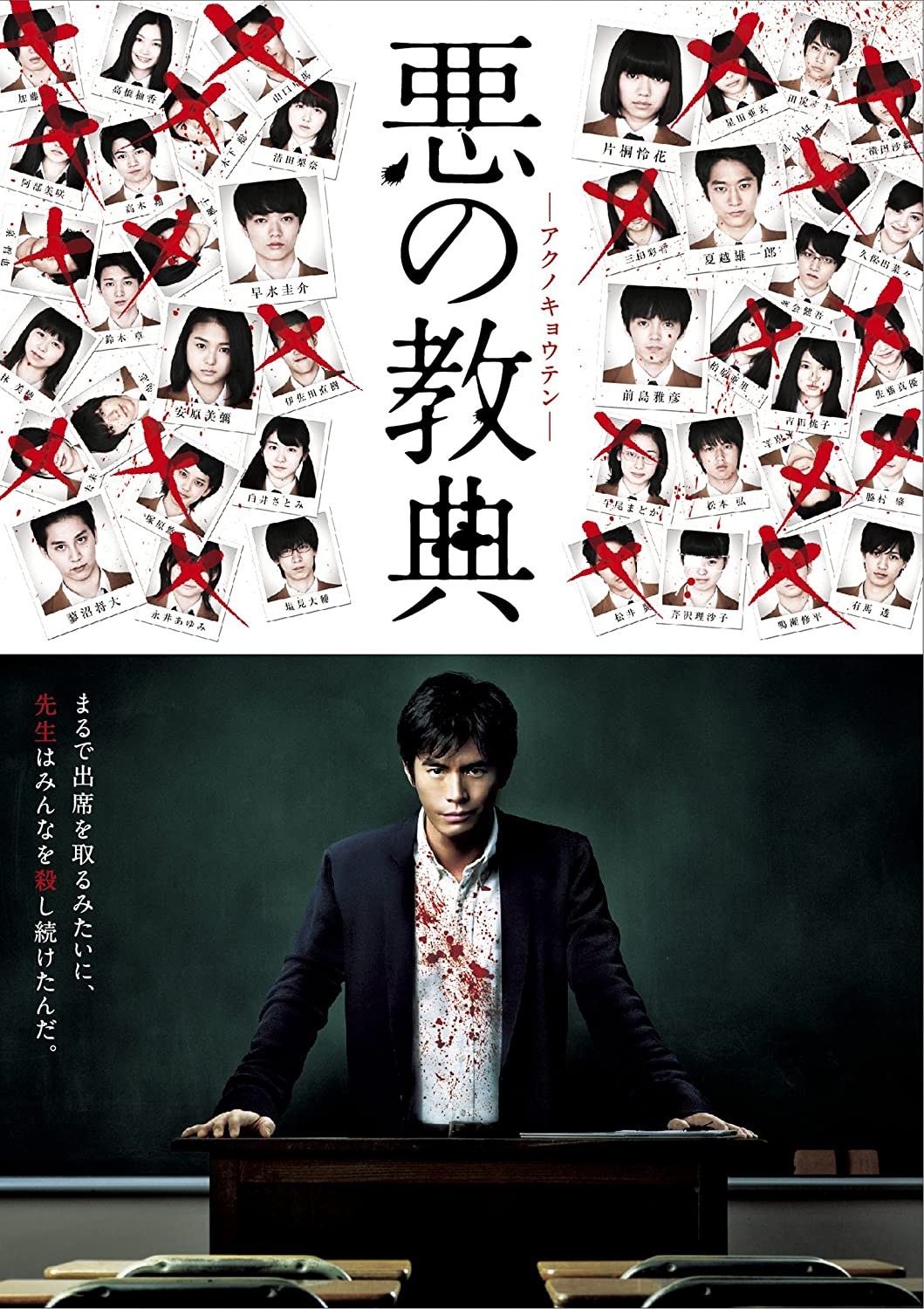
Spoiler alerts and discussion of The Scripture of Evil (novel, manga, and film).
The Scripture of Evil" is a Japanese violent horror film released in 2012. Directed by Takashi Miike, the film is based on a novel by Yusuke Kishi. Seiji Hasumi, a high school teacher, is a cheerful and vivacious man who is relied upon by his colleagues and students. However, he is actually a psychopath who lacks empathy for others and has never hesitated to kill anyone who gets in his way. One day, his past crimes are about to be exposed, and Hasumi decides to eliminate everyone in the school. This film is a story of a psychopath named Hasumi and his life-threatening battle with the people around him.
Read Article

Spoiler commentary and discussion of MIU 404 (Drama)
MIU404" is a TV drama set in the Tokyo Metropolitan Police Department's Mobile Investigation Unit, in which two detectives with very different personalities confront Japan's social problems and try to solve them. The detectives called up to the newly established 4th Mobile Investigation Unit as a temporary unit are Kazumi Shima and Ai Ibuki. Despite their conflicting personalities, the two are partners in a variety of cases. The novel storyline and the way the two detectives develop a bond as buddies is something that one cannot take one's eyes off.
Read Article

Shinsengumi! (Taiga Drama) Spoiler Commentary and Discussion Summary
Shinsengumi! is a historical drama series broadcast by NHK (Japan Broadcasting Corporation) from January to December 2004. It was highly acclaimed as an ensemble coming-of-age drama set at the end of the Edo period and centered on a group of young men who put their lives on the line to defend themselves. The story depicts Isamu Kondo, a peasant from Tama, who goes to Kyoto to become a true samurai, forms the Shinsengumi with his friends, and fights and lives to uphold his sincere loyalty. The lively performances by young actors including Shingo Katori and the screenplay by popular screenwriter Koki Mitani are considered one of the highlights of the film.
Read Article

Ju-On (Video Version) Spoiler Commentary and Discussion Summary
Ju-On" (video version) is a horror video work released in 2000. It was directed and written by Takashi Shimizu. It is the origin of the "Ju-On" series, which later became one of Japan's most popular horror films. It is an omnibus film told from the viewpoints of several characters, focusing on the murder of the Saeki family, which is the origin of the entire "Ju-On" series. The film shows why Kyayako was killed by her husband, Takeo, and how the spirits of Kyayako and Toshio curse many people to death, which is visualized as a terrifying psychic phenomenon. The curse spreads not only to the people who moved into the accident property, but also to those who are related to them.
Read Article

Spoiler commentary and discussion of Boku no Ikiru Michi (Boku Ikiru)
Boku no Ikiru Michi" is a drama series that aired on Fuji Television in 2003. It is the first of a trilogy of the Boku series and is about death. It is affectionately known as Boku Ikiru no Michi. It depicts a year in the life of Nakamura Hideo, a high school teacher who has been told he has little time left to live. The main character is played by Kusanagi Tsuyoshi. The cast also includes Akiko Yada and Ren Osugi. The screenplay is by Atsuko Hashibe, who has created numerous hit dramas. The theme song, "Sekai no One and Only One Flower," became a big hit along with the popularity of the drama.
Read Article

Spoiler commentary and discussion of HERO (2015 film).
HERO" is a Japanese film released on July 18, 2015; it is the second film version of the same series that aired as a Fuji TV drama series in its first season in 2001 and in its second season in 2014. Directed by Masayuki Suzuki. It was the third highest grossing Japanese film (and the highest grossing live-action film) in 2015 (4.67 billion yen). The main character, Prosecutor Kuryu, played by Takuya Kimura, becomes involved in an embassy scandal through a suspicious traffic accident.
Read Article

Ju-On: The Grudge of the Black Girl (film) Spoilers and Discussion Summary
Ju-On: Black Girl" is a Japanese horror film released in 2009. Ju-On: The Grudge of the Black Girl" was shown simultaneously with "Ju-On: The Grudge of the White Old Woman". Directed and written by Mari Asato. In this film, Kyayako, the main character of "Ju-On" series, does not appear in the film, which is a new attempt. As the main character replacing Kyayako, the spirit of a pitch-black girl who could not be born in this world wreaks havoc on people. At the end of the film, a battle is waged between Mariko, who attempts to expel the spirit, and the spirit that tricked Mariko into beating her. The spirit, having gained her freedom, walks away without sticking to her house like Kya-ya.
Read Article

僕と彼女と彼女の生きる道(僕カノ)のネタバレ解説・考察まとめ
『僕と彼女と彼女の生きる道』とは、2004年にフジテレビ系の「火曜22時」枠で放送されたテレビドラマ。主演は草彅剛。銀行員の小柳徹朗は妻から離婚話を切り出され、妻が置いていった一人娘・凛と2人で暮らすことになる。子供にずっと無関心だった徹朗であったが、やがて娘の大切さに気づき親子の関係を築いていく。『僕シリーズ3部作』の2作目であり、親子の絆をテーマにした内容が大きな反響を呼んだ。また、娘役を演じた美山加恋の作中での「はい」というセリフが話題となった。
Read Article

Spoiler commentary and discussion of Yusha Yoshihiko the Brave and the Devil's Castle (Drama)
Yusha Yoshihiko and the Devil's Castle (Drama)" is a comedy drama series broadcast on the TV Tokyo network. The surrealistic and comical storyline and unique characters have attracted a lot of attention. The splendid guests who appear in each episode are also a topic of conversation. The story is about Yoshihiko, a young man from a village who happens to go on a journey to search for medicinal herbs as a hero, and makes friends along the way. The film was also inspired by the game "Dragon Quest," and the sound effects and items in the film excited fans. Due to its popularity, a sequel was later released.
Read Article

Spoiler commentary and discussion of Daigo of Megumi (FIRE BOYS)
Megui no Daigo" is a story about a firefighter serialized by Masato Soda in Weekly Shōnen Sunday for about four years from 1995 to 1999. In addition to the manga, the story was dramatized by Fuji Television in 2004. The main content of the story is about Daigo Asahina, a near delinquent who becomes a firefighter and is inspired by his colleagues, superiors, teachers, and rescuers to become a rescue team member, expanding his field of activity in a maverick manner. The duo of Daigo, with his ex-delinquent way of thinking and acting, and Amakasu, an honor student, adds to the film's appeal. The realistic scenes of fires and accidents also attract the reader's attention.
Read Article

Spoiler alerts and discussion of Nobo no Shiro (The Castle of Nobo) (movie)
Nobo no Shiro" is a 2012 film based on the Japanese historical novel by Ryu Wada. It was co-directed by Isshin Inudo and Shinji Higuchi. The protagonist, Nagachika, is the son of the lord of Oshijo Castle. Oshijo Castle is under pressure to be opened by Mitsunari, a vassal of Hideyoshi Kanpaku. Nagachika, however, was determined to oppose Mitsunari head-on in order to fight against the unreasonableness of the world. With the help of those around him, Nagachika was finally able to defeat Mitsunari's army. This is a historical film that, while at times moving, will leave the viewer feeling refreshed by the devious plans of Nagachika, the "Dekubou".
Read Article
Tags
Contents
- Overview of "The Sixth Sayoko
- Synopsis and story of "The Sixth Sayoko"
- Drama version synopsis
- Mysterious transfer student
- Two Sayoko
- Obstructionists and fake sayoko
- Fearful Cultural Festival
- Identity of Sayoko
- have a door open
- Original Story Synopsis
- Programming in Logic
- spring
- summer
- autumn
- winter
- epilogue
- Characters and characters in The Sixth Sayoko
- The two main characters
- Rei Ushioda (played by Anne Suzuki)
- Sayoko Tsumura (Sayoko Tsumura / Drama: Chiaki Kuriyama, Stage: Ayane Suzuki)
- Students at Nishihama Junior High School
- Aki Sekine (Shu Sekine / Drama: Takayuki Yamada, Stage: Kensuke Takahashi)
- Masako Hanamiya (Masako Hanamiya / Drama: Marika Matsumoto, Stage: Mahana Ozaki)
- Yukio Karasawa (Yukio Karasawa / Drama: Ryo Katsuji, Stage: Kaijin Kumagai)
- Akihiko Kato (Akihiko Kato / Drama: Ikusaburo Yamazaki, Stage: Daiki Tobiba)
- Yuichi Mizoguchi / Drama: Norihiko Torii, Stage: Yuhki Ohara
- Masahiro Shitara (Masahiro Shitara / Drama: Kenta Uchino, Stage: Ryosuke Yamamoto)
- Touko Hirabayashi (played by Yuka Hirata)
- Students of Class 2A (Drama: Yuka Takeshima, Marie Fukaya, Aimi Morimoto, Emi Hasegawa, Risa Ishibe, Chieko Fukuhira, Motoki Kobayashi, Shogo Mori, Kyohei Tanaka, Asami Katsura, Sayaka Hirose)
- Faculty and Staff at Nishihama Junior High School
- Sadao Kurokawa (Drama: Takehiro Murata, Stage: Yoshiyuki Morishita)
- Mikako Sano (Sano Mikako / Drama: Sae Isshiki, Stage: Mimi Naka)
- Dr. Mita (played by Fumiyo Kohinata)
- Koizumi Sensei (Koizumi Sensei / performed by Michiko Iwahashi)
- Principal (Koucho Sensei / performed by Shintaro Takashi)
- Students' Families
- Shunsaku Ushioda (played by Shozo Uesugi)
- Mayumi Ushioda (played by Jun Miho)
- Koh Ushioda (played by Takahiro Ito)
- Takao Karasawa (Actor: Masato Furutani)
- Chinatsu Sekine (played by Hiromi Manikawa)
- Yurie Tsumura (Yurie Tsumura / performed by Manami Fuji)
- Other Characters and Characters
- Sayoko's Shadow (performed by Ayumi Ikeda)
- Mystery Girl (played by: Hinako Sano)
- Yoko Sawaki / Stage: Mizuhoi Yamauchi
- Stage version only
- Maya Nishino (Maya Nishino / Stage: Shida Komaku)
- Yukie Hirata (Yukie Hirata / stage: Nana Hanasaki)
- The Ghost of Sayoko Tsumura (Stage: Beniharu Midoriya)
- Terms for "The Sixth Sayoko
- Difference between "Sayoko," "Sayoko," and "Sayoko."
- sundowner (bright patches on the wings of ducks)
- male crotch (as a target in fighting)
- hyacinth bean (Lablab purpureus)
- Nishihama Junior High School
- Mystery Girl
- coffee shop or cafe where one can hear voices
- Famous quotes, lines/scenes and scenes from "The Sixth Sayoko"
- Rei and Sayoko: "There are two Sayoko's this year, you and me, me and you."
- Scenes from cultural festivals
- Sayoko Tsumura: "I'm just 14 years old!"
- Backstory, Trivia, and Small Stories/Episodes and Anecdotes from "The Sixth Sleepyhead"
- The Sixth Sayoko," a horror-filled stage play that is different from both the original story and the drama.
- The cast gathers for the first time in 21 years to reminisce "The Sixth Sayoko Alumni Reunion".
- Drama Love Poem"
- Eerie theme music
- Theme song and insert song for "The Sixth Sayoko
- OP (Opening): coba "Rokuban no Sayoko