
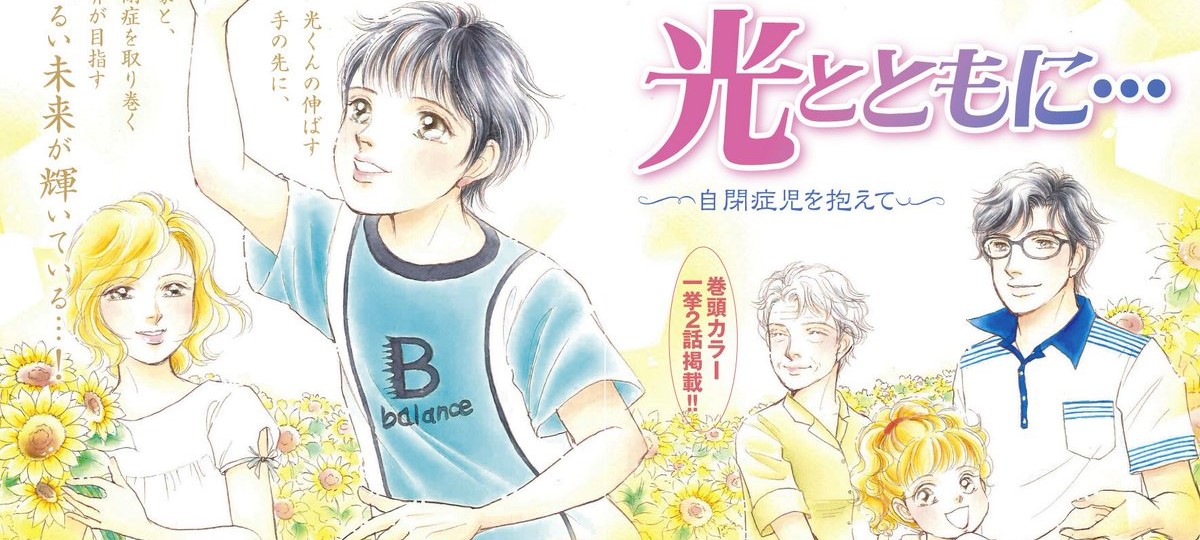
With the Light...~Having an Autistic Child~" is a Japanese manga by Keiko Tobe that has been serialized in "For Mrs." since 2000, and was dramatized and broadcast by Nippon Television Network Corporation (NTV) in 2004. In the same year, it won the Excellence Award in the Manga Division of the 8th Japan Media Arts Festival.
The main character, Hikaru Azuma, is a relatively severely autistic child with intellectual disabilities. Although born into an ordinary businessman's family, the author's meticulous research depicts the difficulties of a time when autism was not yet widespread, as well as the growth of the family along with the main character.
Outline of "Along with Light. Holding an Autistic Child"
"Along with Light. Carrying an Autistic Child" is a Japanese cartoon by Keiko Tobe that was serialized in the November 2000 issue of "Foromyces" and a work that was dramatized and broadcast on the NTV network in 2004. In the same year, he received the Excellence Award in the Manga Category of the 8th Media Art Festival of the Agency for Cultural Affairs, but after being published in the same magazine in the March 2009 issue, the work was suspended due to the author's medical treatment, and the author passed away on January 28, 2010. In April and May 2010, unpublished manuscripts (at the stage of name) made in the sickbed were published, and the final volume (the 15th volume) was published by combining them with manuscripts that had not yet been published as a book.
Subsequently, in 2016, as a memorial to the 30th anniversary of the author's debut, a special edition was published in the March 2016 issue of "Foromyces," in which the name of the posthumous manuscript was penned by Mei Kawasaki, a cartoonist who had a relationship with the author, and published as a completed edition.
The book was written at the graduation ceremony of the author's second son. While the children were presenting "What do you want to be when you grow up?", the mother announced on behalf of the second son's classmate, an autistic child, "I want to become a bright and energetic working adult." The author was impressed by this comment and asked the author to get permission to write a comic book. The author said, "Autism is misunderstood as being caused by depression, withdrawal, and the way parents raise their children. I want you to solve this problem by making it into a comic book."
The author Keiko Tobe, who continued to cover the story during the production, said, "If you say' autistic' in a word, I want a society that doesn't need any explanation!" The story was originally intended to depict Hikaru from his childhood until he became an adult, but the story is incomplete due to the author's death.
As of February 2010, after the author's death, the cumulative circulation has exceeded 2.4 million copies, and the manga has been published in local translations in Taiwan, Hong Kong, South Korea, the United States, and Canada, as well as being widely viewed on smartphone manga apps.
Outline and story of "Along with Light. - Holding an Autistic Child -"
The Birth of Light and Separation from Husband
The story begins with a monologue by a woman who says, "The day you were born. the sunrise was very beautiful." Sachiko Azuma, who has just become a mother, looks at the sunrise from the window of the obstetrics and gynecology hospital and calls her child, who was born with the sunrise, "Light."
Sachiko got married to Masato, whom everyone admired for her love at work. After that, she felt the joy of raising her child with her beloved husband. Sachiko had the so-called "normal happiness." It was hard to raise a child every day, but it was the first time for her to do so, so she put her best effort into her own way.
However, when Sachiko invited his mother friend, who had a child at the same time, to his home, he saw with his own eyes "a baby who doesn't hate being held by his mother." It is a characteristic of babies that they often cry, but when they are held by their mother, they sometimes stop crying. Sachiko accepted the support of his mother friend, who said, "I think Sachiko looks like a slightly nervous father," while leaving a sense of discomfort in the contrast with his child, who tries to hold his child and tries to avoid it.
The problem of this "ordinary happiness" gradually becomes more and more apparent. The admired Miyabito was a husband with a touch of a mother complex who could devote himself to work once he got married. He recognized that child-rearing was secondary and that all housework was done by the mother. This was due to the education of his mother-in-law, but this situation led to Sachiko being driven further.
Also, her mother-in-law used a duplicate key that her husband gave her at his own discretion, and she broke in freely and taught Sachiko how to educate herself every day.
In the midst of this, an unfamiliar diagnosis of autism was discovered during a medical examination.
This is a time when not many people, even doctors, know about this diagnosis. Without the cooperation of her husband, who is not involved in child rearing, and her mother-in-law, who denies her education, Sachiko is forced to fight against autism alone. Sachiko's "normal happiness" and determination as a mother, which she was supposed to have at first, crumbled in a fragile way.
Worried about what to do, Sachiko heads to a welfare center where she has visited in the past. There, she meets professional staff and learns that "autism" is not the result of her mother's education "and that" there is a place to turn to, such as a specialist. "Also, through her involvement with families with disabilities and cooperation at her parents' home, she is able to leave her husband's home and spend time facing the light.
It was a light that did not call her "Mama" or make eye contact, but it was the moment that I was able to see that there might be a different way for parents and children to communicate, as Sachiko, who was depressed, picked many flowers at her feet and left them there repeatedly.
He was a husband who had been separated for a while, but changes will come to him as well.
The reason was that Masato, who had been active on the front line at work, collapsed due to overwork, and was hospitalized for two weeks, which led to a job loss. During the period of medical treatment, there was a sense of regret and conflict that all of his projects were taken over by his successor, but he changed his way of thinking in his sickbed. Then, Masato told Sachiko that his dream was to "do a job that would change the world," that he would "break away from his values and live as a parent," and that he would "live as the father of light," and that he wanted to start over again. From this, Masato was finally able to stand on the starting line as a father.
Prejudice and Objectivity in Nursery School
As light became more walkable, as people walked out of their homes more and more often, and as the eyes around them turned to abuse and prejudice, Azumaya was able to proudly declare to others that her child was autistic.
If things go well, the relationship between nursery schools and groups and society will become even stronger. However, it is necessary to determine whether there are institutions that accept children with disabilities, and even if they do, whether there is a place where they understand that appropriate measures will be taken. Sachiko went through a number of institutions and was able to move on to the next stage by being admitted to Shichi Tsukicho Nursery School.
Fortunately, Hikari is blessed with a good homeroom teacher, but Hikari's curiosity and energy caught up with another nursery school child, Moe. The two of them climbed up the wall of a nearby company and went to a place that could only be reached by a ladder car. Although he was safe, if he made a mistake, it would be a matter of life and death, so Moe's mother would ask him, "Why do you leave Hikaru at the nursery school without taking care of him yourself?" She also declared that if Hikaru continued to stay at Shichi Tsukicho Nursery School, she would consider transferring to another nursery school.
On the other hand, Moe's mother was caring for her single mother as well as her own mother. Thanks to her care, her symptoms have improved. She suggests, "If you continue rehabilitation exercises, you will be able to play gateball, which you used to play." In response, she reveals the reason why she can't go, saying, "I was told not to come. It's a bother. I want to see everyone, but it's not allowed!" She realizes that her words to Sachiko are the same as her mother's.
After that, Moe's mother gradually overcame her conflict and began to make efforts to increase her involvement with Sachiko by exchanging greetings with her.
Sachiko deepened friendship with the parents of Shichi Tsukicho Nursery School, who had come to understand the meaning of light through various troubles, and eventually developed into a person who supported her by asking her to collect signatures so that she could go to the same elementary school in July.
At the Asagao Classroom (support class) of July Elementary School, Hikari's admission was successfully decided by meeting an understanding principal, and the only thing left was to wait for the graduation ceremony. At the end, she had to present her "dream of the future," but since Hikari could not speak on her own, her mother, Sachiko, spoke instead. Sachiko had not been able to see the future of Hikari until now, but now that she is more confident than before, she holds the hand of Hikari and speaks boldly, "I will be a bright and energetic adult when I grow up," and leaves the path of the graduation ceremony. Sachiko's words touched everyone's hearts, and Hikaru was able to graduate from the kindergarten safely.
Entering elementary school and having a younger sister
The light has been safely admitted to elementary school.
I was relieved that I was in the same school as the children I had been friends with since I was in nursery school, and that I was left to the principal and homeroom teacher who had knowledge about disabilities. For a while, I had a tantrum of light at the entrance ceremony. It was because I was nervous and panicked when I heard the crying of the baby I was not good at.
The parents who saw her for the first time criticized her, and Sachiko became anxious again, saying, "Is it OK for Hikaru to stay here?" However, Moe's mother, who had become an understanding of Hikaru and Sachiko, followed her, and her homeroom teachers explained at the parents' meeting that she managed to finish the first day safely.
At the same time, Sachiko was pregnant with her second child. While her husband was away on an overseas business trip, the typhoon flooded the town where Sachiko was living, taking care of Sachiko while she was working. The shock caused her water to break and her contractions to start. Seeing the town turning into a sea, Hikaru swam away while she looked away. Having foreigners in the neighborhood, the support center, the Ohisama House, and firefighters rescue her, Sachiko goes to the hospital and Hikaru goes to the Ohisama House. For the first time, Sachiko and Hikaru were separated for many days, but they managed to get through the situation and Sachiko gave birth safely. Finally, Hikaru became an older brother.
As an older brother, Hikaru cries at the cries of his baby (younger sister), whom he disliked, and turns into a baby again, sometimes fighting with his younger sister, Kanon, and beating her.
But by the time Hikaru was in third grade, there was a change in the relationship, as he patted Kanon gently on the head where he would normally have done so.
Sachiko felt that Hikaru, who had become his older brother, was also affected by the rapid growth of Kanon's language, etc., and at the same time he felt the growth of his own couple.
Understanding Disability and Light Growth
As she gets used to school, Sachiko begins to distribute "Hikaru Tsushin" (Hikaru Correspondence), which she created herself, at elementary schools.
"Hikaru Tsushin" was published in order to help people understand the autistic child, Hikari. It was mainly a collection of characteristics and daily events. It is popular among teachers because the teacher is an understanding teacher, but the problem here was a guardian who read "Hikaru Tsushin" and made a harmless look as if he had understood it.
Sachiko says that people who see the action of light for the first time say, "What is this child?" and people who know about the disability say, "I'm just sorry," and "My sister wants to take care of the disabled child in the future." Sachiko hopes that people will understand her better.
In the midst of this, a new discovery that even Sachiko and his wife did not notice was born.
This is because the light captured the shape of the puzzle without looking at the picture, and completed the puzzle. Since he was not good at understanding with his ears, he relied on "being able to understand by looking," so he called it "camera eye" and the light was in a state where "the image remains in his memory as if he were taking a picture."
Sachiko was sometimes depressed when Hikaru let out a terrible word at the house of a friend of his mother who was in the Kanon grade, but one day she was shown by her homeroom teacher, "The words Hikaru wrote for me. I was so grateful that I put them on." The words written on the blackboard "Genki mo genite" were the words Sachiko used to say every morning.
She was described as' Mitsu-kun is looking as if he is not looking, and hearing as if he is not listening,' and Mitsu-kun, who gave her a gentle hope in her carelessness, encouraged Sachiko.
Entering junior high school and turning point for my grandmother
At the bus stop leading to the junior high school with Sachiko, there is a light wearing a huge Gakuran.
He had grown up to be such a beautiful boy that female students passing by said, "He looks like Wentz."
Sachiko feels that his son is growing more quickly because Hikaru is less likely to have tantrums than before. However, when Hikaru reaches puberty, it means that there will be more problems to deal with.
This is because the act of touching a woman's hair, which has been allowed until now, becomes an object of fear or a crime regardless of the disability seen from the other person.
Troubled, Sachiko was asked at the Ohisama House what the problem was, whether it was "being interested in women" or "sniffing and touching hair." This means that the former is "being interested in women" and the latter is "something that is often seen in autistic people," so Sachiko recognized the latter and decided to review the situation at that time. He showed a method of coping with the problem through ingenuity, and succeeded in leading to a solution, albeit gradually.
On the other hand, his mother-in-law's affection for his younger sister, Kanon, accelerated.
Although her mother-in-law, who was originally enthusiastic about education, reconciled with Sachiko about the light, when she saw the Kanon with her own eyes, she strongly wanted to raise the Kanon under her own care.
Despite the reconciliation, her mother-in-law still ignored the light and did not accept her grandson's disability. She did not even try to understand the difference between illness and disability, asking, "When will light catch up with my sister?", "What will happen to a child like that?", or "When will it be cured?"
Her mother-in-law finally had a turning point. When she was invited by her dance friends to visit the home of a famous writer, she found out that the writer also had a disability. At this point, she finally developed a feeling of facing the light in her mother-in-law and tried to understand the disability of her grandson. Hikari was already a junior high school student, and although it was quite late, she finally had a chance to understand her disability.
Characters in "Along with Light. Carrying an Autistic Child"
Azumaya
Toko (played by Hikaru Azuma, played by Takashige SAITO, played by Tomotaka NAKAJO before entering elementary school)
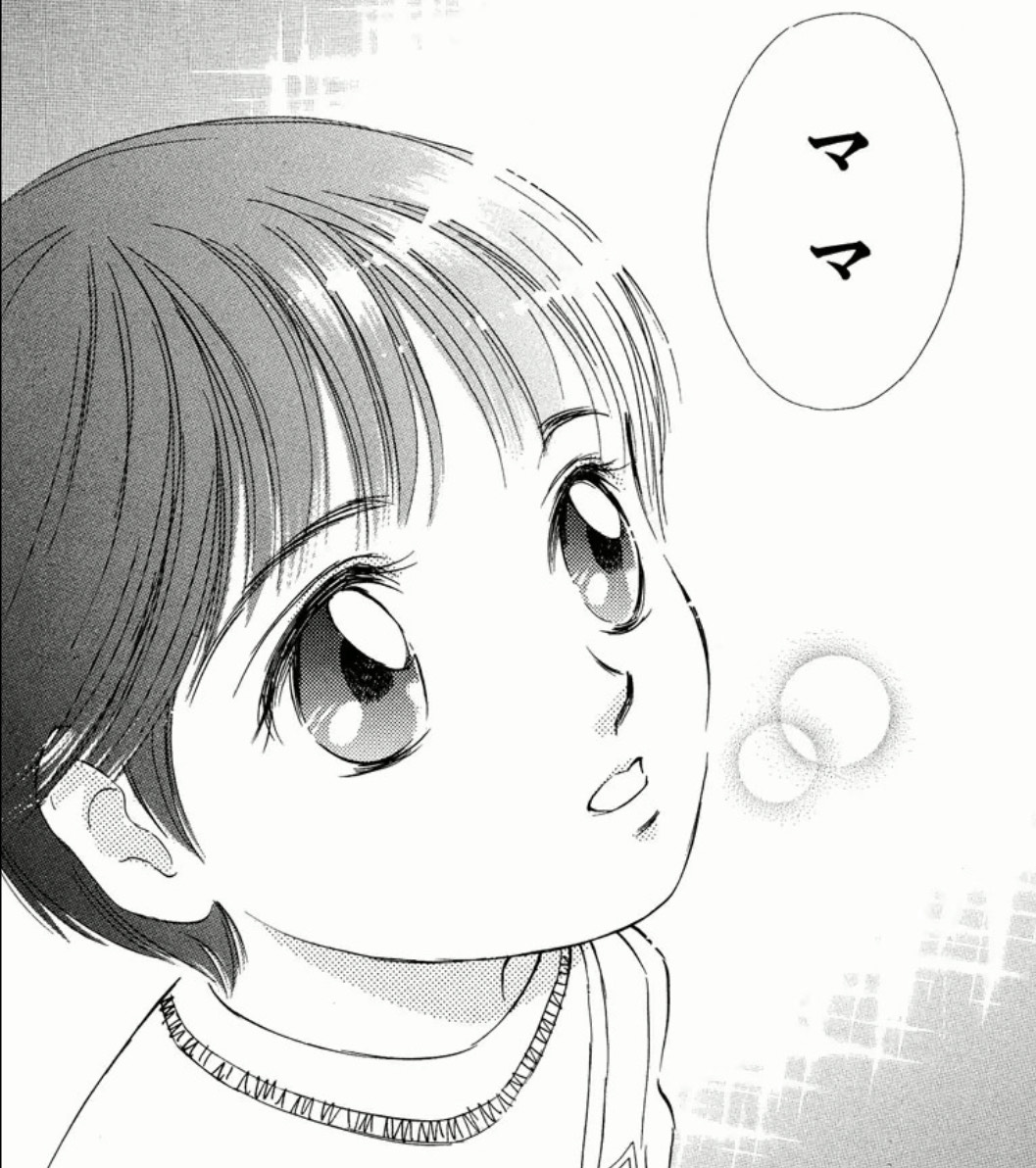
The hero of this story, the eldest son of Azumaya.
At a one and-a-half-year-old check-up, she was diagnosed with hearing impairment and autism with intellectual disability and hyperesthesia from the neck up.
She doesn't like the noise or the crying of dogs or babies. She loves beautiful things such as glittering kaleidoscope and is very particular about it. Her favorite foods are crab sticks and cabbage stir-fried with egg.
When she was two and a half years old, she worked as a mother and child at a welfare center. At the Shichi Tsukicho Nursery School, she graduated from a nursery school for the first year. She graduated from elementary school in July. After attending 穂田 Junior High School until the first semester of her second year, she transferred to the School of Turtle and Imperial Court as she lived with her grandmother.
AZUMA Sachiko (played by SHINOHARA Ryoko)
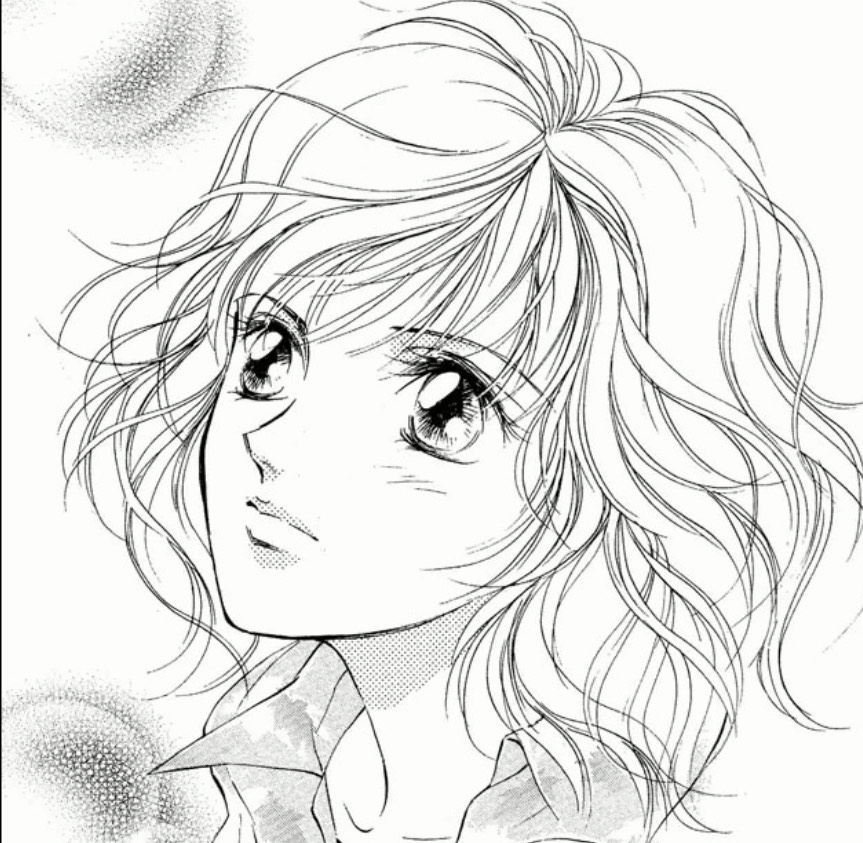
The other main character of this story is Hikaru's mother. Her maiden name is Nishiyama. She is an only child and has grown up without any problems, rebellion or bullying.
After graduating from a local public high school and a junior college where many of her daughters were enrolled, she got a job at Japannet as a accounting work.
Around the same time that she entered Hikari Nursery School, she began working at home, using her experience as a accounting work to input data into computers at accounting firms.
His hobby is human observation. He is not good at singing at karaoke.
Masato Azuma (played by Tatsuya Yamaguchi)
The father of light. An office worker working for Japannet.
He was the eldest son of Azumaya and was expected to be promoted despite being in his 20s.
While women at work were popular, she started dating after being confessed by Sachiko, and later married.
For a while after Hikaru was born, she was always working and always worried about her public image, but after she fell ill due to overwork and was transferred to a low-income job, she became a family-first husband.
Azuma Kanon

Tags
Contents
- Outline of "Along with Light. Holding an Autistic Child"
- Outline and story of "Along with Light. - Holding an Autistic Child -"
- The Birth of Light and Separation from Husband
- Prejudice and Objectivity in Nursery School
- Entering elementary school and having a younger sister
- Understanding Disability and Light Growth
- Entering junior high school and turning point for my grandmother
- Characters in "Along with Light. Carrying an Autistic Child"
- Azumaya
- Toko (played by Hikaru Azuma, played by Takashige SAITO, played by Tomotaka NAKAJO before entering elementary school)
- AZUMA Sachiko (played by SHINOHARA Ryoko)
- Masato Azuma (played by Tatsuya Yamaguchi)
- Azuma Kanon
- Takako Azuma (played by Keiko Takahashi)
- The Nishiyama family (Sachiko's parents' home)
- Yuko NISHIYAMA (played by Aoi KANAZAWA)
- Father of Sachiko
- Friends and Guardians of Light
- Hiroaki Oyamada
- Mother of the sun
- Nakajima Moe
- Nakajima Hisako
- Nobuaki KANAZAWA
- Gozaru
- Kaishichita TANAKA
- Teachers and experts
- Mr. Arai
- Mr. Osawa
- Ms. Yumi Hirokawa
- Principal Yoshizawa
- Mr. Shigeru Aoki
- Mr. Gunji (played by Hariri KATAGIRI)
- The term "Along with Light. Carrying an Autistic Child"
- Autism
- Welfare center
- Words, lines, scenes and scenes of "Along with Light. - Holding an Autistic Child -"
- Masato: "I want to live as a father of light"
- Sachiko: "When I grow up, I will become a bright and energetic working adult."
- Behind the scenes, trivia, small story / episode / anecdote of "Along with Light. ~ Holding an Autistic Child ~"
- Death of the author
- TV drama
- Theme song and insert song for "With the Light. Holding an Autistic Child"
- Theme song: Rythem "Kaleidoscope Kirakira"