

Ahiru no Sora" is an adolescent sports manga about the short protagonist Sora Kurumaya's struggles in basketball. He rebuilds his high school's basketball club, which is full of delinquents, and aims to participate in a national tournament. He grows through friendly competition with his friends and rivals, but also experiences setbacks along the way. The thoughts of the high school students and the famous lines of the adults who support them are often deeply moving and inspire the daily life that we spend without thinking.
During a match in the basketball club of Kuzuryu High School, only five members were left, and one of them was sent off. Then, Senshu HANAZONO (Chiaki Hanazono) appeared as the savior. Senshu played basketball until he was a junior high school student, but he came to think it was uncool to work hard in a match in which he was losing by a large margin. However, one of his classmates, Madoka Yabuchi, a member of the women's basketball club, told him, "I won't laugh even if people all over the world are laughing." He returned to the basketball club and started to fight. To the audience who were laughing at the match of Kuzuryu High School, Senshu said, "Those who don't fight don't laugh at those who are fighting!" This is a famous scene in which Senshu reflected on the bitter experience of being laughed at in the past match and moved his heart to the battle of the sky. The cool Senshu, who had talent but gave up his favorite basketball due to the words around him, had a strong feeling of wanting to play basketball with his friends even if he had a bad feeling. This is an impressive remark.
"IF YOU'RE GOING TO DO ANYTHING, I'D RATHER HAVE A HIGH CABBAGE."
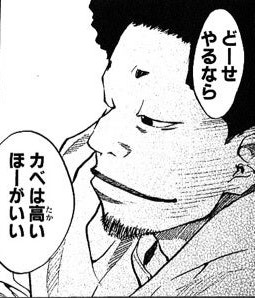
The members of Kuzuryu High School who came to watch the matches at the Kanto Tournament were overwhelmed by the enthusiasm of other high schools. When they saw the match at Shin-maruko High School in the practice matches, they began to feel cool and at the same time a difference in level. Chiaki's line when she learned that she would not be able to participate in the prefectural preliminaries unless she beat Shin-maruko High School, which is in the same district, was, "If I want to do it, I want Kobe to be expensive." The area where Kuzuryu High School is located is not only Shin-maruko High School, but also a hotly contested area for high school basketball teams. Seeing this, rather than feeling scared, she made a strong determination to climb up from now on. In fact, from this point on, full-scale practice began, and the goal was not just to enjoy basketball, but to win as a team.
"We've never even been expected."
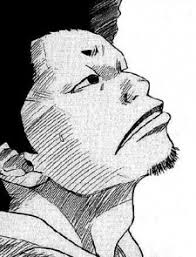
Mokichi Kaname, who was tall and expected to play in the basketball club at junior high school, had a number of drawbacks, including a lack of physical strength. In such circumstances, just because he was tall, the expectations of his seniors and those around him came first, and he was sometimes disappointed. Therefore, he did not continue to play basketball at high school. Chiaki said to Mokichi, "We have never been expected." It is hard to be expected and disappointed, but it is also shameful to say the goal of the national tournament without any expectation. This is a famous line that Mokichi, who saw his seniors making desperate efforts even in the absence of expectation, was moved to seriously face the basketball again. This word from Chiaki triggered Mokichi to join the Kuzuryu High School basketball club and become active.
"It's easy to think that continuing is a virtue, but cutting it off requires a lot of courage. I'll buy that courage."
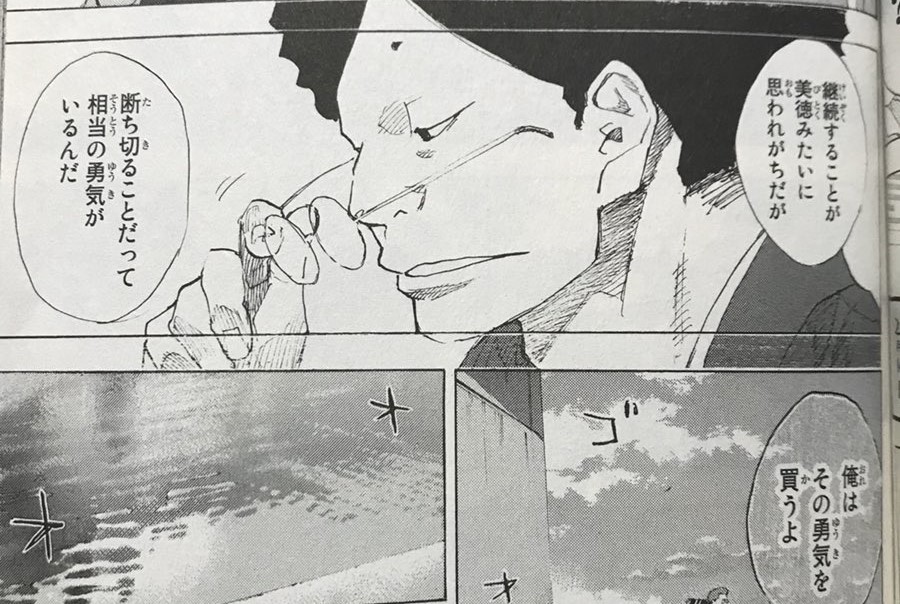
Shoko SAIKI, a member of the Kuzuryu High School basketball team, was worried that his abilities would be separated from those of the other members. He was also conflicted with himself, who was jealous of the performance of the members around him and was happy about his mistakes. Chiaki said to Saiki, who decided to resign from the basketball team, "It is often thought that continuing is a virtue, but it takes a lot of courage to break it. I will buy that courage." It is said that continuing to make efforts is important in this world, but it is not easy to break the dream of a national tournament that you know your feelings and chase with all the members of the basketball team. In such a situation, it is said that the choice to "break" is something that requires courage different from "run away."
Hanazono Hyakushun no Meijin / Meisho / Meisho
"I'll spend the rest of my high school life playing basketball."
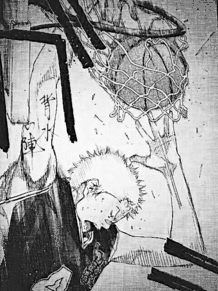
The captain of Kuzuryu High School, Hanazono Momoharu, who burned down the club room while trying to smoke, managed to restart the basketball club by begging teachers. The line he said to the sky at that time was, "I'll put the rest of my high school life on basketball." I was playing basketball half-heartedly, but with this line, I can see that it was the moment when I started to face it seriously. As the captain of the team, I made a mistake and caused trouble to everyone, but from now on, I will devote all of my high school life to basketball, and the powerful line that expresses my will to really strengthen the team is impressive.
"What's wrong with you? I'm still developing."
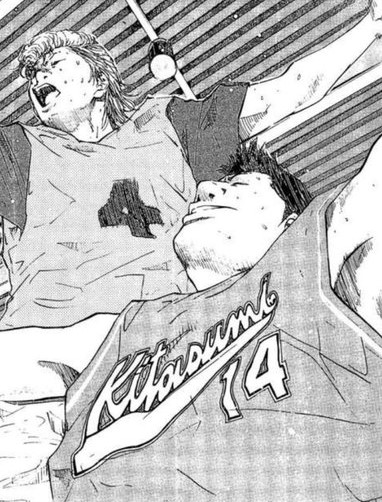
When he was in junior high school, his classmates were angry with him because he couldn't even shoot a lay-up shot, which is the basic goal of basketball, and he didn't give a clear indication to the new students. The line he said at that time was, "What's wrong with me? I'm still developing." He didn't get depressed when he was called "I'm sick." It was a scene where he realized that he had a strong mental attitude that "I still have a long way to go." It was an impressive scene where he realized that his strength and his feelings for basketball were genuine from his junior high school days by the way he stayed at the end of practice and made efforts to become good at it because he knew he was sick.
"I thought something would change if I won. Even if I didn't win, I still thought something would change. It wouldn't change. If I didn't change myself, I couldn't change anything."
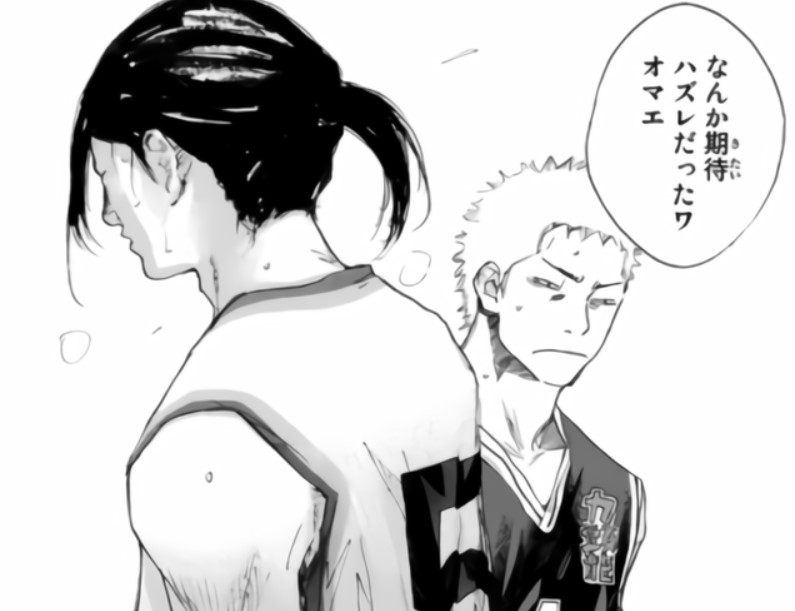
If you win the practice match with Yokohama Daiei High School, you may be recognized as a member of the basketball a basketball club, not as a club. In the beginning, you had a good match, but in the second half, Yokohama Daiei, one of the strongest schools participating in the national competition, has a rhythm and is leading Kuzuryu High School. At the end of the match, Yaguma of Daiei, who was competing with Momoharu on the rebound, put his hand on Momoharu's shoulders and said, "Next year, you must come up." Seeing the difference in ability and the remoteness of the national competition in this match, Momoharu realizes that he didn't have enough determination, saying, "I thought something would change if I won. Even if I didn't win, something would change. It wouldn't change. If I didn't change, I wouldn't be able to change at all." At the same time as being the captain of the national basketball team, Momoharu's lines give the impression that he has no awareness of having once driven the basketball club to the brink of abandonment by smoking, and that he is powerless against the team.
Mokichi Yoru no Meijin / Meisho / Meisho
"I'm not a team that anyone can help anymore. I'm going to make the team stronger."
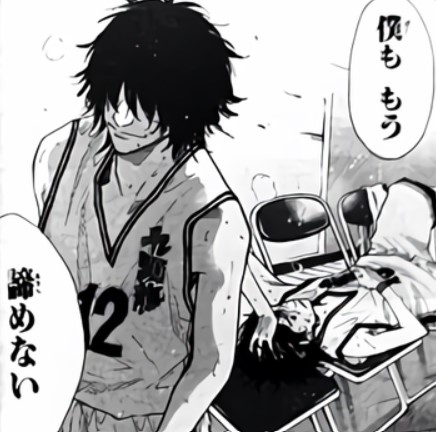
When Mokichi was a junior high school student, he belonged to a strong team, and even though he didn't have much physical strength, he was in an environment where people around him helped him. Mokichi felt that he had been dependent on it. This time, he entered Kuzuryu High School, and although his individual level was high, he was not well organized, and it was a team that had just started. In that environment, Mokichi came to the game and expressed his feelings by saying, "We are not a team that anyone can help us anymore. I will make the team stronger." Mokichi, who is always cool, put his passion for basketball to the fore. It is impressive to see him moving forward with responsibility as a supporter rather than a supporter.

Related Articles
Spoiler commentary and discussion of Ahiru no Sora (manga and anime)
Ahiru no Sora is a basketball manga written by Takeshi Hyuga. The series began in the second and third issues of Weekly Shonen Magazine in 2004, and has now reached volume 46. Kurumaya Sora, a small boy with a passion for basketball, enrolls in Kutouryuu High School. However, the basketball club has become a mere hangout for delinquents. Nevertheless, Sora's passion for basketball gets the others involved, and the team grows. The team aims to make it to the Inter-High School Tournament.
Read Article
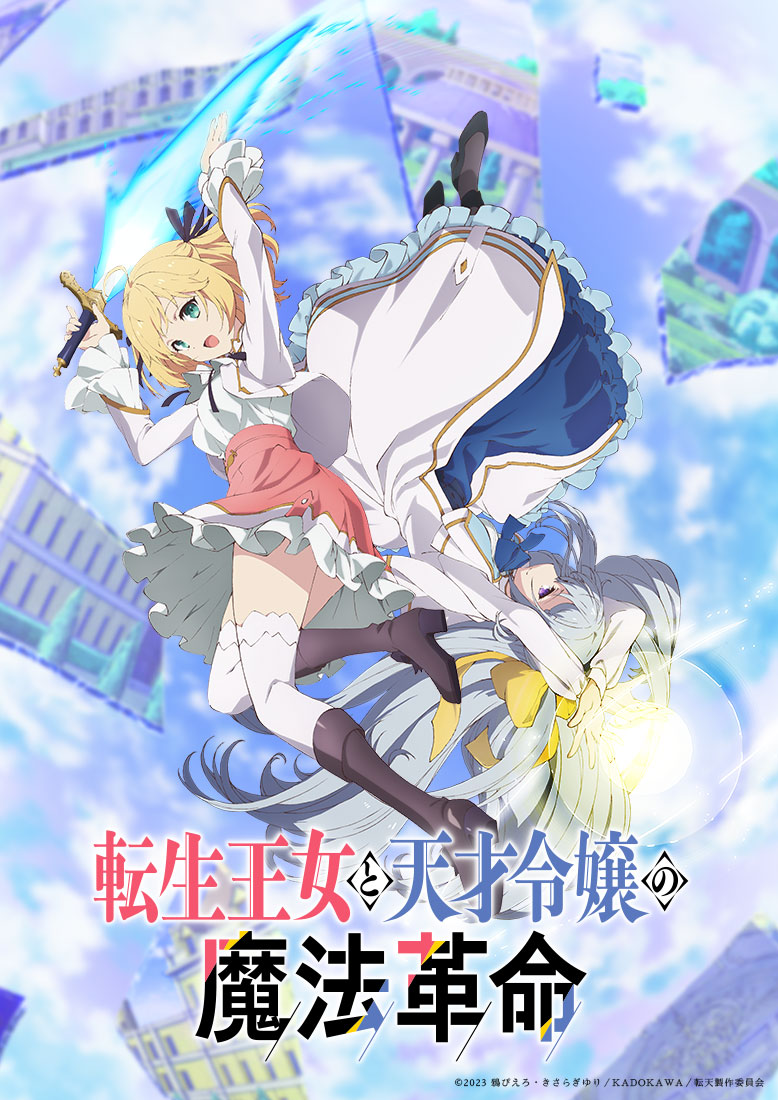
Spoiler commentary and discussion of The Magical Revolution of the Reincarnated Princess and the Genius Daughter (novella, manga, and anime).
Tensei o ojo to Genius Reijo no Magical Revolution" is a light novel by Raven Piero, a manga and an anime based on the light novel. It is abbreviated as "Tenten. This work is a story centered on two people: Anisfia Win Palettiere, "a heretical genius who was not loved by magic," and Euphilia Magenta, "a genius who was loved by magic more than anyone else. Anisfia takes Yufilia as her assistant after she is forced to break off their engagement, and together they pursue the development of magical science. There is also a romantic element between the two, giving the story the catchphrase "royal court yuri fantasy.
Read Article
Tags
Contents
- Overview of SORA -The Wingless Duck-
- Kurumatani Ku-no-Meijin / Meisho / Meisho
- "I want to win,"
- "All we have to do is move on,"
- "I wanted to say thank you to my mother."
- "From now on, I'm going to stand on the court on my own feet."
- "I will be the best and smallest player in Japan."
- "I went over, I went over, I came here."
- Senshu Hanazono's Words, Lines / Scenes
- "THOSE WHO DO N'T FIGHT DO N'T LAUGH AT THOSE WHO ARE FIGHTING!"
- "IF YOU'RE GOING TO DO ANYTHING, I'D RATHER HAVE A HIGH CABBAGE."
- "We've never even been expected."
- "It's easy to think that continuing is a virtue, but cutting it off requires a lot of courage. I'll buy that courage."
- Hanazono Hyakushun no Meijin / Meisho / Meisho
- "I'll spend the rest of my high school life playing basketball."
- "What's wrong with you? I'm still developing."
- "I thought something would change if I won. Even if I didn't win, I still thought something would change. It wouldn't change. If I didn't change myself, I couldn't change anything."
- Mokichi Yoru no Meijin / Meisho / Meisho
- "I'm not a team that anyone can help anymore. I'm going to make the team stronger."
- "I was the one who was disappointed in me."
- Kenji Natsume's Words, Lines, Scenes
- "I decide for myself whether the team needs it or not."
- "I'll bet on it as long as there's a one percent chance."
- "I don't want to admit it, but there's a certain reality here. Accept it. Once you accept it, all you have to do is keep going straight."
- "I've given up all my worries, my frustration with my friends and my stupidity. I'll settle everything in this game."
- Nanao Nao's Words, Lines, Scenes
- "There's no I in TEAM. It's the basics of basketball."
- Yuka Kurumatani's Words, Lines, Scenes
- "If you are frustrated, be a player whose height difference you can throw away."
- "I believe there will be no regrets whatever results lie ahead."
- "It's not normal,"
- Ueki Yozan no Meijin / Meisho / Meisho
- "DO N'T MOVE NOW! TELL ME WHEN TO MOVE!"
- Tomohisa Kurumatani's Words, Lines / Scenes
- "This isn't the kind of line where people can't do anything anymore."
- "There is no man in this world who keeps running. He stops and stops and goes, and people call it walking."
- "People have to be strongest when they are sad or in distress."
- "I practice hard every day not to win, but to keep up."
- Katsumi Takahashi's Words, Lines, Scenes
- "You chose it yourself, didn't you? Don't get lost."
- Kosei Kojima's words, lines, scenes
- "Let me bet my basketball life right here and now!"
- "This is not the end. We're still" "on the way" "here!"
- The words, lines, scenes of Igarashi 行太
- "I wasn't prepared enough. It's more important to break up than make a decision."
- The Words, Lines, and Scenes of Makino
- "I didn't get lost because I had a goal."
- ISONO Mariko's words, lines, scenes
- "Don't think that people who have taken others' time will be able to have meaningful time on their own."
- Makoto Hidaka's Words, Lines, Scenes
- "Whose foot is this? My foot. Whose will does it move? My will. Don't let me run!"
- Sonny Chiba's Words, Lines, Scenes
- "It was a good game. I've done everything. There's no way I'll regret it. Leave it in the corner of your court."
- Sakamaki Yobito's Famous Words, Lines, Scenes and Scenes
- "You're a" "duck." "You can't fly with all your might. You're still alive. And you're gonna live. If you don't start on your own, you'll just rot there."
- Mineta Keisuke's Famous Words and Lines / Famous Scenes
- "I'LL STOP TRYING!"
- Fuwa Hyo no Meijin / Meisho / Meisho
- "To be dependent means to be weak. To be dependent becomes a burden. I will be strong by myself."
- Famous Words, Lines / Scenes of Shizuka Shiraishi
- "In one minute, I'll tell you where オマエラ is."