
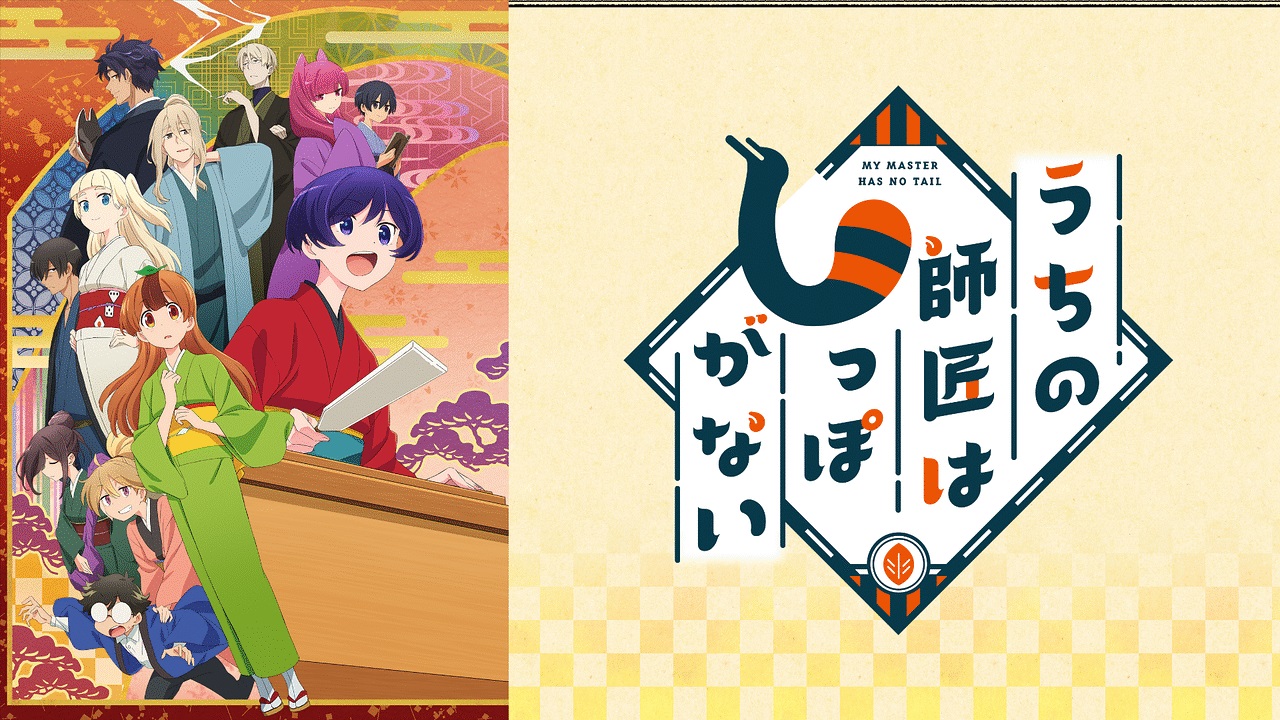
Our Master Has No Tail" is a manga work by TNSK that depicts the struggle and growth of a haunted raccoon girl who aspires to become a rakugo storyteller. It has been serialized in "good!Afternoon" since 2019 and will be adapted into an anime in 2022.
Taisho Era. Mameda, a haunted raccoon who dreams of surprising humans with his jutsu like his father, tries to fulfill his dream on his first visit to the city of Osaka, but fails. However, he is impressed by the storytelling skills of a rakugo storyteller named Daikokutei Bunkusei, and decides to become a rakugo performer himself. Mameda becomes Bunkune's apprentice and grows up while meeting various people.
Outline of "My Master Has No Tail"
"Uchino Shisho wa Shippo Nashi" is a comic book by TNSK that describes the struggle and growth of a monster tanuki girl who aims to become a rakugoka (comic storyteller). The chemistry is "Shippo na."
It was serialized in "Good! Afternoon" in 2019 and became popular, and was adapted into an anime in 2022.
In the Taisho period, Mameda, a monster raccoon dog who dreams of surprising humans with his techniques like his father, met a monster fox called Daikokutei Bunko at a yose where he happened to run away after being chased around by humans and was impressed by her rakugoka.
Fascinated by rakugo (traditional comic storytelling), in which people are "transformed" by words alone, Mameda decides to become a rakugoka herself, and becomes an apprentice of a literary fox. Sometimes she worries about the difference between a person and a monster tanuki (raccoon dog). Sometimes she develops friendships with friends she met during her training, and Mameda grows up as a rakugoka.
The plot and story of "Uchino Shisho wa Shippo Nashi"
The monster raccoon and the rakugo storyteller
Mameda, a raccoon dog who dreams of surprising people with his haunted arts like his father, shows off his skills to the humans on his first visit to the city of Osaka. However, the people of the Taisho Era, who had become accustomed to the civilization of Japan, were not so surprised by Mameda's haunting techniques, and he was easily recognized by them.
In her haste to escape, Mameda accidentally finds herself in the audience of a rakugo theater, where she hears a rakugo storyteller named Daikokutei Bunko. Mameda was astonished by the overwhelming storytelling ability of the female rakugo storyteller Daikokutei Bunko, as if she could picture the actual scene just by listening to her, as if she herself were in it. Mameda was so astonished that she was "transformed by the words alone," and became interested in the world of rakugo herself.
The Bunfox is also not a person, but rather a high-ranking monster fox. He easily recognizes Mameda's true identity, and tells her to protect her and return to her hometown. When Mameda wondered why there was a haunted fox who was living a completely human life, Bunkitsune replied, "Human civilization will eventually take away the place of our own yokai. However, we still have a desire to beguile others, and humans also have a desire to beguile us. That is why people come to their yokai theater. If there is such a new bond between humans and yokai here, then there must be a meaning to her continuing to perform rakugo. This is the reason why she chose to live as a human rakugo performer.
In the world of rakugo, where a single word can fool the audience, Mameda is so impressed by Fumitsune's efforts to create a new relationship between humans and yokai that she decides to "become Fumitsune's apprentice and become a rakugo performer herself.
Runaway daughter of the Kurokoma family
Understanding that Mameda came to him with the right kind of determination, Fumitsune admits her as an apprentice, warning her that it is not a sweet world. Mameda begins working at a yose theater as part of her training, where she meets a girl named Shirara Tsubaki. Shirara is a young rakugo storyteller of the same generation as Mameda, but already has the ability to be a front-runner.
The two are at odds with each other because of their close mental age, but they gradually become friends because of their similar temperaments: both are simple-minded, cheerful, and kind. However, Shirara is actually the daughter of a yakuza family in Tokyo called the Kurokoma family, and because she could not give up her dream of becoming a rakugo performer, she jumped into the world of Kamigata rakugo as if she were at home.
A young head of the Kurokoma family came from Tokyo and kidnapped Shirara in an attempt to force her back. Mameda, in a panic, rushed to the Kansai branch of the Kurokoma family to save Shirara. When the yakuza members of the Kurokoma family tried to force Mameda, who resisted, saying that they would never leave until Shirara was returned to them, Bun Kitsune, seeing her apprentice's predicament, rushed to him and declared, "If you laugh at my rakugo, I will ask you to return Shirara in exchange for money at the kido. Taken in by her gall and her provocation that he could not bear to just listen to a woman's story and not laugh, the wakagashira accepts Bunkitsune's proposal.
Bunkune presented a performance called "camel," in which he tries to raise money for the funeral of a hated yakuza. The wakagashira, remembering his past when he was saved by Shirara as a child, loses his composure for a moment, and reluctantly admits defeat when Bunkitsune points this out to him. Mameda and Fumitsune then left the Kansai branch of the Kurokoma family after rescuing Shirara without incident.
the art of being artistic is to fall down seven times and rise up eight
Mameda's hard work and training have made her a good rakugo performer, and she is finally ready to make her debut as a front-runner. Mameda is happy that the time has finally come to show what she can do, but as her debut as a rakugo performer draws near, she begins to wonder if she will be able to pull it off.
Thinking that she could get used to it by practicing in front of scary people, Mameda visits the Kansai branch of the Kurokoma family and asks to hear a rakugo performance from the head of the family. When Mameda tells him that he does not want to cause trouble for Shirara as well as those who have taken care of him, the young head reluctantly goes along with Mameda's rakugo performance. The wakagashira eventually sees that Mameda is extremely nervous and says, "Can't you even believe in yourself? If you can't believe in yourself, it means you can't believe in the people who brought you up.
I can believe in myself, but I can believe in my master. Mameda, with the lesson he learned from the young master in his heart, is about to appear in front of the audience as a maeza (master). After overcoming many troubles and accidents, such as having to chase after Tenjin-sama, who ran away to hear a rakugo story, Mameda performs a piece in front of the audience.
The audience's reception was not bad, but Mameda was not at all satisfied with his rakugo and cried in frustration, saying, "I practiced over and over again, but I couldn't get it right at all. Fumitsune sees this and encourages Mameda, saying that everyone is like that in the beginning.
Return of the Camellia
Shirara's master, Tsubaki Byakudanji (椿白團治), who had been imprisoned for a dispute with a soldier, is released. Shirara is reluctant to see his master, saying, "The bastard has returned," but he is happy to see Tsubaki again, and Mameda listens to his rakugo and is impressed by the depth of his storytelling, which is different from that of Bunfukuji.
However, Tsubaki is in jail, leaving behind a large amount of debts to various people, and a number of creditors come to the yose to demand their money back. When Mameda sees Tsubaki about to be taken away to the octopus room by the young head of the Kurokoma clan, who is in charge of the collection agency, he remembers how happy Shirara was to see him again and unintentionally says, "I will pay back the debt.
In the world of rakugo, the master is responsible for his apprentice's misbehavior. Bunzo is dismayed to find himself involved in such a troublesome situation, but he suggests to the young master that if he wants Tsubaki to repay his debt, he should let him earn money at a rakugo theater rather than putting him in an octopus room.
If that doesn't work, I'll give him and his master and disciples a free ride," the young head said. After successfully paying off his accumulated debts, he returns to Shirara and his apprentices who are waiting for him.
The Trials of Daikokutei
One day, Mameda is abruptly excommunicated from the Bunmox. Unconvinced, Mameda heads for his mansion, hoping that Tsubaki might know something about it. Tsubaki is evasive about Fumitsune's true intentions and suggests that Mameda stay with him if she has nowhere else to go.
Mameda and Shirara take care of the household chores for the members of the Tsubaki clan and continue their training as rakugo storytellers, until one day Tsubaki asks Mameda if she would like to join his clan after she was excommunicated from Bunkune's place. Mameda is grateful for the invitation, but he tells Tsubaki that he would like to learn rakugo under her, saying that it is Bunkitsune's art that he has fallen in love with.
Hearing this, Tsubaki bursts out laughing and tells Mameda that he has been accepted. The other day, Bunkune, Tsubaki, Kirino Enshi, and Ebisuya Utaroku, the "Four Heavenly Kings of Kamigata rakugo," gathered in one place to denounce Bunkune's decision to take her as an apprentice. The argument was that Wenxu had been told by her master "never to take on an apprentice," and that her breaking this rule was problematic.
Tsubaki, who joined here as a neutral party, suggested, "Wenxu must have been reasonably determined, and let's test whether Mameda is worthy enough to take her as an apprentice even if she breaks her promise to her master. When Wenzhi declared, "If even one of you judges that Mameda is not worth it, I will drop the signboard of Daikokutei," Enzhi, who had been on the side of denunciation, backed down once.
Tsubaki tells Mameda to show Bunshi that he is worthy of being Bunshi's apprentice next, and Mameda is fired up to have Bunshi take him on as an apprentice once again.
Jealousy and Promises
Mameda goes to see Enshi Fog, one of the Four Heavenly Kings of Kamigata Rakugo, and is forced by her to try to master her own "Jukinmoku" in one week. Impressed by Enshi's perfectly calculated rakugo, Mameda masters it to the point of desperation and manages to break through the ordeal. Enshi praises Mameda's efforts and begins to talk about his own reasons for not being able to recognize Bunshi.
Enshi, the daughter of a wealthy family, fell in love with the storytelling skills of her predecessor, Daikokutei Buntori, and jumped into the world of rakugo, yearning to "live on her own. However, Buntori always insisted that he would never take on an apprentice, and he did not allow his son Tsubaki to take over the Daikokutei either, and encouraged Enshi to join another rakugo troupe.
Enshi had dreamed of becoming Buntori's apprentice, but finally gave up and took over the Fog family. However, Buntori had brought Bunshi from somewhere else, and Bunshi, who could not accept Bunmox's position as the disciple of Buntori, whom she had always admired, tried to make Bunmox at least abide by Buntori's will that "you should not take an apprentice.
Enshi did not know why Buntori was so negative about her taking a disciple, but she accepted the ordeal as a breakthrough and told Mameda to head for Ebisu-ke Utaruku.
The past of the literary fox
This was some time before Mameda became Bunfox's apprentice. Buntori, aka Daikokutei, who had always said that he would never take an apprentice, brought a girl with a gloomy atmosphere from somewhere and said in front of his fellow rakugo storytellers, "I will take this girl as my apprentice. She was the future Bunfox, a fox who was enshrined at a small Inari shrine.
At the time, the Bun Kitsune hated people who were abandoning their old beliefs and culture in the rush to civilization and development. When the shrine was about to be destroyed simply because it was "in the way," Buntsune resisted and found the wounded fox lying on the ground, somehow he took a liking to her and invited her to become his apprentice.
At first, Bunbunyoshi was trying to use his position as an apprentice to a rakugo storyteller as a temporary hideout to heal his wounds, but he sympathized with her when he learned that Bunbunyoshi also hated the selfish nature of humans from the bottom of his heart, and at the same time, he glimpsed "the good old Japan that was lost" in his skillful rakugo storytelling and left her. "and he becomes unable to stay away from it. Eventually, he learned that the good side of the people he loved had not disappeared and that the new civilization was not all bad, and before he knew it, Bunko had become a full-fledged rakugo performer.
By this time, Bunboku had fallen ill and had little time left to live. Buntsune took over his name and rakugo as a way of repaying him for making him realize what he had lost sight of, but Buntori passed away, saying, "You finish your own techniques. Bunkuso was troubled day after day as to why Buntori had taught him rakugo and why he had ordered him to finish it, but he went on to become a rakugo performer who would carry on the name of Daikokutei.
The Last Trial and the Bond between Master and Disciple
Mameda's only remaining test was to receive a pass from Ebisu-ke Uta-en. However, Utaroku, although he praises Mameda's rakugo as "interesting," he declares that "it is meaningless if you are not interesting," and declares that he has failed. Unconvinced, Mameda chases after Utaroku, who has retreated into the brothel, in order to get another chance.
Mameda, thinking that he cannot just go home, continues to send Utaroku letters of thanks while working as a scullery maid in the brothel. One day, Mameda is invited to a tatami room by the lord governor, who asks her to perform a rakugo story.
In fact, this Gozan had once had a dispute with Bunbun's teacher, Bundori, and harbored a grudge against rakugo storytellers. Mameda is perplexed when no one listens to his rakugo performance in the noisy tatami room. Then Utaroku shows up and, not wanting to be left out of the show, takes her place. Utaroku's rakugo was so brilliant that even Mameda was drawn in by his storytelling, as if there were "several different people" inside him.
There is a limit to how much fun an individual can create. You cannot be called a full-fledged rakugo performer unless you come into contact with various people, imitate their personalities, and sublimate them into your art. Mameda understands this, and when Utaroku tells him that he has to take the exam again in a week, Mameda goes out to town to observe people. Meanwhile, the Gozaimasu, who had been given a drink by Utaroku, was showing some suspicious behavior.
Heibei, aka "Godaijin," in an effort to avenge the Daikokutei clan's continued mockery of him, invites Mameda to his mansion and gives him a furoshiki (a wrapping cloth), saying that it is a souvenir. The contents of the furoshiki were a large sum of money that Mameda had received from Bunfox as a consolation prize for being beaten up by Buncho.
Unaware of this, Mameda accepts the money and is pursued by the police, who believe Heibei's claim that the money was stolen by a rakugo storyteller's daughter. While Shirara and her friends at the theater were all out to protect her, Fumitsune used his skillful storytelling to get Heibei to say that he had no proof that Mameda had stolen the money, and then turned the tables on Heibei by turning the large sum of money he had prepared into a leaf. The gold had originally been created by Fumitsune in order to trick Heibei.
While seeing off Heibei and the policemen running away with their tails between their legs, Mameda apologizes to Wenkitsune and his friends for the trouble he has caused them. Bunkitsune says that Mameda is a "laborious apprentice," but is glad that Mameda is safe. After all this time, Mameda is still upset that she has met her master before passing the exam, but Bunkune reiterates to her about his relationship with her, and tells her that he is waiting for her to return with a pass. At this point, Bunboku finally realizes that Buntori's words, "You should finish your own art," meant, "Make a new art that makes everyone happy, not one that is rooted in hatred.
Then came the day of the reexamination, and under Utaroku's wing were also Tsubaki and Enshi. For what it's worth, all three are looking forward to Mameda's brightness and passion for rakugo, and discuss that they need him to pass the exam. Mameda runs through the city today, full of energy, toward the examination hall where they are waiting for her.
Characters in "Uchino Shisho wa Shippo Nashi"
Daikokutei Mameda (Daikokute Mameda)
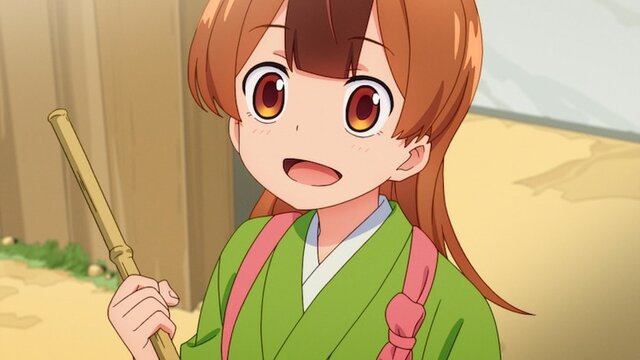
CV:M. A. O.
A MONSTER TANUKI (BADGER) who lived on Awaji Island. IN THE TAISHO PERIOD, WHEN MODERN CIVILIZATION BLOSSOMED, HE ADMIRED HIS FATHER, WHO STILL USED HIS MAGIC TO FOOL PEOPLE. HE TRIED TO FOOL PEOPLE IN OSAKA, BUT HE FAILED. BUT WHEN HE MET A LITERARY FOX THERE, HE BECAME FASCINATED BY THE STORYTELLING OF RAKUGO, SO MUCH SO THAT HE COULD "FOOL PEOPLE," AND BECAME A DISCIPLE OF THE FOX AND DREAMED OF BECOMING A RAKUGOKA HIMSELF.
At first, he called himself only' Mameda,' but after he was accepted as a disciple after many twists and turns, he was given the name' Daikokutei' by Buncho.
Daikokutei Bunko

Contents
- Outline of "My Master Has No Tail"
- The plot and story of "Uchino Shisho wa Shippo Nashi"
- The monster raccoon and the rakugo storyteller
- Runaway daughter of the Kurokoma family
- the art of being artistic is to fall down seven times and rise up eight
- Return of the Camellia
- The Trials of Daikokutei
- Jealousy and Promises
- The past of the literary fox
- The Last Trial and the Bond between Master and Disciple
- Characters in "Uchino Shisho wa Shippo Nashi"
- Daikokutei Mameda (Daikokute Mameda)
- Daikokutei Bunko
- Tsubakishirara (Tsubakishirara)
- Wakagashira / Rakuda (young head / camel)
- Hakudanji TSUBAKI
- Kiri no Enshi
- Ebisuya Utaroku
- Daikokutei Buncho
- Behind the Scenes, Trivia, Small Story / Episodes and Anecdotes of "Uchino Shisho wa Shippo Nashi"
- The C part of the anime contains a commentary on rakugo.
- Theme song and inserted song of "Uchino Shisho wa Shippo ga Nai"
- OP (opening): GARNiDELiA "Maboroshi Aiyuu"
- Ending: Hinano "Virginia"