
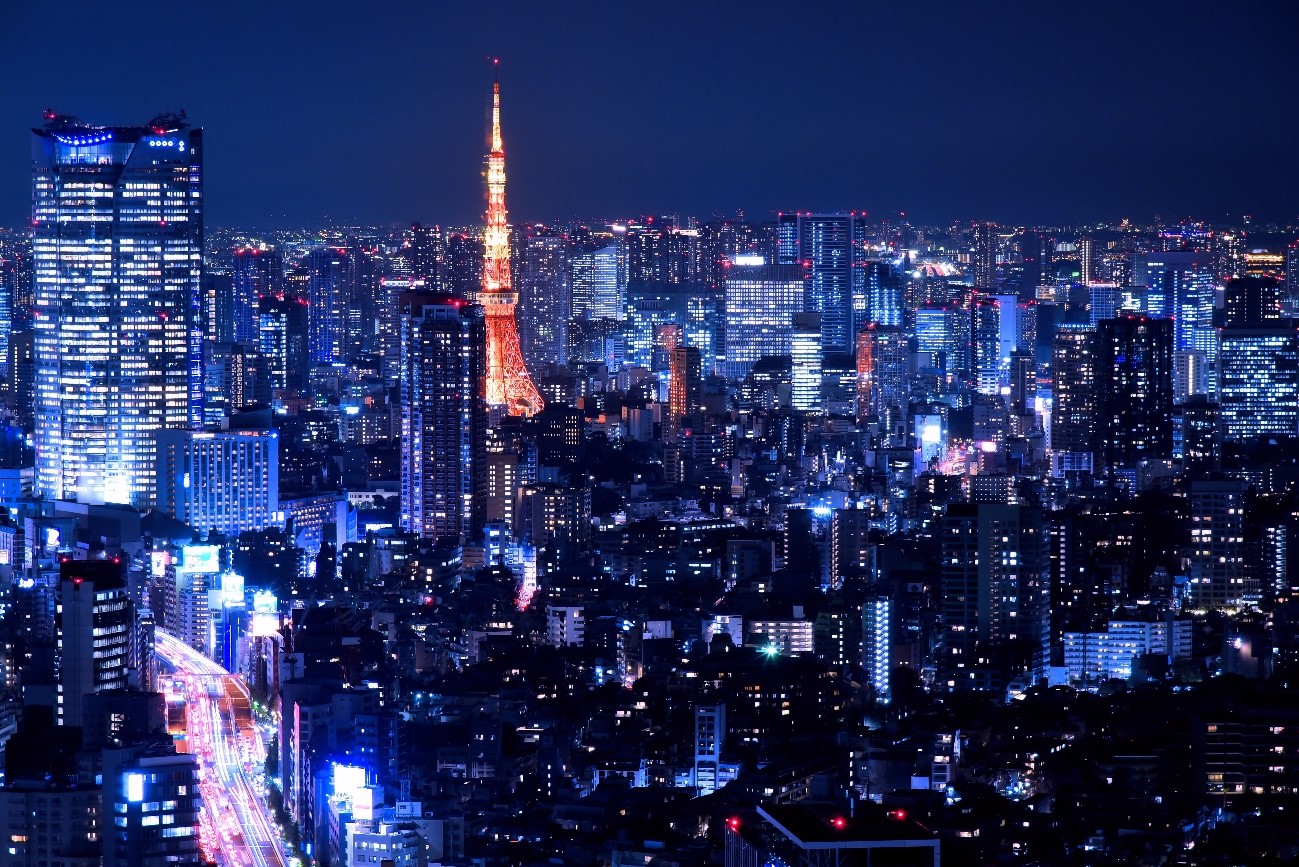
We have compiled a list of urban legends about Tokyo. We have included urban legends such as the rumor that there is a secret passage underground in Tokyo, an anecdote that Tokyo is protected by a ward, and that Hachiko is one half of the Komainu (guardian dogs). We will introduce you to some of the mysterious and a little scary rumors.
Urban Legends about Tokyo's Underground
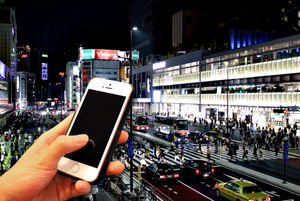
There are several urban legends about the underground in Tokyo. The most famous include "secret subway lines" and "underground passageways for important government officials. What they all have in common is that only important government officials and organizations can use them. In this article, we will introduce the building that became the source of the Tokyo Underground Legend. Although it is not possible to actually go down, one can only assume that there is an underground floor that is clearly hidden.
The location is one stop from Tokyo by JR. There is a huge electronics store in front of the station. It is located near the Imperial Palace, where major government agencies gather, with black cars lined up in front of the station.
The building across the pedestrian crossing from the electronics store is the source of the urban legend. Incidentally, the name of the station and the building are the same.
The first and second floors are commercial facilities, so you can enter normally. Then, look for the elevator.
The first thing that surprises you when you see the elevator is the depth of the basement floor indicated on the electric bulletin board above the ▲▼ buttons. No matter how central the city is, it should be only two or three floors underground, but here it is even deeper.
Automatic turnstiles that charge Suica without your permission.
There is an urban legend that "there is an automatic ticket gate in Shinjuku Station that charges your Suica without your permission. It is said that there is a 1 in 3.5 million chance that 2,000 yen will be charged at the ticket gate in Shinjuku Station just by passing through a Suica. However, there are various theories about this, and there is also an urban legend that "three people are charged 100 yen a day.
The Secret Underpass at Tokyo Station.
There is an urban legend that says, "There is a secret tunnel under Tokyo Station that leads to the Imperial Palace. It is true that Tokyo Station is said to have a noble room used by the Imperial Family, so there is some truth to it. By the way, there really are several underground passages in Tokyo Station that are not open to the public. I have actually checked them out, and with the permission of JR, I have seen the actual one, which is a very magnificent red-brick underground passageway connecting the Central Post Office. It is said that there used to be a "postal subway" running here. There are other underground cavities that were recently discovered during a TV program, so it would not be surprising if there are unknown underground passages.
(Google) street view
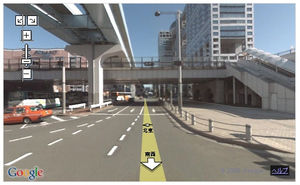
Source: www.google.co.jp
Google Maps Street View has a feature to put mosaic on humans. However, it is said that in Japan, a woman without mosaic is rarely seen in the view. This woman is said to have a white face and her face is facing backward. It would be too scary to find such a woman in Story View.
Unidentified to this day, the Halloween ghost appeared during the Edo period."
For some reason, Jack O'Lanterns appeared in the Edo period. Jack-o'-lanterns are the famous pumpkin ghosts of Halloween. For some reason, it appeared in Sunamura (present-day Sunamachi, Koto-ku, Tokyo) in the Edo period (1603-1867). The image shows its appearance drawn in the Edo period. It is kind of cute, though. There are few surviving documents, so it is unclear what exactly he was doing. s behavior is unknown, but he is a mysterious figure that is still talked about to this day.
The boundaries surrounding the metropolis of Tokyo
According to one developer, until the bubble period, all developers hired experts in feng shui and local knowledge to conduct surveys on warding and direction, and spent considerable amounts of money on ground-breaking ceremonies. However, since the collapse of the bubble economy, construction budgets have fallen, and such budgets have been cut.
However, since the collapse of the bubble economy, construction budgets have fallen and such budgets have been cut.
A building construction project near my shrine suddenly removed the Inari shrine from the construction site. I was so upset that I yelled at the construction company, but they wouldn't take any action, saying, 'Don't worry, we asked a famous feng shui teacher to take care of it. So I managed to make it look good by having the Inari-san dedicated in the garden of a philanthropist located on the outskirts of the building's construction site. Later, the general contractor who built the building went bankrupt. I was very relieved that the disaster fell on the company and not on the community.
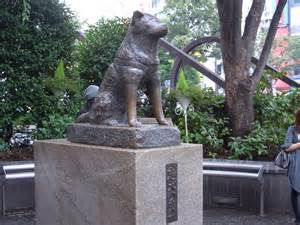
Monge! Hachiko in front of Shibuya station is a fragment of a guardian dog.
Source: blogs.yahoo.co.jp
As the title says, it is an urban legend that Hachiko of Shibuya is one half of the komainu (guardian dogs). The other half is located in Ueno. The other guardian dog is said to be a statue of a dog accompanied by an elephant named Saigo-Takamori. The two dogs are said to protect the city of Tokyo because of the demon's gate in feng shui between the two dogs. It may seem a bit unreasonable, but...
Tokyo is protected by wards.
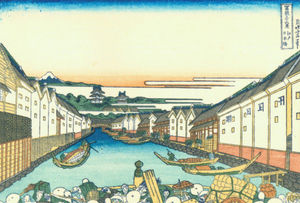
When Tokugawa Ieyasu began to settle Edo, the Tone and Sumida Rivers were flooded and the land was overgrown with reeds, which was not conducive to the development of a capital city.
The moats were built around the Edo Castle as if drawing a "noki" (time line), the earth and sand were used to reclaim Edo Bay, and the daimyo's residences and townspeople's districts were allocated to the different parts of the city. This is the same as modern urban planning.
The idea of feng shui was an important element in this planning!
Source: ameblo.jp
Zojoji Temple is located in the back demon's gate and Sensoji Temple in the demon's gate, and major shrines and temples were built or relocated based on feng shui. Even more surprising is that modern city planning is also based on feng shui, with the Tokyo Tower built in the back ogimon and the Sky Tree in the ogimon.

Contents
- Urban Legends about Tokyo's Underground
- Automatic turnstiles that charge Suica without your permission.
- The Secret Underpass at Tokyo Station.
- (Google) street view
- Unidentified to this day, the Halloween ghost appeared during the Edo period."
- The boundaries surrounding the metropolis of Tokyo
- Monge! Hachiko in front of Shibuya station is a fragment of a guardian dog.
- Tokyo is protected by wards.
- Why was the Yamanote Line built? The story behind the Yin-Yang...