

Kingdom" is a Korean zombie drama on Netflix, based on the web manga "The Kingdom of God. Kingdom: The Story of Ashin" is its prequel. As rumors of the king's death spread through the city of Joseon, where the Yi Dynasty reigns supreme, an eerie disease spreads through the city. The main series follows Se-ji as he struggles to save his people from an evil plot swirling around the royal city, while the one-episode "The Story of Ashin" depicts the origins of the mysterious female warrior Ashin in the form of a memoir. Since the original story was highly acclaimed in Korea and abroad, the decision to produce Season 2 was made even before the distribution of Season 1 of the main series began.
Zombies
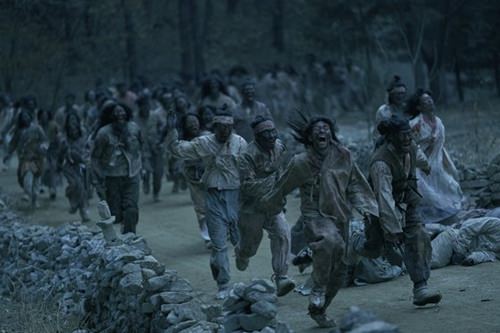
Zombies are dead bodies that have become monsters due to the influence of parasites on life-and-death grasses. They become zombies when they eat life-and-death grasses or when they are bitten by humans who have become zombies. They are vulnerable to rising temperatures and cold temperatures and cannot be active during the day or underwater. They can be repelled by cutting off their heads or burning their bodies.
Jurchen
The Jurchen are the native tongues of the Tungusian languages that lived from Kawazoe in Manchuria to the south of the Stanovoi Mountains.
The words, lines, scenes, and scenes of "Kingdom"
Zombie appearance
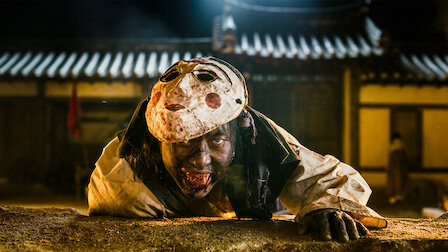
In the first episode of "Kingdom," a zombie appears for the first time at a clinic in Dongna. Young-shin says it is deer juice and treats patients with meat juice made from human flesh that has been scraped from mite bodies. Young-shin says, "I have no choice but to do this to survive my hunger." This was the beginning of the nightmare.
That night, those who had tasted the gravy died one after another. At night, when Soji, who had come back from picking herbs, noticed the odd atmosphere in the clinic and was on the alert, he suddenly locked himself in a shed in Yonshin. According to him, the supposed dead patients woke up one after another and became monsters that bit and killed the woman who had not tasted the gravy. As they breathed their last in the hut, they began to roar like beasts outside the hut and the area began to be covered with the smell of death. The monsters who had smelled their smell began to knock the door of the hut to push through the entrance of the hut, and they barricaded themselves for a night of terror. In the morning, 48 human bodies were found under the floor of the clinic by the Crown Princes, and they were taken to the city hall by the officials he called, and the bodies that were brought in were followed by more tragedy.
This incident triggered a rapid increase in the number of zombies in Korea. The chain of misery created by hunger, poverty, and a lack of knowledge about life, death, and zombies led to the death of the heir and Young-shin.
Seishi Senrigyo
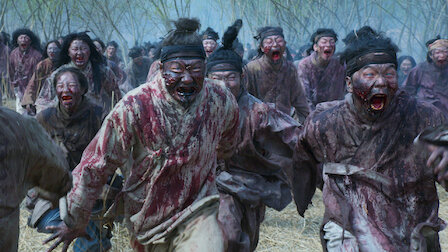
In the first season of "Kingdom," a scene in which the heir, together with the residents left at the dock, escapes to Dongna's clinic. While driving on a bad mountain road, a cart pushed by the residents scratches the steps and becomes stuck. The sun gradually tilts, and Young-soo and others suggest that the residents whose feet have been taken must be abandoned, but the heir does not abandon the residents and helps them push the cart. While doing so, the zombies wake up one after another, and the heirs begin to escape with the determination to die.
Even while the heir was running away, he served as the lord and put the safety of the residents first and tried hard to show the difference between the high officials and the nobles who deserted the residents and escaped with only one boat. This incident triggered the heirs to gain support from the people and the eunuchs although they were not legitimate successors to the throne.
The scene also reveals the validity of Soji's hypothesis that zombies begin to move when the sun falls. The depiction of numerous zombies chasing each other at full speed is overwhelming, and the combination of the extra zombies with special make-up shows the high level of staging.
Ahn Hyeon's strategy
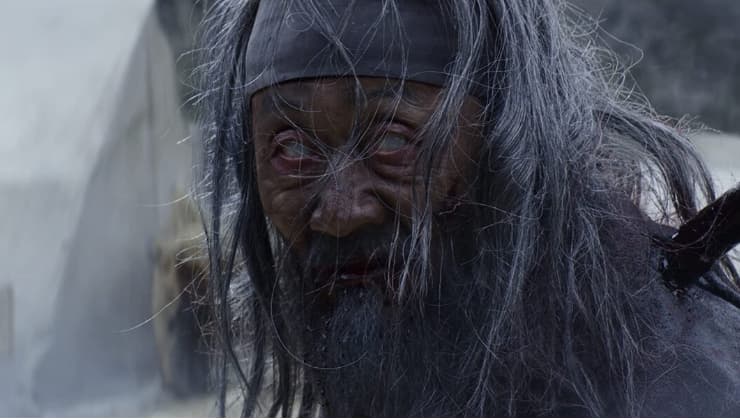
A scene in which Ahn Hyeon, who has become a zombie, attacks Hak-ju with great tenacity. All of the Daejangs who entered Hak-ju's camp were caught in a military trap that foresaw their surprise attack, and the Daejangs who opened the military gate against Hak-ju to save the Daejangs who had been locked up were killed by soldiers. However, just before the Daejangs died, they left a will to the Daejangs to inject the dead body with an extract of life-and-death grass and revive him as a zombie. The heir orders Soji to revive him as a zombie according to the will of the Daejangs. Then, the heir rushes straight toward Hak-ju, devours his cheek, and is beheaded by the Daejangs while being honored as a person of merit.
This scene shows Ahn's determination to use his own body to serve the country and cause to the end against Hak-ju, who uses conspiracy to gain power. After this scene, Hak-ju collapsed and the Cho family's autocratic system began to show signs of decline, with the heir regaining control. On the other hand, Soji, who treated Hak-ju, who did not turn into a zombie immediately after being bitten by Hak-ju, discovered a new method to treat the zombie.
In this way, this scene was an important opportunity to bring about a new development in the story in terms of both the mystery of the zombie transformation and the future of the struggle between the heir and the Cho family over hegemony.
Asin Vow
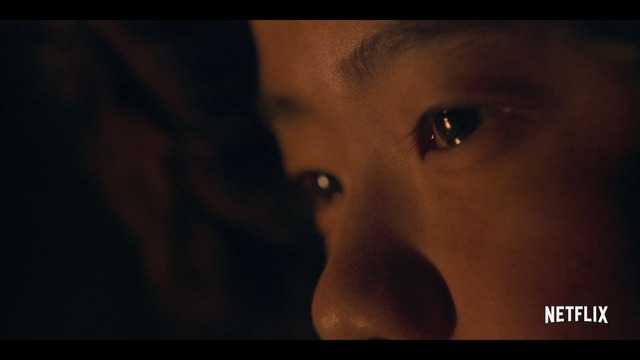
In "The Story of Kingdom Asin," the scene in which Asin, whose village was burned down and his friends and family were killed, went to Tyrok, a Korean military base, begging with tears, "I will do anything, so please avenge my family." This triggered Asin to gain strength under the Korean military base, and at the same time she became a fine female warrior, she also became an incarnation of revenge.
It was Tyrok who framed the 15 murders of the Joshin tribe on the people of the Hu Village of the domain and urged Ba Inui to destroy the village, but he agreed to accept the young Asin. While Asin lived an extreme life under the military, he devoted himself to reconnaissance of the camp of Ba Inui and training of bows and arrows in order to take revenge on Ba Inui. After this scene, the actress playing the role of Asin changed and the adult figure of Asin was depicted, in which she learned that Tyrok was the mastermind of the destruction of the Hu Village of the domain, and set the Korean military as a target to sharpen the blade of revenge.
In the main part of "Kingdom," humans who became zombies under the influence of the life-and-death grass were depicted as a part of evil that should be destroyed, but in "Kingdom Asin no Monogatari," the life-and-death grass functioned as an epoch-making weapon to destroy the Korean military which was full of conspiracy, and zombies moved as a servant of Asin. This scene is an important scene that gives Tyrok a chance to become an incarnation of destruction using the power of the life-and-death grass.
The behind-the-scenes story, trivia, and small stories / episodes and anecdotes of "Kingdom" (the story of Asin)
Revelations to the World Disrupted by the Coronavirus Pandemic
The catalyst for the explosion of zombification in the main story of "Kingdom" was Yeonsin's serving of gravy made from the bodies of ticks to his patients at Mochiriken. However, an examination of the causes that led him to this behavior reveals that the problem is much deeper than that. First of all, the reason why people had to cook and eat human remains was that the high officials and aristocrats monopolized the wealth of the people, while at the same time they were forced to collect from the people, which led to poverty and repeated famines, which made it difficult for the people to feed themselves. In addition, the Joseon government, while lavishly lavishing its wealth, did not adequately fund research at Jiryukheon, a medical institution, so Sobhi and other doctors and women were unable to adequately study the dangers of dead and alive plants and zombification, and as a result, they could not stop patients from eating meat soup containing the bodies. Furthermore, Dani was killed because the Cho family knew that the king had become a monster in the first place and left him as he was in order to secure their own interests. The government's delayed initial response as described above set the stage for the tragedy that was to follow.
Secondly, the reason why the zombification tragedy spread not only to the clinic but also to the entire Dongnae area was that the government officials prioritized their own interests and self-preservation, which caused the response to take a backseat. The bodies of the patients removed from Mochiyulkyeon were collected at the government office, where Yeonsin urged them to burn the bodies, but none of the officials would listen to his appeals. Even when Seobi, the doctor's daughter, visited him afterward and explained the circumstances, the officials refused to listen, fearing that their dignity would be damaged. The zombies began to move during the night, causing Dongnae to collapse. The next morning, the surviving officials were gathered by Seobi and forced to burn the bodies of the dead while the zombies slept. However, the officials, led by Bom Pal, abandoned even this duty and fled by boat, leaving the residents behind, thinking only of their own safety, and the unprocessed zombies caused new casualties. As a result, the Joseon government, controlled by the Cho family, was forced to respond in the worst possible way by sealing off the barrier and completely abandoning the area after Dongnae in order to prevent the spread of infection.
Such a tragedy was depicted in Season 1 of the main "Kingdom" film, which began streaming on January 25, 2019, and ironically, it represented an important revelation to a world that would be hit by the explosive spread of a new coronavirus a year later. The coronavirus spread gradually from a research facility in China, but as depicted in "Kingdom," the initial response of each country was noticeably delayed. The death toll could have been reduced if each country had started early on to restrict overseas travel and develop a vaccine, instead of treating the virus infection as a new type of cold. It is undeniable that the response to the crisis has taken a backseat to the realities of the situation. The lessons learned from this work will be of great significance in the event of an emergency, as demonstrated by actual examples.
Sexist Satire
In this book, Queen Cho is treated as a puppet of her father, Hak Chu, in other words, as a tool to produce a legitimate successor to the throne. She was impatient because she could not bear a baby and could not have a baby boy to succeed to the throne. She confined a pregnant woman who had no relatives in a specific facility in Wang Capital, and committed the cruel and merciless wrong of assassinating the mother and child together if the baby was a girl, or robbing and assassinating the pregnant woman if the baby was found to be a boy.
In this book, the cunning of Queen Jo, who draws antipathy from even Hak-ju for forging a pregnancy, stands out. However, behind this is patriarchal pro-productivity thinking that has continued since the time of the Joseon Dynasty. In other words, the discriminatory pro-productivity thinking that says that women should have children and that boys are more valuable has made Queen Jo commit atrocities. In Season 2, there was a scene where Queen Jo coldly said to Hak-ju, who was dying from being poisoned by Queen Jo, "You have always despised and ridiculed me for being a woman, haven't you?" indicating her revenge for being looked down on just for being a woman in the male-dominated society.
In this drama, the life of Queen Cho, who lost her way in order to gain her place in the male-dominated society, is depicted in contrast to the life of Soji, who did not give up her duty as a doctor, but lived as a professional with full ethics. Soji became famous as a doctor as she followed the story of how the queen who chose an evil way of life turned into a zombie and died. This drama, which contrasts the lives of two women living in the male-dominated society of the Joseon Dynasty with the corresponding stories, makes us aware of the ways of life of women, who are diversifying in the modern society where gender discrimination is still a big issue.
Jin Mi-rok after "The Story of Kingdom Asin"

Tags
Contents
- Outline of "Kingdom"
- Outline and story of "Kingdom" the story of Asin) "
- Departure of Seja Lee Chang
- The Secret of Life and Death Grass
- Zombie Weaknesses
- The Truth About Zombification
- Battle at the Royal Palace
- Succession to the throne
- girl-asin
- The Tragedy of Han Hu Village
- The Beginning of Revenge
- Meet Dr. Soonhee
- Fictional character from "Kingdom"
- Main character of "Kingdom"
- The Heir / Lee Chang (played by Ju Ji-hoon)
- Jo Hak-ju (played by Ryu Seung-ryong)
- Soji (played by Bae Doona)
- Muyon (played by Sanho Kim)
- Yonshin (played by Kim Sung-kyu)
- Jo Beom-pal (played by Jeon Seok-ho)
- Queen Jo (played by Kim Hye-jun)
- Ahn Hyun (played by Heo Jun-ho)
- Main characters in "The Story of Asin
- Asin (played by Jun Ji-hyun / Kim Shea (childhood))
- Min Chil-ok (played by Park Byung-woong)
- Tahab (played by Kim Roe-ha)
- Jo Bomir (played by Jung Suk-won)
- Idagan (played by Koo Kyo-hwan)
- Terms of the Kingdom
- Life-and-death grass
- Zombies
- Jurchen
- The words, lines, scenes, and scenes of "Kingdom"
- Zombie appearance
- Seishi Senrigyo
- Ahn Hyeon's strategy
- Asin Vow
- The behind-the-scenes story, trivia, and small stories / episodes and anecdotes of "Kingdom" (the story of Asin)
- Revelations to the World Disrupted by the Coronavirus Pandemic
- Sexist Satire
- Jin Mi-rok after "The Story of Kingdom Asin"