
Unlike Mazinger, Gundam, and Macross, the original anime works of manga artist Mitsuteru Yokoyama are all epoch-making in the history of robot animation, even if they are a little on the lowly side. In this article, we will look at the three works that participated in Super Robot Wars.
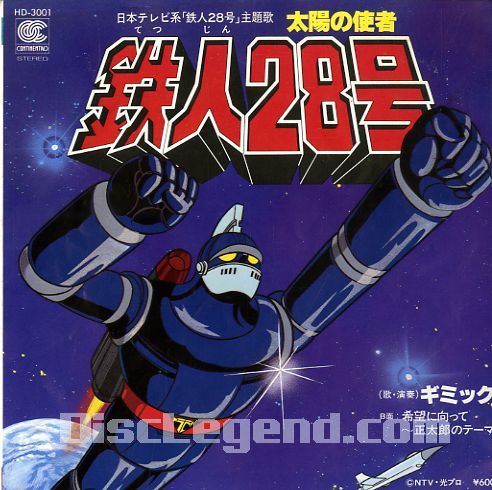
Messenger of the Sun, Tetsujin 28
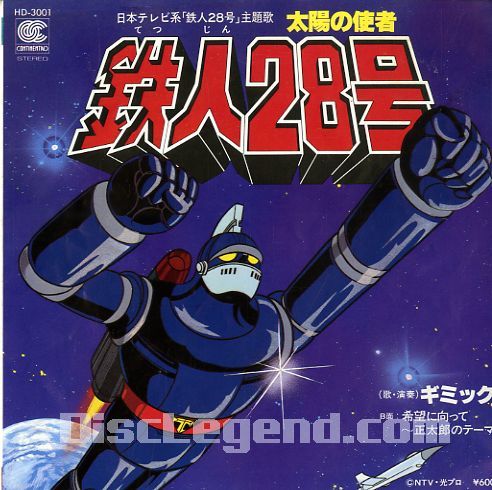
This is the second animated version of "Tetsujin 28-go", the original giant robot and has been animated three times to date. The setting has been revamped to be more modern.
Based on Mitsuteru Yokoyama's masterpiece robot manga "Tetsujin 28-go", the anime features various settings arranged in a modern style.
The story of each episode is simple and clear, based on good and evil. Although these stories are not dependent on the original work, the "good or bad depends on the remote control" characteristic of the original work is retained, and episodes in which the remote control is stolen frequently appeared.
Source: dic.nicovideo.jp
Six Gods Combined God Mars
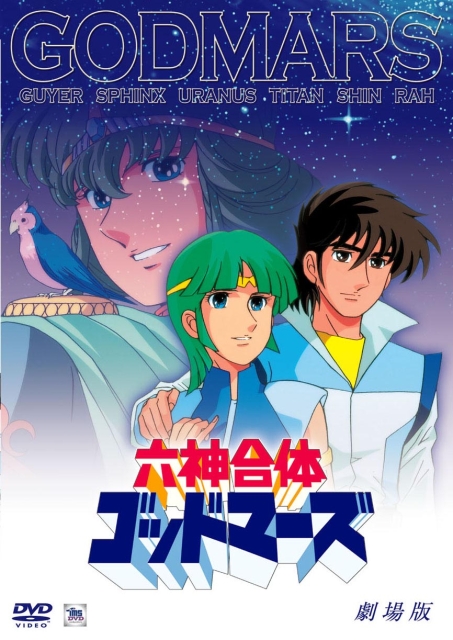
This is a combined robot animation that has won the hearts of female fans with its beautifully shaped characters. The content differs greatly from the original manga "Mars" except for the basic setting.
This anime work is based on the manga "Mars" by Mitsuteru Yokoyama. However, perhaps because the manga was extremely depressing, Yokoyama gave his permission to "write freely according to the times," and the story is almost entirely original, borrowing only some of the settings. The name "Godmothers" was changed for trademark reasons.
The anime was produced for children, and toys such as chogokin (superalloys) recorded strong sales. Meanwhile, many female fans were captivated by the main character Myojin Takeru, Marg, and other beautiful male characters. This led to the series being broadcast for more than a year, instead of the originally planned six months. The popularity of the series among fans led to the production of a movie version and a novel, "Rokushin God Mars: Legend of the Seventeen-Year-Old God Mars. The novel was later made into an OVA.
Since it does not adopt the star system like "Giant Robot The Animation: The Day the Earth Stood Still", it has been participating in "Super Robot Taisen D" released after "The 2nd Super Robot Taisen Alpha", which made it difficult for "Giant Robot" to participate in the series. The copyright of "Giant Robot" is only indicated as "Hikari Productions" when it is used in Super Robot Wars, but "TMS," which refers to TMS Entertainment (then known as Tokyo Movie Shinsha), which was in charge of production, is also indicated when footage from the main series is used.
The previous program was "Tetsujin 28-go, Messenger of the Sun," and there is also a setting that says it is a sequel.
Source: wiki.cre.jp
Giant Robo The Animation: The Day the Earth Stood Still
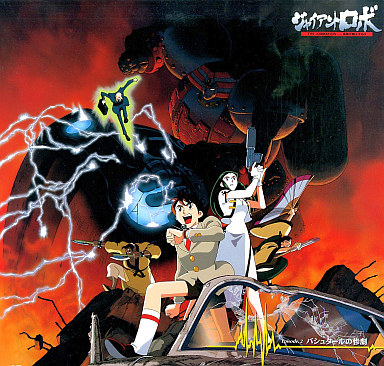
A blockbuster 20th century super robot anime created by a cast and crew of such stellar talent that it would be impossible to realize today. All of the characters, including the main character, appear in the star system from Yokoyama's works.
It is based on the tokusatsu TV program "Giant Robo" written by Mitsuteru Yokoyama, from which the main character and the main character are also chosen. Although this work is classified as a robot animation, the superhero fighting scenes are also a major attraction. It also has a dramatic aspect in terms of the bond between father and son. The subtitle "The Day the Earth Stood Still" is taken from "The Day the Earth Stood Still," the Japanese title of the American science fiction film "The Day the Earth Stood Still," released in 1951.
The star system allows various characters from Mitsuteru Yokoyama's works to appear in the film, and the drama unfolds, but there are many reversals in the relationship between the adversary and the ally from the original concept, with the originally good protagonist Babil II becoming the enemy leader "Big Fire," while the adversary Yomi becomes the top protagonist "Yellow Emperor Lasse," and in the Ten Greatest Gems collection the adversary and ally become cooperative. In the Ten Greatest Collection, the two sides cooperate with each other.
The music was composed by Masamichi Amano and performed by the Warsaw Philharmonic Orchestra, of which he was the permanent conductor, and later arranged for orchestra and brass band as the symphonic suite "GR. The brass band version of "Symphonic Suite No. 2 from GR" and "Symphonic Selection from GR" are often performed in brass band competitions to this day. While different songs were composed for each of the seven films, none of the songs in the main series are theme songs or insert songs. On the other hand, the commitment to the artwork and music caused the film to take a long time to complete, both in terms of funding and production time[1].
Source: ja.wikipedia.org
The settings of the above three films have changed considerably from the original works. You may watch them to enjoy the games, or you may trace the roots of each character and enter the deep Yokoyama world. Either way, they are sure to be masterpieces that many people will enjoy.
