
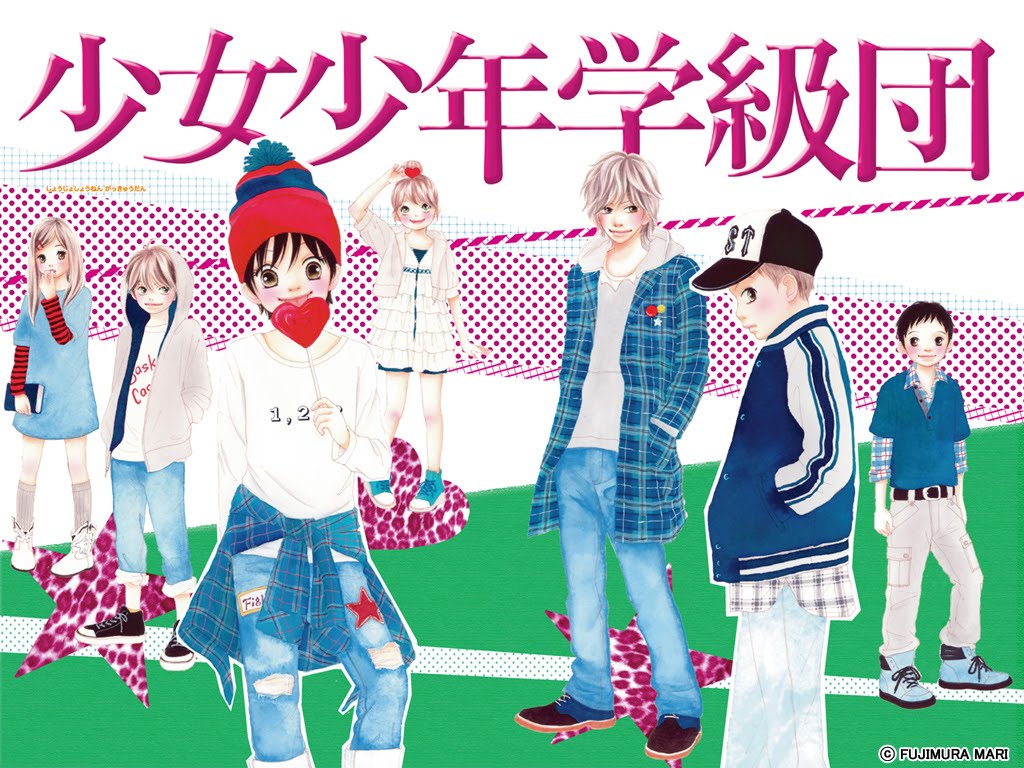
Shojo Shonen Gakkyudan" is a manga by Mari Fujimura serialized in "Bessatsu Margaret" (Shueisha). It is a coming-of-age school story in which elementary school students grow up while worrying. Haruka Nakatani, a girl who loves baseball, yearns for Ken Tanabe, a high school student who has been to Koshien. As she spends time with Ken, her feelings change from admiration to love. The story depicts a girl who struggles to express her feelings well, but grows into an adult while accepting the people and situations around her.
Small picture: "My parents were good, and when I was a child, I didn't have a mobile phone or a digital camera. I never thought that the world would change so much in a few decades. Even adults have unimaginable futures. That's why I think there are no dreams that won't come true. As long as I don't give up, they will come true someday."
Haruka, who was depressed when she learned that she could not go to Koshien or Major League Baseball, was told by a small picture of her friend: "My parents were good, and I didn't have a cell phone or a digital camera when I was a child. I never thought that the world would change this much in decades. Even adults have unimaginable futures. So, I think there are no dreams that can't come true. As long as I don't give up, they will come true someday."
Koe fell in love with her teacher, and although she was not treated by him, she did not give up. Believing that someday will surely come true, she says that it is important not to give up your dream with hope. Hearing this, Haruka decides to continue believing in the future of baseball, which he cannot give up, and moves from sadness to expectation. This is a famous line that became the basis for Haruka to take a new step in the midst of various emotions.
Shinobu Nakatani: "It's difficult to tell what you think to the other side, but it's really important. Even if you are disliked, you should try to be liked this time. Just as if you lost a game and tried to win next time, it's important to have the courage to tell the other side so that you can be liked even if you are disliked."
Haruka is worried that if she tells the truth to her older brother, she might be disliked. Her sister told her, "It's difficult to tell what you think to the other party, but it's really important. Even if you are disliked, you should make an effort to be liked." Wataru took over as the head of the marathon, and the class didn't get together well, so she couldn't walk due to stress, but Ken doesn't know about it. Haruka thought that she was also involved as a factor of stress, so she couldn't tell the truth to Ken, who wanted to know. She pushes the troubled Haruka's back and teaches her, "If you lose the game, it's the same as trying to win the next game, it's important to have the courage to tell the other party so that you can be liked even if you are disliked." It is a kind word that conveys her feelings for her younger sister, Haruka, as an older sister. It is also impressive that she tells the story by likening it to Haruka's favorite baseball.
Haruka: "Not what I don't want to be, but what I want to be"
Ikeguchi Misaki, the elder sister of Koe, has always said that she doesn't want to be like her mother. Hearing this, Haruka told Misaki, "Not what I don't want to be, but what I want to be." After telling her straight away that what I want to be is "becoming a wife of a professional baseball player," she says that everyone must have something they want to be. From the casual words of an elementary school student, Misaki realized that she had always been thinking about things she didn't want to be and holding down her feelings. Misaki began to have dreams and hopes, and she changed not only in her appearance but also in her feelings. Misaki started to think about what she wanted to be, and the scene where Misaki, whose personality became bright enough to surprise Haruka and Koe, became more and more beautiful left a strong impression on readers.
Ken-e: "If there's something you want to do, don't give up and find a way."
When Kazuhiro hears that Ken is planning to go to university, he is jealous, "I like it." He has many brothers, and he feels that going to university is financially difficult for him. He tells Kazuhiro, "If you have something you want to do, don't give up and find a way." There are people in the world who entered university at the age of 70, and he teaches them that it is hard to find a way, but it is important not to give up. If you abandon your own potential, there will be no way, so it can be taken as a message that there are infinite possibilities for still young elementary school students.
勇馬: "I'll be on Haruka's side all the time, high school and beyond."
勇馬 wants to keep playing baseball with Haruka, whom she loves. Knowing that Haruka loves Ken, she told Ken, "I will stay with Haruka for a long time in high school and beyond." 勇馬 keeps thinking about Haruka even if Haruka moves or has someone she likes. She desperately supports and supports Haruka when she decides to take an entrance examination for a junior high school that has a hardball baseball club, which is difficult to pass under the current situation. This shows the strong will of Isamu not to give up or give up someone she likes. It is a powerful line that goes straight to Ken, who sees Haruka as a rival, saying, "If Haruka fails, I will go to public school, and if Haruka says she will join the senior league, I will join the same team."
Behind the Scenes, Trivia, and Small Stories / Episodes and Anecdotes of "Shojo Shonen Jugendan"
Crossing the River's Insect Aversion Triggered by Cicadas
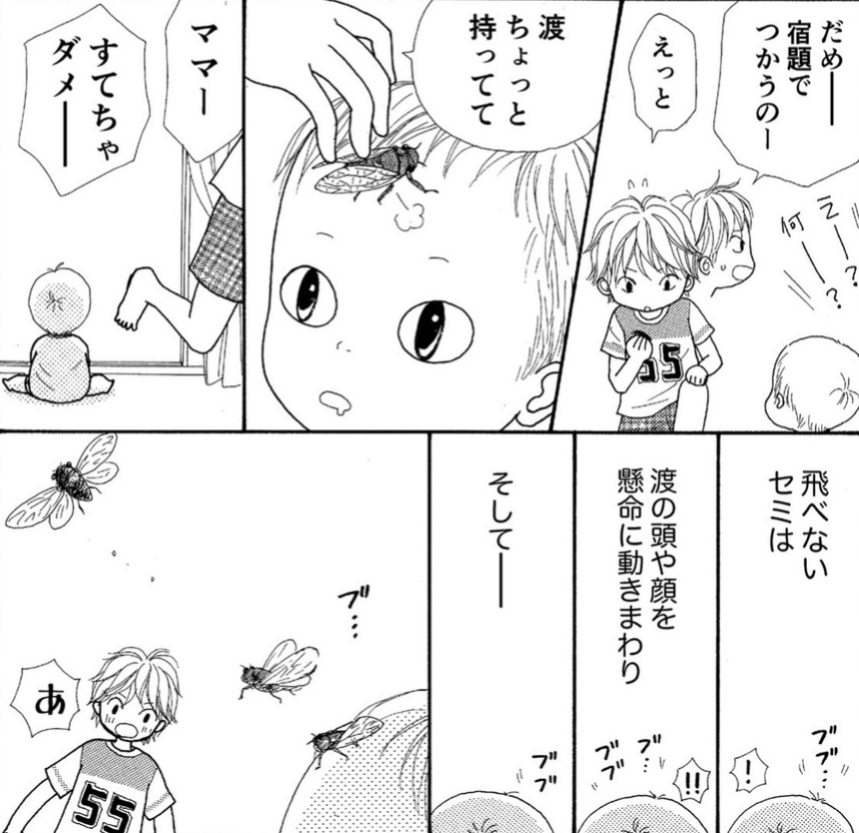
Scene where Ken puts a cicada on the head of Watashi
Ken is also gentle to insects, and is filled with the joy of helping a cicada that has rolled and become unable to fly, saving a small life. At one point, Watari faints when he puts a cicada on his head. However, everyone in the family does not think that Watari fainted because of the cicada, and they do not realize that Watari's dislike of insects began from there.
IN MIDDLE SCHOOL, 時健 WAS BULLIED BY HER SENIORS.
When he became a high school student, he was loved by elementary school students, and he was popular among his classmates. However, he had a slightly bad look in his eyes, and because he was good at baseball, he was strongly criticized by his seniors. He was surrounded by his seniors and told to "change your look," and sometimes he was pulled by his hair and yelled at. He witnessed a strict hierarchical relationship. He continued to play baseball while he was being bullied every day. At one point, Ken became the starting pitcher in a game, but he was caught by the opponent's batting line and replaced. Ken, who was depressed saying, "I wasn't feeling bad," later learned that the catcher was teaching the opponent's batter about the course and the type of ball Ken was throwing. This incident triggered him to leave the baseball club and join the Little Senior baseball team.
"Class x Hierarchy" is the forerunner of this film
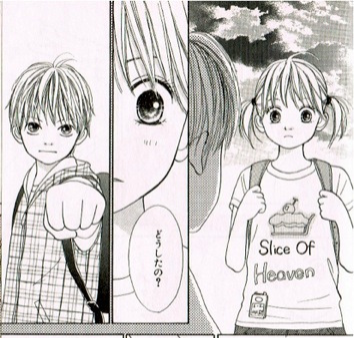
There was a gap between the two, but when they moved, they went back to the way they used to.
Rather than a "society of disparities," it depicts a "class of disparities." The status of children is determined by the status of their parents, and if the parents are promoted, the children are also promoted. The classes are divided into different classes, and the lower class speaks to the upper class in honorific language. This is the predecessor of the Shojo Shonen Class Group, which is completed in volume 1.

Tags
Contents
- Outline of "Shojo Shonen Class Group"
- Outline and story of "Shojo Shonen Class Group"
- Meeting with Kene
- I love baseball, but girls can't go to Koshien.
- An unexpected sudden first kiss
- I LOVE YOU, KEN-NI-
- Love with Kazuhiro
- Jealous of the Moon
- Takee no Tabidachi
- MY DREAM FOR THE FUTURE IS TO MARRY A PRO BASEBALL PLAYER TO MY BROTHER.
- Extra: The moment I decided to go to Koshien
- Characters from "Shojo Shonen Class Group"
- Haruka's friends and classmates
- Haruka NAKATANI
- Tabaru Tanabe
- Hajime Yamano Kazuhiro
- Miki 勇馬
- Kodama Koe
- Mooka Ikeguchi
- Ken's friends and classmates
- Ken Tanabe
- Hazuki Rin
- Hiroshi
- 花帆
- Other characters
- Ikeguchi Misaki
- Shinobu NAKATANI
- Keiichi Ejima
- Term for "Shojo Shonen Class Group"
- Wakakusa Daiichi Elementary School
- Little League
- Time capsule
- Words, Lines, Scenes and Scenes from "Shojo Shonen Class Group"
- Brother Ken: "If I hit someone, I feel pain, too."
- Small picture: "My parents were good, and when I was a child, I didn't have a mobile phone or a digital camera. I never thought that the world would change so much in a few decades. Even adults have unimaginable futures. That's why I think there are no dreams that won't come true. As long as I don't give up, they will come true someday."
- Shinobu Nakatani: "It's difficult to tell what you think to the other side, but it's really important. Even if you are disliked, you should try to be liked this time. Just as if you lost a game and tried to win next time, it's important to have the courage to tell the other side so that you can be liked even if you are disliked."
- Haruka: "Not what I don't want to be, but what I want to be"
- Ken-e: "If there's something you want to do, don't give up and find a way."
- 勇馬: "I'll be on Haruka's side all the time, high school and beyond."
- Behind the Scenes, Trivia, and Small Stories / Episodes and Anecdotes of "Shojo Shonen Jugendan"
- Crossing the River's Insect Aversion Triggered by Cicadas
- IN MIDDLE SCHOOL, 時健 WAS BULLIED BY HER SENIORS.
- "Class x Hierarchy" is the forerunner of this film