
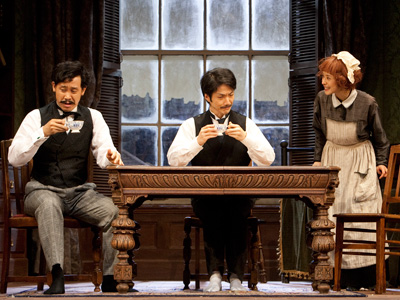
Koki Mitani, the king of Japanese comedy, portrays Soseki Natsume, 19th century England, and the ugly human heart. Here is a funny, sad and sweet play. And in such a play, there is surely "you" somewhere...
A play called "Bedge Pardon.
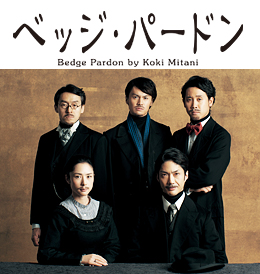
Bedge Pardon
2011 Japan
Writer/Director: Koki Mitani
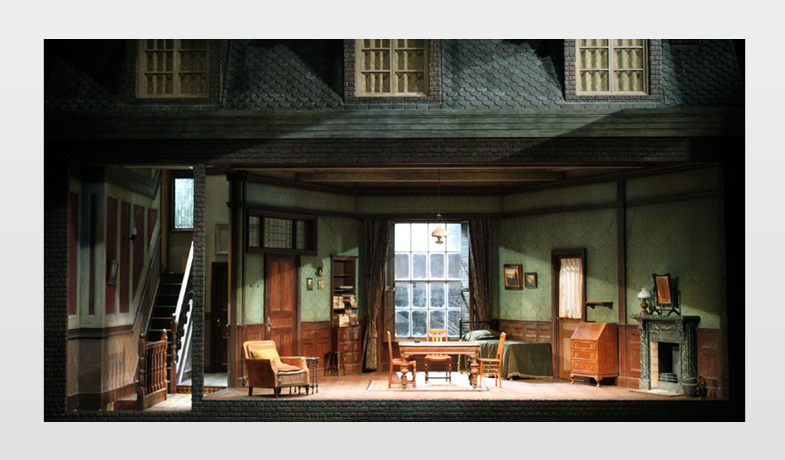
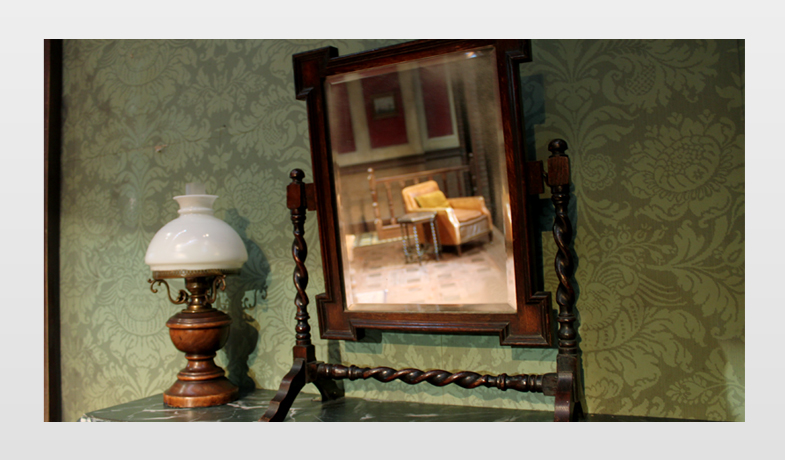
Art Director: Yohei Taneda
Cast: Mansai Nomura, Hiroshi Oizumi, Eri Fukatsu, Kenji Urai, Kazuyuki Asano
It is the 19th century, and Kinnosuke Natsume (Mansai Nomura), an English teacher, visits England under the rule of Queen Victoria as an exchange student.
The film depicts how Kinnosuke becomes "Soseki Natsume" (or not) as he spends his days with the servants, Japanese, and the landlord's family he meets at his lodgings.
Originally planned to be deep, Mitani changed the content of the script because "The People's Movie," which was being performed at the time of the Great East Japan Earthquake on March 11 of the same year, was the heaviest and deepest work, and he wanted to make the audience laugh precisely at such a time.
Source: ja.wikipedia.org
It is said that.
However, I believe that Koki Mitani had a different intention in creating this play.
Rather than making the audience laugh, it is a play that shows them "what they don't want to see.
Kinnosuke Natsume and the "Begge
The title "Bedge Pardon" is a nickname given by Kinnosuke to his servant, Annie-Perrin (Eri Fukatsu).
She is from the East End and speaks Cockney (an English once spoken by the working class in the area, meaning "a badly shaped egg like that laid by a rooster"), but no matter how many times he heard her say "I beg your pardon?" he could only hear "Bedge pardon?" and Kinnosuke Kinnosuke decided to call her "Bedge.
Bedge was not a very dexterous man, and he was far from being a good servant.
However, Kinnosuke, who was troubled by the fact that his life as an exchange student was not going as smoothly as he had hoped, was pleased to be able to talk comfortably in front of Bedge.
Then she giggles and says, "I'm not sure I'm going to be able to do that.
That's because you think I'm an idiot!
She then tells the stunned Kinnosuke, "I may not know things, but I'm not stupid.
What the "Tears" of Bede Tells Us
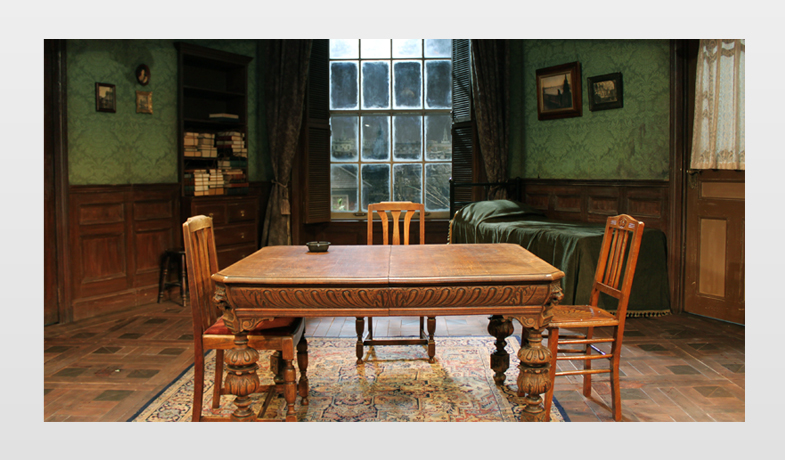
Anyone who sees this play will surely fall in love with Bedge.
(I think Eri Fukatsu is the funniest and most beautiful in Mitani's works.)
The only scene in which she shows tears is my favorite.
She says, "Please stop talking about your dreams. I don't have the time to listen to you right now.
Kinnosuke is exhausted from the days that haven't gone well.
Then she said, "I can't afford to listen to you anymore,
The only time they didn't tell me I was wrong was when I talked about my dreams. The only time they didn't tell me I was wrong was when I talked about my dreams, so don't tell me not to talk about my dreams. Don't tell me not to talk about my dreams, because all I have are dreams.
Bede speaks desperately in faltering speech.
You are me.
Kinnosuke said and hugged her.
At this moment, the audience would have done the same thing as Kinnosuke in their hearts.
So did I.
You" are on the stage.
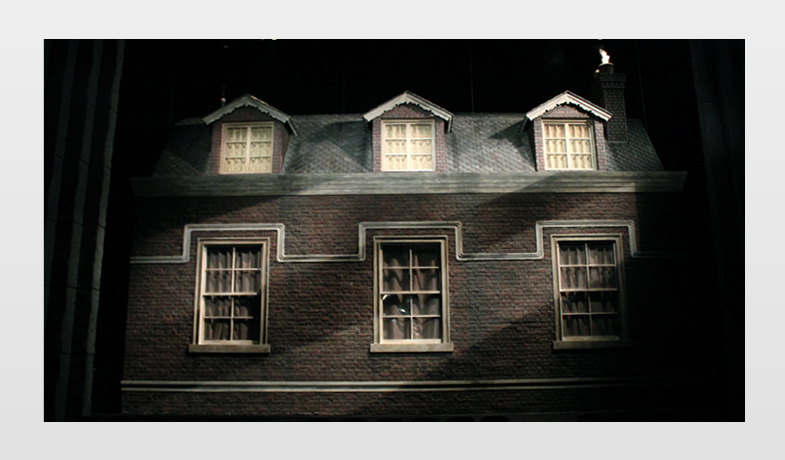
It is not only the beggars who unknowingly superimpose themselves.
The English he taught as a teacher in Japan is not understood in England.
Kinnosuke is filled with self-loathing when he sees Sotaro Hatanaka (Yo Oizumi), the Japanese man downstairs, speak English fluently and act sociable, and he speaks only less and less.
Sotaro is also jealous of Kinnosuke's hidden sense of humor and keeps a letter from his wife hidden.
The landlord and his wife also have a series of petty differences that lead to their separation.
There is a "you" in all the people living under the same roof.
Anyway, this play is anything but realistic.
The lights and shadows of 19th century England.
The inferiority complex that always haunts us.
The dirty parts of the human heart.
Interspersed throughout the comical play (which is really the core of the play) are these realities that make you want to turn away, causing a dull ache in the heart of the viewer...
Bedge pardon?"
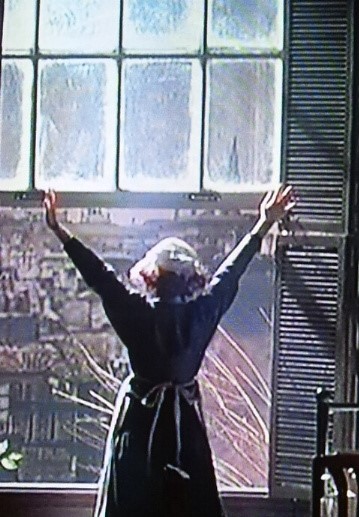
Kinnosuke, in despair, sees a vision of her one day.
One day, Kinnosuke, in despair, sees a vision of her.
Now it is your turn to speak.
To reproduce Cockney's non-pronunciation of the "h," Bedge's lines had been stripped of the "h" sound, but this time, it was different.
On the contrary, it was no longer even Bedge.
I had to live, I thought.
There are shadows in this 21st century.
I have a sense of helpless inferiority that haunts me 24/7.
And I have a dirty part of my heart.
And yet, I can live.
I can say something.
We have a duty to live out this happiness.
From Kinnosuke Natsume to Soseki Natsume. And...
Waking up from his vision, Kinnosuke picked up his pen and began to "tell" his story.
This is all that is left of the play.
And this story leads us to "You".
Today she will ask "you" again.
"Bedge pardon?"--I can't hear you, what are you saying? and "What are you saying?
