
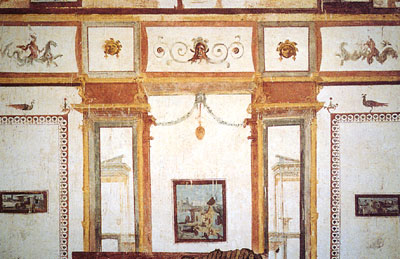
Grotesque is a style of art originating in ancient Rome.
Grotesque is a style of art originating in ancient Rome, in which bizarre figures, animals, plants, etc. are decorated with curved patterns.
It is often interwoven with floral decorations and small, fantastic human, animal, or monstrous figures.
Arabesque is a decorative arrangement.
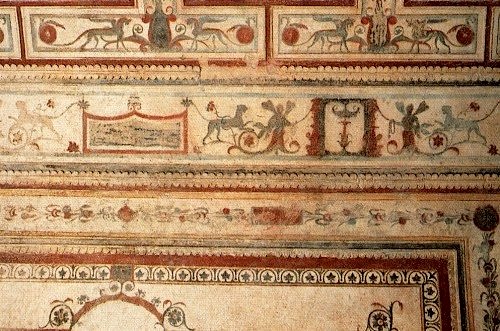
15th century discovery, "Domus Aurea."
The word "grotesque" is nowadays used as a generic adjective to describe anything strange, bizarre, monstrous, incongruous, incongruous, eerie, or bizarre, usually in the sense of something unpleasant or outwardly disfiguring.
In Western art history, the word "grotesque" comes from the Italian word "grotta," meaning a crypt or cave.
Here, "grotta" refers to the rooms and corridors of the "Domus Aurea," an unfinished palace complex built by the Roman emperor Nero that was rediscovered in the 15th century.
There, decorative walls were decorated with motifs of people, animals, and plants, with strange patterns that continuously changed from people to plants, and then to fish and animals.
Florence Guide Diary: Grotesque Patterns
yukipetrella.blog130.fc2.com
A blog full of information about Italy written by a guide living in Italy
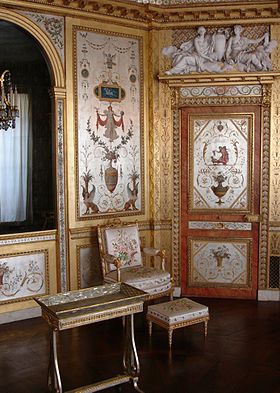
French neoclassical painted decoration in the Raphaelian grotesque style at Fontainebleau Palace in the 1780s.
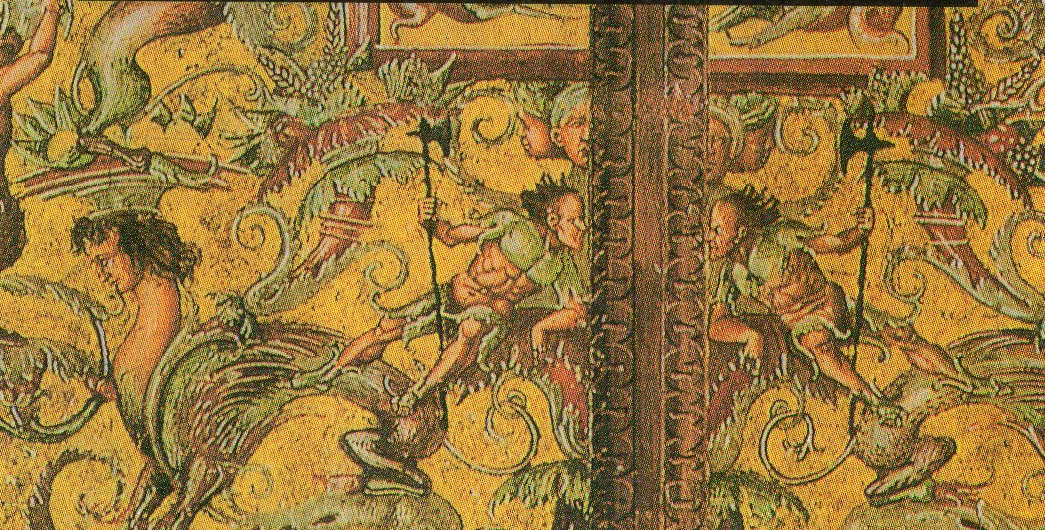
Luca Signorelli
Chapel of San Briccio
Orvieto
People of different shapes Strange configurations
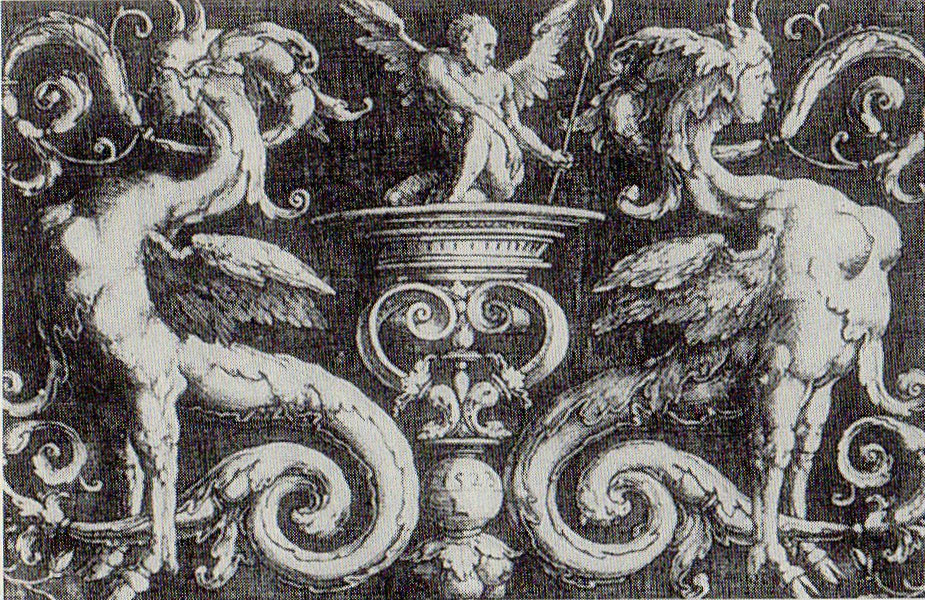
Lucas van Leyden.
The Grotesque, 1528, print
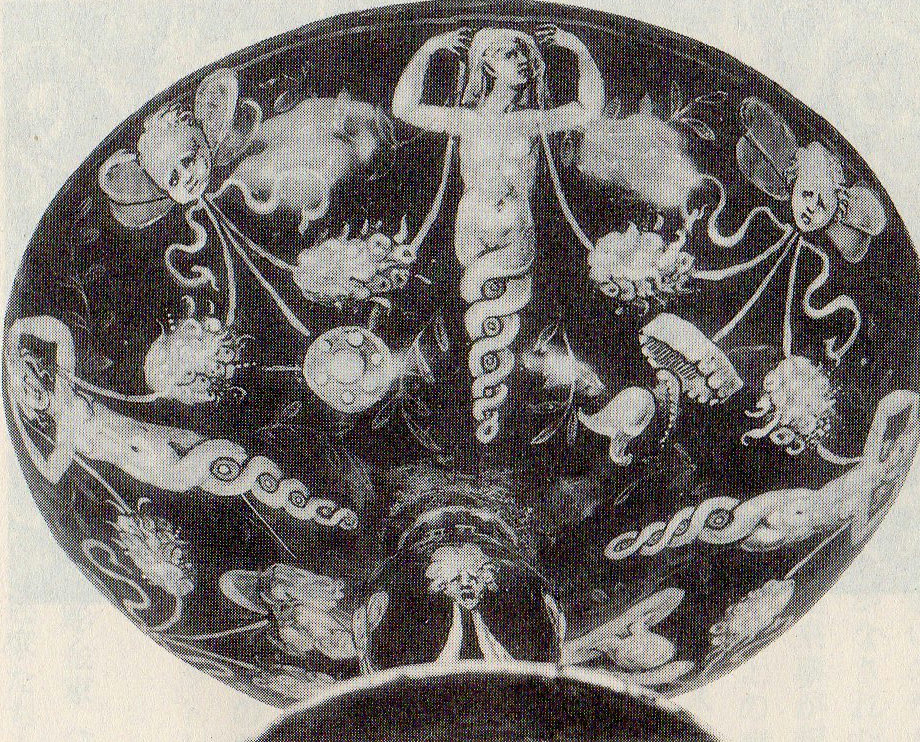
Limoges Pottery, Lidded Cup, 16th century
Mysterious display
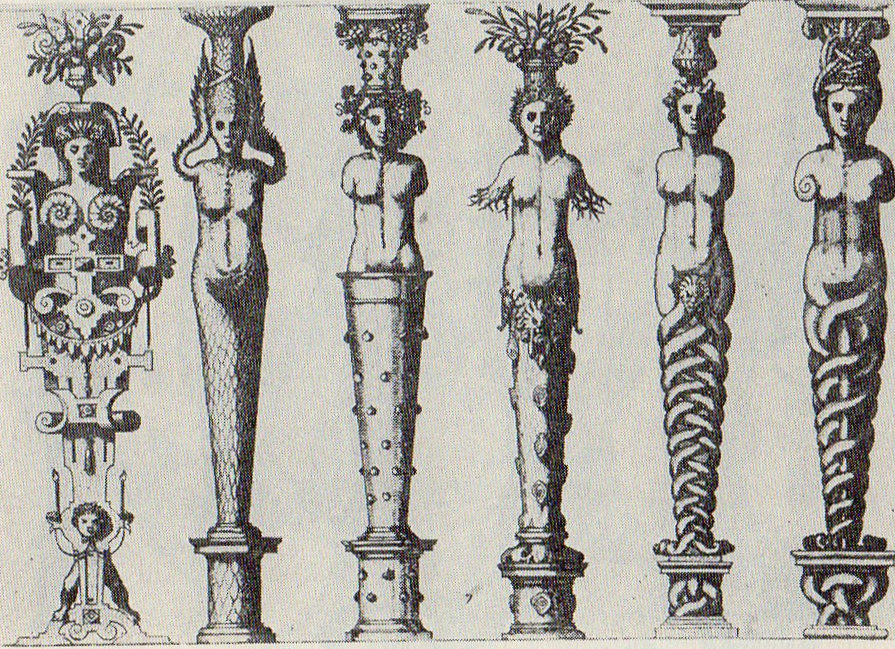
Poirot de L'Angle.
Terme (Boundary Pillar), print, 1592.
The grotesque pattern is a whimsical arrangement of humans, monsters, plants, and animals, sometimes intricately deformed, combined with arabesques and other decorative patterns. It is strangely stiff and frozen, sometimes somewhat comical and unnatural, like an emotionless game.
Flowers, ribbons, monsters, whimsical combinations
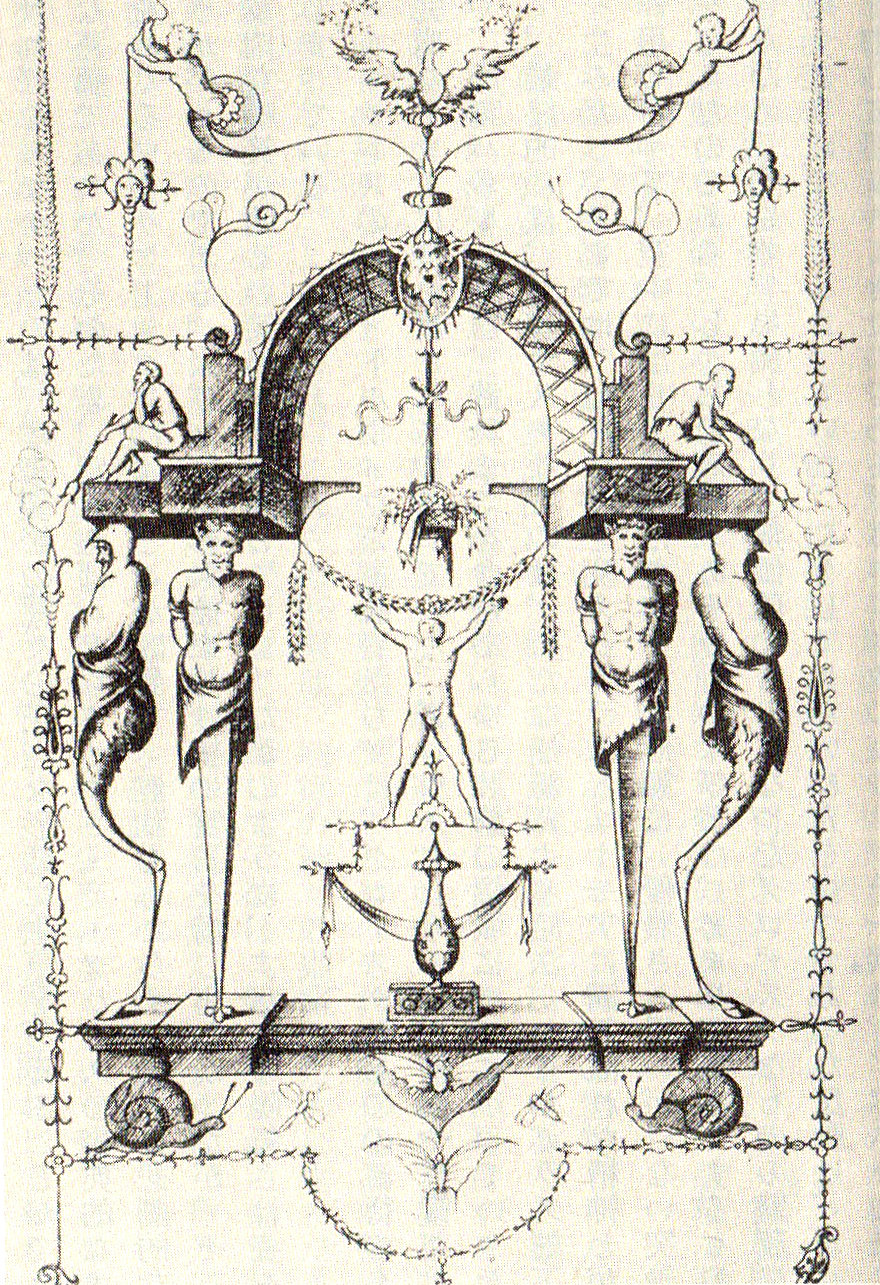
Anonymous Italian
Grotesque with thinning column body with satyr and terme (boundary column) statues
1530.
Strange and funny "ambivalent" balance
The High Renaissance was obsessed with this bizarre sense of antiquity, which came to be known as "grotesque ornamentation.
Later, grotesque decoration was disseminated through copperplate engraving, and became the main subject of Italian and French Renaissance architectural decoration, 17th century French Classicist decoration, and 18th century Neoclassical decoration, and was incorporated into a wide range of crafts and interior decoration, including architecture, paintings, book illustrations, stage decorations, tapestries, furniture, wallpaper, and ceramics. The French Classical decoration was incorporated into a wide range of crafts and interior decorations.
In the field of literature, the 19th century Romantic literature of France, Germany, England, Italy, and other countries delved deeply into the human condition in a modern way, and the bizarre and complex depictions of human beings were studied internationally.
Throughout these eras, modern dictionaries carry synonyms for the concept of grotesque, such as "ridiculous," "bizarre," "bizarre," "outlandish," "extravagant," and "bizarre," but the difficulty is that the figure of ridiculous = bizarre does not always hold.
In this regard, researchers of the grotesque define "comical" and "bizarre" as having ambivalent and even contradictory meanings.
