
The spiral of a spiral is a spiral shell. Many things in nature are made from this shape.
Humans have always seen spirals in nature.
And we have imprinted that shape in our minds.
The "螺" in "螺旋" means "spiral" and "旋" means "to turn. A spiral is a shape of a scroll that rotates like a shellfish.
A spiral, when considered in three dimensions, is one that ascends (descends) while turning at a fixed angle,
A two-dimensional curved spiral may also be called a spiral or spiral line.
To distinguish them from spirals, spirals of three-dimensional curves are sometimes called string coils or vine coils.
In two-dimensional spirals, there are two types of spirals called Archimedes' spiral and Bernoulli's spiral.
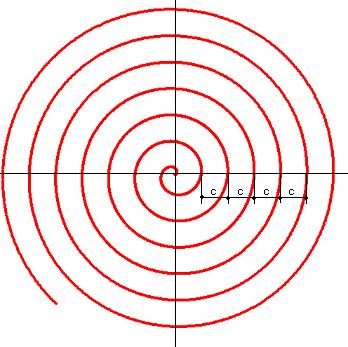
Archimedes' spiral: Also called a uniform spiral, it is used as the name of the pumping pump.
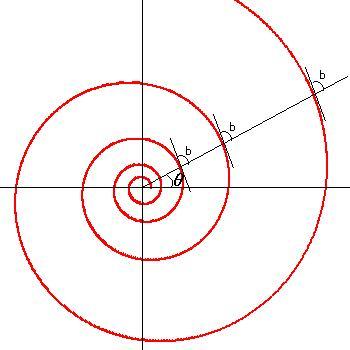
Bernoulli Spiral
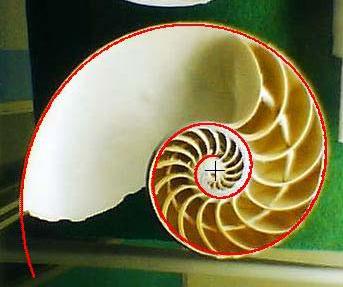
The Bernoulli spiral is called a logarithmic spiral or isometric spiral, and is similar to the way nautiluses, turban shells, and other mollusks are wound.
A spiral is a three-dimensional curve that rises and falls while rotating.
A spiral is a two-dimensional curve that spirals up and down.
Nature's diverse whirlpools
In the Mystery of the Spiral (Part 1), we will discuss spirals, which are primarily secondary spirals.
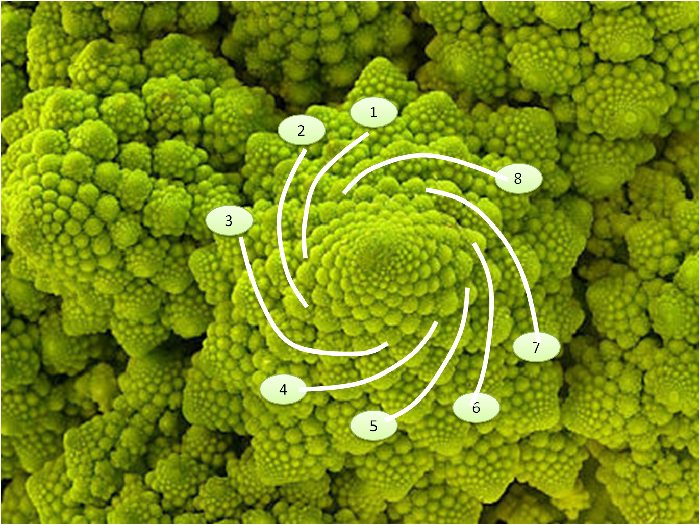
Many plants in nature are observed to develop in a spiral shape.
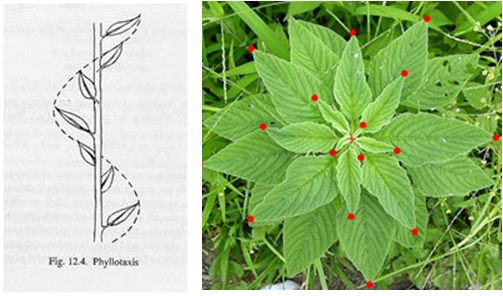
As shown in the figure on the left, the leaves can be seen growing in a spiral rotation around the stem.
This angle of rotation is called the golden angle of the spiral and is found in most plants.
If you look at the plant from above, you will notice that the leaves are evenly distributed around the circumference of the plant, not overlapping each other.
The reason, of course, is to ensure efficient exposure to sunlight under optimal conditions for photosynthesis, which is essential for plant growth.
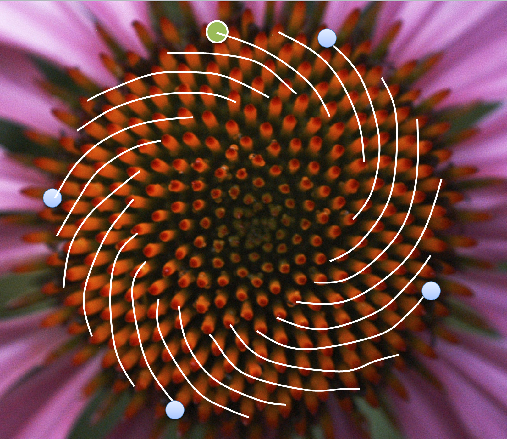
Thus, we see that organisms in nature grow in a spiral.
Human DNA also has two interconnected strands that grow in a spiral.
Our ancestors have long seen this rule in nature's organisms.
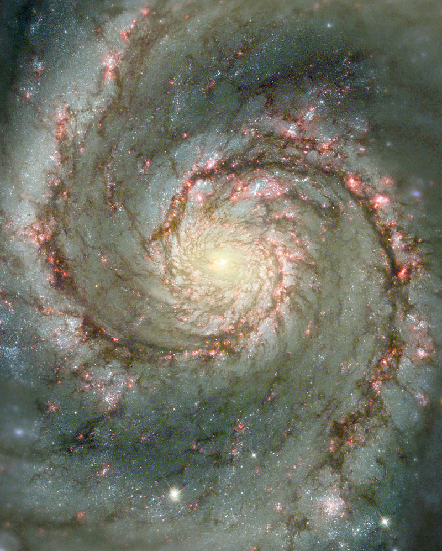
Spiral Galaxy M51
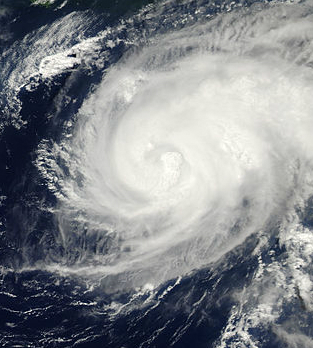
Typhoons bring heavy rain and wind to Japan every year.
There is a belief that the spiral is a symbolic figure related to the birth and evolution of the universe. The Greek and Egyptian gods have spiral-shaped objects in their possessions.
Symbolism of the spiral pattern
The spiral is often used as a symbol in works of art because of its motility and vitality, and is often used as the title of a work of art.
Source: ja.wikipedia.org
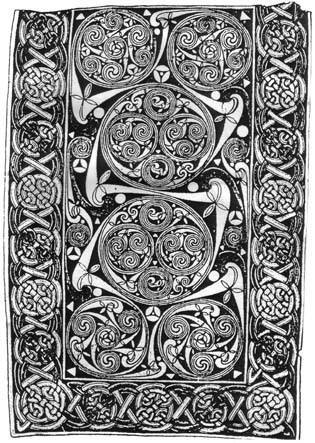
Celtic spiral pattern
There is a belief that the spiral is a symbolic figure related to the birth and evolution of the universe.
Some of the possessions of Greek and Egyptian deities are also spiral-shaped.
There are examples of structures that are basically repetitive, but do not follow the same position, e.g., infinitely ascending structures that can be compared to history or life.
Source: ja.wikipedia.org
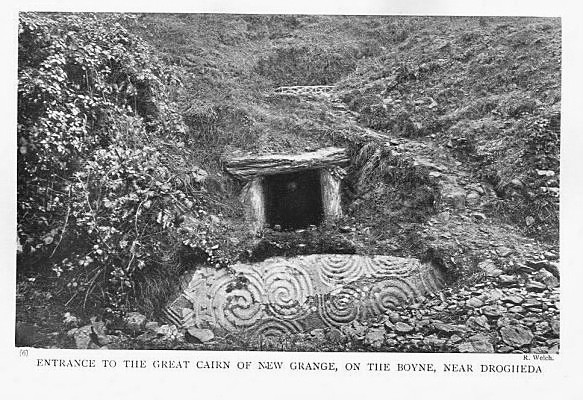
Whirlpools are used as a symbol of rotation.
In many ancient civilizations, it was considered a symbol of the cycle of death and rebirth and was often depicted on tombs.
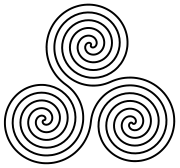
Spiral-shaped tripodal bale
The Celtic symbol of three joined spirals is a Neolithic symbol of Western Europe.
It was carved into the stone of the main entrance to the prehistoric Newgrange site in Meath, Ireland.
The symbol was also carved into the interior walls of other rooms, where it was used as a symbol for the Celtic Society and the Brittany Peninsula.
It was used as a symbol of the Celtic Society and the Brittany peninsula.
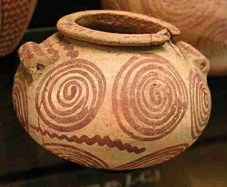
Pottery jar with spiral pattern from the second phase of the Naqada culture in ancient Egypt (Gerzeh culture period, ca. 3400 B.C.)
The idea that spirals and whirlpools are the fundamental principle of living organisms by considering them as a movement from birth to growth.
The spiral continues its motion repeatedly without regression while drawing a circle.
When ancient people repeatedly thought about the wonders of human life and death, they iconized and symbolized this movement as the closest form.
