
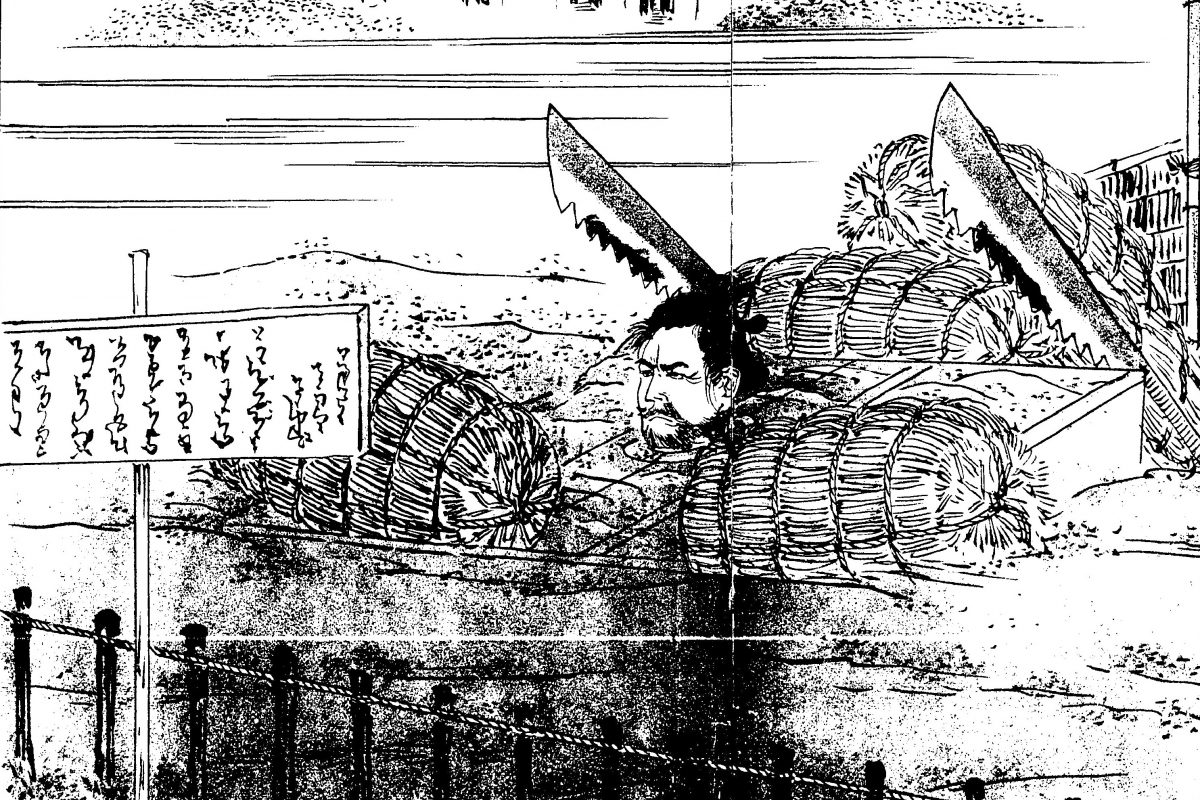
Oga Yashiro (大賀 弥四郎) is a well-known vassal of Tokugawa Ieyasu. Being a vassal, he was supposed to be an ally of Tokugawa Ieyasu, but some people believe that he betrayed Ieyasu and was in league with someone else. There is also a story that he was executed in a grotesque manner at the end of his life. Although the details of Yashiro's life are still unknown, here is a brief summary of his life as far as we can tell.
About Yashiro OGA
Yashiro OGA (year of birth unknown - 1574?) was a busho (Japanese military commander) in the Sengoku period (period of warring states). He was a vassal of the Tokugawa clan. There is a theory that his family name was actually the Ooka clan.
Source: www.weblio.jp
According to "Tokugawa Jikki" (A True Record of the Tokugawa family), he was in the middle of Ieyasu TOKUGAWA at first, but since he was good at arithmetic, he was employed as an accountant and tax accountant on trial, and was selected as a local governor of more than 20 villages in 奥郡, Mikawa Province.
Source: ja.wikipedia.org
Source: ja.wikipedia.org
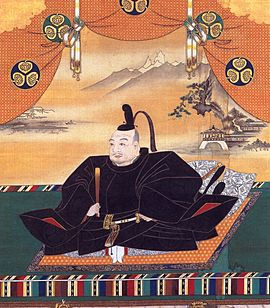
Tokugawa Ieyasu
Ieyasu TOKUGAWA (also known as Motoyasu MATSUDAIRA) was a busho (Japanese military commander) and daimyo (Japanese territorial lord) in the Sengoku period (period of warring states) and the Azuchi-Momoyama period. He was the first Seii Taishogun (literally, "great general who subdues the barbarians") of the Edo bakufu (Japanese feudal government headed by a shogun). He was one of the Three Heroes. He is also known as' Kaido-ichi no Yumitori' (great general of the Tokai-do Road).
Although he was usually in Hamamatsu City where Ieyasu lived, he sometimes took care of his legitimate son, Matsudaira Nobuyasu, who was in Okazaki City, and he gained the trust of both of them, becoming a person without power and increasing his influence.
Source: ja.wikipedia.org
Source: ja.wikipedia.org
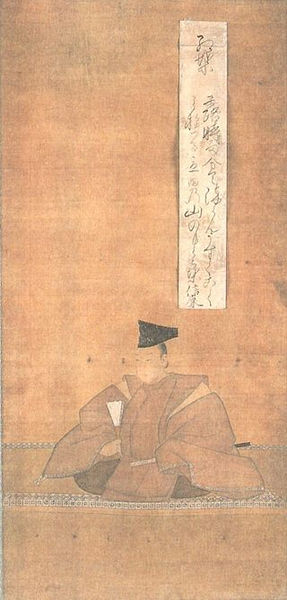
Matsudaira Nobuyasu
Nobuyasu Nobuya / Nobuyasu Nobuya was a busho (Japanese military commander) from the Sengoku period (period of Warring States) to the Azuchi-Momoyama period. He was the first son (legitimate son) of Ieyasu TOKUGAWA. His mother was Tsukiyama-dono, a daughter of Yoshihiro SENA and a niece of Imagawa Yoshimoto. Since he later served as the lord of Okazaki Castle (Okazaki City, Aichi Prefecture), where the head family of the Matsudaira family resided, he called himself Saburo OKAZAKI like his grandfather Matsudaira Hirotada.
When a certain Kondo, a vassal of Ieyasu, had his territory increased, Yashiro told him that it was because of his intervention, so Kondo followed Yashiro and offered to give it back because he did not want to have his territory increased. This triggered Ieyasu to hear about Yashiro's daily wrongdoings, and Yashiro was captured and his household goods were confiscated by Ieyasu's order.
Source: ja.wikipedia.org
A letter to the Kurachi side was discovered in which Yashiro conspired with Jinzaemon ODANI, Heizaemon TAKEDA and Hachizo YAMADA to take over Okazaki Castle and guide Takeda Katsuyori. As Hachizo YAMADA also changed his mind and appealed to Nobuyasu, Yashiro was led around the town of Hamamatsu-jo Castle by a horse and was shown that his wife and five children had been crucified, and he was buried in the earth in Okazaki and his neck was pulled by a passerby with a bamboo saw and died seven days later.
Source: ja.wikipedia.org
In recent years, there is a theory that this incident occurred in 1575, and that Takeda Katsuyori's invasion of Mikawa Province, which caused the Battle of Nagashino to occur on May 21 of the same year, was conducted in conspiracy with Yashiro.
Source: ja.wikipedia.org
In historical dramas and novels
Source: ja.wikipedia.org
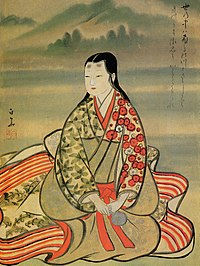
Tsukiyama-dono
Tsukiyama-dono (year of birth unknown - September 19, 1579) was a woman who lived from the Sengoku period (period of warring states) to the Azuchi-Momoyama period. She was the lawful wife of Ieyasu TOKUGAWA. Her name is unknown. She is generally called Tsukiyama-dono, Tsukiyama Gozen or Suruga Gozen. The name' Tsukiyama' comes from the name of a place in Okazaki City.
His father was Chikanaga SEKIGUCHI.
Her mother was said to be Imagawa Yoshimoto's aunt or younger sister, and if she was a younger sister, Tsukiyama-dono would be Yoshimoto's niece. According to the genealogies in "Ii Nenpu," "Keizu Sanyo," and "Ike no Soran," she was Ii Naohira's granddaughter, first became Imagawa Yoshimoto's concubine, and later married Chikanaga as her foster sister. In this case, Ii Naomori and Haitoko, and Ii Naotora would be her junior nieces.
In some fictions such as "Ieyasu TOKUGAWA" written by Yamaoka Sohachi, it is described that he conspired with Tsukiyama-dono to secretly communicate with Takeda Katsuyori, but there is no support from historical materials.
Source: ja.wikipedia.org
What is sawing?
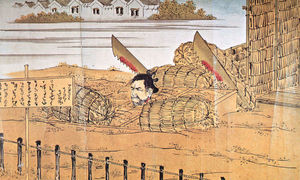
Source: www.tanken.com
Sawing
Saw sawing is a form of capital punishment in which the body of a criminal is sawn with a saw. It was also performed in European countries and Chinese countries ("Gosha Inzui" (The Romance of the Five Wheels), "塵添 壒嚢 Sho" 11, "北斉書" (The Chronicles of the Emperor Monzen) and Xue 嬪伝 (older sister of Xue Bin)).
Source: ja.wikipedia.org
It was a punishment in which a criminal was tied up with a shallow cut in the neck, and a saw with the blood of the criminal was placed nearby, and the victim's relatives and passers-by were forced to grind the head once or twice to die slowly; before the Edo period, the head was actually sawed, and in addition, the criminal was fixed upside down, and the pain was sometimes prolonged by grinding the body from the crotch.
Source: ja.wikipedia.org
Reference Links
Yashiro OGA - Wikipedia
ja.m.wikipedia.org
Yashiro OGA (year of birth unknown - 1574?) was a busho (Japanese military commander) in the Sengoku period (period of warring states). He was a vassal of the Tokugawa clan. There is a theory that his family name was actually the Ooka clan [1].
Ieyasu TOKUGAWA (NHK Taiga Drama) - Wikipedia
ja.wikipedia.org
Kume: Tokie Hidari (wife of Yashiro OGA), Ofu: Megumi Ishii, Aki: Makiko Fukami, Kojiju: Terumi Niki (a waiting woman for Toku-hime), Suga: Yorico OGAWA (a waiting woman for Matsudaira Hirotada), Yuri: Ayumi Tachieda (a waiting woman for Odai), Ozasa: Kumi Tanahashi (a waiting woman for Odai), Okazaki Castle, Kitchen Woman::.
NHK On-Demand Taiga Drama The 18th Rebellion of Ieyasu Tokugawa is Revealed
www.nhk-ondemand.jp
Ieyasu wanted to show the large army of Oda to suppress the movement of the Takeda clan. In Okazaki, the conspiracy of Tsukiyama Gozen and Yashiro Oga was uncovered. When Nobuyasu heard the truth from Toku-hime, he was outraged and killed his daughter Kojiju. Ieyasu executed Oga, but Tsukiyama Gozen.
Yashiro OGA: definition of Yashiro a yashiro and synonyms of OGA.
dictionary.sensagent.com
Yashiro OGA was a busho (Japanese military commander) in the Sengoku Period (Period of Warring States) and a vassal of the Tokugawa clan. He was a hereditary vassal of the Tokugawa family throughout his life and served as a daikan (local governor) of more than 20 villages in 奥郡, Mikawa Province. Because he was good at government affairs, he was trusted by Ieyasu TOKUGAWA and assigned to Matsudaira Nobuyasu, his legitimate son, and an important post of bugyo (magistrate).
"Tokugawa Ieyasu Executes Yashiro OGA" - Events on April 5 - History Blog
ameblo.jp
OGA Yashiro had served the Tokugawa family as a middleman for a long time, but he was a very talented person, was good at calculation, and was also familiar with local affairs. He was gradually given an important position because of his smooth handling of various matters, and was eventually appointed as a local governor of more than 20 villages in Mikawa Province and 奥郡.
Yashiro OGA - Overview of Yashiro OGA - Weblio Dictionary
www.weblio.jp
Yashiro OGA Overview of Yashiro OGA According to "Tokugawa Jikki" (The True Tokugawa Records), he was in the middle of Ieyasu TOKUGAWA at first, but since he was good at arithmetic, he was employed as an accountant and tax accountant, and was selected as a local governor of more than 20 villages in 奥郡, Mikawa Province. Usually in Hamamatsu where Ieyasu lives, but sometimes.
Okazaki Castle Yashiro OGA Rebellion - Footprint of Ieyasu IN Tokai - Yahoo! Blog
blogs.yahoo.co.jp
Rebellion of Yashiro OGA at Okazaki Castle Ieyasu met two major betrayals throughout his life, one at Okazaki Castle in 1574, the other at Kanayama rather than the rebellion of Nagayasu OKUBO after he established the Edo shogunate in 1613.
