
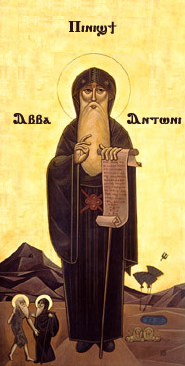
Saint Antony the Great, founder of the monastic system, born in Egypt, ca. 300 A.D.
As the founder of monasticism and patron saint of the plague since the Middle Ages, Antonius the Great has been the subject of many Western paintings.
Antonius has been depicted as the subject of Western paintings.
The Temptation of St. Antony" is based on the story of the founder of the monastic system, Antony the Great, who was a pious ascetic living alone in the wilderness,
The Temptation of St. Antony" is a story about the devil's seduction of the founder of the monastic system, St. Antony, by means of violence, gold and silver treasures, and an enchanting and noble woman,
This theme has been the subject of works by numerous masters in the history of Western art.
It is interesting to note, however, that the way in which these masters depicted the temptation of the devil in their works shows the awareness of the times.
The interesting point is that the paintings of this theme by these masters show the awareness of the times in the way they depict the temptation of the Devil.
The painters have elaborately depicted the monster that attacks the saint and the devil queen who tries to drag the saint to her bed,
They reflect the characteristics of the period in which they were created.
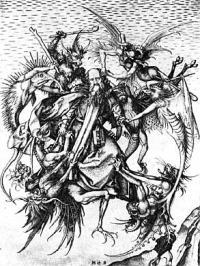
The demons hold him high in the air and then drop him to the ground, mortally wounding him.
The engraving by German painter Martin Schongauer,
had a profound impact on the painters of the time.
The realistic demons, inspired by the forms of various real animals, can be said to be the germ of naturalism.
realistic-looking devils.
The realism of observing nature and reflecting it in paintings is reflected in his works.
(Late 15th century)
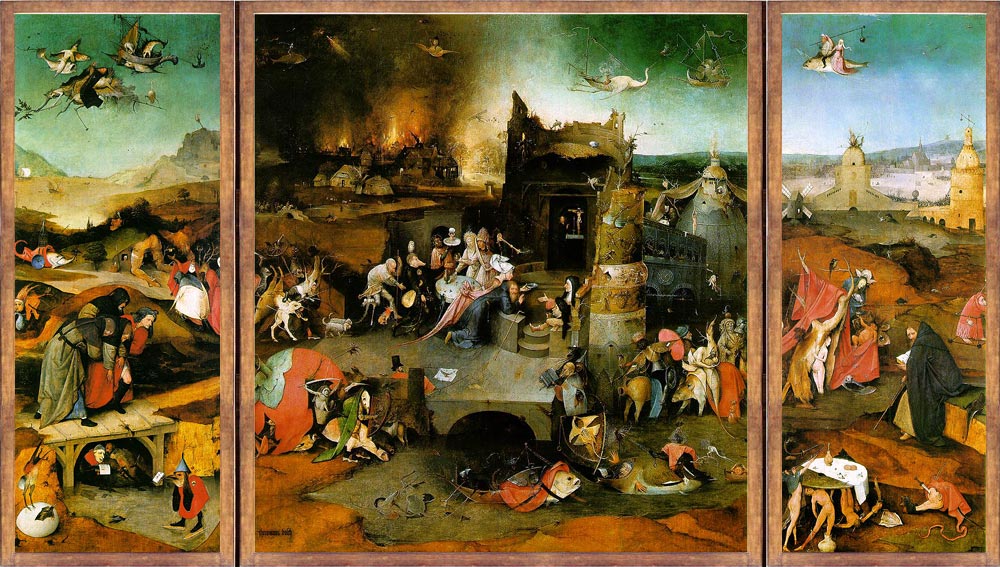
The "Temptation" works of Dutch painter Hieronymus Bosch (1450?-1515), who exposed the vices of the Middle Ages through symbolic iconography,
The "Temptation" works of Dutch painter Hieronymus Bosch (1450?-1515) were disseminated by the print workshop "The Four Winds" and influenced later generations of painters.
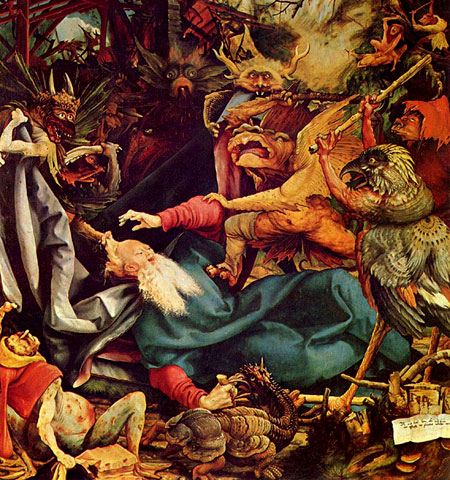
Mathias Grünebald (c. 1470-1475-1528), from the "Eisenheim Altarpiece.
Like Schongauer, these realistic monsters are inspired by the forms of birds and animals.
Antonius said they were in the tomb he had chosen as a place of training,
The devil's minions come in droves and decimate Antonius.
The Great Antonius was painted as a prayer picture (a picture for a prayer object) for the cure of "malt fungus poisoning" that was prevalent in Northern Europe during the Middle Ages,
It flourished mainly in northern Europe.
The local lords of what is now French territory built a cathedral of Antonius where they prayed,
The local lord of what is now France built a cathedral of St. Antonius and prayed for the cure of his son's incurable disease of gangrene of the extremities, the cause of which was unknown at the time,
Since then, he called this disease "the fire of St. Antonius,
The name of the cathedral is derived from the fact that he founded the Society of St. Antonius and engaged in activities for the cure of the disease.
The lower left figure in the above image is said to be a patient suffering from the malarial disease.
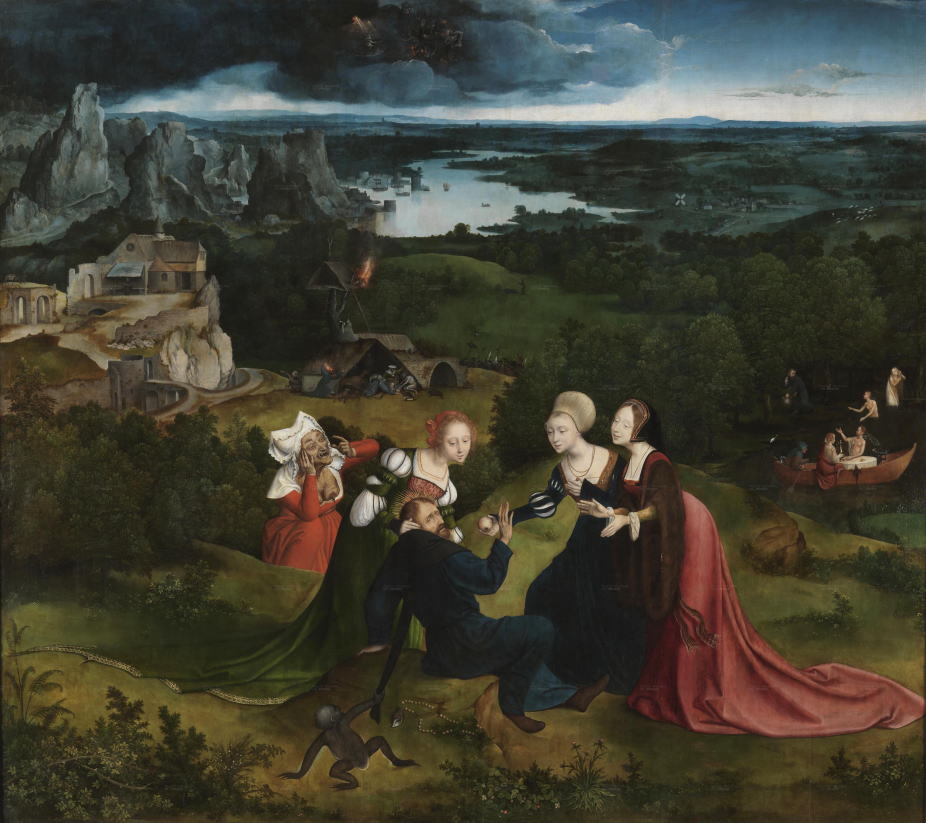
A work by Joachim Patinir (ca. 1480-1524) depicting Christian subjects in a landscape painting.
A noble queen entertains and seduces Antonius by offering him a high position and the promise of marriage.
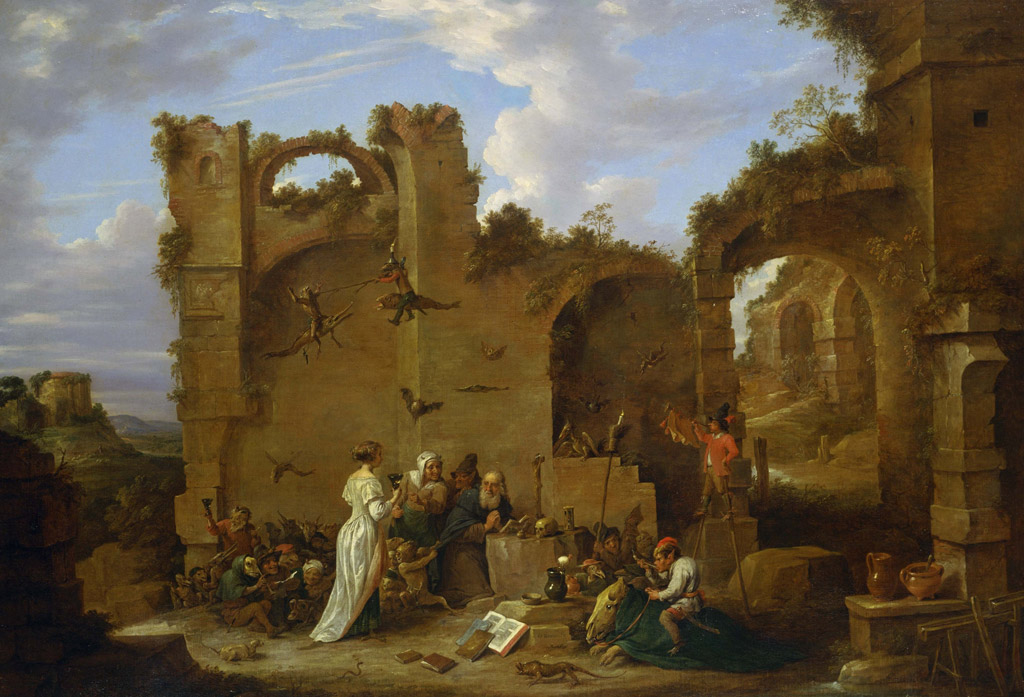
Dafit Teniers (Child), 17th century, composition showing the influence of Boss.
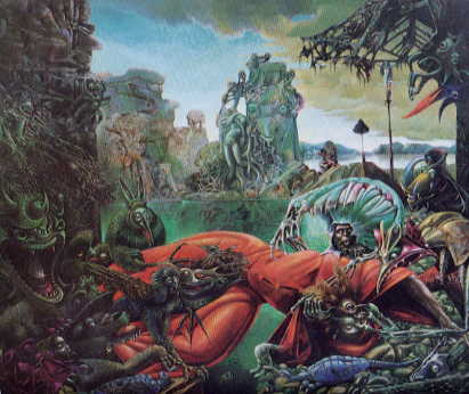
(1891-1976) Max Ernst.
This is a seductive figure of the 20th century, escaping the medieval and early modern periods and approaching the present day.
The shape of the monster goes far beyond the naturalism of Schongauer and Grunewald,
The monster's shape goes far beyond the naturalism of Schongauer and Grünebart, becoming grotesque and eerie with a palpable horror.
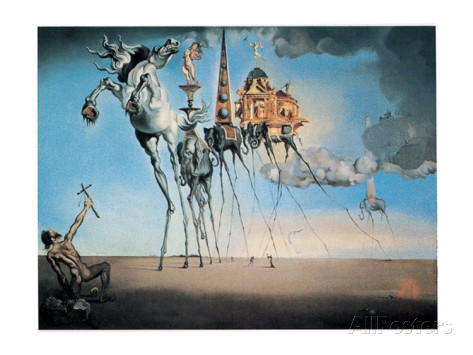
Salvador Dali's seduction figure.
More visionary than illusory, it reveals the lone, determined Antonius' determination to overcome the wanderings of his mind with all his might.
The distorted horses, elephants, naked women, and modern-day demons that stir the saint's nerves are more atmospheric than the mere violence of medieval demons,
It is a testament to the crisis of the human spirit.
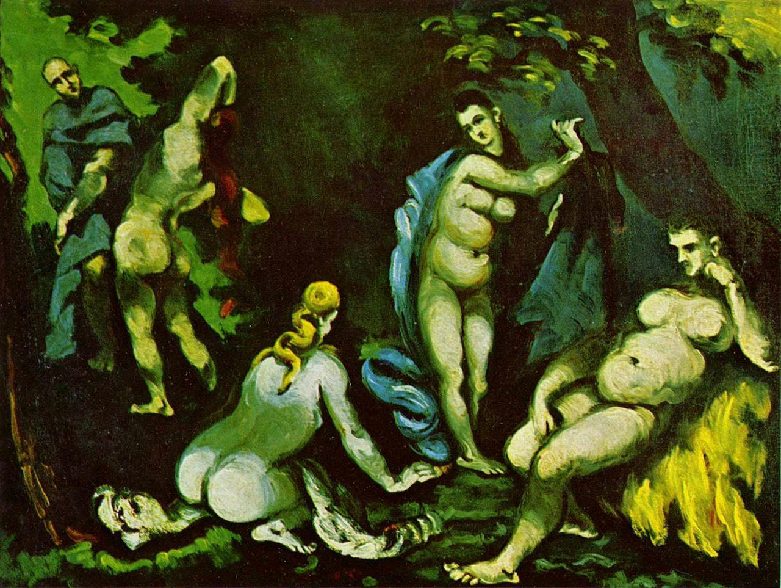
Paul Cezanne's Fleshy Seduction Figure
Interpreted in a modern way, the composition of this work is that of a friar who is afraid to go off the path as a Christian monk, and the desire within himself that tempts him,
The composition of this work is a monk who is afraid to go off the path as a Christian monk, and the desire within himself that tempts him to do so.
If we think of it as a conflict between a man who recognizes the desire within himself but is afraid of the risk of putting his hands on it, then we can understand it without limiting it to Christians in particular,
It can be understood without limiting it to Christians in particular.
