
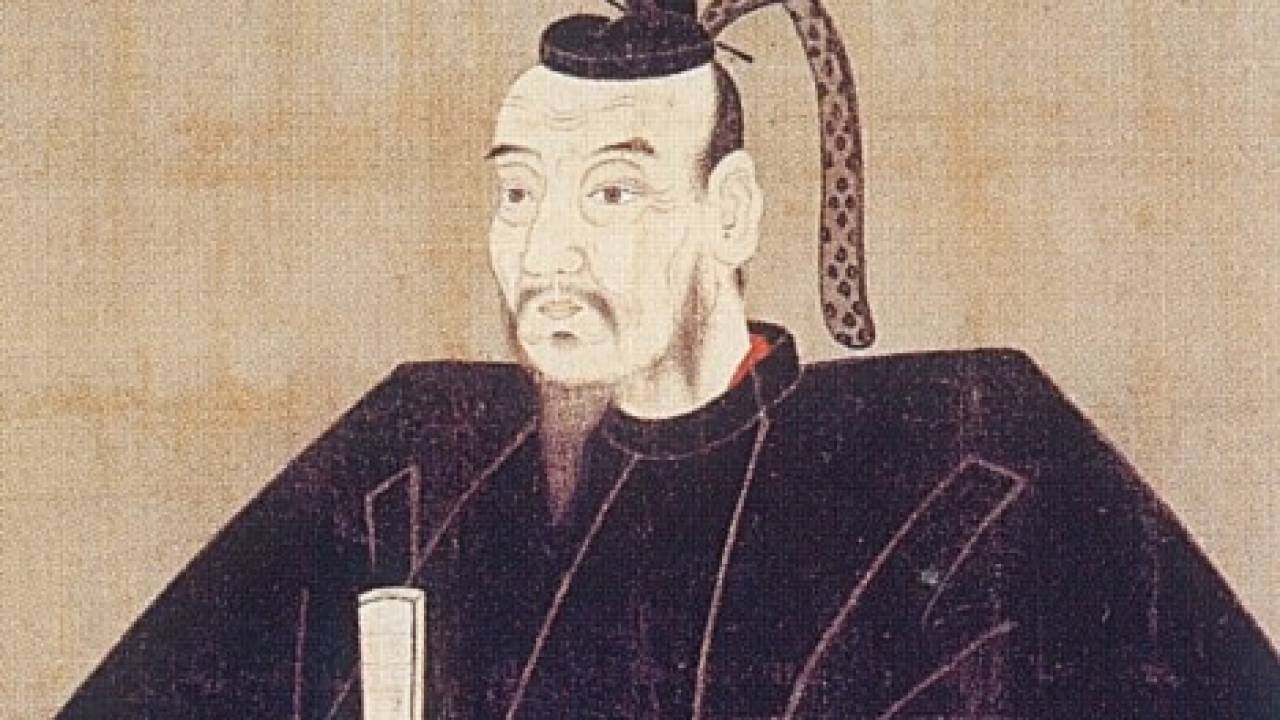
Chosokabe Motochika is known as the warlord who unified Shikoku. In fact, he has a close relationship with Mitsuhide Akechi and Nobunaga Oda. This article briefly summarizes what kind of relationship he had with them. The reasons for the Honnoji Incident are also summarized in this article.
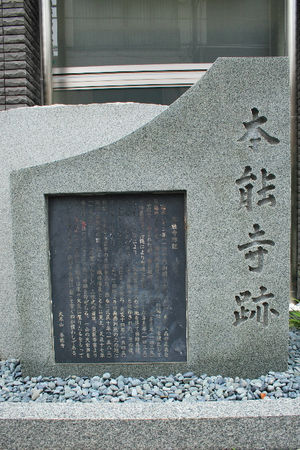
Source: naokun.cocolog-nifty.com
A letter written by Chosokabe Motochika, a warlord in the Sengoku period (period of warring states), expressing his intention to obey orders from Nobunaga Oda before the Honnoji Incident was discovered, and the Okayama Prefectural Museum, which is jointly studying the letter with the Hayashibara Museum of Art in Okayama, announced on March 23.
Source: www.nikkei.com
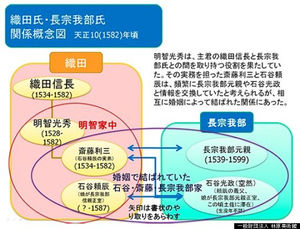
According to the Prefectural Museum and other sources, at first Nobunaga established a friendly relationship with Motochika and allowed him to conquer the Shikoku region. Since Motochika's lawful wife was a relative of Toshimitsu, Mitsuhide acted as an intermediary (diplomat) between Nobunaga and Motochika, but later Nobunaga changed his policy because he was wary of Motochika, who was rapidly expanding his power to unify the Shikoku region. Before the Incident (June 2), Motochika was enraged by the order to allow him to own only Tosa and the southern half of Awa Province, and Mitsuhide was caught between Nobunaga and Motochika.
Source: www.asahi.com
Akechi Mitsuhide used Toshimitsu to negotiate with his chief vassal Saito Toshimitsu, who was a relative of Chosokabe Motochika, a warring lord of the Shikoku region. However, Akechi Mitsuhide rebelled against Nobunaga when Nobunaga switched sides and attacked the Shikoku region.
Source: www.nhk.or.jp
Source: i.huffpost.com
Mitsuhide AKECHI was in charge of mediating between his lord Nobunaga ODA and the Chosokabe clan, and Toshimitsu SAITO and Yoritoki ISHITANI, who were in charge of this practical work, were believed to have frequently exchanged information with Chosokabe Motochika and Mitsumasa ISHITANI, but they were in a relationship of mutual marriage.
Source: Press release from Hayashibara Museum of Art
Source: www.huffingtonpost.jp
About Mitsuhide Akechi
Source: upload.wikimedia.org
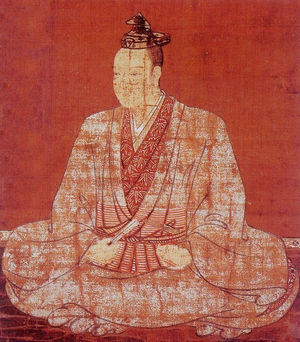
Mitsuhide AKECHI was a busho (Japanese military commander) from the Sengoku period (period of Warring States) to the Azuchi-Momoyama period, and was one of the senior vassals of Nobunaga ODA, a Sengoku daimyo (Japanese territorial lord in the Sengoku period), and is famous for causing the Honnoji Incident, which is considered to be one of the mysteries of Japanese history.
His real family name was Minamoto, and later he was given the family name of Koreto by the Imperial Court. His family line was the Akechi clan, a branch of the Toki clan of the Mino-Genji (Minamoto clan), of the Settsu-Genji (Minamoto clan) of the Seiwa-Genji (Minamoto clan). He was commonly known as Jubei. His pen name was Shoan and also called Mitsuhide KORETO. His wife was Tsumaki Hiroko. Between them were the wife of Tadaoki HOSOKAWA, Tama (Christian name: Gracia), his legitimate son, Mitsuyoshi (Jugoro), and the wife Tsuda Nobusumi
Source: ja.wikipedia.org
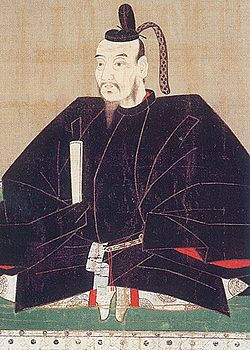
About Chosokabe Motochika
Source: upload.wikimedia.org
Motochika CHOSOKABE was a warlord of Tosa Province from the Sengoku period (period of warring states) to the Azuchi-Momoyama period. He was the 21st head of the Chosokabe clan. He was the eldest son of Chosokabe Kunichika, and his mother was a daughter of the Mino-Saito clan. His lawful wife was a daughter of Mitsumasa ISHIGAI and a half younger sister of Saito Toshimitsu. His court rank was Jugoinoge (Junior Fifth Rank, Lower Grade) and was conferred Shogoi (Senior Fifth Rank) [4] after his death, and Shosanmi (Senior Third Rank) in 1928 (1928). He received one character of' Gen' from Harumoto HOSOKAWA, kanrei (shogunal deputy) and head of the Hosohosokawacho family, which also served as shugoshiki (post of provincial constable) of Tosa Province, which was one of the common characters of the Keicho family, so he was given the same name as the 15th family head (Chosokabe Motochika (the period of the Northern and Southern Courts)) who also received the character of' Gen' from the Kawakyo clan. He grew from kokujin (local samurai) to sengoku daimyo (Japanese territorial lord in the Sengoku period) and became the hegemon of the Shikoku region fighting against the Miyoshi clan of Awa and Sanuki, the Saionji clan and the Kono clan of Iyo Province. However, Nobunaga ODA was close at hand and Tosaichi Totsugi
Source: ja.wikipedia.org
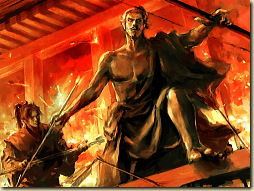
The Honnoji Incident
Source: kamurai.itspy.com
It was a rebellion against Nobunaga ODA by Mitsuhide AKECHI.
The Honnoji Incident was a coup d' état (incident) that occurred on June 21, 1582, when Mitsuhide AKECHI, a vassal of Nobunaga ODA who had started a rebellion against Nobunaga ODA who was trying to rescue Hideyoshi HASHIBA who was besieging Tanba-jo Castle, returned from Bitchu-Takamatsu Kameyama-jo Castle, and attacked Nobunaga who was staying at Honno-ji Temple in Kyoto and Nobutada ODA who was staying at Myokakuji Temple. Nobunaga, who was attacked in his sleep and surrounded, gave up escaping and was forced to commit suicide, and Nobutada retreated to Nijo Gosho (Imperial Palace) to fight but also committed suicide.
Source: ja.wikipedia.org
Reference Links
EGU-SPLOSION Channel - YouTube
www.youtube.com
EGU-SPLOSION - Duration: 2 minutes, 18 seconds. EGU-SPLOSION Channel 53263146 views 2 years ago 2:39 Play next Play now "The arrival of Commodore Perry" Dance class.
Why did the Honnoji Incident occur?
ironna.jp
Why did the Honnoji Incident occur? On June 2, 1582, just before the unification of Japan, Nobunaga ODA was brutally killed by the rebellion of his senior vassal Mitsuhide AKECHI. There are various theories about the motive for the rebellion, but it is still shrouded in many mysteries. It is said to be the greatest mystery in Japanese history.
"Honnoji kill Nobunaga, Japan will collapse.
biz-journal.jp
Honno-ji Yakiuchi no Zu (Painting of Honno-ji Temple being burned down) (from Wikipedia / Braceman) At dawn on June 2, 1582, Oda Nobunaga died at the age of 49 at Honno-ji Temple in Kyoto. The person who attacked Nobunaga was. (1/3)
Honnoji Incident - Wikipedia
ja.wikipedia.org
Honnoji Incident' Honnoji Yakiuchi no Zu' (painting of the burning down of Honno-ji Temple) (Meiji period, painted by Nobukazu Yosai) War: Azuchi-Momoyama Period Date: June 2, 1582 (June 21, 1688) Location: Honno-ji Temple in Yamashiro Province and Nijō Goshinzo Result: Akechi's Victory: Self-Inflicted Fighting Power of Nobunaga and Nobutada ODA: Oda's Akechi's Army
