
It is commonplace for Hollywood blockbusters to all have production costs exceeding 10 billion yen. Among such films, there are many films that have created images as powerful as those of major productions, but with budgets that are not necessarily large. In this issue, we will introduce such films.
How much does it cost to make a film in the first place?
A major movie can cost hundreds of millions of dollars to make. Let's take a look at the production cost of a movie, using a Hollywood movie as an example.
In Hollywood, a film costing around $50 million (about 5 billion yen) is considered to be a medium-scale film, a film costing over $80 million (8 billion yen) is a major film, and a film costing over $100 million (10 billion yen) is considered to be a major production.
To take a famous movie as an example, "Terminator 2" cost approximately 10 billion yen, and "Titanic" cost more than 28 billion yen.
In contrast to these Hollywood films, which are made with a production cost of 10 billion yen, the following is a list of low-budget films that are as impressive as the Hollywood films.
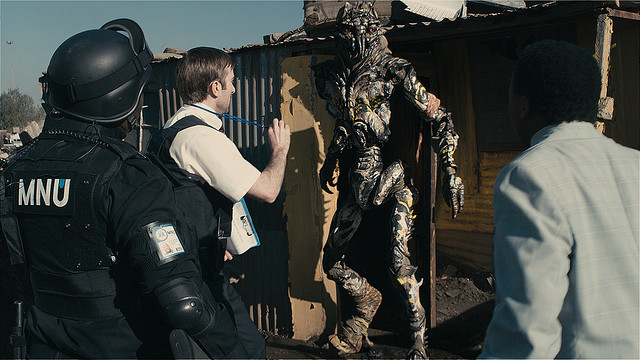
District 9
District 9" is a 2009 science fiction film in which the protagonist, a government official in charge of managing aliens living as refugees on Earth, is exposed to a mysterious chemical that causes him to become involved in incidents and conspiracies.
The film was made at a production cost of 3 billion yen, a small amount for a Hollywood film. However, the vast slums, aliens that look like a combination of shrimp and insects, sci-fi weapons, and even giant robots are depicted in CG of the same high quality as those in major productions, and the images are as powerful as those in major films.
However, be warned that there are many grotesque scenes in this film.
Skyline -Conquest
This 2010 science fiction panic film depicts an alien invasion from the perspective of citizens who survived by holing up in an apartment building.
The film cost only 1 billion yen to produce.
The film was made almost exclusively in the vicinity of a single apartment building, with unknown actors, and it is evident that the filmmakers focused on showing action scenes and aliens by devoting as much of the budget as possible to the visuals.
The attention to detail in the alien modeling, in particular, is beyond that of a bad blockbuster film.
Monsters/Extraterrestrials
This is a road movie style science fiction film about a man and woman trying to return to the U.S. through an alien-infested and blockaded area.
The production cost was about 50 million Japanese yen. However, the novel approach of portraying an alien movie as a road movie and the unique atmosphere of the film were highly acclaimed and created a buzz, generating box-office revenues nearly 10 times higher than the budget.
It can be said that this is another film that triumphed with an idea. A sequel to this film was also produced.
The director of this film is also directing a Hollywood version of Godzilla, which was released in 2014 in recognition of this film.
SPACE BATTLESHIP Yamato
The last one is from a Japanese film.
It is a live-action version of "Space Battleship Yamato," which was released in 2010 and became a hot topic because of its starring role by Kim Taku.
The film was not well received by fans of the original story, but if you look at the visual aspect of the film, it has many highlights.
The production cost was approximately 2 billion yen. This is a fairly large budget for a Japanese film, but compared to Hollywood, it can be said to be low-budget. It is a great achievement to make a science fiction film with an epic story on such a budget, and to show a moderately powerful image. I never thought that we would be able to see large-scale battle scenes in space in a Japanese film with a lot of CG.
The director is Takashi Yamazaki. He is the director of "Sunset on Third Street" series, "Eternal 0" and "Yosei Zyu". He is by far the best in Japan at making movies that use a lot of CG.
summary
How was it?
There are many films that use technology and ideas to produce high quality, powerful images even with a budget that is a fraction or a tenth of the cost of a Hollywood blockbuster. We may not often look at movies with a focus on production costs, but I believe that having this perspective will change the way we look at movies again. Why don't you take this opportunity to look at films from a new perspective?
