
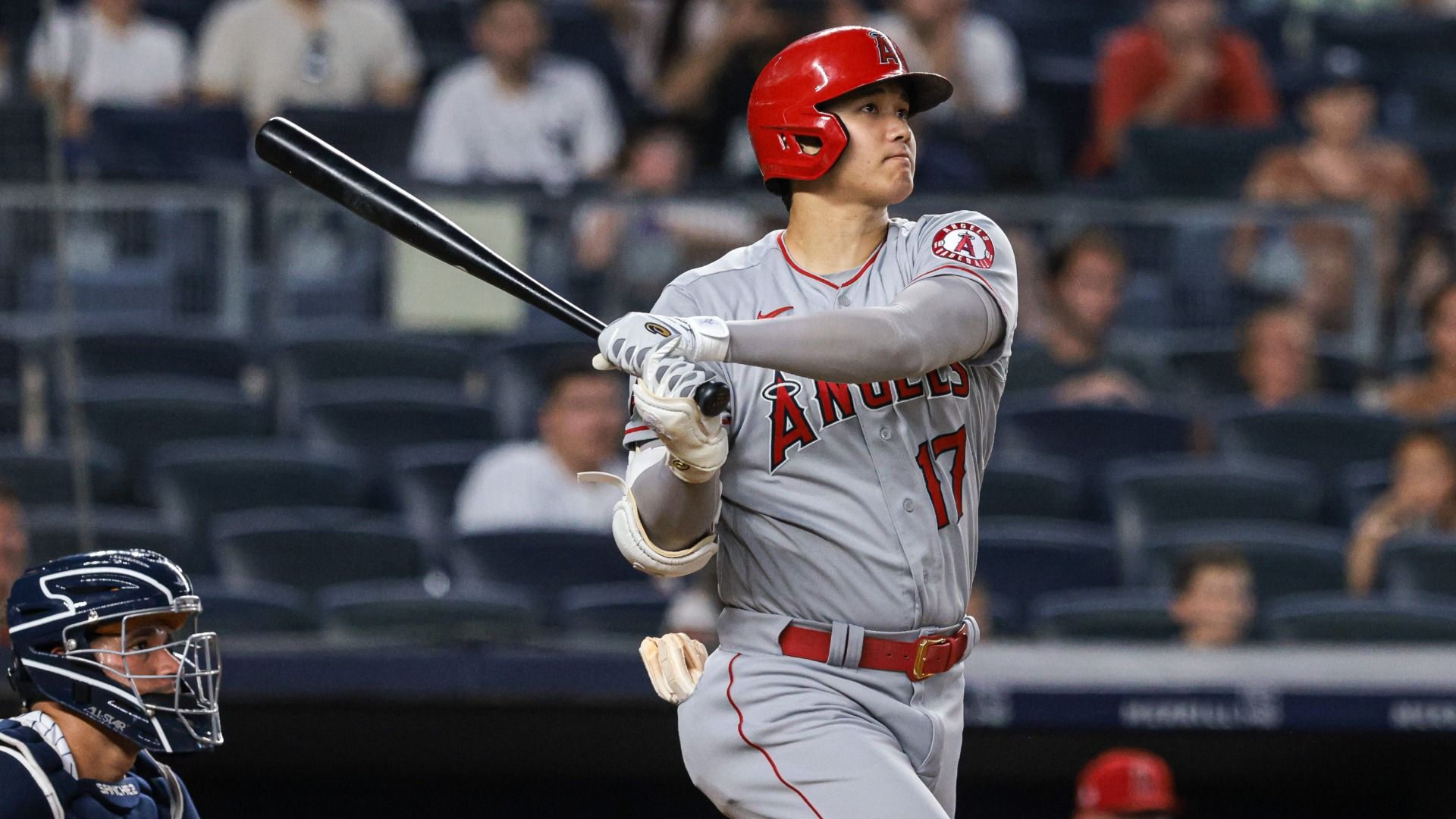
Shohei Ohtani's specialty and the differences between Japanese professional baseball and Major League Baseball will be thoroughly examined to see if he can make it in the Major Leagues. He has achieved many feats with his two-faced style of pitching, and baseball fans have been watching to see if he will be able to play in the home of baseball.
1. Many breakdowns
Although Otani is only in his fifth year as a professional baseball player, he is often out of action due to injury.
It would be understandable if he were to grow up too quickly or if he had passed his peak as a player, but the fact that he has so many injuries in his youngest years, when he can move the most, will have an impact on his future career as a player.
Ichiro, Nomo, Matsui, Darvish, Kuroda, and others who have made their mark in the Majors have had few injuries and almost no withdrawals since their days in Japan, so there is no doubt that the presence or absence of injuries will have a major impact on their major league careers.
2013: Insufficient right zygomatic bone fracture
2014: Pinched right leg, out of the lineup
2015: Pinched foot and dropped out of the lineup
2016: dropped out of the lineup after crushing a blister
2017: left thigh labrum separation, ankle injury
Source: www.aflo.com
2. Overcrowded schedule for majors
Many people know that the Majors have an overcrowded schedule with more games than Japan.
In Japan, there are only 144 games per year, but in the Majors, there are 162 games per year.
Since domed stadiums are not the norm in the Majors, as is the case in Japan, the schedule is expected to be even more overcrowded in the latter half of the season due to rain postponements.
(In Japan, there are 15 or 20 games in a row and double headers (two games per day), which are impossible in Japan.
3. Measure travel distance
Furthermore, since the teams are scattered over a wide area of the country, the distance traveled is sure to be longer than in Japan.
The aforementioned weakness against injuries is likely to be further exposed by the overcrowded schedule and long travel distances.
Major League Baseball's schedule is overcrowded
Major League Baseball stadiums are less likely to be domed, and are more likely to be affected by weather, with many games being cancelled due to rain. This often results in an overcrowded schedule of 20 or 30 games in a row.
The total distance traveled in a season is said to be 1.8 laps around the globe, and even key players have to be removed from the starting lineup to recover from fatigue, indicating that games are played under a grueling schedule.
Source: spaia.jp
4. Limitations on members registered on the bench
In the majors, along with overcrowded schedules and travel distances, there is a disadvantage in bench registration.
In Japan, up to 28 players are allowed on the bench, but in the Majors, up to 25 are allowed.
The difference is significant. In Japan, if six starting pitchers are available, one pitcher can pitch in six games per week, which means that one pitcher can pitch once a week.
In the majors, however, the number of starting pitchers is reduced by one, and five pitchers are required to pitch in 10 or 15 consecutive games.
In other words, not only one week, but five days after pitching, another appearance awaits the pitcher.
In addition to the weakness against injuries and the overcrowded schedule, pitchers will be subjected to even greater abuse than in the days in Japan.
5. Difference in mound
When pitching, one of the concerns is the difference in the mound from the Japanese era.
In the majors, the soil is harder than in Japan, and the mounds are sloped more steeply.
Otani's team, Nichi-Ham's Sapporo Dome, is famous for its relatively hard mound, but that is only in Japan.
In the Majors, it is necessary to switch to pitching for the Majors, but the mound is hard and the slope is steep, so the large step-and-sink pitching form characteristic of Japanese pitchers is too much of a burden, and there are concerns about injury.
The pitching form of Kuroda, Uehara, Maeken, and others in the majors is seen as if they throw lightly without stepping into the mound too much.
They have already switched to a major league form that uses power from the upper body.
Matsuzaka, Fujikawa, and Igarashi, who, like Otani, were characterized by a sinking form with a sense of power, were unable to adapt to this change and ended up getting hurt by the Japanese style form.
Source: www.aflo.com
6. High rate of straight hits
Major league hitters are especially good at dealing with straight pitches.
On the other hand, many of the foreigner assistants who come to Japan are unable to handle the fastball pitchers of the Majors and come to Japan.
It is not widely known that the reason why Merton, who set the record for hits, and Valentin, who set the record for home runs, were not recalled to the majors was because of their inability to handle fast straight pitches.
What is of interest in this situation is the batting average of Ohtani's straight.
For a pitcher who throws a fastball (165 km/h), which is rarely seen in history, his batting average is only .230, which is mediocre.
Major league hitters probably have no trouble with Ohtani's straight.
7. The decisive pitch is a fork pitch.
Ohtani's characteristics include a fast straight ball and his signature pitch, the fork.
Japanese pitchers throw the fork more frequently than major league pitchers, and it is known as an effective pitch against major league hitters.
However, it is a double-edged sword for pitchers in the majors, as few pitchers in the majors throw it due to the burden on their shoulders and elbows.
As mentioned above, if straight pitches are not as effective as they are in Japan, the Yankees will probably throw the fork a lot.
This is exactly what happened to Tanaka of the Yankees, who broke his elbow early in his career and was unable to perform as well as he did before the injury.
Because he was able to use his fork (split) so well, he threw it too many times, which damaged his elbow and shortened his life.
Darvish and Maeken often struck out with a slider-type ball when they could not get through with a straight ball, and Kuroda often used a cut ball.
Kuroda often used a cut ball. The fork ball, which he threw while pulling it out from between his fingers, put less stress on his elbow.
Otani, who has similar tendencies to Tanaka of the Yankees, is likely to throw a lot of forks when straight pitches do not work, and he is likely to fall into a trap.
Source: www.aflo.com
Injuries" predicted two months ago.
I recommend that young pitchers throw a curveball or changeup. The change-up can be used like a split (vertical change), but the grip is different, so it doesn't put as much stress on the elbow and forearm. Personally, I am interested to see how he will do after throwing the split so well at the age of 25.
These were the words of Maddon, the Rays manager, just before his first matchup with Tanaka on May 1. This was in response to a direct interview with the Japanese online media "THE PAGE.
Source: www.j-cast.com
8. Commitment to two-faced
He made a lot of noise about being a two-sport athlete during his days in Japan, but in fact he has never completed the prescribed number of innings as both a pitcher and a hitter in a single season.
Depending on the season, he has either been a pitcher or a hitter, or has left the game due to injury.
In addition, as a hitter, he has mostly played as a DH and not so much as an outfielder.
Therefore, he has not played much as an outfielder, and has not played much as a DH! In fact, he has rarely played in a game like that since he became a professional baseball player.
He was not playing two sports in a single game, but rather, he was playing a similar role throughout the season.
He has indicated that he intends to continue playing two-tool baseball in the majors, but it is highly doubtful that he will be allowed to play two-tool baseball on the demanding schedule of the major leagues.
9. Kitchen situation in Enzens
The Angels, the team that Ohtani will be joining, are a typical team with a high batting average and a low pitching average.
While the Angels have the best hitter in the majors, Puhols, who has 614 hits, and the best young fielder, Trout, who is a three-tooled runner, there is no ace pitcher in the lineup.
In such a situation, the most expected player will probably be the pitcher Otani.
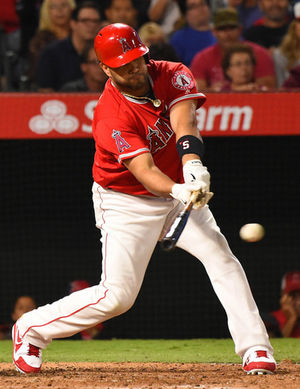
However, they are also preparing to have Puhols, who used to be the DH, protect first base and put Ohtani as the DH for the sake of Ohtani the fielder.
As mentioned above, he has a lot of problems to adapt as a pitcher, and he also has to produce results as a DH, having relegated the best hitter, Puhols, to first base.
If he does not play defense as a DH and has a poor performance, he will be compared to Puhols, and the bashing will be stronger.
The hurdles are quite high.
Source: www.aflo.com

Contents
- 1. Many breakdowns
- 2. Overcrowded schedule for majors
- 3. Measure travel distance
- 4. Limitations on members registered on the bench
- 5. Difference in mound
- 6. High rate of straight hits
- 7. The decisive pitch is a fork pitch.
- 8. Commitment to two-faced
- 9. Kitchen situation in Enzens
- 10. The end of a player injured in the majors.