
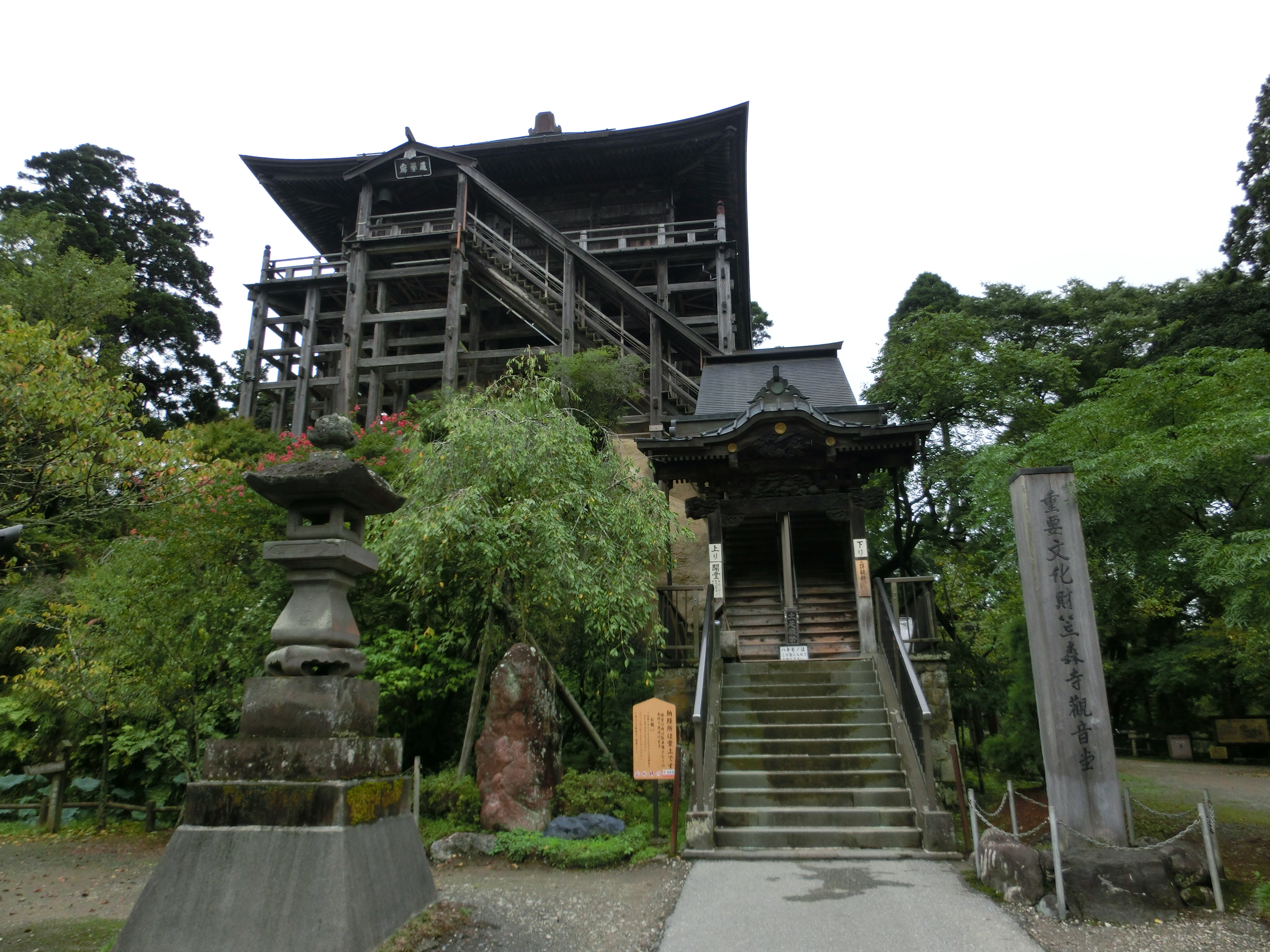
Dai-No-San Kasamori-ji Kannon-do Hall: Important Cultural Property, Curiosity Heritage, built in 1028 (Chougen year), the 31st of the 33 Kannon temples in the Bando area.
Founded by Saicho, the Great Teacher Dengyo, Natural Monument "Kasamori Natural Forest", Chiba Prefectural Kasamori Tsurumai Natural Park
1 building, four sides, 5 ken (girigakuken), 4 ken (beam spacing), single story, hipped roof, copper shingle roof
Japan's only Kasamori Kannon (Goddess of Mercy) with a four-sided suspension structure
Kasamori Kannon is the only building of its kind in Japan built in the Shiho-Kake-zukuri style,
It is designated as a national important cultural property.
The kakezukuri is a method of building on steep cliffs,
The temple or shrine is built on top of the footings,
There are many temples and shrines built in this way in Japan, but only Kasamori Kannon has geta on all four sides,
The Kasamori Kannon is the only temple in Japan that has geta on all four sides.
The official name of the temple is "Kasamori-ji Temple," which is the official name of the Tendai sect of Buddhism.
Saicho Saicho, a great Buddhist priest, carved a statue of the eleven-faced Kannon (Goddess of Mercy) from a sacred camphor tree and founded the temple on top of a mountain.
Kannon-do was built in 1028 at the request of Emperor Goichijo.
The current building was rebuilt in the Bunroku period (1592-1595) based on an inscription found during dismantling and repair work.
It is believed to have been rebuilt in the Bunroku period (1592-1595). From the corridor up the 75 steps of the Kannon-do Hall, the mountains of Boso in each of the four seasons can be seen below, and the view is beautiful in each season.
The view of the mountains of Boso in each of the four seasons is worth seeing. There are many other cultural assets such as a cast bronze lantern with arabesque design, which is an important cultural property.
The temple is also home to many other cultural assets, including an important cultural property, a cast bronze lantern with arabesque design.
Designated as a National Treasure in 1908 for its architectural style of "Shihou kakezukuri.
Designated as a National Important Cultural Property in 1950.
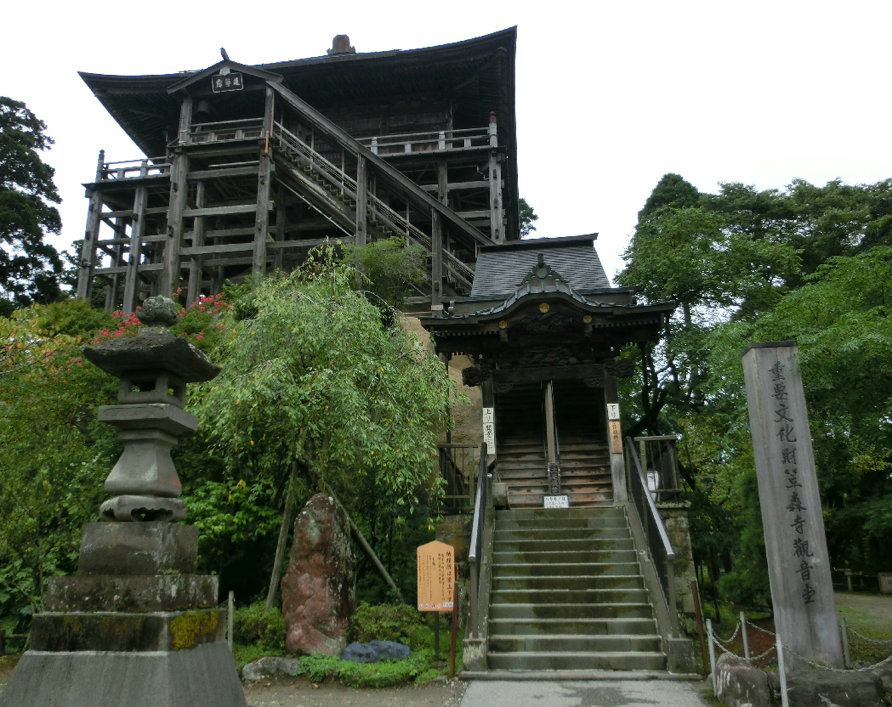
Kakezukuri in various parts of Japan
Here are some famous examples of Japanese kakezukuri construction methods.
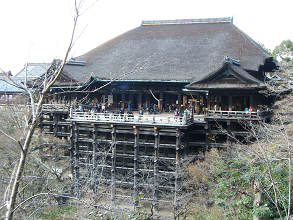
Main Hall of Kiyomizu-dera Temple, Kyoto
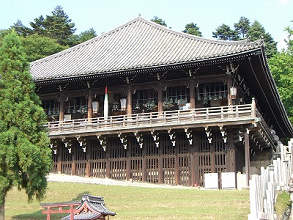
Nigatsudo Hall, Todaiji Temple, Nara Prefecture
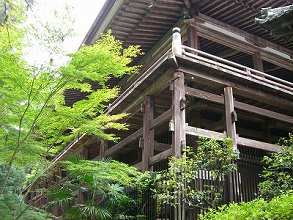
Ishiyama-dera Temple Main Hall, Shiga Prefecture
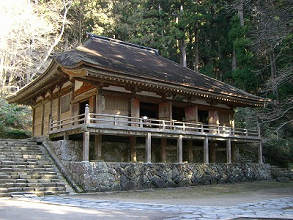
Kondo, Muroji Temple, Nara Prefecture
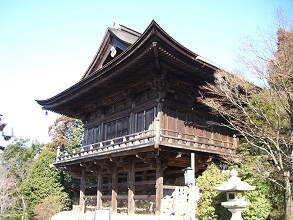
Nyoirindo Hall, Daigoji Temple, Kyoto, Japan
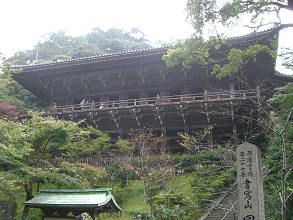
Maniden, Engyoji Temple, Hyogo Prefecture
The Birth of Kakezukuri
According to the Kegon scriptures, Kannon Bosatsu (Bodhisattva Avalokitesvara) is said to reside in "Mount Fudaraku," which is said to be located on the southern coast of India,
In Japan, sacred sites have been opened in Kumano and other mountainous areas as if they were "Mount Fudaraku" in the Pure Land,
As the belief in the Kannon (Goddess of Mercy) spread, Buddhist temples began to be built on rocky mountains as the Pure Land in many places.
As the faith spread, people began to build Buddhist temples on top of the rocky mountain as if it were a pure land,
In order to keep the part of the building that faced the cliff level, a shokubashira was erected according to the angle of the cliff or slope, and the shokubashira was connected with stakes and wedged,
To keep the overhanging part horizontal, a shakuhashira was erected according to the angle of the cliff or slope, connected with a stake, and secured with a wedge, and the structure naturally became kakezukuri.
In this process, the support columns for the building had to be thinner than the columns used for the main body of the building, and the building had to be built with a number of thin columns,
In order to support the building with the collective strength of a number of thin columns,
This structure should be called a ramen structure, which is still used today as a theory of building construction,
This method of construction, in which building materials are assembled vertically and horizontally and joined at right angles, is still used today as a theory of building construction.
This method of construction, which is unprecedented on the continent, creates a floor in the air without the use of a single nail,
This method of building floors in the air without the use of a single nail is an example of the development of an architectural style unique to Japan, where timber construction is the norm.
Among the examples of architecture from the old days when tools were not yet developed, there are some that are still in use today,
Some of the details of how they were built are unknown.
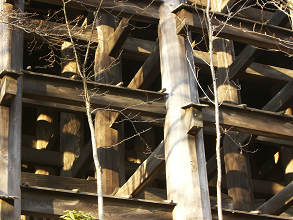
To prevent this, Kiyomizu-dera Temple in Kyoto has an umbrella-like roof made of wooden planks,
This is one example of how Kiyomizu-dera Temple in Kyoto prevents damage caused by rain.
Foundation of Kasamori Kannon
The kakezukuri is usually located in front of the building because it is added after the main hall is built,
The Kasamori Kannondo, built in the Kamakura period (1185-1333), was constructed from the beginning on the top of a rocky hill.
It is a unique structure with a floor height of 16 meters, supported by 61 pillars, and is called Shihokake-zukuri.
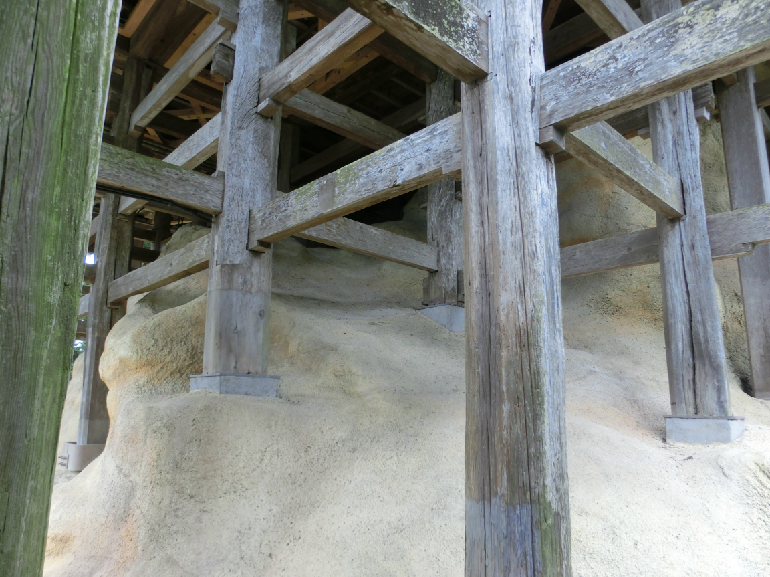
The foundation rock is sandstone. It is a miracle that it is built on such a soft and fragile rock.
Frankly speaking, I question the sanity of those who decided to build here, but that is the modern way of thinking,
It shows the strength of the faith of the time in the Buddha, and the enthusiasm and zeal of the people who built this symbolic temple and shrine.
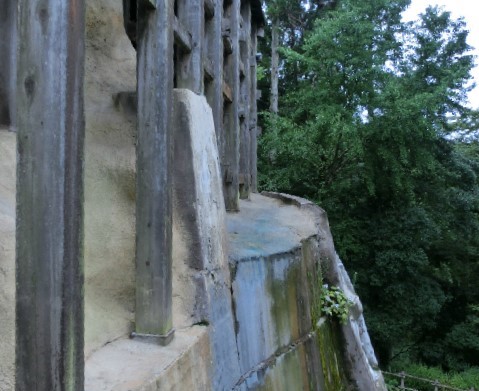
The base of the right side of the side facing from the front.
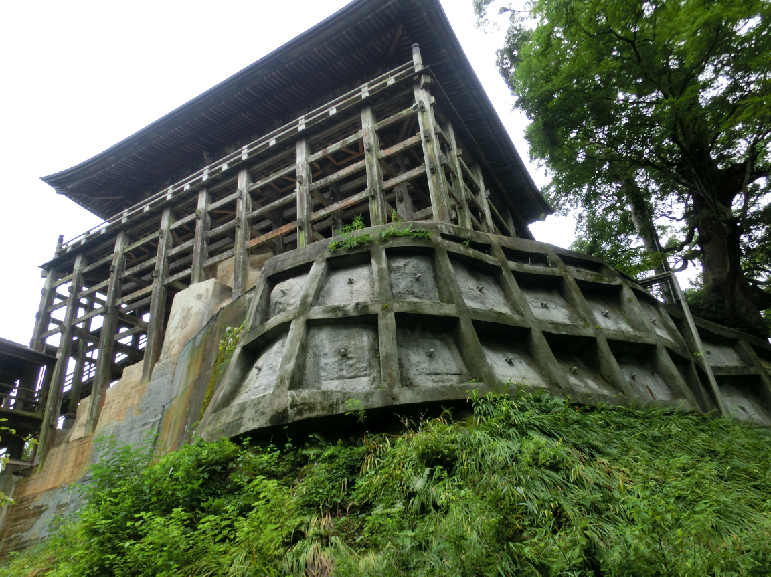
This is a composition looking up from the rear, turning to the right side of the front.
Reinforcement with reinforcing steel and concrete can be seen in the modern period.
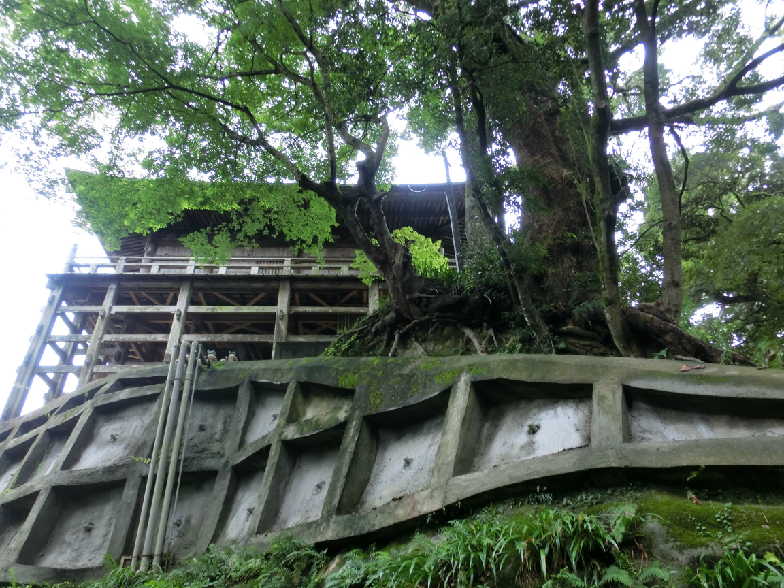
This is a shot taken from directly behind Kannon-do. A large tree supports the rear of the foundation.
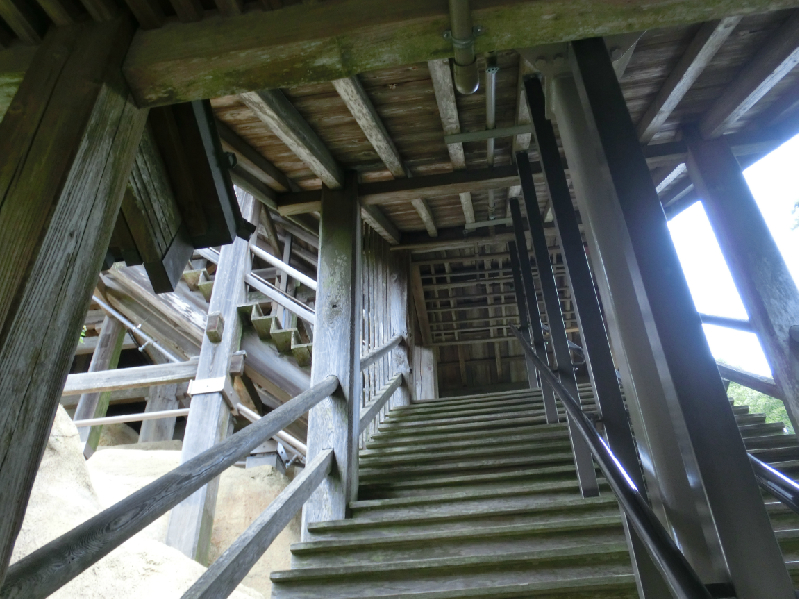
The Kannon-do has 75 steps.
Partitions and handrails are provided between ascending and descending, and only two persons can ascend or descend at a time.
The roof is low and steeply sloped.
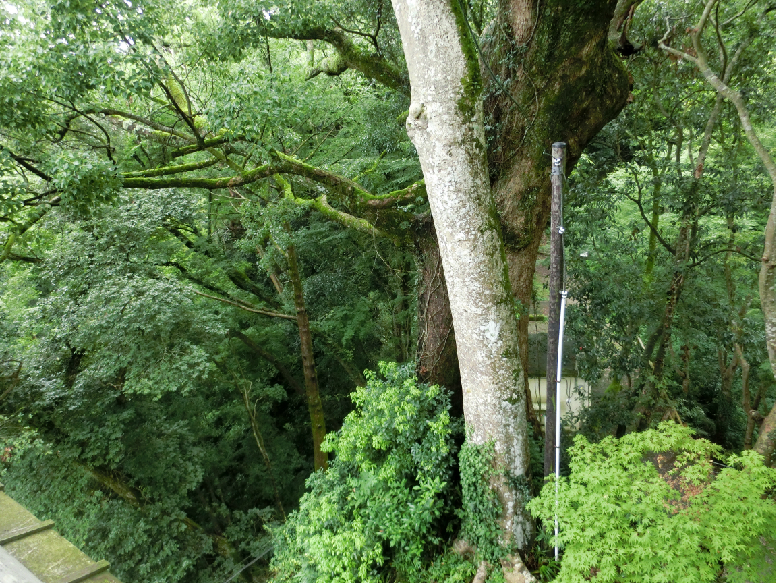
Surrounded by "Kasamoriji Natural Forest" designated as a natural monument.
Surrounded by the Chiba Prefectural Kasamori Tsurumai Nature Park, it is one of the most unexplored areas in the area.
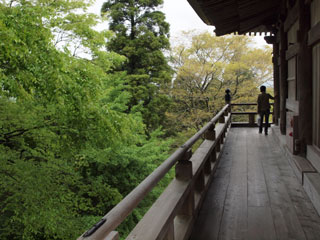
The surrounding trees are overgrown and the view is not good.
Only a few distant mountains can be seen.
