
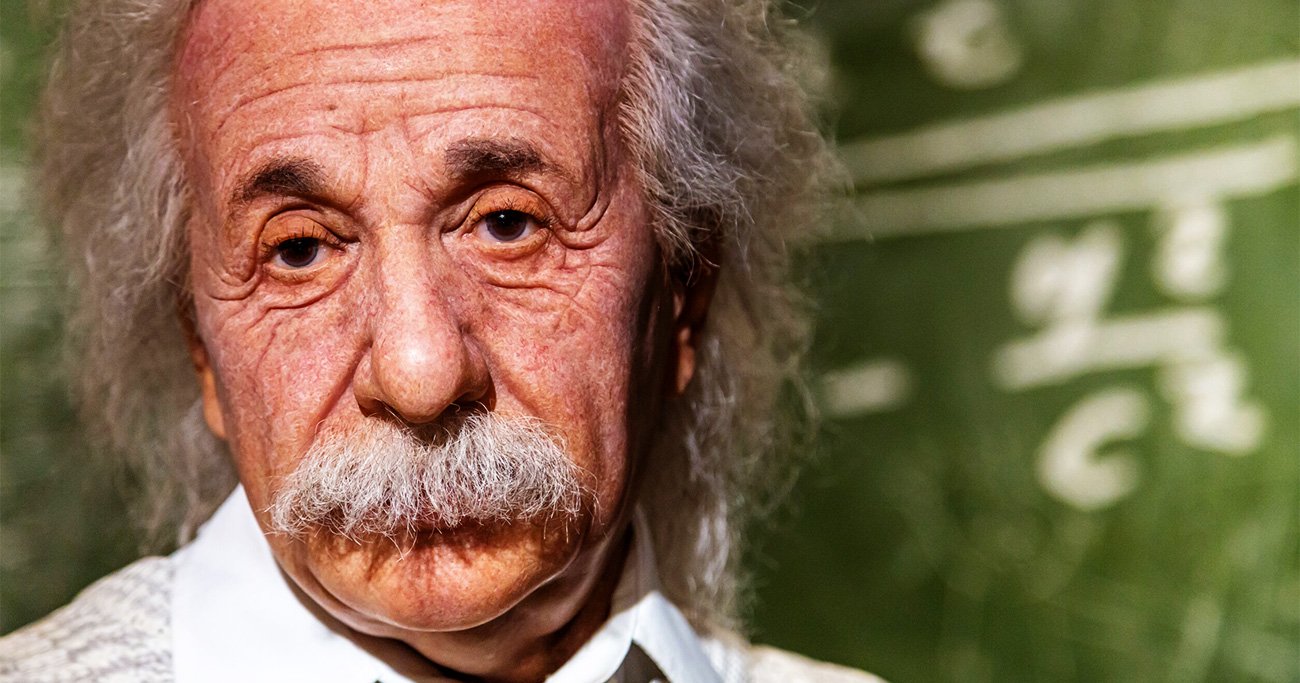
We have compiled anecdotes and urban legends about Einstein, the greatest genius of the century, including why he did not speak until the age of three and the amazing episode of a man who removed the genius's brain after his death without his family's permission in order to study it. Here is some interesting information that you won't be able to stop reading once you start.
■No interest in Marilyn Monroe?

Source: ameblo.jp
Marilyn Monroe.
Monroe said, "A baby with my good looks and your brains must be wonderful! Monroe replied, "I'm sure it will be wonderful!
Source: woman.mynavi.jp
If it were the other way around, it would be worse, so let's not do it," he kicked out....
Even an invitation from the most beautiful woman in the world was meaningless to this genius.
Source: woman.mynavi.jp
■The brain of a great genius is a concern, but it is overkill.
When Einstein died in 1955, a man removed his brain without his family's permission! It was Thomas Stoltz Harvey, a pathologist at Princeton University Hospital, who presided over Einstein's autopsy.
Source: tocana.jp
The man took the brain home and stored it in a jar. When the hospital notified him to return the organs, he refused, and Harvey was forced to leave his workplace.
Source: tocana.jp
Later, after receiving permission from Einstein's eldest son, Hans, to study the brain, Harvey sent slices of Einstein's brain to various scientists around the world.
Source: tocana.jp
One of them, Marian Diamond of the University of California, Berkeley, discovered that Einstein's brain has significantly more glial cells than that of a normal person. These are the cells that work in synthesizing and integrating information.
Source: tocana.jp
Sandra Whittelson of McMaster University also found that Einstein's brain lacked a "sulcus" called the "lateral sulcus," also known as the Sylvian fissure. She found that Einstein's brain lacked a "sulcus," also known as the Sylvian fissure, which she called the "lateral sulcus.
Source: tocana.jp
Whittelson speculates that this "abnormality" may rather have helped smooth information transfer between neurons in his brain. Other studies have shown that his brain was denser than normal and, moreover, that the inferior parietal lobes, which are associated with mathematical ability, were larger than in the normal brain.
Source: tocana.jp
