

Paul Weller is a big name in the British rock world. He made his debut as the frontman of The Jam in 1977, following the punk boom. In the 1990s, he went solo. He has always been a hero of the working class, characterized by his musical diversity in sound creation and rebellious lyrics. A charismatic figure in the UK rock world, he is admired by many musicians, notably the members of Oasis.
Paul Weller Overview
Paul Weller is a musician from Woking, Surrey. He debuted as a vocalist and guitarist of The Jam in 1977. Riding on the tailwind of punk / new wave which was popular in the UK at that time, he quickly became a popular band. The cool style in which everyone performed wearing a stylish suit with three buttons set a line with other punk bands and created a boom called "Mods, Revival". The Jam made good hits and grew steadily, but Paul Weller felt that he could not express his own musical changes with The Jam, and suddenly disbanded The Jam at the height of its popularity in 1982.
In 1983, he formed The The Style Council to shift to a more Seoul-and R & B-influenced sound. In contrast to the pop and stylish sound, the song's lyrics are full of a defiant spirit that clearly expresses political criticism. He has always been a working class hero even though the music has changed.
Since 1992, he has become a solo musician and has been called "Mod Father" by young musicians of Britt Pops such as Oasis, Blur, and Pulp. Since then, he has released albums regularly and released various songs that make use of his music pilgrimage. He is still active on the front line of the scene in the sharp Rock Sound that does not make you feel old. He is the charisma of the UK rock world.
Paul Weller's Activity History
1977: The Jam was formed.
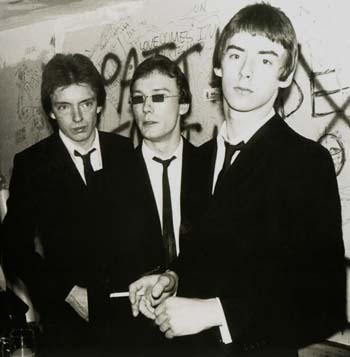
The Jam. From left to right: Bruce Foxton (b), Rick Buckler (d), Paul Weller (vo & g)
In 1977, he formed a party band called "The Jam" covering the Beatles and others on foot in the London suburb of Surrey. At the time, the band was composed of four members: Paul Weller (b), Rick Buckler (d), Bruce Foxton (g), and Steve Brooks (g). However, after Steve left the band, it started with three members: Paul Weller (vo & g), Rick Buckler (d), and Bruce Foxton (b). Paul and Rick, who both attended the same school, had a jam session in the music room during lunch break, which is said to be the origin of the band's name.
The year before The Jam was founded, the Sex Pistols had made a spectacular debut with "Anarchy in the UK," and in 1977, The Clash released its first album "The White Riot," The Damned released "The Damned Bastards," and a series of punk movements brought British rock to life.
The sound of The Jam is influenced by punk bands such as Sex Pistols, but the style as a fashion is refined, wearing a slim mods suit in a stylish way, giving a strong impression of the sound of The Who and The Kinks, while showing a distinct personality from other punk bands. Paul Weller himself was greatly influenced by the "mods" movement in the early 1960s, and the attitude of pursuing something cool for himself without being influenced by trends is the backbone of Pole.
What is mods style?
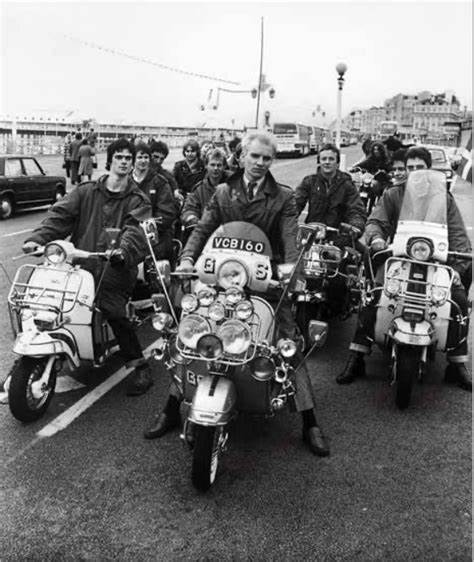
Beach town of Brighton, the holy land of the Mods
Mods Style is a lifestyle based on music and fashion that was popular in London from the late 1950s to the mid 1960s. It became popular among young workers living in London and in new residential areas in the suburbs. They are said to be the first generation who did not pay for part-time work at home and spent all their time dressing up.
Fashion features include a slim three button suit, jeans, a polo shirt, a narrow necktie, an M-51 military hoodie from the U.S. Air Force, Clarks desert boots, and a mods cut hair style modeled after that of a French Nouvelle Vague actor.
They appeared in late-night clubs on scooters instead of motorbikes as a means of transportation. Scooters were less likely to contaminate their prized fashion with oil and mud, and they protected their fashion by wearing military hoodies when driving.
In contrast to leather-jacket style rockers, military coats are considered a symbolic item of mods. For example, the Japanese "Sekai no Owari" wore military coats as fashion, but for mods at that time, military coats were not so much a fashion item as an actual means of transportation. Italian scooters such as Vespa, Innocenti, and Lambretta were favored, but they were soon decorated with many lights and mirrors.
As for musical characteristics, they liked rare R & B, Soul, Jamaican Ska, British music, The Who, The Kinks and Small Faces. Mods was named after modern jazz, which was popular in the 50s, or because modern jazz players and fans were called "modernists." Mods came to be called "mods" for short. Mods was also a reaction to the 50s leather jacket bike style and American regent style, called "rockers" in the countryside and suburbs, and a movement of young people who adopted new styles from Italy and France.
The 1979 film "Quadrophenia" is famous for depicting the mods of the time, named after The Who's album "Quadrophenia." By the end of the 1960s, mods were further transformed into marubozu, Dr. Martens boots and Ben Sherman shirts, and the "skin heads" style of listening to deep reggae.
The Jam Period (1977 - 1982)
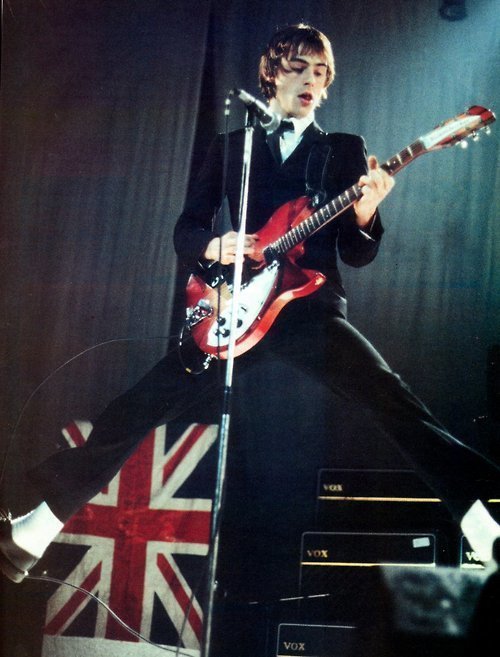
Paul Weller 1979
Jam quickly became a popular band with the boom of punk and new wave at that time. Its music was characterized by the punk style of high-speed performance based on R & B. However, it was distinguished from London punk like Sex Pistols, and its cool style wearing a stylish suit was called mods revival.
On April 29, 1977, "In the City" on April 29,, it suddenly made it to the national chart. His second album, "The Modern World," was not as successful as his previous album, but his third album, "All Mod Cons," released in 1978, established a unique sound by adding Motown's respect to the traditional edgy sound. It became the first peak of the band, highly appreciated by fans and journalists, and Jam took this opportunity to raise the Noroshi of success.
In his fourth album "Setting Sands" released in 1979, "The Eton ライフルズ" was a hit. The variety of Paul's music further expanded, and he was praised as a masterpiece along with his third album. In March 1980, he released his 10th single "Going Underground", which won the No. 1 spot on the British chart for the first time. In addition to his first visit to Japan in this year, Jam visited Japan three times, in 1981 and 1982. In his fifth album "Sound Effects" released in the same year, he developed an experimental and profound sound production that incorporated various music such as the influence of the Beatles, respect for soul music such as Michael Jackson, and psychedelic elements. Rifles
In the 6th album "The Gift" released in March 1982, funk, Calypso and other aspects were introduced along with the horn section, further expanding the range of music. Jam reached its peak with the single "A Town Called Malice town called malice", which directly shows respect for Motown, taking first place in the United Kingdom, but the band suddenly announced its dissolution.
This was due to Paul's desire to finish while he was at his best, but jam was no longer able to express the black music and diverse musical traits to which Paul was committed. The last single, "The Beat Surrender," which was released without a break, won the first appearance No. 1 again. Despite its tremendous popularity in the UK, the band ended their activities on December 11, 1982, with their last gig in the seaside town of Brighton, the holy place of Mods.
In just five years, Jam had produced 18 of the top 40 songs, including four of his number one hit songs, and ended at the height of his popularity.
The The Style Council period (1982 - 1990)
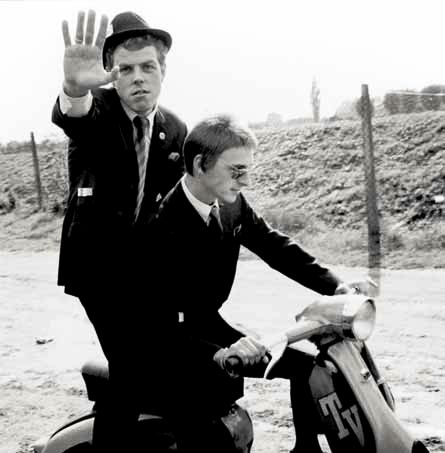
Mick Talbot (left) and Paul Weller (right)
Shortly after The Jam broke up, in late 1982, Paul Weller formed the pop/soul unit The Style Council with Mick Talbot, organ player for the neo-mod band Merton Parkas.
The unit was basically Paul Weller (vo & g) and Mick Talbot (key), but often consisted of D.C. Lee (vo) and Steve White (dr). In particular, drummer Steve White, who was 17 years old at the time, auditioned for the Style Council, which had not yet been given a band name. Paul was impressed by his musical background in jazz and hired him directly. Although he was never officially credited as a member of the Style Council, he participated in most of the Style Council's recordings and music videos, and became an integral part of the backing band after Paul turned solo. His younger brother, Alan White, also played as a drummer in Oasis.
He made his debut in March 1983 with the single "Speak Like a Child. The single "Long Hot Summer/The Paris Match," released in August, reached No. 3 on the U.K. Singles Chart.
In 1984, the band's first album, "Cafe Boulud," was released, and it was a complete change of pace from the punk-inspired Jam, mixing R&B, jazz, new wave, bossa nova, Django Reinhardt-style gypsy guitar, and other diverse elements into a fashionable European cafe-like sound. Although the old fans were puzzled, the new pop approach greatly broadened their fan base. The album also reached #2 on the UK Albums Chart.
In 1985, their second album "Our Favorite Shop" was released. This album slightly diluted the avant-garde flavor of the sound and brought Motown-like pop to the fore. It was a success both musically and commercially, and was the Style Council's first and last No. 1 in the UK. The single "Tumbling Town" was a vintage tune, but its lyrics were a scathing critique of the regime and Weller's rebellious spirit of worker solidarity. It reached #6 on the UK Singles Chart.
The third album, "The Cost Of Loving," released in 1987, was a more electric, modern soul album, more conscious of the American market. This album also featured more of DC Lee's vocals, and she later married Paul (they divorced in 1998). With this album, Paul and Talbot succeeded in realizing their ideals, but at the same time, they began to lose their direction due to the diversification of their musical styles, and from this period onward, sales began to slump.
Their fifth album, "Confessions of a Pop Group," released in 1988, was a quieter, ballad-driven album, but after reaching No. 15 in its first week of release, it fell off the charts in its fourth week and received negative reviews from critics. While Paul and Talbot were trying to broaden their musical horizons, Paul also approached the burgeoning acid house scene of the late 1980s. The result was their sixth album, "Modernism-A New Decade," released in 1989. However, the label Polydor refused to release this album because it was deemed not to be a sales success. It was not until 1998 that the album finally saw the light of day. The Style Council left behind many gems of pop songs, but in the midst of their musical wanderings and disappointments, they disbanded in 1990.
As a solo (1990 - 1995)
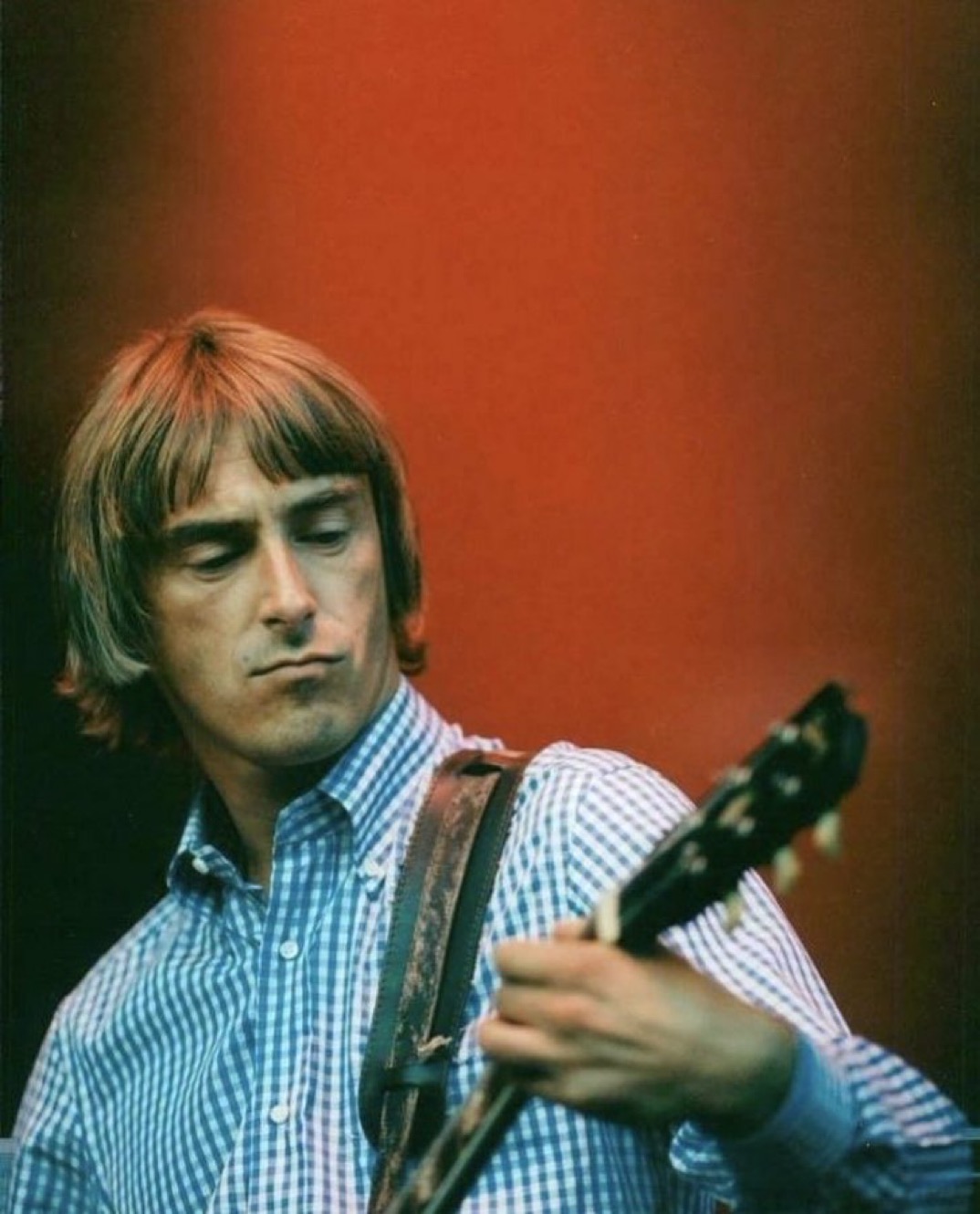
Solo period; 1990s Paul Weller
The dissolution of The The Style Council was in contrast to the farewell dissolution at the height of The Jam. Paul himself had the potential to retire from music and become a person of the past.
After spending most of 1990 resting, he made a fresh start with his long-time friend and The Style Council drummer Steven White and James Taylor Quartet session bassist Paul Francis in the country's previously unimaginable small halls and clubhouses. In 1991, he released his actual solo debut single, "Into Tomorrow," under the name of "Paul Weller Movement," which is neither a band nor a solo, from the self-produced label Freedom High. In the late The Style Council period, Japanese fans were delighted when Paul, who was devoted to house music, came home with his guitar for the first time in a while.
After many twists and turns, in 1992 he released his solo debut album "Paul Weller" from the Japanese Pony Canyon. He was not able to get a contract in the UK, but was released by the London-based record label "Go! Discs" about six months later. In the UK, Paul was on the verge of becoming out of the mainstream, but in the Japanese market, he had a strong The Style Council fan base and was more popular than in his home country. The album features a return to the origin sound that completely strips out the intensity of the jam period and the splendor of the The Style Council period. It also mixes elements of the acid jazz that was popular in the British scene at the time and creates a simple and solid sound. The debut album was positively received commercially and by critics, and Paul gained confidence and confidence in playing the music he wanted to play.
His second album in 1993, "Wild Wood," which included singles such as "Sunflower" and "Wild Wood," was nominated for the Mercury Music Awards. Around this time, he became a big brother of the British rock world, being respected by young artists of Britpop such as Oasis, Ocean Color Scene, Pulp and Blur.
And in 1995, when Britpop swept the British music scene, he rode the wave, but his third album, "Stanley Road," was a big hit and made a complete comeback, taking the No. 1 spot in the UK for the first time since he turned solo. The single "The Changing Man" returned to No. 7 on the UK singles chart, and the ballad "You Do Something To Me" made it to No. 9 in the UK, making it to the top 10 for the second consecutive song. The album was Paul's best-selling album, with Oasis' Noel Gallagher joining as a guest guitarist for "I Walk on Gilded Splendors." Paul paid back by appearing as a guest guitarist and backing vocalist for Oasis' hit "Champagne Supernova."
1997 to 2006
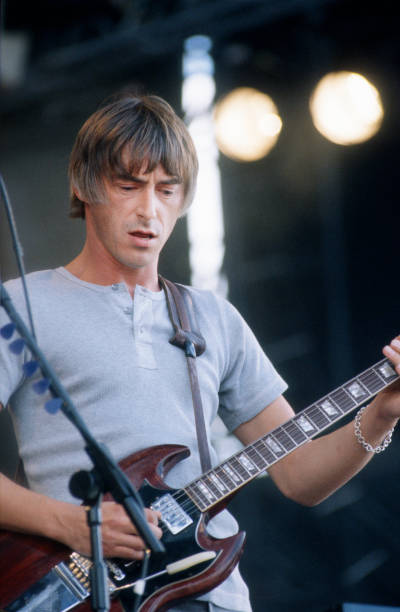
Paul Weller, 2000s
Following "Stanley Road" which became a million seller, "Heavy Soul" was released in 1997. It developed a sharp Rock Sound. In the fifth film "Heliocentric" released in 2000, the orchestra was used for many songs, and Steve Craddock and Demon Minkera of Ocean Color Scene fully participated.
Paul, who lost his record contract again, went on a European tour in 2001, mainly on an acoustic guitar, which was featured in a live album called "Days of Speed", which also featured jam and several The Style Council era numbers, and won third place on the UK album chart, becoming the second successful live album of 2001.
Rumors circulated that Heliocentric would be Paul's last studio, but the rumor proved unfounded with the release of his 2002 album Illumination, which again took the No. 1 spot on the UK album chart. The album also featured young players like Steve Craddock and Demon Minkera from Ocean Color Scene and Noel Gallagher and Gem Archer from Oasis.
In 2004, he moved to V2 Records and released the album "Studio 150" which covers all the songs. It was the first album to reach the 2nd place on the UK chart. In addition to "All Along the Watchtower" by Bob Dylan, "The Bottle" by Gil Scott Heron, "WishOn A Star" by Rose Royce, etc. were covered in the Paul Weller style became a topic of conversation. In 2005, he released "As Is Now" and released singles such as "From the FloorBoards Up", "Come On/Let's Go", and "Here's the Good News", but critics said that there was no musical progress and it was the lowest chart album since his debut.
In February 2006, he received the Lifetime Achievement Award at the U.K. Awards. Originally, Paul tended to decline such awards, but he received the award and presented four songs at the ceremony, including "The City of Malice," a masterpiece from his jam days. He was also approached that year about being appointed Commander, the next rank after Knight, for the Order of the British Empire, which is given to businessmen, cultural figures, entertainers, athletes and social workers, but he declined the offer.
In June 2006, she released her live album "Catch-Flame", which included songs from her The Style Council and solo days. In late 2006, she released her best album "The Hit Parade", which included all the singles she released during her jam, The Style Council and solo activities.
2008 to 2012
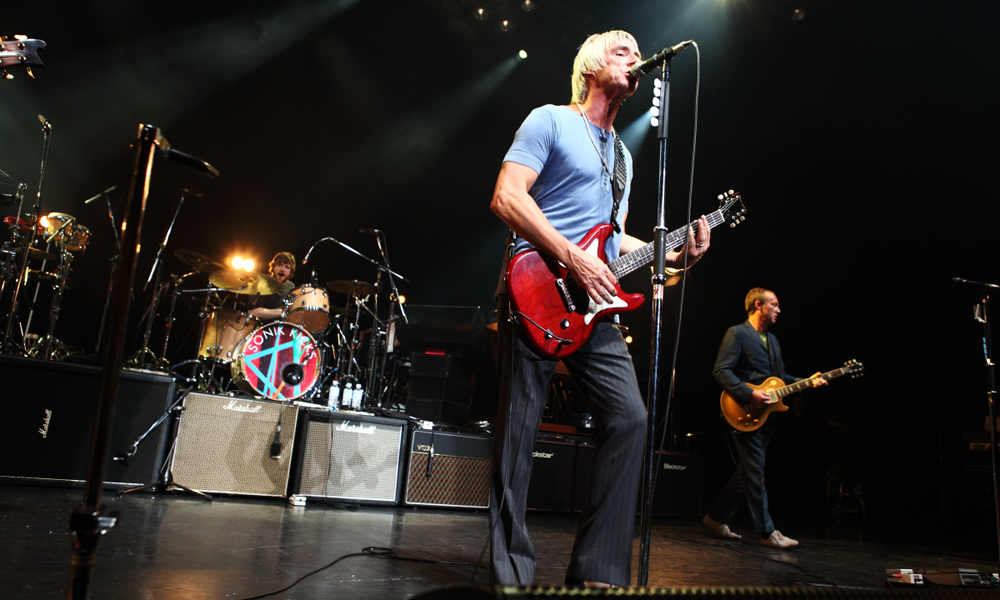
At the 2012 Zepp DiverCity performance in Tokyo
In 2008, Paul replaced all band members except guitarist Steve Craddock and released 22 Dreams, which featured Oasis's Noel Gallagher and Gem Archer, former Blur's Graham Coxon, former The Stone Roses' Aziz Ibrahim, former Soft Machine's Robert Wyatt and three members of the Little Barrie. The album made its first appearance on the British Album Chart and became Paul's third solo album to top the chart.
In 2009, he won the U.K. Award for Best Male Solo Artist, and in 2010, he won the NME Award for Godlike Genius. He released "Wake Up the Nation" in April 2010, and collaborated with the bassist of The Jam, Bruce Foxton, for the first time in 28 years. The album was the second best in the UK and was nominated for the Mercury Music Award. On March 19, 2012, he released his 11th solo album, "Sonik Kicks". Noel Gallagher, Graham Coxon, and Aziz Ibrahim, who also participated in "22 Dreams" as guests, participated in the album and the album became the No. 1 album on the UK album chart.
In December 2012, he was the head liner of the Crisis Charity Gig at HammerSmith Apollo, and in March 2013, he appeared in a charity concert about teenage cancers hosted by Noel Gallagher of Oasis, where Paul Weller drummed and performed Blur's "Tender" with Damon Albarn, Noel Gallagher and Graham Coxon.

Tags
Contents
- Paul Weller Overview
- Paul Weller's Activity History
- 1977: The Jam was formed.
- What is mods style?
- The Jam Period (1977 - 1982)
- The The Style Council period (1982 - 1990)
- As a solo (1990 - 1995)
- 1997 to 2006
- 2008 to 2012
- 2015 and later
- Paul Weller (Paul Weller) profile and personality
- Paul Weller (Paul Weller) discography
- Album
- Paul Weller
- Wild Wood
- Stanley Road
- Heavy Soul
- Heliocentric
- Illumination
- Studio 150
- As Is Now
- 22 Dreams
- Wake Up the Nation
- Sonik Kicks
- Saturns Pattern
- A Kind Revolution
- True Meanings
- On Sunset
- Fat Pop
- Live album
- Live Wood
- Days of Speed
- Catch-Flame!
- Other Aspects, Live at the Royal Festival Hall
- An Orchestrated Songbook
- Compilation album
- Modern Classics - The Greatest Hits
- Hit Parade - The Complete Single Collection
- Free Soul. The Classic Of Paul Weller
- Paul Weller's signature song
- In The City
- The Eton Rifles
- Going Underground
- The Town Called Malice
- Speak Like A Child
- You're The Best Thing
- My Ever Changing Moods
- Shout To The Top
- Walls Come Tumbling Down!
- Paul Weller's music video (MV/PV)
- Sunflows
- Wild Wood
- The Changingman
- Paul Weller (Paul Weller) Quotes
- Paul Weller "I don't think I'm British anymore. We think we're European."
- Paul Weller's (Paul Weller) Inside Stories, Trivia, Small Stories / Episodes, Anecdotes
- Beat Sid Vicious of the Sex Pistols
- Paul Weller has eight children.