
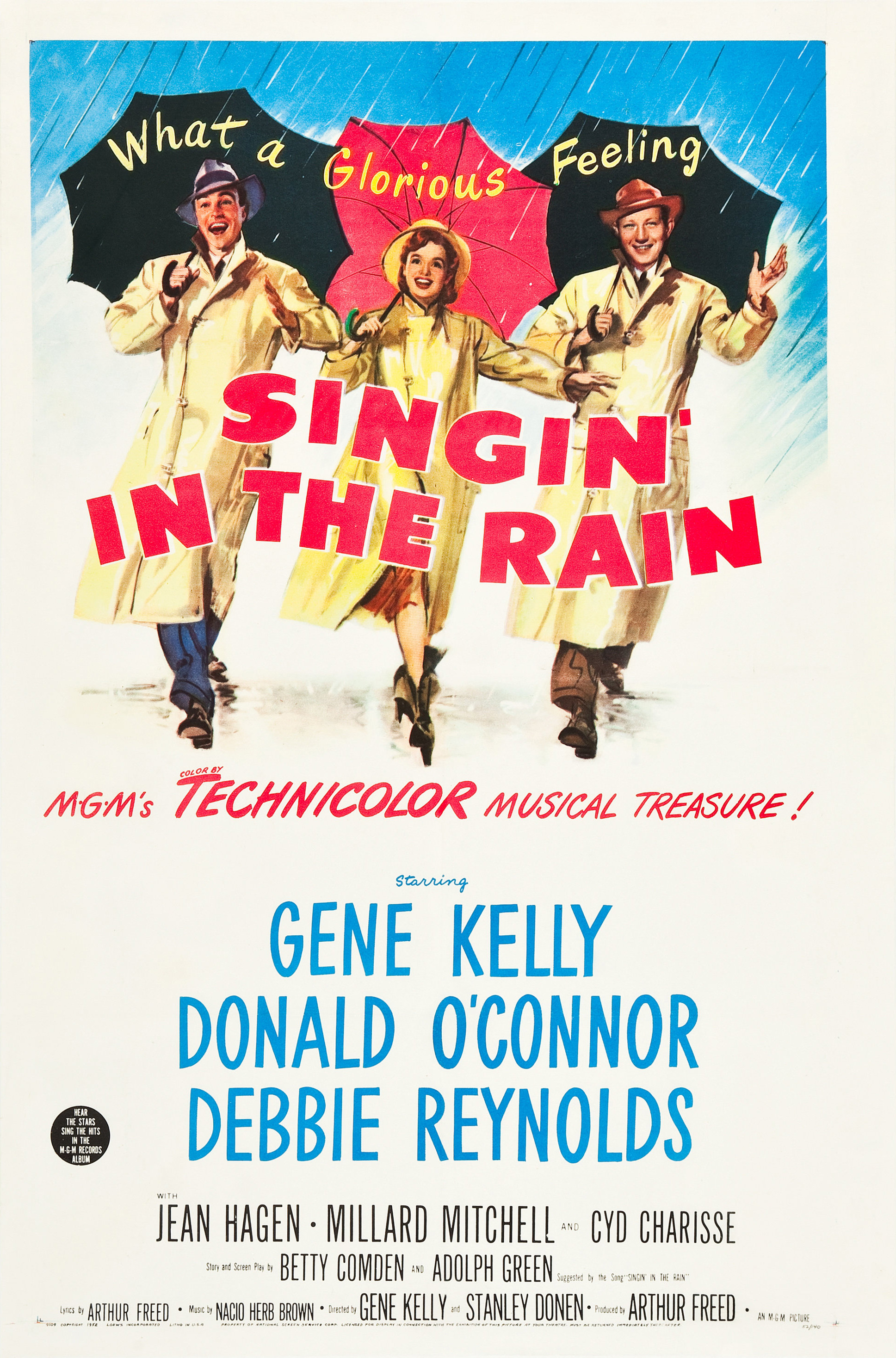
Singin' in the Rain (film) is a 1952 American musical film. Set in Hollywood, which was beginning the transition from silent films to talkies, the film comically depicts the love affair between popular star Don and up-and-coming actress Cathy. The film is directed by Gene Kelly and Stanley Donen. Kelly not only directs, but also appears in the film with Donald O'Connor and Debbie Reynolds. The film is considered a "masterpiece of musical cinema," and the scene in which Kelly sings "Singin' in the Rain" with an umbrella in her hand is one of the most iconic scenes in the film.
Japanese voice-overs: NHK / Koji Kawamura, Fuji TV / Tadashi Nakamura, DVDs / Yutaka Nakano
The president of Monumental, the film production company to which Don and Kozumo belong. The man who promoted Don from a stuntman to a big star. He also saw through Kathy's ability and has an eye for talent that is as good as the president of a film production company. He showed a willingness to obey when Lena was told to stop Kathy from appearing in the film by using the contract as a shield. However, when Lena was to sing a song in front of the audience with Kathy's dubbing in the stage address afterwards, he happily cooperated with Don's action to expose the fact in front of the audience. At the time, he was singing "Singing in the rain" with Don and Kozumo and happily raised the curtain.
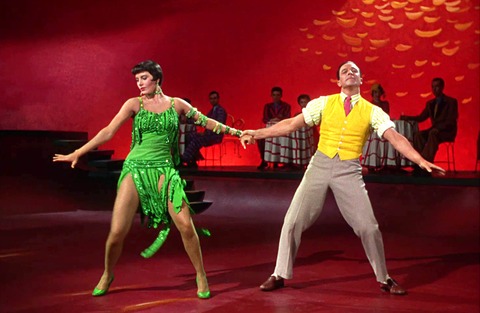
Don's dance partner (played by Cyd Charisse)
Source: livedoor.blogimg.jp
The woman on the left is her dance partner.
A woman dancing with a tap dancer, the main character, in one scene of "Dancing Knight". She shows off her fascinating dance and fascinates the main character played by Don.
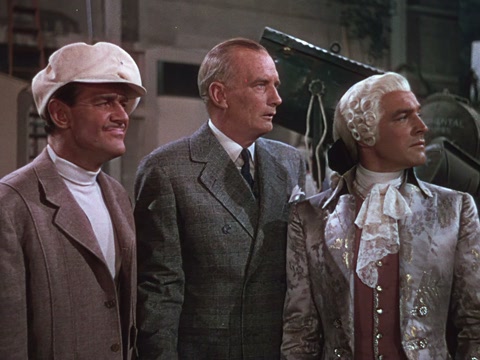
Director Dexter (played by Douglas Fowley)
Source: 2.bp.blogspot.com
On the left is Dexter.
Japanese voice-overs: NHK / Shinsuke Chikaishi, Fuji TV / Hisashi Katsuta, DVDs / Hiroki Tasaka
He is a film director and has produced many Monumental films. He has been a director since Don was a stuntman, and he has a very strict personality. In the production of talkie films, he was frustrated with Rina because she could not listen to unfamiliar tasks and instructions.
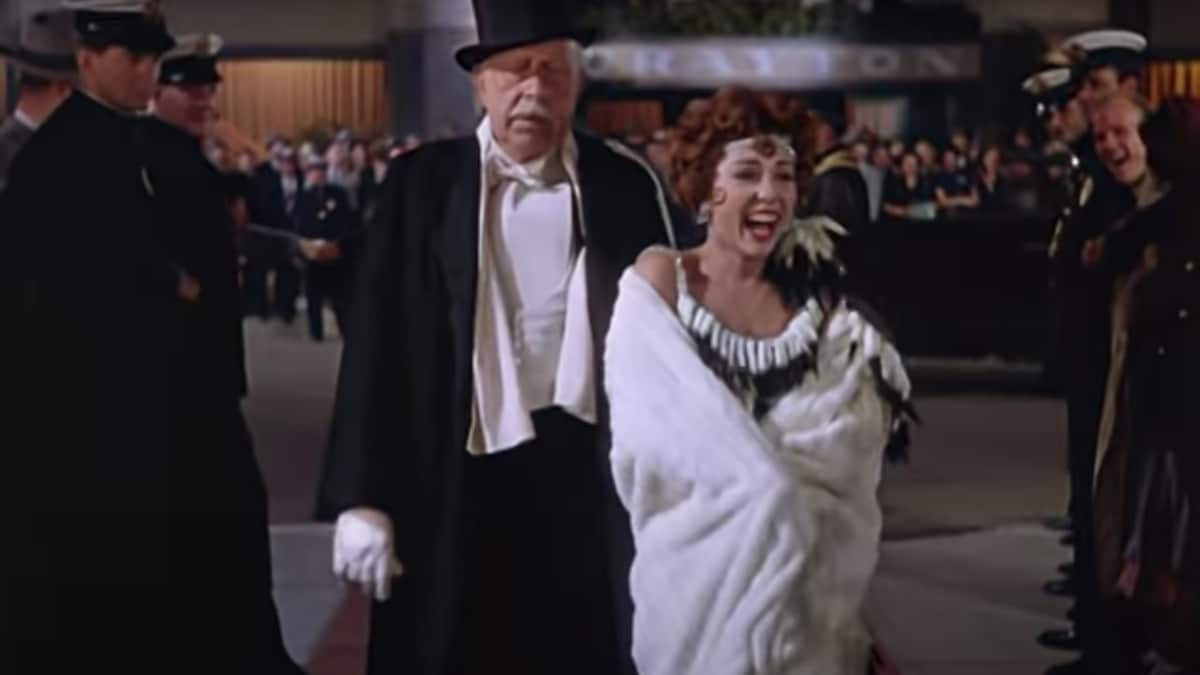
Zelda Zanders (played by Rita Moreno)
Source: www.thewrap.com
The woman on the right is Zelda.
Japanese voice-overs: NHK / unknown, Fuji TV / Mariko Nakagawa, DVDs / Miho Kobayashi
She was one of the actresses who appeared in "Kyutei no Fuunji" (The Wind and Cloud at the Court) starring Don and Lena. She felt a sense of crisis as she thought that her presence would be blurred by the fact that Cathy would appear in the movie in which she was the main character. In the midst of this, she heard that Cathy was dubbing Lena, so she snitted on Lena thinking she could bring Cathy down.
Terms used in "Ame ni Utaeba" (Singing in the Rain)
Silent film
A silent film is one that has no voice, no sound, and no actor dialogue. Until the release of the world's first talkie film, Jazz Singer, in 1972, silent film was the norm. From the 1930s, it gradually shifted to talkie films.
Talkie film
In October 1927, Warner Bros. released "Jazz Singer," which was the world's first full-length talkie film. Since then, it has become the center of silent film culture. On the other hand, many European critics and filmmakers believed that movies were more artistic, so the initial evaluation was low. In Japan, "Madam and Wife" in 1931 has become the first talkie film.
Monumental
Simpson is the president of a fictitious film company that includes Hollywood stars such as Don and Lena. The film also includes the name of a real company called Warner.
"Dancing Knight."
The first Monumental Talkie silent film featuring Don and Lena. Initially titled "Fighting Knight," the story was about the French Revolution. The film was composed simply by adding voices to the original film. However, due to the poor results at the preview, Don, Kozmo and Kathy came up with a good idea to change it to a musical film. The story is set in modern times, and the main character is a tap dancer from New York City. He suddenly faints after being hit by a sand bag that fell down, and dreams of the French Revolution period. Because of this, he was able to make a movie that incorporates modern characteristics while using the scenes he had shot so far. Kozmo came up with this story and was also selected as a playwright.
The words, lines, scenes and scenes of "Ame ni Utaeba" (a song in the Rain)
Scene from "Singh' in the rain" expressing Don's joy
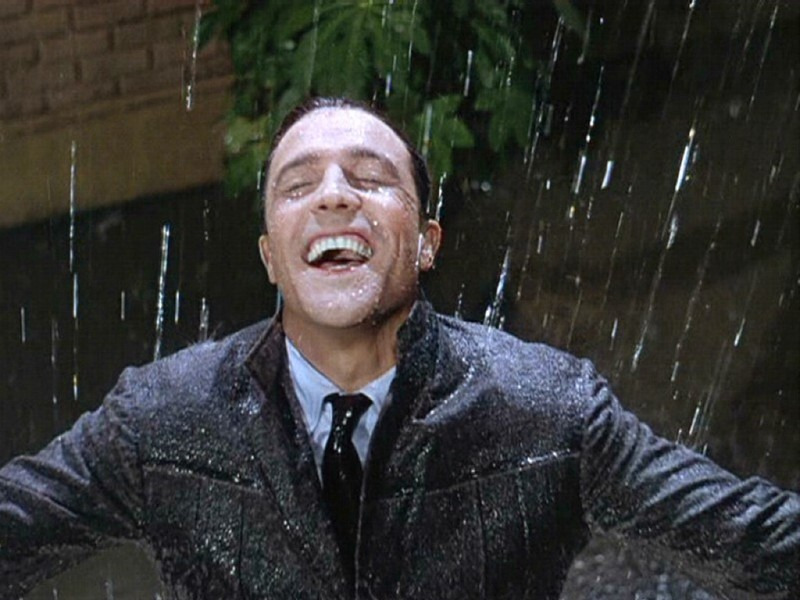
This is a famous scene that symbolizes this film. He worked hard to make a talkie film and showed it at the preview. At the preview, he was laughed at by the audience and lost his confidence. However, he came up with the idea of changing it to a musical film with Kathy and Kozumo, and he felt the possibility of the film's success. After that, he takes Kathy home. He tries to go home alone, but he doesn't take the taxi that he used to take. He sings while tap-dancing in the rain without an umbrella. Although it is a dark scene of a rainy night, Don's smile and splendid dance make him feel the possibility of the film's success. The scene also emphasizes the joy of having a good relationship with Kathy.
"Make Em" Make Em Laugh "where Kozumo encourages Don

Tags
Contents
- Outline of "Ame ni Utaeba" (Singing in the Rain)
- Outline and story of "Ame ni Utaeba" (Singing in the Rain)
- Transition from silent film to talkie film
- Let's make a musical film!
- Cassie's Debut
- Fictional character from "Ame ni Utaeba" (Singing in the Rain)
- Don Lock Wood (played by Gene Kelly)
- Cosmo Brown (played by Donald O'Connor)
- Kathy Seldan (played by Debbie Reynolds)
- Lena Lamont (played by Jean Hagen)
- R. F. Simpson, President (played by Millard Mitchell)
- Don's dance partner (played by Cyd Charisse)
- Director Dexter (played by Douglas Fowley)
- Zelda Zanders (played by Rita Moreno)
- Terms used in "Ame ni Utaeba" (Singing in the Rain)
- Silent film
- Talkie film
- Monumental
- "Dancing Knight."
- The words, lines, scenes and scenes of "Ame ni Utaeba" (a song in the Rain)
- Scene from "Singh' in the rain" expressing Don's joy
- "Make Em" Make Em Laugh "where Kozumo encourages Don
- "Ame ni Utaeba" (Singing in the Rain): Behind-the-Scenes Stories, Trivia, and Small Stories / Episodes and Anecdotes
- Behind the scenes of "Ame ni Utaeba"
- Debbie Reynolds's hard work
- Post-Release Appreciation of Works
- The theme song and insert song of "Ame ni Utaeba" (Singing in the Rain)
- Insert: "Make' Em Laugh" by Donald O'Connor
- Insert: "You Were Meant For Me" by Gene Kelly
- Insert: "Good morning" by Gene Kelly, Donald O'Connor and Debbie Reynolds
- Insert: Gene Kelly "Singh' in the Rain"
- Insert: "The Broadway Melody Ballet" by Gene Kelly