

Leukemia, which can happen to anyone at any time, is a cancer of the blood. It occurs in white blood cells, which are a component of blood, and is called leukemia because blood that would normally appear red appears white due to abnormal reproduction of cancerous white blood cells. This article provides a summary of celebrities and entertainers related to leukemia and whether it can be cured.
HONDA Minako Amazing Grace
In January 2005, he was urgently hospitalized after being diagnosed with acute myeloid leukemia.
A bone marrow transplant was considered, but with no time to find a donor, he underwent a cord blood transplant.
He was in and out of the hospital repeatedly, but his condition suddenly changed due to complications in his lungs, and he passed away.
Source: uitanlog.com
Andy Hug, a karate fighter, at age 35.
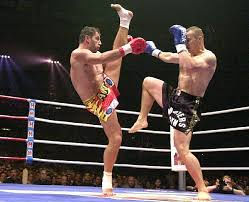
Source: www.google.com
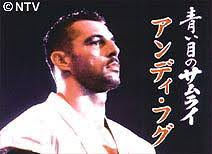
Source: www.google.com
(2000) Emergency live broadcast Andy Hug died suddenly of leukemia
CM Strong Noodle Summary Andy Hug
In August 2000, it was announced at a press conference that he was in critical condition due to acute promyelocytic leukemia, and he died four hours later.
Source: uitanlog.com
Blood disease is a cancer of the blood. Blood cells include red blood cells, platelets, and white blood cells, which become cancerous during the process of their production in the bone marrow. The cancerous cells (leukemia cells) multiply in the bone marrow and occupy the marrow. As a result, the number of normal blood cells decreases, and symptoms such as anemia, decreased immune system function, bleeding tendency, and enlargement of the spleen (an organ that stores blood) are manifested.
In Japan, leukemia is diagnosed in 11.4 males and 7.9 females per 100,000 population per year (2011 data*).
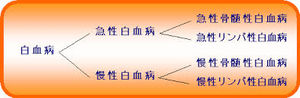
Leukemia is classified into "myeloid" and "lymphoid" types based on the type of cancerous cells, and further into "acute" and "chronic" types based on the disease progression pattern and symptoms.
Documentary about a man who died of leukemia
What is the battle against leukemia? An actress who overcame the disease tells her story
What types of treatments are available?
Treatment of chronic myelogenous leukemia (CML) is divided into drug therapy and transplantation therapy.
Drug therapy includes molecular targeted therapies, chemotherapy, and interferon-alpha therapy, which reduce the number of leukemia cells and suppress symptoms. Transplantation therapy includes hematopoietic stem cell transplantation, in which healthy hematopoietic stem cells are transplanted to restore hematopoietic function. Currently, hematopoietic stem cell transplantation is the only method that can achieve a cure. These therapies are used or combined depending on the medical condition.
When chronic myelogenous leukemia (CML) is diagnosed for the first time, molecular targeted therapies are used if the disease is in the chronic stage. However, depending on the side effects of the molecular-targeted therapy and the progression of CML, the patient may be switched to a different molecular-targeted therapy or to a therapy other than molecular-targeted therapies.
Source: ganclass.jp
Source: www.google.com
Facing and Overcoming Chronic Myeloid Leukemia (CML)
When diagnosed with a blood cancer, every person experiences shock, disappointment, and other emotional changes, and anxiety over the future of life.
However, most people become calm once a treatment plan is decided and treatment begins, because chronic myelogenous leukemia can be prevented from progressing even if it cannot be cured if appropriate treatment is given at an early stage.
It is no one's fault that you have leukemia, so it is best not to look back on the past and continue looking for the cause forever.
It is important not to keep your anxiety and worries to yourself, but to face your leukemia together with the people around you. Share as much information as possible about the disease and its treatment with family, friends, and colleagues, and ask them to listen to you so that you can find peace of mind.
Exchanging information with other patients who are facing the same disease can also be a great source of emotional support.
For cancer patients, having someone who empathizes with their feelings and is there for them is a great source of strength to continue treatment.
Source: ganclass.jp
Summary of the characteristics of "blooming breast cancer" that Mao Kobayashi is believed to have contracted! Her blog is also introduced - RENOTE
renote.net
On June 22, 2017, Mao Kobayashi passed away after a battle with breast cancer; she was only 34 years old when she passed away, and she had been writing a blog about her battle until three days before her death. It is said that she had a condition called "blooming breast cancer," in which cancer cells penetrate the skin at an early stage. In this article, we will discuss the details of her "blooming breast cancer" in detail.
A Savior for Cancer Patients? Opdivo Insurance Coverage and Cancer Treatment Today - RENOTE
renote.net
Entertainers and celebrities who die of cancer, such as Mao Kobayashi, Kirin Kiki, and Momoko Sakura, often make headlines. Opdivo," which is expected to be a special drug for cancer, is currently covered by insurance for only six types of diseases.
The "Cancer Cells" we learn about in the manga "Hataraku Cell" are too realistic and scary! The topic is now at the level of cautionary tales! - RENOTE
renote.net
The manga and anime "Hataraku Cell" has gained popularity for its scientifically correct content and easy-to-understand storyline that anthropomorphizes cells. The "cancer cells" that appeared in the seventh episode of this work have been talked about as being too realistic and scary. This article summarizes and introduces the contents of "Hataraku Cell" and cancer cells.
Explains the unknown primary cancer suffered by Akira Emoto's wife, Kazue Kadokae! Also introduces his sons, Tasuku Emoto and Tokio Tokio, and other siblings! - RENOTE
renote.net
Actress Kazue Kadokae (real name Kazue Emoto), a noted playwright in stage, film, and drama, passed away in 2018 from "primary unknown cancer," her husband Akira Emoto announced through her agency. This article explains what "cancer of unknown primary" is.
[Warning] Mao Kobayashi, Momoko Sakura, and Kirin Kiki are not strangers! Summary of terminal symptoms of cancer - RENOTE
renote.net
A succession of celebrities and entertainers have died of cancer, including Mao Kobayashi, Momoko Sakura, and Kirin Kiki. The symptoms of terminal-stage cancer are well-defined to some extent, and it has become possible to predict life expectancy. Here, we summarize the terminal symptoms of cancer.
Tokuiku "KID" YAMAMOTO, the "Son of God" who collapsed from stomach cancer! Video summary of the genius of the little 163cm fighter's fights! - RENOTE
renote.net
Tokuyu Yamamoto, who announced in August 2018 that he was battling cancer, did not return the following month in September. This article presents a summary of his prodigious match videos, family relationships, and the stomach cancer that Yamamoto suffered from.
A compilation of inspiring quotes by Kirin Kiki! Let's learn about the exceptional woman who lived her life honestly! - RENOTE
renote.net
Kirin Kiki was a great actress who was attractive not only for her acting but also for her straightforward words. This article introduces a collection of quotes left by Ki-Kirin so far. If you are in a difficult situation with a problem, please listen to her words.
Masanori Uchida - RENOTE
renote.net

![Tragedy] Summary of celebrities and entertainers who died prematurely before the age of 30! Okada Yukiko, Natsume Masako, etc. [Tragedy](https://renote.net/files/blobs/proxy/eyJfcmFpbHMiOnsiZGF0YSI6ODU3ODU2NSwicHVyIjoiYmxvYl9pZCJ9fQ==--8b3b1043e344fe302a2c0434cf61fe90d74f92aa/20191120-OHT1I50161-L.jpg)
Tags
Contents
- Swimmer Rikako Ikee announces that she has leukemia.
- Can leukemia be cured?
- However, it is not yet known how many years it will be before the possibility of recurrence completely disappears.
- Speaking of leukemia, Masako Natsume (who was 27 years old)
- Famous people who have developed leukemia
- Famous people who have died from leukemia (including Masako Natsume, the first)
- What types of treatments are available?
- Facing and Overcoming Chronic Myeloid Leukemia (CML)