
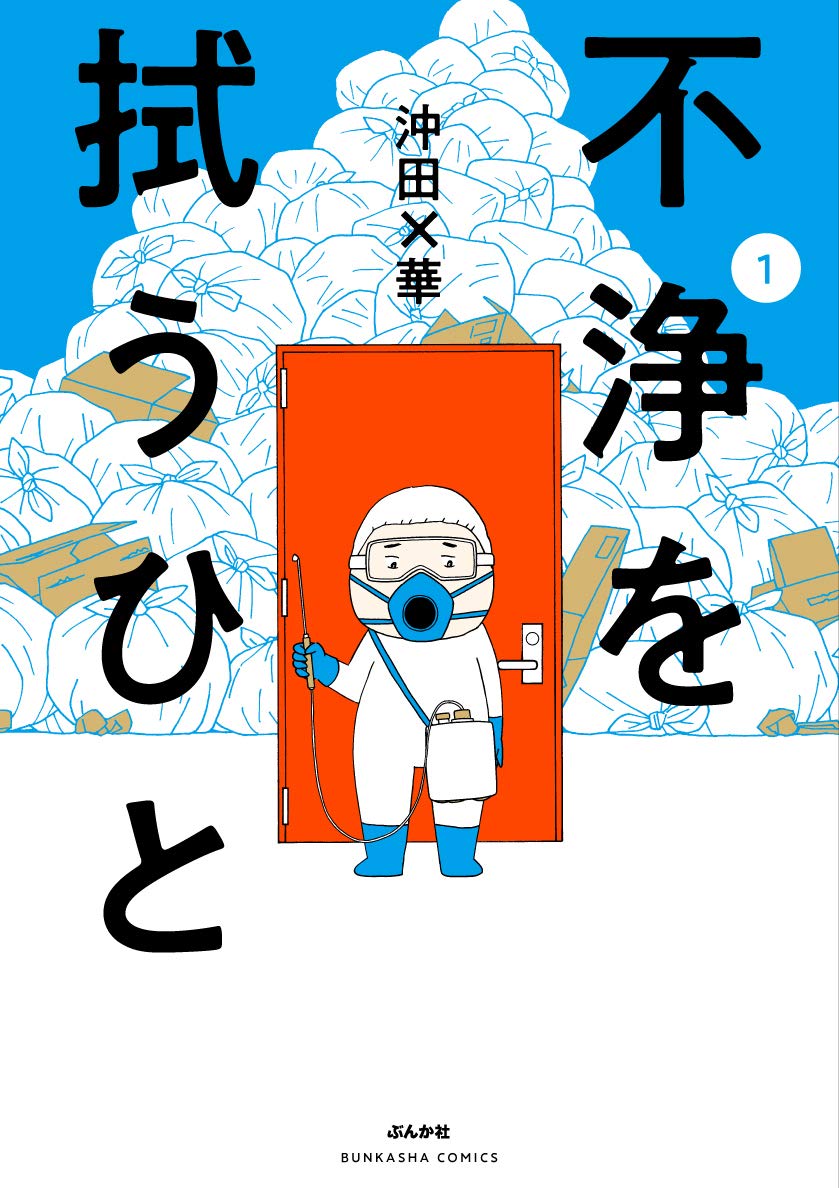
The manga "Fujou wo Wu Hito" is a manga work by Okita X Hana. The story is about Masato Yamada, a special cleaner, who is asked to clean up the rooms and trash of people who have died alone. The story is about Masato Yamada, a special cleaner by profession, who is asked to think about life, death, and living through cleaning the rooms of people who have died alone or in garbage dumps. The story is full of realistic content, such as how the cleaning is done after death and the words and actions of the bereaved families, as the job of a special cleaner touches deeply on death and life.
A man who was a senior at Masato's previous workplace. He taught Masato about special cleaning work. He encouraged Masato, who was in a complicated state of mind, thinking about the feelings of those who had died alone. He has a strong personality, asking Masato to eat because he wanted him to sell information about the unique cleaning goods developed by Masato.
Term for "the unclean man"
Special cleaning
Special cleaning is the work of cleaning up the traces of dead bodies, mainly from accidents, incidents, or suicides. It involves cleaning up bodies that have become liquid after being left for a long period of time, getting rid of bugs that have sprung up on the bodies, removing bad odors, and restoring defaced houses to their original state. It is also responsible for cleaning up waste houses that cannot be handled by normal cleaning. Since the bodies are collected by the police, they may touch the body fragments, but rarely touch the body itself directly. Since the content of cleaning is special, specialized knowledge is often required they are required to have the qualifications or equivalent knowledge of an odor judge, medical environment manager, pest control supervisor, or first class funeral director.
Mr. Yamada works for a special cleaning company that cleans up damaged areas and trash houses. He receives a phone call from the client directly to the employee's cell phone, makes an estimate, and if the client is satisfied, the contract is concluded.
It is often confused with a dealer of personal belongings, but they are totally different things.
Garbage house
A garbage house is a place where a large amount of garbage is piled up inside or on the premises. There are two types of garbage: one is thrown out by the residents, and the other is picked up from outside. The more the garbage piles up, the more it puts pressure on the living space. There are problems such as bad smell, insects, and mice breeding, which can easily cause problems for the residents. There is also the risk of fire, fires, and so on, which has become a social problem. In addition, there are accidents where the residents are crushed by the garbage and die. It is said that the reason why the residents pile up the garbage is simply that they are sloppy, but they are often suffering from mental illness.
In many cases, a large amount of garbage is piled up at the entrance, making it extremely difficult to get in and out. However, the space where the residents usually live is often hollowed out like arigigaku. In the story, Masato calls it' arigigaku' and cleans it from there.
Bomb
The word "bomb" refers to a plastic bottle or some other container containing urine that is placed in a garbage house. Residents of a garbage house sometimes store urine in a nearby plastic bottle because the toilet is not hygienic and they can no longer use it. Also, due to mental illness, dementia, or other diseases, bombs can be created because they can no longer excrete properly. Since it is not visible that it is buried in garbage, there is a risk of it exploding if you step on it carelessly. If it explodes, there is a risk of spreading pollution and getting infected, so Masato pays close attention to it.
The Words, Lines, Scenes and Scenes of "Fujo wo Wiped hito"
"People can start over as long as they live."
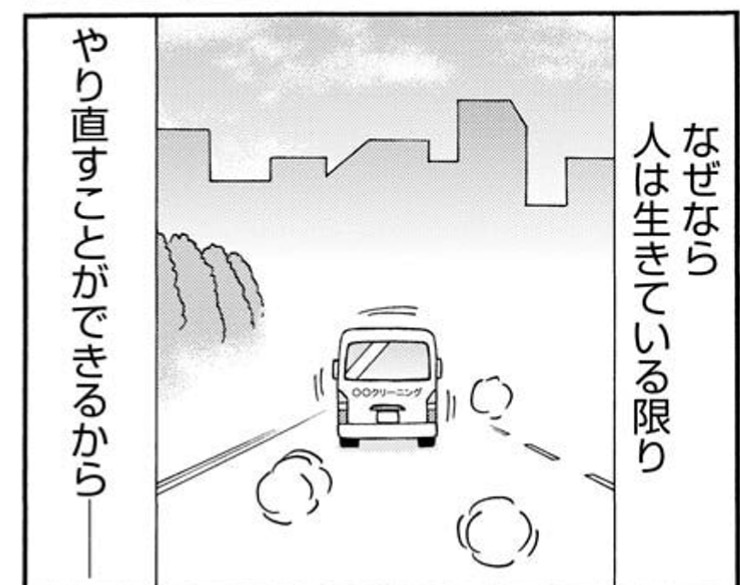
At the request of a man whose parents had committed suicide, he asked the man about his family environment and thought to him, "People can start over as long as they live."
The parents of the client man, especially his mother, had been mentally ill for a long time, and he had been hysterical with his school and friends since he was a child. Even when the man got a job, his mother came to work and became hysterical, and even when he had a girlfriend, he was forced to break up with her. The man had been tormented by his mother's existence for a long time. At one point, as usual, his mother called him on the phone and said, "I'm going to die. I'm going to die." When the man got angry and said, "If you want to die, please die," the mother apologized and hung up the phone. The next day, when I returned to my parents' home for the first time in a while, the parents had committed suicide. Even if the parents were related by blood, they had been tormented for a long time, so the man thought, "It's finally over," rather than the sorrow of having died, he said as if he hadn't told anyone about it while he was cleaning up. The man had a feeling that he couldn't tell anyone that it was good that the man's parents had died, so he just nodded.
Looking at the back of a man staring at his parents' home, Jeong-in hoped that a man who had been ruled by his mother since he was a child would become a new person and regain his own life.
There are quite a few people who are troubled by family relationships. Even if you can talk to friends and acquaintances about how you feel about your parents and children, there are few people who can tell you that they feel relieved after the death of a family member who felt lonely. Even so, this scene shows the complicated state of mind of a man who wanted to talk to someone about his feelings.
Senpai: "Because people who die alone don't think at all that they will die alone."
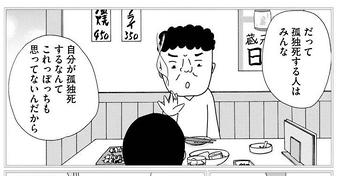
When I went to clean the room of the woman who had died alone on the futon, the elder said, "Because all the people who die alone don't think at all that they are going to die alone."
There are few people who are conscious of death in their daily lives. Moreover, they do not think that they will die alone. Those who actually die alone do not think that they will die alone. However, lonely death is something that happens to everyone. The woman who died alone on the futon that Masato encountered also had dishes that had been lightly washed in the kitchen sink. This is thought to be because she felt sick and wanted to wash them later, and she probably did not think that she would die after that. In fact, the rooms of those who die alone are left in the house with a way of life that suggests that they lived thinking about tomorrow until just before they died.
Senpai told Masato that the people who died at the end of their lives were not as miserable as the people around them thought they were, and that no matter how they died, they would not think that they had "given their lives as human beings." It was a word that saved the feelings of Masato who had seen the deaths of unrewarded people due to his occupation of special cleaning.
No one can predict when and how a person will die, and people live on the assumption that tomorrow will surely come. However, death will come to everyone equally and suddenly. Even if the death is a disease, accident, or suicide, there is no need to be pessimistic about the life of the person.
正希: "If I wanted to die, I should have gone alone. this is too much."
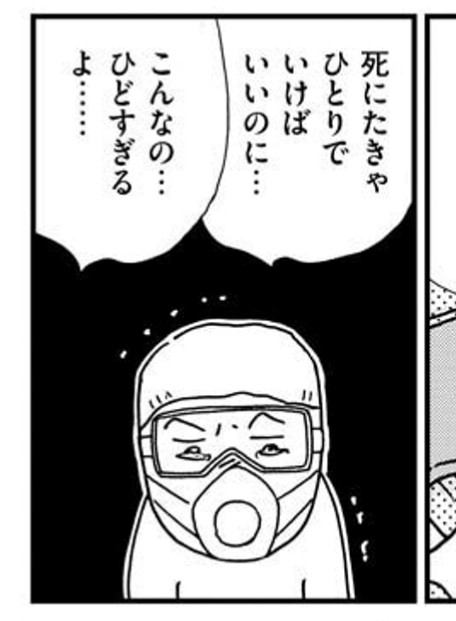
When 正希, who came to help Masato with his work, saw the bodies of the dogs involved in the homeowner's suicide, he said, "If I wanted to die, I should have gone alone. this. is too terrible."
正希 suddenly lost his job, so he started working as a part-time special cleaner. The two went to clean up the house where the landlord had committed suicide. They were looking for the dogs, because the landlord's sister had asked them to protect the dogs they had. They found the dogs sleeping on a dog bed in the landlord's room, but the dogs were already dead. To 正希, who suspected that the dogs had died of starvation, the landlord told him that the dogs were beautiful, so he guessed that it was a suicide by the landlord. 正希 was distressed by Masato's guess and became angry, telling him not to get the dogs involved in the suicide. The landlord had committed suicide because he was sick and worried about his life, and the dogs were all old, so he thought he wouldn't be able to find someone to pick them up, so he was forced to commit suicide.
After that, when 正希 tried to move the body of the dog to hand it over to a professional company, the skin of the stomach became brittle due to the progress of putrefaction inside the body, and the dog broke through the skin with his finger. As a result, the maggots gushing out of the inside flooded out, and 正希 panicked and ran away. This triggered him to give up his job as a special cleaner and take another job.
Whatever the reason you choose to commit suicide, the scene suggests that the involvement of others, even animals, will only create more grief.
Behind the Scenes, Trivia, and Small Stories / Episodes and Anecdotes of "Fujo wo Wiped hito"
The identity of the insects in the story
An insect thought to be a larva of the haraziro Dermestidae
It is possible that the author, Bakka Okita, does not know the identity of the insects that appear in the 18th episode of "Fujo wo Wiped,"' Mushi no Iru no Heya' (Room with Insects), and the janitor probably does not know the names of the insects either.
However, it is thought that the insects that resemble Gejigeji and have jaws powerful enough to make holes in the plaster board, and that the insects that do not respond to insecticides are the larvae of Harajiro Dermestidae, and the insects that eat other insects are Enma-mushi.
The Dermestidae is found mainly on dried bonito, dried sardines, and dried fish, as well as on the carcasses and bones of animals. It sometimes enters the walls of houses to bite wood. It is also said that it was hiding inside the walls by biting gypsum board. The adults are round-shaped, but the larvae look like gejigeji. It is also similar to the illustration of Bakka Okita, so there is a high possibility that it is the Dermestidae. The Enma-mushi is a stocky, round-shaped insect, named' Enma' because it gushes out of corpses and feces. It gushes out of corpses and feces, but the maggots that actually eat it are the maggots that gushes out of corpses and feces. The insect that appears in the story is thought to be the black En Ma.
An author's obsession with writing dirty things
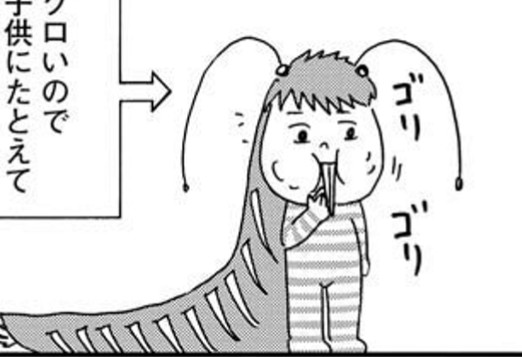
Because the main character of this movie is a special cleaner, there are many things that cause physiological chills, such as the body, blood, insects, and filth. Okita says in an interview that it is difficult to "draw dirty things without being dirty." For this reason, grotesque depictions such as the degree of decay of the body are sometimes blurred. In addition, in order to inflame physiological aversion, insects are replaced with human children, cockroaches are replaced with male hosts, and so on.

Tags
Contents
- Outline of "Fujo-wiped Man"
- Outline and story of "Fujoshi wo Wiped hito"
- First time job
- It's a waste of personal effects.
- The spirit of a man who wants to tell you that it was an accidental death
- Expensive
- Characters in "The Man Who Wipes the Dirt"
- Protagonist
- Tadashi Yamada people
- Yamada's family
- Kanan Yamada Kanako
- Kiyoshi Yamada salt
- Special cleaning company where Masato works
- Tadao MORI
- Junior
- Other people
- Yamada 正希
- Mother of Kanako
- Chief Priest Kamiya
- Kaneda
- Shirakawa
- Seniors at the workplace before Masato
- Term for "the unclean man"
- Special cleaning
- Garbage house
- Bomb
- The Words, Lines, Scenes and Scenes of "Fujo wo Wiped hito"
- "People can start over as long as they live."
- Senpai: "Because people who die alone don't think at all that they will die alone."
- 正希: "If I wanted to die, I should have gone alone. this is too much."
- Behind the Scenes, Trivia, and Small Stories / Episodes and Anecdotes of "Fujo wo Wiped hito"
- The identity of the insects in the story
- An author's obsession with writing dirty things
- "The Manual of Total Suicide" in the book is real.